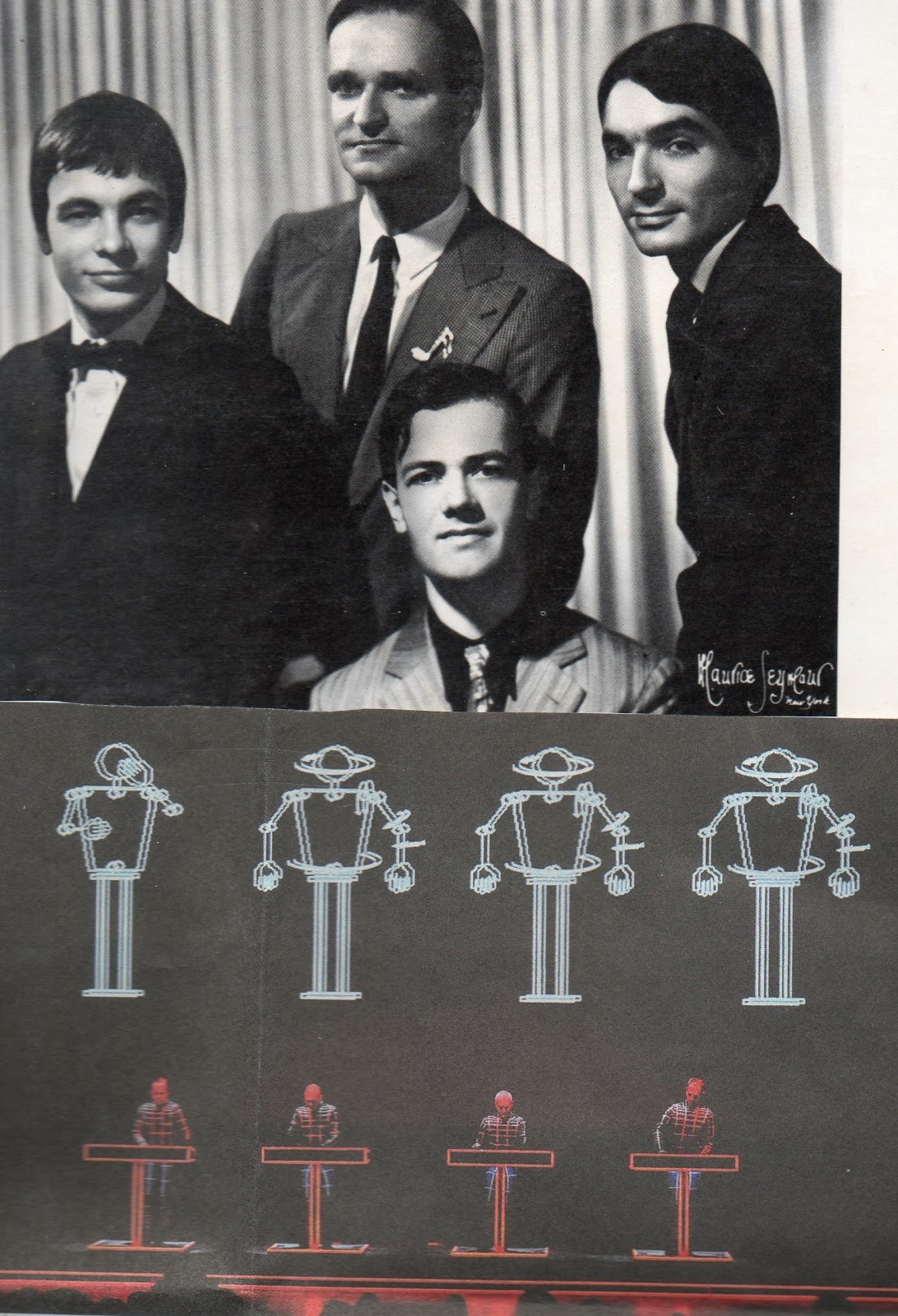
Wednesday, 27 February 2013

Poem: MARIE


 MARIE

when I woke friday morning
the world had not ended

there are still grease-rings on the stove,
biscuit-crumbs in the folds of the bed,
formations of dust beneath the furniture,
the curtains still move lethargically
stirring disinterested currents of air,
shadows still move dumbly beyond the window
living lives of desperation both quiet
and loud, in rage and deceptive calm,
litter still silts the pavement around them,
as smoke crawls sleepily over the city,
where snow still glows in bitter wind, and
tobacco smells and factory girls in torn jeans
still fill the café to drink the same acrid coffee

when I woke friday morning
the world had not ended,
but you were gone…


This poem is published in the excellent new 120-page
‘EARTH LOVE: AN ANTHOLOGY OF ENVIRONMENTAL POETRY’
edited by Tracy Patrick (February 2013) - £6 including P&P
from www.earthlovepoetrymagazine.yolasite.com
To order, go to this website, click on 'anthology-2013'
then click to donate via Paypal - all proceeds to
environmental charities. Fully illustrated, other contributors
include Cardinal Cox, Pete Faulkner, Peter Asher,
Belinda Cooke, Jane Seabourne, Geoff Stevens and
many other very fine poets. Highly Recommended...!

Interview: KRAFTWERK IN A SCHIZOPHRENIC COUNTRY


KRAFTWERK: IN A
SCHIZOPHRENIC
COUNTRY

An interview with Ralf Hütter of the
legendary prophets of modernism and
all things digital-sterile. In which Kraftwerk
travel all the way from the Last John Cleese-oid
Skirmish of WW2, to cyborg Wet-Ware
Science Fiction futures...

TECHNO-POP AT THE ELECTRIC CAFÉ
“We play the machines, but the machines also play us.
They should not do only slave work, we try to treat
them as colleagues so they exchange energies with us...”
                            (Ralf Hütter in ‘Mojo’, April 1997)

Eins, Zwei, Drei, Vier...

Kraftwerk means ‘Power Station’ – regardless of what you read elsewhere. They are also the Teutonic fourpiece responsible for soundtracks for science like “Trans-Europe Express” and “Computer World”. They are the musicians who first encrypted the transcript from the handbook of neuro-electronic tomorrows, the fountainhead of all things digital-sterile, and took it into the minimalist technological zeitgeist. Their sound, from its early-1970’s beginnings, was already aerodynamically styled for the next millennium. Now they here in London for a brief tour promoting their album ‘The Mix’ (June 1991), playing selected concerts – including the cult Dance Festival ‘Tribal Gathering’ (at Luton Hoo 24th May 1997), and doing a limited number of meet-and-greet press interviews. I corner Ralf Hütter (electronics and voice) in a cluttered backwater of EMI House, and poke theories at him through the language barrier.

It seems to me there are two distinct phases to Krautwerk’s career. Or perhaps even three. The first five years devoted purely to experimental forays into synchromeshed avant-electronics, producing the batch of albums issued in Britain through Vertigo – ‘Kraftwerk’ in 1972, ‘Ralf Und Florian’ the following year, the seminal ‘Autobahn’ in 1974, and the compilation ‘Exceller 8’ in 1975. Then they switch to EMI, settle on a more durable line-up and the subsequent move into more image-conscious material, a zone between song and tactile atmospherics feeding into areas dangerously close to Euro-Disco. The third – and current phase, involves a long and lengthening silence.

‘No, it wasn’t like that’ says Hütter, all neat and in black. ‘It was...’ his hand indicates a level plane. ‘There was never a break. It was a continual evolution. We had our studios since 1970, so we always worked on the next album, and the next album, and just so on. I think Dusseldorf therefore was very good because we brought in other people, painters, poets, so that we associated ourselves with...’ his sometimes faulty English – interfacing with my even more faulty German, breaks down. The words don’t come. So he switches direction. ‘Also we had some classical training before that (Ralf and Florian met at the Dusseldorf Conservatory), so we were very disciplined’. The other Crafty-Workers in this original extended family of neo-Expressionist electro-subversives included Conny Plank (who was to produce later stuff for Annie Lennox’ The Tourists, and Ultravox), Klaus Dinger and Thomas Homann (later of Neu), artist Karl Klefisch (responsible for the highly effective 1978 ‘Man-Machine’ sleeve), Emil Schult (who co-composed “Trans-Europe Express”) and others. In the subsequent personnel file – as well as Hütter, there is Florian Schneider who also operates electronics and sometimes robotic vocals. While across the years of their classic recordings they are set against Karl Bartos and Wolfgang Flur who both manipulate electronic percussion.

I ask if they always operated as equal partners. ‘Everybody has their special function within the group, one which he is good at and likes to do the most.’ It was never just Ralf und Florian plus a beatbox rhythm section? ‘No. It’s just that we started historically all that time ago and worked for four years with about twenty percussionists, and they would never go into electronics, so we had to step over, banging away and things like that. And then Wolfgang came in...’

You find the phrasing strange? I’ll tell you... when the possibility of doing this interview first cropped up I ransacked my archives and dug out everything on Kfartwerk I could find. Now it occurs to me that each previous press chat-piece from ‘Creem’ to ‘Melody Maker’ have transposed Herr Hütter’s every utterance into perfect English. Which is not the case. His eloquence is daunting, but it inevitably has very pronounced Germanic cadences. Sometimes he skates around searching for the correct word, other times he uses the right word in the wrong context. When her says ‘we worked on the next album and the next album, and just so on’ it really emerges as ‘ve vork on ze next album und ze next, und just zo on’. It might be interesting to write up the whole interview-tape with that phonetic accuracy, but it would be difficult to compose and impossible to read. Nevertheless, I’m not going to bland out his individuality by disinfecting his speech peculiarities, or ethnically cleansing his phrases entirely...

RADIO AKTIVITAET:
THE VOICE OF ENERGY…
“I think our music has to do with emotions.
Technology and emotion can join hands...”
                                   (Ralf Hütter, 1991)

With that sorted out I ask if he enjoyed touring. ‘Yes, basically, because we don’t do it so often. But we also enjoy working in our studios in Dusseldorf, we shouldn’t tour too much otherwise... we get lost somewhere, maybe! We get too immunised. When you have too much you must shut down because you get too many sounds and visions from that tour. For the first five years we toured always in Germany on the Autobahns – that’s where that album came from. Since 1975 we do other countries as well.’ They first toured the USA in March 1975, topping the bill over British Prog-Rockers Greenslade, then – leaving an American Top Thirty hit, they went on to play eight British dates in June set up for them by manager Ira Blacker.

How much of that early music was improvised? Was the earlier material ‘freer’? Kraftwerk numbered Karl Klaus Roeder on violin and guitar back then, so are the newer compositions more structured? ‘No. We are going more... now that we play longer, work longer than ten years, we know more and every afternoon when we are in the Concert Hall or somewhere in the studio we just start the machines playing and listen to this and that. Just yesterday we composed new things. Once in Edinburgh we composed a new piece which we even included in that evening’s show. New versions on old ideas. So we are always working because otherwise we should get bored just repeating. And it’s not correct what he (a hostile gig reviewer) was saying – that we play on stage exactly like we sound on the record. That’s complete rubbish. It means people don’t even notice and they don’t listen. They go instead over to the Bar for a drink! We, our music is very basic, the compositions are never complex or never complicated. More sounds – KLINK! KLUNK!! Metallic sound. We go for this sound composition more than music composition. Only now they are thematically more precise than they were before.’

After so long within the genre don’t they find electronics restricting? ‘No, just the opposite.’ Words precise with the sharp edge of Teutonic resonance. ‘We can play anything. The only restrictions we do find are, like in writing, as soon as you have a paper and pen – or a computer or a cassette recorder and a microphone, and you bring ideas, you find the limitation is in what you program rather than what is in the microphone or the cassette. You – as a writer, writing this interview, can’t say that the piece you are writing is not good because the word processor did not pick out the right words for you. It’s the same with us. If we make a bad record it’s because we are not in a good state of mind.’

When they started out they recorded in German-language. ‘We always record in German’ he corrects emphatically. ‘Then we do – like in films, synchronised versions for English. The original records are all German, but we also do French, and now Japanese versions. We are very into the internationalist part.’ Continuing this trans-Europe theme he suddenly suggests ‘Britain in a very historical society. The Establishment. The hierarchy. We come here and we feel that immediately. On the one hand you have this very modern...’ he tails off. Starts again, ‘it’s a schizophrenic country, a modern people, new music and everything, but on the other hand the... how can I say it, a theatrical establishment.’ I retaliate, yes – but surely it could equally be argued that all Europe forms a common cultural unit attempting to survive between the historic power-block forces of the USA and the old Soviet Union? Indeed, to journalist Andy Gill, Kraftwerk’s music is ‘promoting the virtues of cybernetic cleanliness and European culture against the more sensual, body-orientated nature of most Afro-American derived music’ (‘Mojo’, August 1987). Europe shares a common heritage uniting Britain, Germany and France, which are all being subtly subverted by a friendly invasion of American Economic and McCultural influences, movies, records, clothes? Hütter himself once said ‘in Germany, Pop music is a cultural import’. ‘Yes, I know. Certainly when we came to Birmingham (England) we thought it was similar to Dusseldorf. There’s no question. But in Germany it happens even more though, because here in England at least you notice, you know the language and everything. In Germany they don’t notice, it was just taken over.’

I’d always considered the German language to be a defence against foreign influence. It was far easier for mainstream British culture to be accessed, and infiltrated because of a common American-English language. In France, for example, the Government is actively resisting the ‘Anglicisation’ of their language through ‘Franglaise’, because they rightly see its corruption as the thin end of the wedge. ‘Maybe. That should be checked. But you, together with the Americans had another situation to start with. After the war, Germany was finished. I’m not saying why or whatever, that’s OK. But when I grew up we used to play around the bomb-fields and the destroyed houses. This was just part of our heritage, part of our software. It was our education and cultural background...’ The spectre of Basil Fawlty springs unbidden. Earlier an entirely innocent question about Kraftwerk’s origins had dislodged similar sentiments. He’d spoken of Germany’s Fascist years – ‘in Germany especially, that’s what I mostly knew about, then all the (artistic / creative) people emigrated, Einstein had to leave, and everybody knows the reasons. And then only after the war – he came back. But I think Germany went through a period, with our parents, who had never had anything. They went through two wars...’

Now personally, the dinosaur struggles of mindless European Empires doesn’t bother me. Creativity and human individuality does. And massive giga-jolts of respect are due here. Long before the world had heard of Bill Gates, Y2K or William Gibson, when Silicon Valley was still just a valley and mail had yet to acquire its ‘e’ prefix, Kraftwerk were literally inventing and assembling their own instruments, expanding the technosphere by rewiring the sonic neural net, and defining the luminous futures of what we now know as global electronica. But suddenly I get visions of our dialogue devolving into the last skirmish of Ward War 2. ‘Don’t mention the WAR!!!’ Giant imaginary replicas of John Cleese goose-step across the room...

MAN MACHINE: MENSCH MASCHINE…
“We feel that the synthesizer is an acoustic mirror, a brain
analyser that is super-sensitive to the human element in ways
previous instruments were not, so it is really better suited to
expose the human psychology than the piano or guitar...”
                                 (Ralf Hütter in ‘Mojo’, April 1997)

Change of tack. There’s a lot of Kraftwerkian influence around. Much of current electro-Dance seems to be plugged directly into the vaguely ‘industrial’ neuro-system that Hütter initially delineated, while dedicated eighties survivalist cults Depeche Mode and Human League also have Kraftwerk DNA in their gene-code. He nods sagely. ‘There’s a very good feeling in England now. It was all getting so... historical.’ Is the same thing happening in Germany now? Is there a good Rock scene there? ‘No. But New Music (Neu Musik).’

Hütter’s opinions on machine technology have been known to inspire hacks of lesser literary integrity to sprees of wild Thesaurus-ransacking adjectival overkill, their vocabularies straining for greater bleakness, more clone-content, ‘Bladerunner’ imagery grown bloated and boring through inept repetition. And sure, Kr-art-werk is all geometrical composition, diagonal emphasis, precision honed etc, but their imagery is not entirely without precedent. Deliberately so. Their ‘Man-Machine’ album track “Metropolis” obviously references German Fritz Lang’s 1926 proto-SF Expressionist movie. The album sleeve also acknowledges the ‘inspiration’ of Bauhaus Constructivist El Lissitzky. I go on to hazard a connection with German modern classical music bizarro Karlhienz Stockhausen – particularly on Kraftwerk’s ‘Radio-Activity’ (1975) album, where they use the ‘musique concrete’ technique of surgical-splicing different sounds together from random areas. “Radioland” uses drop-in short-wave blips, bursts and static twitterings, “Transistor” has sharp pre-sample edits, alongside the pure found-sound audio-collage “The News”. A technique that resurfaces as late as ‘Electric Café (1986), where “The Telephone Song” is made up of ‘phone bleeps and telecommunication bloopery. He’s familiar with the input. Immediately snaps back the exact location of the ideas – ‘Kurzwellen’, from Stockhausen’s back-catalogue. And what about the aural applications of Brion Gysin / William Burroughs’ literary cut-up experiments? Is there any interaction there? ‘Maybe’ he concedes. ‘‘Soft Machine’, contact with machines. But we are more Germanic.’ He pauses, then suggests ‘we take from everywhere. That’s how we find most of our music. Out of what we find in the street. The “Pocket Calculator” in the Department Stores.’

The music is the message – ‘the perfect Pop song for the tribes of the global village’ as Hütter once described it. The medium and the form? ‘If the music can’t speak for itself then why make music? Then we can be writers directly. If I could speak really everything I want with words then I should be working in literature, in words. But I can’t, I never can say anything really, I can’t even hardly talk to the audience. I don’t know what to say. But when we make music, everything keeps going, it’s just the field we are working in, or if we make videos we are more productive there.’

I quote back from an interview he did with ‘Q’ magazine in July 1991 where he suggests that traditional musical skills are becoming increasingly redundant, ‘with our computers, this is already taken care of’ he explains. ‘So we can now spend more time structuring the music. I can play faster than Rubenstein with the computer, so it (instrumental virtuosity) is no longer relevant – it’s getting closer to what music is all about, thinking and hearing.’ So what’s new in electronics, Ralf? ‘What we find now is like, a revolution in machines. They are bringing back all the garbage now that has been put into them for the last hundred years and we are facing a second, third and fourth Industrial Revolution. Computers. Nano-electronics. Maybe then we come back into Science Fiction? I don’t know.’ Then, on inspiration, ‘there’s another thing coming out. ‘Wet-Ware’, and we function also – in a way, as Wet-Ware.’

I’m hit by a sudden techno-blur of off-the-wall ideas, imperfectly understood concepts of some electro-erotic wet ‘T’-shirt ritual in the pale blue wash of sterile monitors. What is ‘Wet-Ware’, Ralf? Spoken with bated breath. And he explains. Like hardware is machines. Software is the data that is fed into them. ‘Wet-Ware is anything biochemical. The biological element in the machine!’

The programmer? I see. Fade into intimations of cybernetic ubermensch conspiracies.

Eins, Zwei, Drei, Vier...

*Although deliberately angled to imply that this interview occurred at a later date, in fact it consists of material taped at the time of my Kraftwerk interview which appears in the book ‘I Was Elvis Presley’s Bastard Love-Child’ (Headpress Books)


 KRAFTWERK:
VORSPRUNG DURCH TECHNO

1970 – ‘TONE FLOAT’ by ORGANISATION. Ralf Hütter and Florian Schneider-Esleben with others (Basil Hammoudi, Butch Hauf and Alfred Monicks), produced by Konrad ‘Conny’ Plank and recorded in a studio in Dusseldorf’s Oil Refinery. Includes “Milk Rock”, “Silver Forest” and “Rhythm Salad”, “Noitasinagro” and 20:46-minute “Tone Float”

1971 – ‘HIGHRAIL’ by KRAFTWERK. Hütter and Schneider with Klaus Dinger and Thomas Homann, who later form Neu. Issued on German Philips label

1972 – ‘VAR’. Includes first-ever recorded use of a drum-machine

1972 – ‘KRAFTWERK’ (Vertigo 6641-077 2LP) UK edited compilation of earlier Germany-only LPs released as ‘Kraftwerk’ (November 1970) with “Ruckzuck”, “Stratovarius”, “Megaherz” and “Von Himmel Hoch” and ‘Kraftwerk 2’ (1972) with “Klingklang”, “Atem”, “Strom”, “Spule 4”, “Wellenlänge” and “Harmonika”

1973 – ‘RALF UND FLORIAN’ (Vertigo) Duo album including strings and woodwind, “Elektrisches Roulette”, “Tongebeinge”, “Kristallo”, “Heimatklänge”, “Tanzmusik” and “Ananas Symphonie”

Nov 1974 – ‘AUTOBAHN’ (Vertigo 6360-620/ EMI CD 46153-2) with Wolfgang Flur and Klaus Roeder, “Komet Melody 2”, “Kristallo” and 22-minute title (‘W’ir fahn fahn fahn auf der autobahn’ – ‘we’re driving driving driving down the Motorway’) edited down to a three-minute single which reaches no.11 (UK) 10th May 1975 (Vertigo 6147-012) and no.25 (USA) 12th April 1975 (Vertigo 203)

Oct 1975 – ‘EXCELLER 8’ (Vertigo 6360-629) compilation, “Ruckzack”, “Kristallo” etc

Nov 1975 (Ger)/ Jan 1976 (UK) – ‘RADIO-ACTIVITY’ (Ger: ‘RADIO AKTIVITAET’) (Capitol EST 11457 CDP 7-464742 / US Cleopatra CLE CD 58752) First album with Karl Bartos replacing Roeder, now fully electronic and issued on their own ‘Kling Klang’ label in Germany. “Geiger Counter”. “Antenna”, “Ohm Sweet Ohm”

May 1977 – ‘TRANS-EUROPE EXPRESS’ (Capitol EST 11603 CD 7-46473-2) An album of ‘eerie empty beauty’ (‘MOJO’). With “Franz Schubert”, “Europe Endless” and “Showroom Dummies” – a UK no.25 chart single 20th February 1982 (EMI 5272). Title track later sampled by Africa Bambaataa’s “Planet Rock”, and includes the lyric ‘from station to station / back to Dusseldorf city / meet Iggy Pop and David Bowie’. Bowie returns the reference on his “V2 Schneider”

May 1978 – ‘MAN-MACHINE’ (Ger: ‘MENSCH MASCHINE’) (Capitol EST 11728 CD 7-46039-2) ‘It is the only completely successful visual / aural fusion Rock has produced so far’ (‘NME’). With “The Robots”, “Spacelab” and “The Model” – a UK no.1 chart single 6th February 1982 (EMI 5207)

May 1981 – ‘COMPUTER WORLD’ (EMI EMC 3370 / US Elektra CD 9-3549-2) ‘Interpol and Deutsche Bank, FBI and Scotland Yard’. With “Pocket Calculator”, “Numbers”, “Computer Love”

1981 – ‘ELEKTRO KINETIK’ (Vertigo) compilation

1981 – ‘VIRTU EX MACHINA’ (Klon 1992001) quality bootleg recorded live from mixing desk in Tokyo with ad-libbed “Autobahn” lyrics

July 1983 – ‘Tour De France’ (12” single EMI 5413) + mixes. A UK no.22 single later featured on ‘BREAKDANCE’ movie soundtrack

November 1986 – ‘ELECTRIC CAFE’ (EMI CDP 7-46416-2) With “Techno-Pop”, “Musique Non-Stop”, “Boing Boom Tschak”, “The Telephon Call” etc. A sequel to projected, then cancelled album, to be called ‘TECHNO-POP’ – scheduled for August 1983 release and designated EMC 3407. Album reissued as ‘TECHNO POP’ in October 2009. Following the original release of ‘ELECTRIC CAFE’ Bartos and Flur are replaced by Franz Hijbert and some robots, while Karl Bartos forms ELEKTRIC MUSIC who release the album ‘ESPERANTO’ in August 1993

June 1991 – ‘THE MIX’ (‘DIE KLASSIC WERKS’) (EMI CDP 79-6671-12/ CDEM 1408) With new digital mixes of “The Robot”, “Computer Love”, “Autobahn” (9-min mix), “Musique Non-Stop” etc

1991 – ‘HEUTE ABEND’ (Deep Records 021) Low-fi live bootleg including 20-min “Musique Non-Stop”

1993 – ‘THE REMIX’ (On It CD 049) Bootleg including studio remixes of “Tour De France” and early demos of “Sex Object” and “Technopop” from aborted album sessions

August 2003 – ‘TOUR DE FRANCE SOUNDTRACKS’ (Kling Klang / EMI / Astralwerks)

June 2005 – ‘MINIMUM-MAXIMUM’ (Kling Klang / EMI / Astralwerks) live album

2006 – ‘K4: BREMEN RADIO 1971’ live recordings of the Schneider, Dinger, Rother line-up recorded 25 June 1971 for ‘Radio Bremen’

October 2009 – ‘THE CATALOGUE’ (‘DER KATALOG’) (Kling Klang / EMI / Mute / Astralwerks) remastered box-set of albums 1974-2003


Published in:
‘AURAL INNOVATIONS no.7: July’ (USA - August 1999)
‘FATWAH no.4’ (UK - June 2002)

CULT MOD-POP CD: THE ATTACK


 THE ATTACK:
IT’S ‘ABOUT TIME’

Album Review of:
‘ABOUT TIME:
THE DEFINITIVE
MOD-POP
COLLECTION 1967-1968’
by THE ATTACK
(2006, Bam Caruso RPM BC317)

        ‘We don’t know about the H-bomb
we don’t know about drugs
              we don’t know what is going on…’
                                      (“We Don’t Know”)

It’s one of those heavy conundrums that have teased the minds of thinkers across decades. One of the moral dilemmas that defy satisfactory resolution, despite thesis, antithesis and synthesis. Well… perhaps not quite that. But the question why some records sell their way into the upper reaches of the charts, while others – in every way better crafted, better played, more cleverly constructed, more hip and cutting-edge, fail. Attack were sulphate-propelled, witty and flirtatious. They were also capable of cutting slices of perfect Pop. But that defining hit to write them into Rock history consistently evaded them.

January 1967 opened with the drum-snap and brittle-sharp guitar of debut single “Try It”, a catchy piece of Mod-Pop predicated on a softer version of the Who/Small Faces model, claiming ‘by the way you look, I can tell that you want some action – action is my middle name’. A manifesto, an invitation to try what Attack had to offer. ‘Record Mirror’ introduced them to its readers as ‘the Attack are one of the new wave of beat groups who say they have something more to offer than the usual group format.’ And yes, it’s an attractive seven-inches of vinyl marked out by powerful vocals, Pop-art guitar, the swelling Mod-Soul underbelly of warm Hammond-organ, punctuated by sharp bass and tight drum figures. It nevertheless lacked the essential standout magic to give it sales-legs. Lyrically, the ‘B’-side – “We Don’t Know”, is even better, with Richard Shirman’s words chomping on the controversial issues of the day, but rather than taking a protest-stance, he disclaims it all. ‘We don’t know about marriage, we don’t know about sex, we don’t know what is going on, ‘cos we’re in a mess’. As the Kaiser Chiefs would much later point out, ‘it’s cool to know nothing’. A witty freak-beat reversal of all the contemporary rebel-poses, so that when it gets to the ‘bring it on down, all the way down’, and the ‘sock it to me one time’, ‘keep on keeping on’, ‘hold on to what you’ve got’ and ‘got to, got to, got to’ exhortations in the play-out fade there’s just a suspicious that it’s cheerfully tongue-in-cheek. Taking the vocabulary of Mod-Soul into newer post-Mod realms.

While ‘Record Mirror’ predicted that ‘the five-strong group looks as though they have quite a career in front of them, especially with confident Mr Shirman leading them’, what’s necessary is to achieve that breakthrough hit. The one that establishes the group-brand. And that presents an ethical dilemma. For there were a number of ways of jumping that barrier. The astute cover of the current American hit, grabbing media-space and immediacy before the original has a chance of registering. Matthew’s Southern Comfort scored a UK no.1 by opportunistically grabbing Joni Mitchell’s “Woodstock”, effectively stopping the fiercer Crosby Stills And Nash American hit-version. But it didn’t lead Ian Matthews to any further chart action. And in fact, “Try It” had originally been done by Ohio Express and the Standells, whose bratty versions exemplify the sneering Punk-garage sound, although ‘New Musical Express’ concede that Attack ‘were every bit as authentic-sounding as the originals’ (23 January 1993). Another route was to ransack the latest Beatles LP for potential covers. Despite serious opposition from a group called Bedrock, Marmalade (with post-Attack Alan Whitehead) lifted “Ob-La-Di Ob-La-Da” from the ‘White Album’ and took it all the way to no.1. Against the odds they were able to follow it with further hits, and even a modicum of musicianly credibility. Another passport into the chart is the Poppy confection of the novelty hit. Mugging a convenient fad or hopping a passing trend much as the Flowerpot Men had done all the way into brief celebrity with “Let’s Go To San Francisco”.

Manager Don Arden brought the group a demo of “Hi Ho Silver Lining” from its American composer, Scott English. Is “Hi Ho Silver Lining” a novelty hit? It has many of the distinguishing characteristics, which over-familiarity tends to disguise. It’s very much riddled with sixties crazy wackiness, the ‘open up your peach umbrella, while you’re watching TV’ could have come directly from a trendy sit-com. Not to mention ‘the hippie hat’. And who now connects the song-title with its TV-origins? Clayton Moore’s masked-avenger ‘The Lone Ranger’ with his trademark cry ‘Hi Ho Silver, away!’ Of course, Arden was absolutely correct. It was a sure-fire hit. Only not for Attack. The problem is that producer Mickie Most had also got his hands on a songwriter demo, cut it with the Jeff Beck Group, and both versions emerged near-simultaneously. Although Beck’s came a week later, he had the edge. He was already a ‘name’ from his stint following Eric Clapton into the Yardbirds. Attack take the song altogether lighter, with Richard’s exaggeratedly clear enunciation and vocal delivery, ‘although it’s obvi-yars’. But, let’s be honest, the litmus test between the two versions is that Attack’s polite instrumental break, a rising whine in the background with Gerry Henderson’s little honking clarinet giving it a jaunty New Vaudeville Band quality, can’t match the brief burn of the Jeff Beck guitar solo.

So Attack watch as the Jeff Beck group single enters the ‘Record Mirror’ chart at no.36 (13th April), rising through no.28, no.24, and no.17, to peak for three weeks at no.14 (from 11th May), before sliding down through no.19, and no.27 to exit at no.37 (15th June). And they watch as Jeff Beck bags the ‘Top Of The Pops’ tele-spot. There must be only one thing worse than sacrificing your self-respect to achieve the step-up career-elevation of a hit, and that’s to sacrifice your self-respect and still fail to make that vital chart-connection.

To add to the irony, Davy O’List’s savage haywire guitar-break on the flip makes up for the ‘A’-side’s passivity. Written and recorded within half-an-hour, “Any More Than I Do” claims ‘we want something uncomplicated, we want something clean and free, this I the way it’s got to be’. While its two opening lines take a last nod at their debt to the seminal Soul music they were rapidly accelerating away from – ‘standing in the shadows’ (Four Tops), ‘sitting in the park’ (Billy Stewart), carried on a frugging dance-beat.

Richard Shirman has the louché Jagger slouch and a corkscrew mind. To ‘Melody Maker’ writer Chris Welch, he was ‘a star with an ego to match, and the cheek to achieve miracles’. A rare combination of gifts. Born 26 April 1949 in London, Richard was the Attack founder-member who would also remain the only consistent part of the group throughout its many line-up changes. ‘I was inspired by the Rolling Stones and Yardbirds’ he told the folklinks.com website, ‘I saw both when I was fourteen, over the objections of my parents, and was hooked.’ By the time he was fifteen he was cutting his teeth fronting the Soul System, an unstable lineup of musicians all older than he was. In early 1966, its remnants were strengthened by the addition of new faces. Shirman encountered the tousle-haired innocence of seventeen-year-old guitarist ‘David John’ (an alias used by Davy O’List), they shared a taste for rare-groove R&B imports, so Davy joined and adds back-up vocals to “Try It”. At the time, Davy confided to ‘Melody Maker’ that ‘I’ve been playing guitar for two-and-a-half year and started as a Rock guitarist. My first idol was George Harrison and I copied his solo on “Roll Over Beethoven” note for note. I want to be able to play Blues without anybody going ‘ugh!’ (11 March 1967). Which seems a fairly modest ambition. Then bassist Gerry Henderson arrived. Until, in response to a small-ad placed in ‘Melody Maker’, there was bespectacled Bob Hodges on organ, the group’s token geek. And work-study trainee drummer Alan ‘Noddy’ Whitehead, who stays with Attack long enough to play on the debut single (he was then replaced by Barney ‘Rubble’ Barnfield).

Hammering out a repertoire of bluesy riffs, Don Covay’s “See Saw”, Wilson Pickett’s “In The Midnight Hour” and Sam And Dave’s “You Don’t Know Like I Know” at the Marquee, Soul System came to the attention of entrepreneur Don Arden, who already managed the Small Faces, Ron Wood’s The Birds, and Creation. He signed them to Decca for first try-out sessions with top A&R-man Dick Rowe (with Rolling Stones, Small Faces, and Marmalade on his CV) at IPC Studios in Regent Street on 31st December 1966. It was around this time they changed their name to Attack, a short one-word name, like the Who, Creation or Action. ‘Now the Pop scene seems ready for us’ proclaimed Richard, ‘we shall take it by storm in six months.’ Some overconfidence perhaps? asks ‘Record Mirror’, while conceding their riveting presence, ‘their stage act is exciting and different, and involves quite a bit of audience participation (if you’re inclined that way).’ But shortly after their “Hi Ho Silver Lining” single was released, O’List quit Attack. In late February he was headhunted by Andrew Loog Oldham into join the Nice, initially a vehicle providing backup for Oldham’s newly-acquired soul singer PP Arnold. Meanwhile, Shirman, given to hanging out at the trendiest London clubs – ‘Tiles’ and ‘Blaises’ as well as the ‘Marquee’, had been keeping a watchful eye on a young guitarist he’d witnessed jamming with Jimmy Page. No mean feat. So John DuCann – future mainstay, and songwriter, later of Andromeda and Atomic Rooster, was lured into the group.

The third 45rpm, “Created By Clive” is a foppishly effete sub-Kinks-style number. When they appear in front of the BBC microphones on the Light Programme’s ‘Saturday Club’ (1st July 1967) presenter Brian Matthew enthusiastically introduces Attack as ‘this group with a difference’, and “Created By Clive” as ‘a sad story of a modern Miss’. And, yes – given the preeminence of “Dedicated Follower Of Fashion”, it’s the perfect soundbite for trendy Carnaby Street film-clips. ‘Your face is bony ‘cos you don’t eat, your hair’s too short and your clothes are chic’ conjures all the right fashion-fix Twiggy and Mary Quant images. If you think ‘somebody’s taught you how to walk’ is taking it a little too far, just check out Victoria Beckham or Naomi Campbell. And ‘now you dress for the magazines’ is carried effortlessly by Richard’s slightly camp vocals – he’s ‘got this fancy talk’, catching all the right fashion-dummy weirdo traits. Her ‘heart is plastic’ and her ‘mind’s gone weak’, all she needs is a ‘mirror and a powder-puff’, then stylist Clive can ‘put you in the window of Ellen’s Boutique’. Was there ever an ‘Ellen’s Boutique’? If there wasn’t, there should have been. And you should have seen it in a tracking-shot from the ‘Blow Up’ movie. Produced by their regular knob-twiddler Mark Wildey, the song was written by Johannesburg-born Hubert Pattison, who’d also penned “The Hand Don’t Fit The Glove” for Terry Reid And The Jaywalkers, “Don’t Let Her Go Away” for John Leyton, “Here Come The Bees” for the Barron Knights, and cut a single of his own with “My Home’s In My Pocket” (August 1969 for Fontana). And if an Attack single was ever to catch fire, surely this was the moment?

Wrong. Again their finest efforts were sabotaged by cruel circumstance. Or rather, by inept label politics. Again, there was another version of the same song, this time by a group called the Syn – formerly the Syndicats, with a line-up including Chris Squire and Pete Banks who would later figure in mega-selling Prog-Rockers Yes. They also needed a hit. But it wasn’t happening for them either. Although both groups, Syn and Attack, were operating beneath the sprawling canopy of the same Decca organisation, the Syn version was ‘A’-sided through the ‘progressive’ subsidiary Deram, leaving the two to fight it out. Which is the better version? It’s a toss-up. Both are pretty good. Where the Attack simply repeat the chorus-title ‘created by Clive, created by Clive’ with just a hint of xylophone, the Syn’s more close-harmony treatment amends the lyric to ‘created by Clive’s publicity drive’. Does that improve it? In the end, you pays your money and you takes your choice. Both were fairly well received by the music-press. The Pirate Radio stations were generally evenly divided in their allegiances, for every seasick DJ who gave high-rotation support to Syn there was another shoving Attack. The inevitable result was that sales were evenly divided, and neither got to nibble the chart.

The irony, again, is that the Attack’s ‘B’-side, Shirman’s “Colour Of My Mind”, is a fairly groovy Mod-psych tune which has since been strongly supported on psychedelic compilations, and – if the sides had been flipped, would have been quite capable of making it on its own. Winding-in with a distorted sitar sound, then guitar and organ braided into the texture of the sound, the surreal chain-of-thought hazy shading lyric inhales freely of the lysergic atmosphere with pseudo-profound ‘living is a habit, thrust upon mankind’. ‘My eyes are green and yellow’ he insists, ‘‘cos they’re the roving kind’, before fading into a pleasing cacophony.

This second high-profile failure could have been, and almost was, a major extinction event for Attack. Failure…? Well yes, in the sense that it did not crack the Top Ten, the Top Thirty, or even make it onto the lower rungs of the Top Fifty. Hence it didn’t reap the benefit of a ‘Top Of The Pops’ tie-in appearance to project them into the familiarity of every British front-room. But failure…? They were a name, even if only among the in-crowd. Up in Hull, far away from the hip action, I was well into the Attack. I read about them in the music press. I bought the records, and played them over and over again. Surely I could hardly have been exceptional in that? And such a level of familiarity hardly equates with failure. The Attack would remain a cult legend, as compilations of their back-catalogue were issued and reissued on LP and CD across decades.

So yes, it could have been a major extinction event for Attack, but instead it led to a frantic explosion of creativity. Over-caffeinated, fiercely energetic, led by a self-confessed ‘precocious little bugger telling them what to do’, there was a merry-go-round of line-up changes. Recently recruited bassist Kenny Harold and guitarist Geoff Richardson quit shortly after the disappointment of ‘Clive’, leaving John as lead guitarist. For Attack version-four Jim Avery – who later went on to the proto-Punk Third World War, was drafted in on bass, with Plug Davies – destined to join Welsh acid-rockers Man, still on drums. They came up with a projected next single – “Magic in the Air”, which Decca inexplicably turned down. Maybe they were losing confidence in their signing? Unwisely so as it turns out, because it could have been the one. It opens ear-catchingly with TV’s ‘Watch With Mother’ theme – an evocative cert for radio attention, before the effortlessly contagious nagging riff breaks in, in fits and starts, its harmonies shot with light, but deep, forming a cohesive whole. As he walks wide-eyed ‘the flowers turn their heads and bow as I pass by.’ What is causing this magical transfiguration – love, or chemicals? There’s a fade-out, then it fades back in again, almost painfully of the moment. Sixties Beat-Pop seldom came better. Whatever the Attack’s commercial omissions of the past, such sweet freakbeat more than compensates.

Yet this only led to further changes. Plug and Jim Avery left, replaced by Roger Deane (bass) and Keith Hodge (drums). The final single, released in early 1968, combines “Lady Orange Peel”, with its high ascending ‘Strange Brew’ ethereal refrain, heavy guitar solo, and tempo-change into the ‘come into my garden’ fast mid-section, with “Neville Thumbcatch”, a fruity Mod-pop tune with spoken narration, not dissimilar in places to the ‘atonal apples and amplified heat’ of Cream’s “Pressed Rat And Warthog”. Delivered tongue-in-cheek straight, it’s the cautionary tale of ‘a man of nature who forgot his birds and bees’, who spends so much time in his allotment, leaving his wife alone – ‘her only comfort was an alabaster gnome’, that she leaves him for George the milkman. She even takes their budgie called Mabel. Now Neville has no wife. But at least he has his window-box. As quirky as this précis suggests, with harpsichord-like keyboards and guitar-strum giving it something of an ‘Excerpt From A Teenage Opera’ quality, it inevitably flew under the chart radar.

And Decca’s deal with Attack expired, with a projected fifth 45rpm languished unreleased, “Freedom for You” c/w “Feel Like Flying” – with throbbing rhythm-track and stinging guitar break moving closer to the Move, and a flip driving full-on into tightly focused velvet dreams. Decca expressed an interest in retaining Attack as a Pop act. How about trying something lighter? Another novelty along the lines in ‘Clive’? But music was changing. Rock was being recalibrated. And Shirman and DuCann were more interested in furthering the heavier direction of their newer material. And now, freed of label and management interference, they did some of their best work. They’d already sweated out studio-time on an intended album project to be called ‘Roman Gods Of War’. But with both artwork and a clutch of tracks completed, in the confused circumstances of Attack’s uncertain status, the label fucked-up and recorded over the tapes even as the two parties, group and Decca were going through the process of divorce.

During the group’s final days, with DuCann becoming the dominant creative force, they produce the likes of the unreleased “Mr. Pinnodmy’s Dilemma” – pronounced ‘Pin-odd-me’, about a deaf-dumb-and-mute boy. Although he predates ‘Tommy’, this time there’s no pinball happy ending, ‘he felt just like a freak, when all the world is dead he would sit alone and cry’, with a guitar-break shaking the restraining walls of the very space-time continuum, and a neo-classical ‘ba-ba-baba’ chorus. Bad taste...? Maybe, but it’s a Who-powerful track. And the strongly percussive “Strange House” which shows the Attack foraging further into absurdist shots at acid-surrealism with ‘I was riding in the sky, and I saw this strange-looking land’. ‘Perhaps it’s just a funny dream’ he queries, ‘but to me it seemed so real’ as he sits in ‘a bed suspended in mid-air’ and the sinister flanging around ‘it was strange’ betrays a very English sense of mod-psych whimsy. ‘There wasn’t any chairs so I sat on the edge of a sink, I had tea in a clock and I ate a piece of green rock’ he insists, shoving the hallucinogenic weirdness-quotient over the brink. ‘I went up the stairs to the cellar, I went down the stairs to the attic’ until its inspired mélange of sounds fades like flickering stars pulsing in the impenetrable depths of some distant galaxy, or vice versa.

Yet, battered by the events that had happened to them, and the events that should have happened, but hadn’t, Attack finally admit defeat in late-1968, and go their own ways. By then, answering the regulation ‘Melody Maker’ classified ad, Alan Whitehead had joined Marmalade who successfully employed two of the tried-and-tested routes to making hits. In June 1968 their bland cover of the Grassroots US hit “Lovin’ Things” reached no.6, then they topped the charts in January 1969 with the Beatles’ cover “Ob La Di Ob La Da”. Meanwhile, Davy O’List’s career was also progressing alongside Keith Emerson in Nice – who scored a Top Thirty hit with “America” in July 1968. He subsequently went on into Roxy Music and Jet. And DuCann continued exploring a guitar-heavier direction with his subsequent group Andromeda – put together with the nucleus of Five Day Week Straw People musicians, from 1968 to 1970. And in truth, Andromeda deserve their own separate feature. Then he joined Atomic Rooster in the seventies.

While Richard Shirman, who’d been invited to sing with Andromeda, but declined, instead recorded a one-off Emidisc acetate of Jagger-Richard’s “Sympathy For The Devil”, which although he acquits himself well, seems like a fairly pointless exercise, but for the fact that the Stones’ original was only available on their ‘Beggars Banquet’ (1968) album. Perhaps there was a chance for a single’s cover? The ‘B’-side – Shirman’s own “Anything”, works even better, about living through time from childhood when ‘all that dying meant to me, was somewhere else to go’, into the future, when ‘there’ll be a man on the moon by 1975, will I read it in the news? Will I still be alive?’ As with his quote about the Attack taking ‘the Pop scene by storm in six months’, this prediction was also way out, Neil Armstrong alighted on the lunar Sea of Tranquility 20th July 1969. Not that it matters. The tracks would remain under wraps for a decade, and longer.

But what Attack had achieved would not be easily forgotten. As the archivist-collector’s obsession with all things sixties Mod and freak-beat grew, the Attack reputation came into the up-tick. Swinging London had become kitsch, and what could be more Swinging London than “Created By Clive”? There were ripples of vinyl bootlegs, compounded by the group’s inclusions on ‘Rubble’-style compilations. Then, among a raft of Attack CD’s, John DuCann’s 1990 association with Angel Air label’s John McCoy initiated a reissue programme, remastering and compiling the carefully-hoarded tapes of supposedly-lost final Attack sessions from John’s own collection. Both sides of Attack’s projected last single were salvaged, as well as seven group demos recorded around the same time. These were included as a bonus disc with a CD reissue of the rare 1968 album by Five Day Week Straw People. Opportunistically initiated by the budget Saga label, this was a spin-off studio-only outfit involving DuCann, and cut on a cheap Revox machine. The revival process also resulted in an Angel Air compilation of Attack’s post-Decca sides titled ‘Final Daze’, featuring more unreleased material. As well as the neat group career-summary that is ‘About Time’ (RPM, 2006), with sleeve-notes by Chris Welch, and track-by-track comments from Richard himself.

Richard inaugurated a new Attack in 1979, with Mickey Jones and Steve Waller (guitars), Al MacLean (bass) and Glen Le Fleur (drums). Then, two years after that, he founded another band Hershey and the Twelve Bars who released an album ironically titled ‘Greatest Hits Volume II’ (2000, A New Day Records, AND CD43). Diagnosed with multiple sclerosis in 1991, he enjoyed the renewed musical activity, and the revival of interest in Attack. To him, the story of Attack ‘is not a unique tale, but it does demonstrate the real power of music. After all, but for the music you wouldn’t have read a word of this, would you?’ Although it might not be one of those heavy conundrums that have teased the minds of thinkers across decades, that defining hit had consistently evaded them, but Attack got written into Rock history anyway. Reviewing their 1993 ‘Magic In The Air’ compilation LP, ‘New Musical Express’ said ‘the Attack were one of Britain’s finest garage bands and this salute to their memory is a must’. No argument there… Try it, yeah…


 ‘THE DEFINITIVE MOD-POP
COLLECTION’: THE ATTACK

Singles:

27th January 1967 – “Try It” (Joey Levine and Bellack) c/w “We Don’t Know” (Davy O’List and Richard Shirman) (Decca F12550) Original Attack line-up, Richard Shirman (vocals), Davy O’List (guitar and back-up vocals), Bob Hodges (organ), Gerry Henderson (bass), Alan ‘Noddy’ Whitehead (drums)

3rd March 1967 – “Hi Ho Silver Lining” (Scott English, Larry Weiss) c/w “Any More Than I Do” (O’List melody and Shirman lyrics) (Decca F12578) Produced by Mark Wildey for Withit Records. Second Attack line-up, with Barney Barnfield replacing Alan Whitehead (drums)

23rd June 1967 – “Created By Clive” (Hubert Pattison) c/w “Colour Of My Mind” (Geoff Richardon and Richard Shirman) (Decca F12631) with Geoff Richardson (guitar), Kenny Harold (bass), Plug Davies (drums)

late 1967 – “Magic In The Air” (aka ‘Watch With Mother’) (John DuCann) – unissued single with Richard Shirman (vocals), John DuCann (guitar), Geoff Richardson (guitar), Chris Allen (drums) and George Watt (organ)

12th January 1968 – “Lady Orange Peel” (Shirman) c/w “Neville Thumbcatch” (Vic Smith and Bain) (Decca F12575) Features Attack’s final line-up with Richard Shirman, John DuCann, Roger ‘Pincott’ Deane (bass) and Keith Hodge (drums)

March 1968 – “Freedom For You” (John DuCann) c/w “Feel Like Flying” (aka “Making It”) (John DuCann) – unissued single

Other Sessions:

June 1967 – Collectors Beware, a single “Washington Square” c/w “Please Phil Spector” (Philips BF 1585) issued as by the Attack USA was an American same-name group with no connection to the UK Attack

1st July 1967 ‘Saturday Club’ BBC Radio Session broadcast “Come On Up” (Felix Cavaliere) and “Created By Clive”

1969 – “Sympathy For The Devil” (Jagger and Richard) c/w “Anything” (Shirman) (acetate only recorded at RG Jones studio in Wimbledon, financed by Elektra) Len Tuckey plays guitar. He later joins the Suzie Quatro group, and marries her

21st November 2005 – “Created By Clive” c/w “Colour Of My Mind” (Acme ACF1019)

previously unreleased sessions January-March 1968: includes “Too Old” (John Du Cann), “Mr Pinnodmy’s Dilemma” (John DuCann), “Go Your Way” (John DuCann), “Strange House” (John DuCann)

Compilation Albums:

1990 ‘Magic In The Air’ (Reflection MM08, reissued in January 1993 as Aftermath AFT1001) with “Magic In The Air”, “Colour Of My Mind”, “Mr Pinnodmy’s Dilemma”, “Hi Ho Silver Lining”, “Freedom For You”, “Any More Than I Do”, “Strange House”, “Neville Thumbcatch”, “Feel Like Flying”, “Lady Orange Peel”, “Too Old”, “Go Your Way”, “Try It” (reviewed in ‘New Musical Express’ as ‘pure Carnaby Street Popadelic on a grand scale’)

1999 ‘Attack: Complete Recordings 1967-68’ (Acme ADLP1026, reissued 2005, Acme ACLN1005CD) with “Magic In The Air”, “Try It”, “Colour Of My Mind”, “Feel Like Flying”, “Lady Orange Peel”, “Freedom For You”, “Mr Pinnodmy’s Dilemma”, “Strange House”, “Any More Than I Do”, “Created By Clive”. “We Don’t Know”, “Hi Ho Silver Lining”, “Neville Thumbcatch”, “Too Old”, “Go Your Way”

2001 ‘Final Daze’ (Angel Air SJPCD080, and Get Back GET602 in Italy) with “Magic In The Air”, “Mr Pinnodmy’s Dilemma”, “Freedom For You”, “Strange House”, “Feel Like Flying”, “Too Old”, “Go Your Way”, plus previously unissued titled drawn from John DuCann’s personal collection of acetates, “You Know He Did” (sparse Beat-group sound), “The Rock Door” (‘Lucile’-based Rocker), “Now The Sun Shines” (slow Folky-style, ‘I was lower than the ground, feeling lonely, now I’ve found…’), “Sleep Like A Child” (tempo-change, ‘close your eyes, tomorrow when you rise…’), “Roll On” (catchy fast-harmony), “My Letters” (Beat-Boom style harmonies), “Earth Tremor” and “Spaced Out” (Heavy Rock instrumentals) plus “Magic In The Air” (unplugged), “Go Your Way” (Demo)

2002 ‘Five Day Week Straw People’ (Akarma AK218/2) 2-Disc set, first disc ‘Five Day Week Straw People’ (Saga FID2123 from 1968, Angel Air SJPCD059 in 2000) with “Does It Rain”, “Gold Digger”, “Sunday Morning” etc coordinated by Guy Mascalo and David Montague, with Mick Hawksworth (bass, vocals), Jack ‘McCulloch’ Collins (drums), John DuCann (guitar, vocals). The second disc is made up of Attack tracks “Magic In The Air”, “Mr Pinnodmy’s Dilemma”, “Freedom For You”, “Strange House”, “Feel Like Flying”, “Too Old”, “Go Your Way”, “Now The Sun Shines”, “Sleep Like A Child”

2006 ‘About Time’ (RPM BC317) also Bam Caruso KIRI121, with “Any More Than I Do”, “Feel Like Flying” aka “Making It’, “Created By Clive”, “Try It”, “Go Your Way” (lyrics by John DuCann), “Too Old”, “Colour Of My Mind”, “Lade Orange Peel’, “Sympathy For The Devil”, “Neville Thumbcatch”, “Strange House” (John DuCann, with Roger Deane and Keith Hodge), “Mr Pinnodny’s Dilemma”, “Freedom For You”, “Hi Ho Silver Lining”, “Magic In The Air” aka “Watch With Mother”, “Anything” (Shirman), “We Don’t Know”, plus two tracks from BBC Light Programme’s ‘Saturday Club’ “Created By Clive” and a cover of the US Young Rascal’s “Come On Up”. The radio show also featured the Bee Gees and Swinging Blue Jeans, with Lulu headlining

The Attack are also featured on compilations ‘The Clouds Have Groovy Faces’ (FORLP2906) with “Created By Clive” and “Neville Thumcatch”: ‘The Great British Psychedelic Box Volume 4’ (Acme ACMEBOX4) with “Created By Clive” and “Colour Of My Mind”: ‘The British Psychedelic Trip 1966-1969’ (SEELP66, 1992) with “Created By Clive”: ‘British Psychedelic Trip Volume 3’ (SEE86) with “Neville Thumbcatch’

Brooklyn-born Scott English who wrote “Hi Ho Silver Lining” (with Larry Weiss) had a UK no.12 hit with his own song “Brandy” (October 1971), which – as “Mandy”, topped the US charts for Barry Manilow. Scott also wrote “Bend Me, Shape Me”, a US hit for American Breed which was a UK hit for Amen Corner, and “Help Me Girl” for Eric Burdon And The Animals, also done by the Outsiders

Hubert Pattison – who wrote “Created By Clive”, also wrote’ “Move It Baby” recorded by Cliff Richard-alike Simon Scott and was revived in 1999 by Roy Loney And The Longshots (ex-Flamin’ Groovies), while “Hand Don’t Fit The Glove” was recorded by Terry Reid (on the 2000 expanded CD edition of ‘Bang Bang, You’re Terry Reid’). He also wrote “Everybody Knows” for Billie Davis (1964). Hubert Pattison’s own singles include “Bare-Back Ride” c/w “The Baby” (Pye 7N17207, November 1966) and “My Home’s In My Pocket” c/w “Saturday Morning Bride” (Fontana TF859, August 1967)

Attack’s producer Vic Smith, who was Decca engineer for their version of “Hi Ho Silver Lining”, wrote “Neville Thumbcatch” – later recorded by actor Peter Wyngarde. He also worked on Jam’s first album

VINTAGE SF BOOK REVIEW: DONALD A WOLLHEIM WRITING AS 'DAVID GRINNELL'


DONALD A WOLLHEIM:
BEYOND THE
EDGE OF TIME…

‘EDGE OF TIME’ by DAVID GRINNELL
(1958, Avalon Books, then paperback Ace Double, 1959)

‘They Had Created A Miniature Universe.
But Could They Control It?’

‘David Grinnell’ was Donald A Wollheim, the all-round SF-activist who donated his initials to found ‘DAW Books’. That he was also an inventively useful novelist is evident from this weird and unusual tale. And it explodes up from the opening line – ‘William Bassett had just returned to his tractor when the dinosaurs appeared’, before hurtling pell-mell into the breathless narrative. Bassett is a dirt-farmer ploughing his field in upstate New York. The dinosaurs, complete with their own slice of primeval jungle, have appeared in his back forty. Terrified, he races his tractor back towards the house with his plough gouging an untidy zigzag furrow all the way. But turning, the prehistoric vista has vanished. This is the latest in a series of bizarre visions seen in this remote rural area.

Very much like a fifties version of Mulder and Scully, Warren Alton and Marge McElroy are despatched to investigate these strange occurrences. Except that they’re a news team from national picture weekly ‘People’. And he’s a writer who’s at first shocked to discover that his designated photographer is female, after all ‘it was embarrassing to send a girl unescorted with him’. With his objections firmly slapped down he sullenly sets out with her in his three-year-old Dodge, on their way to the back of the beyond. And a strangeness that would tax even the comprehension of the two ‘X-Files’ agents.

Although largely known as a pioneering editor, anthologist, essayist and critic, New Yorker Donald Allen Wollheim (born 1 October 1914) sporadically contributed short fiction to the pulps following his early debut with “The Man From Ariel” in ‘Wonder Stories’ (January 1934). By the early fifties he’d already published a handful of series-novels as ‘Martin Pearson’, and a couple of others under his own name. There is also one earlier ‘David Grinnell’ novel – ‘Across Time’ (1957), about jealousy and revenge between two brothers, hook-lined ‘a quest in the year one-million’, a year earlier. Then came ‘Edge Of Time’ which was largely well-received by reviewers at the time, but has been subsequently overlooked, and largely forgotten. Its extravagantly wide-eyed sense-of-wonder scarcely accords with the more dour experimental trends that reconfigured the genre over the following years. But it still makes for a hugely enjoyable read, leaving a residue of teasing speculation.

Alton and McElroy chart a map of strange visions across the Appalachian Coningo County – flights of pterodactyls, mysterious cities in disappearing valleys, even sudden soundless eruptions where previously – and afterwards, there was no volcano. Plotting the hub of the events, they calculate their point of emanation to isolated Thunderhook, where, after a hair-raising pursuit up unmade mountain tracks they are captured and led into a secure installation. There are threats and bluffing, but eventually it is decided that their writerly credentials make the duo ideal for recruitment to the secret ‘Project Microcosm’, and they are given responsibility for documenting its progress. In this capacity, the scientific activity causing the region’s mysterious appearances is revealed to them.

Donald Wollheim called his exhaustive academic study of the SF-genre ‘The Universe Makers’ (1971), and that’s precisely what the scientists at Thunderhook have become. In a domed building adjacent to the main complex they have created a pocket galaxy, held in place by powerful atomic stabilisers. Using a cyclotron – a kind of progenitor of the Large Hadron Collider, beginning with the detonation of a primordial super-atom, ‘the achievement of bringing a particle of matter to infinite mass and infinite length at absolute zero was the creation of a thing which could not exist in our universe’, the resulting miniature bubble-cosmos has evolved through gravitational whorls into star systems and planets on which life-forms are in the process of evolving. Due to its relative size, time is accelerated within the contained realm, enabling the scientists to observe and analyse the entire sequence through an array of telescopes. It is sympathetic vibrations from here that have accidentally thrown up the odd visions seen by the baffled people of the surrounding countryside. Although, once Alton and McElroy are embedded within the establishment, all reference to these mirages ceases. Perhaps Dr Steiner’s attempts at ‘using additional magnetic blocks to channel them’ succeeds, or maybe they continue, in increasingly complex and scary ways. Either way, the reader is no longer privy to them.

And it’s not as though the microverse was exactly a new concept in SF. The discovery of the atomic structure, and the fact that its nucleus plus orbiting protons and neutrons resemble a miniature solar system, irresistibly enabled writers to take that similarity literally. With fiction involving various heroes shrunk down to visit the worlds within the elemental sub-particles of matter, experiencing the usual array of extravagant adventures, frequently involving beautiful princesses. Tales such as Ray Cummings’ enchanting “The Girl in The Golden Atom” (in ‘All-Story’ magazine, March 1919), Peyton Wertenbaker’s “The Man In The Atom” (‘Science And Invention’, August 1923), RF Starzl’s “Out Of The Sub-Universe” (‘Amazing Stories Quarterly’, Summer 1928) meeting inhabitants of the miniature worldlet Elektron, and Captain SP Meek’s “Submicroscopic” (‘Amazing Stories’, August 1931) adventuring in the sub-world of Ulm. Wollheim was an original ‘Futurian’, and as an avid student of SF history he was obviously aware of these fantastic tales. But his concept is significantly different in a number of ways. Not least as an early-adapter to the ‘Big Bang’ which was a theory by no means firmly established, and still fiercely contested within the astrophysics community (although he dates it to a mere ‘four-and-half billion years ago’, whereas modern science prefers 13.77-billion). His closely scrutinised contained experimental galaxy constitutes an original slant on the idea. And it is a single galaxy, a subjective hundred-thousand light-years across, not a universe.

Alton soon finds the history of the project fascinating, researching the formation of planetary systems, then the emergence of early life-forms that stumble through their various stages towards sentience. That, in itself, forms a masterclass in evolutionary biology. But what is even more intriguing is the potential for the miniaturised future within the pocket worlds. To enable closer scrutiny a means of hypnotically projecting members of the team down into the bodies of people within the microverse is devised. Relativistic time effects determine that subjective months can pass within the experiment as a matter of moments occur within the external world. Gaps of days between projections span thousands of years in the historical development of the tiny planets they visit.

As a teenager I first encountered this book as a second-hand 1966 Ace paperback, with the haunted green Kelly Freas jacket illuminating an eerie alien planetscape, and the sky-maid ‘Oracle’ reaching out to envelop the White Star. I was impressed. It had trace-elements of that vast mind-blowing immensity which acted as my litmus of good SF. And yes, my mind was blown. But this is a 1950’s novel. As such, it betrays 1950’s attitudes. Although in many ways Marge McElroy is an aspirational career-woman, full of ingenuity and respected for his skills as a photographer, she still insists on her hair and lipstick being right before she goes into a ‘projection’. Warren Alton has many of the hard-bitten attributes of a pulp hero, who also finds time to puff contemplatively on his pipe as he reflects on aspects of his mission. And, maybe as a hidden literary reference, one of the scientists is called ‘Dr Weidekind’. These characters gaze up at the night sky over Thunderhook with maturing respect, while never taking it that next logical step – is all of this, our universe, merely a bubble-microcosm in someone else’s yet vaster experiment? Even RF Starzl got there in 1928 speculating about ‘the constituents of the infra-universe beneath us and the super-universe above us are only links of a chain that stretches into infinity’.

Instead, there are Cold War elements too. One of the anticipated benefits of the project, justifying its funding, is that as the contained worlds achieve, and then ‘when these micro-civilisations surpass us’ by evolving beyond contemporary levels of science and technology, its advances and ‘super-inventions’ can be filched. ‘Not merely space flight, but star flight, the secrets of tapping cosmic energy, the secrets of harnessing sun-power direct, the architectural plans for redesigning planets, blueprints for manipulating gravity and the forces beyond gravity.’ The weaponisation applications will give the global power-balance a decisive kick. Hence there’s an espionage sub-plot with suspected infiltrations by a double-agent spy of a foreign nation. But beyond such contemporary preoccupations, there’s also the kind of consensus that earlier SF writers had painfully worked out about the pattern the future will assume. So far the Thunderhook crew have watched history unfold, across an array of basically humanoid species, through essentially similar stages, ‘savagery, nomadic society, agricultural communities, slave-keeping societies, medievalism, the rise of industry, electric and atomic energy’, war and revolution. Various competing confederations then merge into a single global unity. Projected into the future, the pattern continues. Planets seed colonies that grow into star-empires. Inevitably they encroach into each other’s spheres of influence, leading to space warfare, then reconciliation, and larger unified federations. Isaac Asimov and his ilk had already charted out such a future. As though there is a deterministic manifest destiny for the human race out among the stars. Wollheim generally accepts the rough contours of this future.

Much of the groundbreaking head-spinning novelty of all this has long since been ‘Star Trek’ked into a dull kind of Xbox conformity. Until such future-history has become merely another stock galactic-empire scenario for war-gaming and wedge-thick dynastic fantasy trilogies. For Wollheim it was still a little more than that. It was speculation about the nature of time and destiny. Albeit in a cheap fast-turnaround pulp-fictional sense. ‘Edge Of Time’ is not a great novel. Even among its genre contemporaries. But there is a real questioning at work. Although only days are passing in Thunderhook, like a time-traveller the projectionists dip in and out of time across centuries and thousands of years in short sharp vignettes – precise short stories that take place through the ages of galactic expansion. From the first Komarian space-shot to the Ice Moon where two astronauts from competing powers must cooperate, cannibalising each others wrecked crafts so that they can return home together. Then the first star-drive voyage, utilising cosmic-sails, to reach the savagely hostile neighbouring SSW19 system. The evacuation of extra-solar colony Morlna threatened by its sun going nova. Through to first contact with another expanding star-empire from another sector of the galaxy. Into the advanced utopian Galactic Congress and all-embrasive League of Planets. So what lies yet further ahead? Events, and expectations accelerate…

Wollheim knew nothing about the interaction of dark matter and dark energy. But he knew that the universe must end. And when his microverse reaches the limit of its expansion, it goes into its contraction phase. It’s hereabouts that things get a little blurry. As the galaxy within its artificial enclosure had gone through all the evolutionary stages of existence from cooling planets with the primal spores of igniting life, all the way up to sentience – ‘three-hundred million year compressed into one of our years’, so logically it would devolve over a further span of subjective billions of years before condensing down to its eventual entropic heat-death. In that way ‘we shall see what will happen when our own system grows old, when our own sun cools, and when our own galaxy comes eventually to old age and to some sort of cosmic death’. We, in the real universe, all live quite comfortably with that knowledge. While Science Fiction writers, from HG Wells’ ‘Time Traveller’ on, through Olaf Stapledon, William Hope Hodgson, John Campbell (as ‘Don A Stuart’ with “Twilight”, in ‘Astounding’, November 1934), to contemporary writers such as Stephen Baxter, have all strained at the limits of imagination to envisage that strange and distant end. But it could be argued that Wollheim ducks that mind-stretching challenge. As soon as the inhabitants of his miniature galaxy detect evidence of its tilt into contraction, they panic. With the personnel of Thunderhook, intermittently visiting the realm across centuries, documenting the process.

Although initially glimpsed only as the eternal ‘Oracle Of The White Star’, Marge now asserts her presence in a very positive way, using her time within projections to influence events. As things move towards a climax both internally and externally, the mysterious agents of the foreign power launch their attack on Thunderhook. And taking advantage of the ensuing confusion Marge releases the dampening field around the micro-galaxy, enabling its micronaut exodus-fleet of world-ships, constructed over generations by stripping entire planets for materials and consuming stars as energy-sources, to burst free and escape into the infinite real universe. Our universe. Perhaps this is a cop-out? A way of resolving the plot’s internal conflicts and bringing it all to a satisfactory close? It’s only a genre novel, after all. Perhaps to ask more would be unreasonable? There’s even a romantic resolution as Warren Alton looks at Marge McElroy with new respect, and growing love. Not only ‘an eternal priestess with miraculous insight’ but ‘the sweet smiling face of a young girl, vibrant with youth, whose eyes had witnessed glory even as had his’. They kiss in the closing line.

Wollheim died 2 November 1990. By then ‘Edge Of Time’ was overlooked and largely forgotten. Or perhaps not, not completely. In ‘The Simpsons Treehouse Of Horror VII’ (Season: 8 Episode: 1, October 1996) there’s a quaint little sequence called ‘The Genesis Tub’ in which Lisa’s school science project accidentally produces a rapidly-evolving miniature civilisation in a glass retort, in which through shrinking herself down she’s able to participate as a god-figure. Whether that’s coincidence, or if creator Matt Groening or writer Dan Greaney drew directly from this novel, is open to conjecture. Meanwhile Wollheim’s legacy was being reactivated elsewhere. His story “Mimic” (from ‘Astonishing Stories’ December 1942) was transfigured into a high-grossing shock-horror cockroach-crawling movie by director Guillermo del Toro around the same time (1997).

As it is, ‘Edge Of Time’ still makes for a hugely enjoyable read, leaving a residue of teasing speculation.

Tuesday, 29 January 2013

POEM: 'I WILL BE YOUR ARMALITE'


I WILL BE
YOUR ARMALITE /
CHYMICAL NUPTIALS

“When a bullet is fired from an Armalite AR15 rifle
it travels 3,285 feet a second, at a third of a mile
it will pierce both sides of a steel helmet
and leave a hole the size of a fist
in a man’s head”
              (‘The Observer’ August 1975)


I will be your Armalite
flesh tearing, life devouring.
Stalking midnight Belfast alleys
where burning-bus barricades
fill concrete canyons of urban
fly-overs with arabesques of flame.
Crimson gnawing at sky,
at streets, at rooftops,
reflected in lenses,
in shattered glass, in pools of blood,
in faces gauging patterns of light and shade.
I will be your Armalite
firm at your shoulder recoil-absorbing,
growing hot and trembling
beneath the caress of your fingers,
opening to you, accepting each
magazine clip pregnant with death.
Cradle me with your need,
feed me with your thirst
and I will destroy for you,
death-pouring, fear-spawning,
white-flame spitting,
splitting shadows,
splitting silence,
splitting bone.
Armalite tearing, Armalite maiming,
Armalite devouring clean baptisms of flame,
purging cities in the white-heat of vengeance,
chanting litanies in terse bursts
of cyclic angry precision.
I will be your Armalite.


Published in:
‘UGLY DUCKLING no.8’ (UK – November 1977)
‘HARD LINES’ anthology Faber & Faber (UK – January 1983)
also in collection:
‘SUBVERSIVE ART AT POPULAR PRICES’
(Purple Heather Publications) (UK – January 1988)
on cassette:
‘DREAMS OF REALITY: BROKEN SKULL TALES’
(UK – C60 – September 1981)
and used as part of a theatrical presentation by
Northern Ireland Schools Education Authority (1984)

Monday, 28 January 2013

SF WRITER: HARRY HARRISON 'THE REAL GALACTIC HERO'


HARRY HARRISON:
THE REAL GALACTIC HERO

Harry Harrison was a Science Fiction shape-shifter.
Andrew Darlington examines the evidence…

‘Violence and death concern me very much’
(notes for “From Fanaticism, Or For Reward”, 1968)


The cover-art to the paperback ‘The Best Of Harry Harrison’ (Orbit, 1976) shows a stubby yellow spacecraft with a blue propulsion array to the rear, and a red-orange column of rocket-flame controlling its vertical descent through blue planet-spotted alien skies down towards an undulating green world. It says ‘TDL Solar Turbo’ on the ship’s regalia. Three more similar crafts are receding in the background beneath a ringed Saturn-planet that occupies the space where the word ‘Harry’ is shorter than the word ‘Harrison’. It all makes for an agreeably eye-grabbing cover, but in truth, very little of Harry’s fiction is actually like this, and when it is there’s frequently a conscious element of knowing pastiche. He was SF to the core. But he was also a shape-shifter. To such an extent that he could afford to be playful with its elements.

Years before Grant Naylor first launched ‘Red Dwarf’ on TV, long before Douglas Adams embarked on his ‘Hitchhiker’s Guide To The Galaxy’, Harry Harrison was doing it. As Arthur Dent or Arnold Rimmer would do, Harrison’s ‘Bill, The Galactic Hero’ and his ‘Slippery Jim’ Bolivar diGriz – the ‘Stainless Steel Rat’ were already knowingly riffing on all the familiar SF ticks into pangalactic gargleblasters of accelerating action-adventure with a wry comic twist. Slippery Jim employs a seemingly-inexhaustible arsenal of gadgets at hand to extricate him from the most hazardous situation, gadgets way beyond Q’s feeble imagining. ‘SF was such a grave matter’ Harry twinkled, and ‘humour has always fascinated me.’ Of course, back then it was pretty much an in-joke. Science Fiction had yet to go mainstream. Sci-Fi, and Slippery Jim’s exploits were secret pleasures enjoyed by SF insiders. It was Harry who carried the vivacity of that SF subculture over into the ‘outside’ world – at least in part when ‘2000AD’ shocked ‘The Stainless Steel Rat Saves The World’ (1972) into its perfect picture-strip form. For, while Slippery Jim is a ‘single- minded freebooter of no fixed abode’, the peripatetic Harrison is almost as energetic as his creation..!


In a genre of curious life-tales, Harry Harrison’s is more eventful than most. Born in Stamford, Connecticut in 12th March 1925 as Henry Maxwell Dempsey, his writing career took him to spells of living in Mexico, England, Italy, Denmark, Spain, California and Ireland. Yet he claims to have had no great childhood ambition to be a writer. Instead, the course of his career was only decided by ‘mental coin-flipping’. And then it took him into studying commercial art in New York’. Living on the GI Bill of $75-a-month, it was at the ‘Cartoonists And Illustrators School’ – founded by ‘Tarzan’-artist Burne Hogarth, that Harry met comic-book activists Al Williamson and Roy Krekel, as well as befriending his future-collaborator Wally Wood.

During those earliest days ‘I laboured for far too many years in the cesspit of the comic-book industry’ he admits, ‘sunk into the slough of commercial hackdom’. Harry and Wally produced romance strips for Victor Fox at $23 per page, westerns (for ‘Gunfighter’, January and March 1950), and then inking-in frames for EC’s ‘Weird Science’ and scripting “Only Time Will Tell” for Wood’s art in ‘Weird Fantasy no.1’. ‘It may be art, but it is business too’ he rationalised. He artfully sends up the travails and ‘exorcises’ his feelings about the trade in his short story “Portrait Of The Artist” (1963). Although the story’s protagonist, a picture-strip illustrator, is replaced by what we’d now recognise as a Photoshop program – which then consisted of a complicated mechanical contrivance, the resulting automation is nevertheless as absolute. Yet the years spent labouring on picture-strips instilled in the tyro writer the useful disciplines of tight fast-action plotting, which served him well in his subsequent fiction. ‘I know that all those hours at the drawing board have helped my visual sense in my writing, I just wish there had not been so many of them.’

‘BILL, THE GALACTIC HERO’

The news of Harry’s death was all over the internet 15 August 2012, just as I was preparing to depart for the Mediterranean. And I thought, yes, holiday reading, I’ll dig out Harry’s original ‘Bill, The Galactic Hero’ and re-read it. The book that even Terry Pratchett concedes is ‘the funniest science fiction book ever written’, perfect. But ransacking my ‘H’ bookshelf, there are many Harry Harrison’s, but no ‘Bill, The Galactic Hero’! I’d definitely read it. I certainly had it at one point. There are huge sequences I can remember wholesale. I recall recounting passages out loud with poet Steve Sneyd, mutually chortling over its ludicrous comic inventions. Have I mislaid it somewhere? Was it a library-book version I read? I’ve got a mental image of those yellow Gollancz hardbacks, so it might well have been the original 1965 edition I read. Which shows just how long ago I first began to appreciate the genius of Harry Harrison.

I remember how the titular ‘Galactic Hero’ starts out as Bill, an amiable Zoroastrian farmboy ploughing the fields of hick-world Phigerinadon II with his robo-mule, until he’s drugged and press-ganged into the Space Troopers. Harry was a lifelong rationalist with a healthy suspicion of the shutdown military mindset. While superficially unpretentious, his parodies, homages and genre-reconfigurations have sharp teeth. He claims his own draftee military service robbed him of three years of his life, and taught him only the ‘universal coin of military life’, how ‘to drink and curse’. For the novel, Harry even creates his own all-purpose expletive – ‘bowb’, which is applicable to most situations.

Bill’s recruit-training at the Leon Trotsky boot-camp by the wonderfully ghastly drill-sergeant Deathwish Drang – resplendent in vat-grown surgically-implanted tusks, is not only hilariously funny, but also an informed satire of, in particular Robert Heinlein’s ultra-militaristic ‘Starship Troopers’ (itself not without its satiric overtones), and the patriotic-idealisation of army-life in general. Literature contains more subtle attacks on militarism – ‘Catch 22’ et al, but few make their ridiculing point with such laugh-out-loud knockabout energy. Bill becomes a Fusetender 6th Class. Harry had himself been a specialist in prototype computer-aided bomb-sights during his US Army Air Corp military service in 1943. Now Harry’s hapless recruits are rushed to the Galactic war-zone on board the ‘Fanny Hill’ by the ingeniously-ludicrous Bloater Drive, which, like Harry’s ‘cheddite’ drive, created by irradiating cheddar cheese in ‘Star Smashers Of The Galaxy Rangers’ 1973) – is itself a comic send-up of other imaginative faster-than-light techniques conjured up by supposedly ‘serious’ SF conceptualists. A category that possibly encompasses his own ‘Daleth Effect’ in ‘In Our Hands The Stars’ (1970).

The first single-chapter outline of what was to become ‘Bill’ was begun while Harry was living in Denmark. Then titled ‘If You Can Read This You Are Too Damn Close’, it was green-lighted by Damon Knight, acting as literary scout for Berkley Books. Although it constituted Harry’s first deliberate exclusion of all other quick-return work in favour of a single long-term project, it was ‘laughter all day at the typewriter’, adding ‘how I do enjoy my on jokes’. Yet there was continuing uncertainty despite Knight’s tentative approval, after all ‘there had never been anything like it in SF before’. A fear borne out when once complete Knight was less than convinced by what he read, nervously suggesting that maybe the manuscript could be improved by dropping the joke-content and emphasising the plot-structure intact as a straight adventure! Eventually Frederik Pohl bought the American serial rights for ‘Galaxy’, while Michael Moorcock took it for ‘New Worlds’ in Britain, prior to the Doubleday (USA) and the Gollancz (UK) edition which I first picked up on, where I first read about the Galactic Empire engaged in its pre-emptive wiping-out war of extermination against the only other sentient species yet discovered, the saurian Chingers. And how Bill’s amiable boot-polishing colleague Eager Beager turns out to be a robot-spy driven by a Chinger – not the monstrous predators of propaganda, but a miniature seven-inch lizard!

After a space-battle in which he becomes an accidental hero, Bill ends up with two right arms following a limb-graft from incinerated companion Tembo. At least he can now shake hands with himself! And when he’s taken to Helior, the imperial city-planet of 10,000-Suns for his award, it seems Harry is switching his target to parody Asimov’s ‘Foundation And Empire’ series, for this world-city is obviously modeled on ‘Trantor’. Bill’s audience with what he assumes to be the in-bred Emperor – actually an actor stand-in, is another comic high-point. ‘There, just before him, was the most beloved man in the galaxy! The long and swollen nose that graced a billion bank notes was pointed towards him. The overshot jaw and protruding teeth that filled a billion teevee screens was speaking his name. One of the Imperial strabismic eyes was pointing at him! Passion welled in Bill’s bosom like great breakers thundering onto a shore’.

From this climax Bill embarks on what Harrison calls a ‘terror-haunted’ Odyssey to mask the incredible details of its comic hazards, through a global mega-metropolis that still uses phonograph records and flintlock rayguns! These deliberate anachronisms are comparable to the coal-powered robots of the first ‘The Stainless Steel Rat’ (1961) novel. With his map stolen, Bill gets caught up in a series of Catch-22’s with the circular illogic of a robot and a bribed Cop, lost in the city’s slipways, slideways, chairways, gravdrops, hellavators, pigchutes and suctionlifts sustained by Heroin-cola from a dispenser, Alco-Jolts, Dobbin-burgers and stolen Chlora-fillie sausages. ‘If you’re poor don’t come to Helior’ cautions a cashier-robot ‘primed with all the snappy answers’. After further comic misunderstandings at the Transit Centre Bill escapes Drang and flees deeper than he’s ventured before, to join the deplanned, and further to the bottom of the world where he’s recruited as a G-man – that is, ‘garbage man’ for the Department of Sanitation. In one of the novel’s most inventively comic sequences Bill helps tackle the impossible waste-disposal problems created by a population of 150-billion people. First, using a matter-transmitter they beam garbage directly into the core of the nearest star, which causes it to go nova – ‘I hear that they didn’t manage to evacuate some bases on the inner planets completely’, and peaks into Supernova threatening Helior itself. Bill suggests mailing packages of garbage out across the galaxy as Unsolicited Duty-Free Gifts, which becomes a safer option.

Although fulfilled and rewarded in his new role – ‘he kept the greasy bills in a toy rubber cat he found in the rubbish heap, and bit by bit the kitty grew’, Bill’s new-found contentment is threatened by triple-armed Agent Pinkerton of the GBI (Galactic Bureau of Investigation), who compromises him into spying on a Revolutionary Underground sect. ‘The Revolting Workers Of Helios’ demand equal rights for androids, computers, electronic brains, ‘a number of strange things that are best not described’ and robots ‘who retain their built-in obsequiousness in spite of their revolutionary tendencies’. But when the insurrection actually happens the mob is found to consist of just one man – the rest are undercover agents of various intelligence and counterintelligence outfits! But in the ensuing chaos Bill is once again apprehended by Deathwish Drang, and tried as a deserter in an absurdist court playing a ludicrous prosecution against an ingeniously convoluted legal defence that exhausts his carefully-hoarded ‘kitty’. With his execution commuted, he’s sent back to the war frontline on Vaniola, ‘a fog-shrouded world of untold horrors, creeping in its orbit around the ghoulish green star Hernia like some repellent heavenly trespasser newly rose from the nethermost pit’.

This leads to another scene that has stayed velcro’d to my memory across the years. Bill’s second encounter with Eager Beager, the Chinger. Does he seize the opportunity of negotiating an understanding with the talkative little alien? initiating the first steps in attempting to reconcile the two warring species? bridging their gulf of misunderstandings? No, part-Rambo and part-Bilko, Bill calmly watches a giant snake circle behind and gobble it up. Before the story full-circles back to another amiable bumpkin on hick-world Phigerinadon II drugged and press-ganged into the Space Troopers. Only this time the recruiting Sergeant is Bill, minus the leg he deliberately shot off to be invalided off Vaniola, but with the addition of the vat-grown tusks regrafted from the dead Deathwish Drang. And the luckless new recruit… is Bill’s brother! This is a novel that proves Harry’s dictum that ‘(Joseph) Heller and Voltaire demonstrated to me that some things are so awful that they can only be approached through the medium of humour’. Harry would return to ‘Bill The Galactic Hero’ in a new series of comic-absurdist exploits some twenty years later, but the original stand-alone novel retains its charge of delightfully explosive energies that nothing since can touch.

To Brian Aldiss its satiric-fusion technique ‘marked Harrison out as one of the few authors capable of carrying the old vigour of earlier days forward into a new epoch’ (in his authoritative ‘Billion Year Spree’, 1973). And later, Harry followed it with ‘Star Smashers Of The Galaxy Rangers’ (Putnam, 1973), switching his lampooning to the pulp-adventures of EE ‘Doc’ Smith, affectionately mocking its preposterous jingoism (‘the decadent enemy jaw felt the full impact of a good American fist’) and the ludicrous science of a 747 landing on Titan! And short-story “Space Rats Of The CCC” (1973) – initials that represent the spaceborne ‘Combat Camel Corp’, who ride vicious tooth-clashing great-clawed spacewarped mutacamels given to snapping the limbs off the unwary then biting their heads off too! These ‘Starship Troopers’ boldly go to barren pirate-world Biru-2 where the inevitable shock-ending awaits them. It may parody widescreen Space Opera, but Harry cheerfully concedes that the genre ‘blasts on as ever’ and his efforts ‘won’t make any difference at all’.

‘A DIP IN THE SWIMMING-POOL REACTOR’

But there’s continuity as well as diversity threading Harry Harrison’s work, in his anti-violence humanist tales such as “From Fanaticism, Or For Reward” (1968), or the sinister logic of “I Always Do What Teddy Says” (1963) in which, in a world indoctrinated against violence, one boy is purposefully kept from conditioning in order to slay a tyrant, with tragic results. A moral conundrum framed by plot-elements resembling Brian Aldiss’ later ‘AI’ (2001).

His best-known work probably remains ‘Make Room Make Room’ (1966), even if through the medium of director Richard Fleischer’s wide-screen adaptation ‘Soylent Green’ (1973) which – to Harry, ‘at times bore a faint resemblance to the book’. But sorry Harry, despite his reservations it makes a great movie! Stanley R Greenberg’s screenplay for the film vividly reinterprets even the word ‘soylent’, which for Harry simply conflates the words soya and lentils, with no cannibalistic content! Reformulating it as a protein foodstuff made up of processed human corpses adds a macabre level of extremism, amplified when Police Detective Robert Thorn (Charlton Heston) uncovers the shocking truth, and even this revelation that ‘soylent green is people’ changes nothing. Every other edible food-source has been eaten into extinction. For this environmentally-degraded overpopulated future, there is no alternative. Despite Harry’s understandable reservations, it’s through the film that the term ‘soylent green’ has entered the cultural mainstream, used by stand-up comedians and film-buffs who have never read a single line of Harry Harrison text.

To Harry the source-novel forms ‘an admonitory finger being shaken at the reader’. He’d worked on the idea for five years, researching ‘a great number of very thick books’. Its essential elements were compressed and rewritten as a short story – “Roommates” (1970) for a Thomas Disch-edited theme-anthology, rich with squalid detail of a ‘Judge Dredd’ NY-megacity of 35-million undernourished people. Sol’s death (Edward G Robinson’s euthanasia in the film) represents the final extinguishing of a small niche of wit and culture. Its overpopulation theme is an issue that recurrently incites Harrison’s ire, in other tales. ‘We have gone too far and there is no easy way out now. Millions are going to die, are dying. It is going to get worse before it gets better’. Talking of “A Criminal Act” (1966), he says ‘I was possessed by rage when I wrote this story’, and ‘a feeling of rage possessed me whenever I think about it’. Since he wrote those stories, the global population has expanded from 3.5-billion to seven-billion. Harrison’s ‘Criminal Birth Act’ – limiting families to two children only, is enacted in 1993 – and has been overtaken in real-life by China’s single-child policy which can be seen as more draconian than his imaginings. A dystopia replicated by the geriatric-dominated future of “Brave Newer World” (1970) – which also promotes racial and cultural diversity by attacking a Genetic Guidance programme intent on eliminating it.

His most highly-regarded taboo-breaking short story – “The Streets Of Ashkelon” (1961), was originally meant for a Judith Merril anthology of ‘dangerous visions’, which failed to materialise. After being shunted around all the major American markets – which were frightened off by its atheistic content, editor John Carnell ‘stiffened his spine’ to publish it in ‘New Worlds’, but only after Brian Aldiss’ positive intervention. Yet it has since been reprinted some thirty times, and was later adapted into picture-strip form (for ‘Graphixus’ no.5, August 1978). Brian Bolland’s frames show trader John Garth on cloud-shrouded Wesker’s World alongside his logical, inquisitive, guilt-free amphibious friends. Then the arrival of the snake in this prelapsarian Eden, in the form of missionary Father Mark. Torn between Garth’s rational scientific explanation of the physical laws ruling stars they’ve never seen, and Mark’s superstitious soup of god, evil, sin and redemption, the natives apply their own test. They crucify the deluded missionary and await his resurrection. It’s a biting condemnation of religious inflexibility concisely encapsulated in a detailed well-portrayed alien setting.

Equally powerful, “Mute Milton” (1965) is a perfectly balanced vignette fuelled by revulsion at the racial bigotry which – at the time, was a smouldering blight on the segregated American state it too accurately and concisely portrays. The carelessly shattered prototype energy-convertor in a cigar-box a neat metaphor for the squandered potential the system perpetrates.

But he can effortlessly slipstream genres, witness his Napoleonic CS Forester-derived… no, steampunk is not an apt term, for “Captain Honario Harplayer RN” (1962) demands a new label-definition to itself, as the comically exaggerated ‘Carry On’ martinet seafarer unknowingly encounters an alien craft, and uses it to sink six French warships. Elsewhere there’s strange magical realist enigmas, such as “By The Falls” (1968), expanded from a dream vision. Yet, tasked with contributing a story to the ‘John W Campbell Memorial Anthology’ he’s equally adept at concocting “The Mothballed Spaceship” (1972), an informed problem-solving story with an Asimovian post-galactic empire setting, that the late-editor of ‘Astounding / Analog’ would surely have snapped up. As the Rim Hordes threaten to sweep through the solar system spreading death and destruction the Earth forces must deactivate the self-defence grid guarding a five-thousand-year old three-kilometre long battleship of the Fourth War of Galactic Expansion, to access it and use it against the barbarian attackers. The solution is meticulously worked out, with an ironic punch in its tail.

Harry was a restless traveller, and new situations seem to toss out new fictional ideas. “Rescue Operation” (1963) is set in what he called the ‘most primitive country in Europe’ – the now-vanished Yugoslavia. It has something of a ‘Jeff Hawke’ quality about it when two simple fishermen send for Joze Kukovic’s help when they discover the survivor of a fallen ‘sputnik’ on the seabed. It turns out to be an aquatic alien, somewhat similar to Dan Dare’s ‘Pescods’. The aged Doctor’s fumbled attempts to help it result in its death, and the fearfully superstitious Priest destroys its irreplaceable gift of a book.

Harry’s long-time friend and project-collaborator Brian Aldiss – who he describes as the ‘shipmate who is reading the sextant and plotting the course for us all’, has delved into the world of Mary Shelly’s Promethean creation more than once, designating it the first-ever science fiction novel. “At Last, The True Story Of Frankenstein” (1963) is Harry’s own macabre zombie-take on this most-enduring of literary mythologies, in which the long-lived son of the original Victor Frankenstein has ended up touring the cheap Carnie circuit with his animated ‘sideshow monster’ exhibit. He divulges the truth, as distinct from Mary Shelley’s ‘vile libellous volume’, to a curious journalist who’s misfortune it is to become his next victim.


E=MC2 OR BUST

According to “The Beginning Of The Affair” – his contribution to the ‘Hells Cartographers’ collection (Orbit, 1976), Harry’s career had gone from drawing to editing comics, then he’d used that ‘editorial experience to move into editing pulps, which were gasping their last at the time. Then into writing.’ But it’s not true that he abandoned picture-strip SF entirely. And why should he? Story-telling is a skill that can be channelled through any number of media. Each of which has its own distinctive merits. Things can be done, and audiences can be reached in picture-strip form that are not possible elsewhere. While living in Capri he became the principal scripter for King Features’ ‘Flash Gordon’, daily and Sunday editions from 1958 to 1964. After meeting ‘Daily Express’ strip-artist Sydney Jordan he also scripted a powerful six-month serial for the ‘Jeff Hawke’ series called “Out Of Touch” (4 October 1957 to 5 April 1958). As Jordan explains, the plot Harry envisaged pre-dates Arthur C Clarke’ ‘Rendezvous With Rama’ (1972) by some fifteen years, as ‘a vast space colony ship arrives in the Solar System, its anti-gravity hull sparkling with the myriad flashes of space-dust vapourising in endless matter/antimatter collisions. The interior is an entire living biosphere, which is soon to be destroyed as the ship’s atomic sun finally goes nova. Hawke’s task is to save the souls on the World of Ramm by finding a way to get through the antimatter barrier’ (in ‘Jeff Hawke’s Cosmos’ Vo.7 no.3).

And, although published anonymously and of disputed authorship, Harry is known to have written five authenticated ‘Rick Random’ titles for the ‘Super Detective Library’ picture-strip pocket-book series, including ‘The Terror From Space’ (January 1959) in which shape-shifting Kreggari replace world-leaders, and most likely ‘The Mystery Of The Time Travellers’ (February 1957) an audaciously stunning wide-screen blockbuster epic in pocket-library form, a narrative sweep across thousands of years of history, then a million years into an unimaginably desolate future of ruined devolving cities, taking in temporal conundrums – or ‘time-faults’ that a Robert Silverberg novel (‘Up The Line’) or Isaac Asimov (‘The End Of Eternity’) would consider itself smart to include, conjecturing an alternate history of Napoleon with ‘aircraft and nuclear fission’. In addition, there’s the treacherous attack by Venus on its supposed Earth-ally in the 2585 Martian war, the complete destruction of Pluto as a terrible warning of the ‘ultimate weapon’, battles between space armadas 10,000-miles beyond the moon, and tripod alien ships descending into devastated Earth cities. All rendered in Ron Turner’s intricately detailed art at its most visionary.

‘The Stainless Steel Rat’ (1961) – Harry’s debut novel, was written as a novelette, then as an ‘Astounding SF’ serial (in two parts, “The Stainless Steel Rat”, 1957 and “The Misplaced Battleship”, 1960). To Harry these were later ‘clobbered together’ or ‘expanded into a novel’ about the planet-hopping wide-boy-cum-master criminal. In the ‘rich union of worlds that will be the Galactic Empire of the far future’ Slippery Jim is finally bent to the secretive Special Corp services of law and order – if not without occasional lapses! Bigger yet, ‘from small acorns…’ it naturally spawned sequels. There would eventually be twelve books in the full series! In the third, ‘The Stainless Steel Rat Saves The World’ (1972), Slippery Jim playfully rationalises his moral justification for bank-robbery by arguing that he’s a redistributionist ‘benefactor of mankind, not a thief’. But with his colleagues disappearing in an undeclared Time War, so that they never existed (as in his Rick Random picture-strip), it’s up to Slippery Jim to return through a time-helix to the ‘ancient and primitive society’ of 13 June 1975 on the mythic planet of human origins variously named ‘dirt’ or ‘earth’. Like a time-travel movie-comedy there are autowrecking car chases, helicopter pursuits, explosions and rough-and-tumble action sequences. With brilliant gags. Slippery Jim complains that programmes on the ‘glass-eyed instrument’ called the TV are ‘interrupted by brief playlets and illustrated lectures about the purchase of various consumer goods’. He learns English from a Hell’s Angel called Slasher, so that he speaks in a kind of fractured slang. There’s a comic misunderstanding about horsepower used in the ‘intoinal combustion engine’ – ‘from earlier conversations I had understood that horses were rather large quadrupeds’ he muses, ‘so perhaps it was an animal miniaturisation process to get a large number of them into the machine’. He travels back 32,590-years, yet adapts to what he considers ‘Stone Age’ Earth remarkably easily, even when it’s necessary for him to have ‘grabbed my brain by the throat, no mean feat that, and gave it a good shaking’. They don’t call him Slippery Jim for nothing! He tumbles back further to year AD1807 of a diverging time-stream to find himself in a walled Napoleonic London (again a similar element to Rick Random’s time-jaunt). Then, with his lethal wife Angelina, 20,000-years into the environmentally-degraded final years of a future-Earth fought over by ‘He’s’ thugs pitted against returning Martian colonists.

The ‘alternate history’ theme in Harry’s wide bibliography is probably best represented by his ‘Eden’ trilogy – ‘West Of Eden’ (1984), ‘Winter In Eden’ (1986) and ‘Return To Eden’ (1988), in which the extinction-event asteroid-strike never happened, and the Earth’s dominant dinosaurian Yilané civilisation comes into conflict with the primitive humanoid Tanu in an isolated north America. But he’d already ventured into the sub-genre with ‘A Transatlantic Tunnel Hurrah!’ (1972), a parallel world in which George Washington was shot as a traitor, the American Revolution never happened, and the founding American States never broke away from the Britain Empire. While, although never intended as such, ‘In Our Hands The Stars’ (Faber, 1970), has become an alternate history through the mere passage of time, with Soviet cosmonauts stranded on the Moon rescued by a Danish team using a converted submarine powered by a kind of HG Wellsian ‘Cavorite’ device called ‘the Daleth Effect’. Denmark then takes the lead in the Space Race by going on to establish a colony on Mars. Interestingly, it was John Campbell who pointed out that a space-vehicle powered by a reactionless drive could assume any form. Why not a ‘modern atomic submarine’ he suggested? Although, in a sense, the device is what Alfred Hitchcock used to call ‘the MacGuffin’, the excuse for the action to revolve around, because there’s Cold War intrigue and espionage complications, as well as an apartheid South African slave state.


There’s an argument that Harry’s tendency to develop his ideas into franchises dilutes the power of the originals. His debut full-length novel, ‘Deathworld’ (1960) spawned two sequels, evolving ‘Jason dinAlt’ into a series character. There were no less than eleven spin-off ‘Stainless Steel Rat’ novels following Slippery Jim’s first space-hopping exploits in 1961. There’s even a ‘You Can Be The Stainless Steel Rat’ (Grafton, 1985) fantasy-gaming book! And – after a suitable pause, there’s a total of seven ‘Bill, The Galactic Hero’ romps, starting with ‘On The Planet Of Robot Slaves’ (1989) by Harry, which uses the ‘story-within-a-story’ device to poke fun at ER Burroughs’ ‘Barsoom’ and the hardboiled cyberpunks. Further pun-laden slapstick titles are subcontracted out to other writers, edited by Harry – ‘On The Planet Of Bottled Brains’ (1990) by Robert Sheckley (one reviewer claims he ‘lined up another array of SF clichés and wrestles them into submission’), ‘On The Planet Of Tasteless Pleasure’ (1991) by David Bischoff, ‘On The Planet Of Zombie Vampires’ (1991) by Jack C Haldeman, ‘On The Planet Of Ten-Thousand Bars’ (1991) also by David Bischoff, and ‘Bill The Galactic Hero: The Final Incoherent Adventure’ (Avon, 1991) by David M Harris. Harry closed the series with “Bill, The Galactic Hero’s Happy Holiday” in his ‘Galactic Dreams’ (1994, Legend) anthology. There’s some truth in the assertion that such repetition dulls the edge. But it can’t touch the power of the original novels. Harry Harrison was SF to the core. ‘That I am a writer now I can blame almost completely on science fiction’ he claims in his contribution to the ‘Hell’s Cartographers’ collection. We should be vastly grateful for that fact.

This brief and necessarily selective circumnavigation of the Harry Harrison cosmos is, admittedly, sadly inadequate. It is single-dimensional where a multiverse would be required. In fact, it would need to be novel-length to approach anything like doing Harry justice, and then there have to be a graphic-novel spin-off edition too.

HARRY HARRISON:
THE SHORT FICTION FILE

Rock Diver (‘Worlds Beyond no.3’, February 1951) edited by Damon Knight. Story anthologised by Fred Pohl in ‘Beyond The End Of Time’ (1952). Also in ‘Fifty In Fifty’ (Tor, 2001)

An Artist’s Life (‘Rocket Stories’, September 1953), as by ‘Felix Boyd’. Also in ‘Fifty In Fifty’ (Tor, 2001)

Web of the Worlds (‘Fantasy Fiction’, November 1953) with Katherine MacLean

Navy Day (‘If’, January 1954)

The Velvet Glove (‘Fantastic Universe’, November 1956), collected into ‘War With The Robots’ (Pyramid, 1962)

World in the Balance (‘Fantastic Universe’ June 1957)

Welcoming Committee (‘Fantastic Universe’, October 1957), as by ‘Felix Boyd’. Also in ‘Fifty In Fifty’ (Tor, 2001)

Captain Bedlam (‘Science Fiction Adventures’, December 1957, then ‘New Worlds SF no.69’, March 1958), collected into ‘Two Tales And Eight Tomorrows’ (Gollancz, 1965), and ‘Fifty In Fifty’ (Tor, 2001)

The Repairman (‘Galaxy SF’, February 1958), collected into ‘War With The Robots’ (Pyramid, 1962)

Open All Doors (‘Fantastic Universe’, February 1958) with Hubert Pritchard

The Robot Who Wanted to Know (‘Fantastic Universe’, March 1958), as by ‘Felix Boyd’, collected into ‘War With The Robots’ (Pyramid, 1962)

Web of the Norns (‘Science Fantasy no.28’, April 1958) with Katherine MacLean

Trainee for Mars (‘Fantastic Universe’, June 1958, then ‘New Worlds no.75’ September 1958), republished as ‘Simulated Trainer’ in collection ‘War With The Robots’ (Pyramid, 1962)

The World Otalmi Made (‘Science Fiction Adventures’ US June 1958, then ‘Science Fiction Adventures no.4’ UK September 1958)

Arm of the Law (‘Fantastic Universe’, August 1958, then ‘Science Fantasy’, October 1958), collected into ‘War With The Robots’ (Pyramid, 1962)

The Robots Strike (‘Fantastic Universe’, January 1959)

Robot Justice (‘New Worlds no.83’, May 1959, then ‘Fantastic Universe’, July 1959), republished as ‘I See You’ in collection ‘War With The Robots’ (Pyramid, 1962). Also in ‘Fifty In Fifty’ (Tor, 2001)

The K-Factor (‘Analog’, December 1960)

Survival Planet (‘Magazine Of Fantasy And SF’, August 1961), collected into ‘War With The Robots’ (Pyramid, 1962)

Toy Shop (‘Analog’, April 1962), collected into ‘Prime Number’ (Berkley, 1970)

War With The Robots (‘Science Fiction Adventures No.27’ July 1962), collected into ‘War With The Robots’ (Pyramid, 1962) and ‘Machines That Think’ edited by Isaac Asimov

The Pliable Animal (‘The Saint Detective Magazine’ UK, September 1962), collected into ‘Two Tales And Eight Tomorrows’ (Gollancz, 1965)

The Streets of Ashkelon (‘New Worlds no.122’ September 1962), collected into ‘Two Tales And Eight Tomorrows’ (Gollancz, 1965), and republished as ‘An Alien Agony’ in ‘Penguin Science Fiction Omnibus’ edited by Brian Aldiss (1962)

Captain Honario Harpplayer, R.N. (‘Magazine Of Fantasy And SF’, March 1963), collected into ‘Two Tales And Eight Tomorrows’ (Gollancz, 1965)

Down To Earth (‘Amazing Stories’, November 1963), collected into ‘Prime Number’ (Berkley, 1970)

Unto My Manifold Dooms (‘Galaxy’, June 1964), collected into ‘Two Tales And Eight Tomorrows’ (Gollancz, 1965), republished as ‘The Many Dooms’ (1964)

Incident In The IND (‘Magazine Of Fantasy And SF’, March 1964), collected into ‘Prime Number’ (Berkley, 1970)

Final Encounter (‘Galaxy’, April 1964), collected into ‘Two Tales And Eight Tomorrows’ (Gollancz, 1965)

According To His Abilities (‘Amazing Stories’, May 1964), collected into ‘Two Tales And Eight Tomorrows’ (Gollancz, 1965)

How The Old World Died (‘Galaxy’, October 1964)

Portrait Of The Artist (‘Magazine Of Fantasy And SF’, November 1964), collected into ‘Two Tales And Eight Tomorrows’ (Gollancz, 1965)

Rescue Operation (‘Analog’, December 1964) collected into ‘Two Tales And Eight Tomorrows’ (Gollancz, 1965)

They’re Playing Our Song (‘Fantastic Stories Of Imagination’, December 1964)

Not Me, Not Amos Cabot! (‘Science Fantasy’, December 1964), collected into ‘SF Reprise 3’ (1966), ‘Science Fiction Horizon no.1’ (1968), and ‘Prime Number’ (Berkley, 1970)

Rock Pilot (‘Fleetway Boy’s Annual’, 1965)

Famous First Words (‘Magazine Of Fantasy And SF’, January 1965), collected into ‘Prime Number’ (Berkley, 1970)

The Outcast (‘Science Fantasy’, March 1965) collected into ‘SF Reprise 4’ edited by Kyril Bonfiglioli (1966)

I Always Do What Teddy Says (‘Ellery Queen’s Mystery Magazine’, June 1965) collected into ‘Two Tales And Eight Tomorrows’ (Gollancz, 1965)

At Last, The True Story of Frankenstein (‘Science Fantasy’, September 1965)

Contact Man (‘Alien Worlds no.1’, 1966), collected into ‘Prime Number’ (Berkley, 1970)

Mute Milton (‘An ABC Of Science Fiction’ edited by Tom Boardman Jrn, 1966), collected into ‘Prime Number’ (Berkley, 1970)

The Gods Themselves Throw Incense (‘Impulse’, March 1966), collected into ‘Prime Number’ (Berkley, 1970)

The Greatest Car In The World (‘New Worlds’, October 1966)

A Criminal Act (‘Galassia no.71’, November 1966, then ‘Analog’, January 1967), collected into ‘Prime Number’ (Berkley, 1970)

You Men of Violence (‘Galaxy’, April 1967), collected into ‘Prime Number’ (Berkley, 1970)

The Man From P.I.G. (‘Analog’, July 1967)

The Fairly Civil Service (‘Galaxy’, December 1967), republished as ‘A Civil Service Servant’ in ‘Prime Number’ (Berkley, 1970)

I Have My Vigil (‘Magazine Of Fantasy And SF’, February 1968)

The Secret of Stonehenge (‘The Magazine Of Fantasy And Science Fiction’ June1968), collected into ‘Prime Number’ (Berkley, 1970), a masterpiece offering a new view on why Stonehenge was built

The Powers of Observation (‘Analog’ September1968), collected into ‘Prime Number’ (Berkley, 1970)

Praiseworthy Saur (‘Worlds Of Wonder’, 1969 and ‘If’, February 1969), republished as ‘If’ in ‘Prime Number’ (Berkley, 1970)

The Ghoul Squad (‘Four For The Future’ edited by Harry Harrison, February 1966, and ‘Analog’, June 1969), collected into ‘Prime Number’ (Berkley, 1970)

The Man From R.O.B.O.T. (‘Analog’, July 1969) the two novellas published together as ‘The Men From P.I.G. And R.O.B.O.T.’ (Atheneum, 1978), with the two specialised law enforcement departments made up of men of certain personalities able to choose some very strange partners

Plague Ship (‘Venture SF’, November 1969)

The Finest Hunter In The World (‘Prime Number’ edited by Harry Harrison, Berkley, July 1970)

Commando Raid (‘Prime Number’ edited by Harry Harrison, Berkley, July 1970) later collected into ‘Study War No More’ edited by Joe Haldeman (Avon 1978). Harry diverts bloodlust into savage well-digging and disease-fighting on behalf of unwilling tribes

The Pad aka ‘The Pad-A Story of the Day After the Day After Tomorrow’ (‘Prime Number’ edited by Harry Harrison, Berkley, July 1970)

The Final Battle (‘Prime Number’ edited by Harry Harrison, Berkley, July 1970)

By The Falls (‘New Worlds Of Fantasy no.2’ edited by Terry Carr, 1970, then in ‘Science Fiction Monthly’, November 1975)

American Dead (‘The Year 2000’ edited by Harry Harrison, Doubleday, March 1970)

The Ever-Branching Tree (‘Science Against Man’ edited by Anthony Cheetham, Avon, December 1970)

‘One Step From Earth’ (Macmillan, 1970) a Harry Harrison collection on the theme of teleportation and matter-transmission, with ‘One Step From Earth’, ‘Pressure’, ‘No War, Or Battle’s Sound’, ‘Wife To The Lord’, ‘Waiting Place’, ‘The Life Preservers’, ‘From Fanaticism, Or For Reward’, ‘Heavy Duty’ and ‘A Tale Of The Ending’

Roommates (‘The Ruins Of Earth’ edited by Thomas M Disch, Putnam, November 1971)

The Wicked Flee (‘New Dimensions 1’ edited by Robert Silverberg, Doubleday, 1971)

Brave Newer World (‘Four Futures’ edited by Robert Silverberg, Hawthorn Books, October 1971)

Strangers (‘Magazine Of Fantasy And SF’, October 1972)

An Honest Day’s Work (‘New Writings In SF’ edited by Kenneth Bulmer, April 1973)

The Defensive Bomber as by ‘Hank Dempsey’ (‘Nova 3’ edited by Harry Harrison, 1973)

We Ate The Whole Thing (‘Vertex: The Magazine Of Science Fiction’, April 1973)

The Graduates (‘The Men From P.I.G And R.O.B.O.T’, Faber, November 1974)

Space Rats Of The CCC (‘Final Stage: The Ultimate SF Anthology’ edited by Edward L Ferman and Barry N Malzberg, 1974)

Ad Astra (‘Vertex: The Magazine Of Science Fiction’, August 1974)

The Whatever-I-Type-is-True Machine with Barry N Malzberg (‘Magazine Of Fantasy And SF’, November 1974)

Speed Of The Cheetah, Roar Of The Lion (‘Magazine Of Fantasy And Science Fiction’, March1975)

Run From The Fire (‘Epoch’ edited by Robert Silverberg and Roger Elwood, November 1975)

The Last Train (‘The Second Bedside Book Of Strange Stories’ edited by Herbert van Thal, 1976)

The Greening Of The Green (‘Anticipations’ edited by Christopher Priest, Faber and Faber, 1978), the development of telekinesis among the Irish is due to their superior sense of humour

Planet Story with Jim Burns’ colour art (published as ‘Planet Story’, Pierrot Publ, £5.95 edition, 1979) excerpt in ‘The Best Of Omni Science Fiction’ edited by Ben Bova, April 1980. Harry also edits ‘Mechanismo’ an illustrated SF art-book with linking chat for Pierrot Publ (118pp, £4.95, 1978)

A Fragment Of Manuscript (‘Microcosmic Tales’, September 1980)

The Day After The End Of The World (‘After The Fall’ edited by Robert Sheckley, Ace, September 1980)

After The Storm (‘The Planets’ edited by Byron Preiss, Bantam, December 1985)

The View From The Top Of The Tower (‘Magazine Of Fantasy And Science Fiction’, May 1986)

In The Beginning (‘Amazing Stories’, May 1986)

We Are Coming, Doctor Zamenhof, We Are Coming! (‘Tales From The Forbidden Planet’ edited by Roz Kaveney, Titan Books, August 1987) republished as: ‘Ni Venos, Doktoro Zamenhof, Ni Venos!’ (1987) and ‘Arriviamo, Dott. Zamenhof, Arriviamo!’ (1994)

The Curse Of The Unborn Living Dead (‘The Drabble Project’, April 1988)

Samson In The Temple Of Science (‘The Microverse’, November 1989)

A Letter From The Pope with Tom Shippey (‘What Might Have Been Vol.2: Alternate Heroes’ edited by Gregory Benford and Martin H Greenberg, Bantam, January 1990)

Luncheon In Budapest (July 1990) in ‘A Is For Brian’ edited by Margaret Aldiss, Frank Hatherley and Malcolm Edwards (Avernus Press)

Tragedy In Tibet (August 1990) in ‘Confiction 1990: Souvenir Book) edited by Johan-Martijn Flaton (Stichting Worldcon)

Dawn Of The Endless Night (October 1992) in ‘The Ultimate Dinosaur’ edited by Byron Preiss and Robert Silverberg (Bantam

Bill, The Galactic Hero’s Happy Holiday (1994) in ‘Galactic Dreams’ (Legend 0-09-926341-6)

A Dog And His Boy (1995) in ‘Overload’ edited by Martin Tudor for The Birmingham SF Group (Novacon no.25)

‘Fifty In Fifty’ (Tor Books, June 2001), collection of fifty stories selected from across fifty years, including ‘Alien Shores’, ‘Make Room! Make Room!’, ‘Miraculous Inventions’, ‘Laugh – I Thought I Would Cry’, ‘Other Worlds’, ‘R.U.R’, ‘One For The Shrinks’, ‘The Light Fantastic’, ‘Square Pegs In Round Holes’ and others

The Road to the Year 3000 (2001), in ‘Fifty In Fifty’, reprinted in ‘Futures From Nature’ edited by Henry Gee (Tor, November 2007)

Frankenstein In Brighton (2008) in ‘Quercus One: The West Pier Gazette And Other Stories’ edited by Paul Brazier for Three Legged Fox Books


PICTURE-STRIP WORK

‘CAPTAIN ROCKET no.1’ (Premier Publishing, November 1951) ‘ Harry Harrison put this comic-book together almost completely on his own (‘I edited, wrote what I could, drew and inked it…’). Captain Rocket, otherwise known as Alan Campbell, ‘has dedicated his life to the development of super-scientific knowledge that would protect Earth from the unknown forces of the universe.’ Other series in the comic-book include the Space Falcon, who ‘preys on the ill-gotten loot of crooked spacemen and donates it to the poor people of the universe’, and Aurora of Jupiter, ‘a lovely scientist of the Planet Jupiter who works for universal peace in her domed laboratory in the void of the stratosphere.’ (from ‘Science Fiction Comics: The Illustrated History’ by Mike Benton, Taylor Publishing, 1992)

‘RICK RANDOM: THE MYSTERY OF THE TIME TRAVELLERS’ (64 pages) Art: Turner. Script: ‘Keston’ although textual evidence suggests Harry Harrison. ‘SUPER DETECTIVE LIBRARY’ no.97, February 1957. Reprinted in ‘DAN DARE ANNUAL 1979’

‘RICK RANDOM AND THE S.O.S. FROM SPACE’ (64 pages) Cover Art: James McConnell. Inner Art: Turner. Script: Harry Harrison. ‘SUPER DETECTIVE LIBRARY’ no.115, November 1957. Reprinted in ‘2000AD SUMMER SPECIAL 1978’

‘RICK RANDOM AND THE SPACE PIRATES’ (64 pages) Cover: McConnell. Inner Art: Turner. Script: Harry Harrison. ‘SUPER DETECTIVE LIBRARY’ no.127, May 1958

‘RICK RANDOM’S PERILOUS MISSION’ (64 pages) Cover: James McConnell. Inner Art: Turner. Script: Harry Harrison. ‘SUPER DETECTIVE LIBRARY’ no.129, June 1958. Reprinted as ‘RED Q EMERGENCY’ in ‘SPACE PICTURE LIBRARY HOLIDAY SPECIAL’ (1981)

‘RICK RANDOM AND THE MYSTERY OF THE ROBOT WORLD’ (64 pages) Cover: James McConnell. Inner Art: Turner. Script: Harry Harrison. ‘SUPER DETECTIVE LIBRARY’ no.137, October 1958

‘RICK RANDOM AND THE TERROR FROM SPACE’ (64 pages) Cover: McConnell. Inner Art: Turner. Script: Harry Harrison ‘SUPER DETECTIVE LIBRARY’ no.143, January 1959. Reprinted in ‘BUSTER ANNUAL 1963’, then as ‘BUSTER ADVENTURE LIBRARY no.27’ (August 1967).

‘JEFF HAWKE: OUT OF TOUCH’ ‘Daily Express’ 4 October 1957 to 5 April 1958 Script: Harry Harrison. Art: Sydney Jordan. See also ‘Starburst no.1’ (1978) for detailed history of Harry Harrison’s ‘Jeff Hawke’ scripts

‘THE STAINLESS STEEL RAT’ in ‘2000AD’ from Prog.140 (1979), illustrated by Carlos Esquerra

‘DEATHWORLD no.1’ (1991, Adventure Comics, $2.50) Adapted by John Holland from the Harry Harrison novel, with poor art by Marcello Campos. Psychic gambler Jason dinAlt on the appalling planet Pyrrus, an ecological disaster area where the climate suffers dramatic changes almost by the hour, and the indigenous life-forms have to be tough to survive

SELECT NOVELS

‘PLAGUE FROM SPACE’ (1965), the Jupiter probe returns unexpectedly and crash-lands, but the original crew isn’t all it’s brought back. Fifties ‘B’-movie shocks

‘THE TECHNICOLOUR TIME MACHINE’ (Doubleday, 1967, then a Tor Books 1985 edition) playful time-travel romp about a failed movie-producer taking his ‘Climatic Studios’ film-crew back to the Viking era to shoot a low-cost historical epic. Adapted by Chris Boucher for a BBC Radio 4 ‘Saturday-Night Theatre’ play broadcast 4 September 1981

‘CAPTIVE UNIVERSE’ (1969) a world within a world, featuring Chimal the Aztec. A twist on the ‘generation ship’ idea using a ‘Rama’-type hollow asteroid spaceship with its inhabitants slowly discovering the true nature of their home (206pp)

‘STONEHENGE’ with Leon Stover (1972) strong heroic fantasy with Atlantis and Mycenae battling over a Cornish tin mine, Prince Ason builds Stonehenge to win the barbaric Britons over to his side (309pp) reissued as ‘Stonehenge: Where Atlantis Died’ in 1983

‘IN OUR HANDS, THE STARS’ (1970) every country on Earth wants the new power-source ‘The Daleth Drive’, some will stop at nothing to acquire it (217pp). Reprinted in 1975, 1981, 1986, and 1991

‘LIFEBOAT’ with Gordon R Dickson (1976) Giles is the unwilling diplomat who must ensure survival both for the two aliens who are in control of the lifeboat, and the human slaves who are passengers. A taut story that maintains its tension throughout while escalating towards its climax (181pp)

‘SKYFALL’ (Faber, 1976) The mighty 2,000-tonne ‘Prometheus’ is the largest piece of space hardware ever launched. In a masterfully suspenseful novel the predicament of the six-man crew incarcerated together with their fears and frictions, shrinks by comparison with the potential destruction threatening Earth if the satellite can’t be moved from its decaying orbit. Its lethal radioactive Uranium-235 fuel adds international urgency as politicians play out their power-games in the light of this desperate knowledge

‘TO THE STARS’ trilogy. ‘HOMEWORLD’ (1980, Granada) ‘Technology Gone Mad… And No Place To Hide’ says the cover-blurb. The State has total control, but Jan Kulozik accidently encounters a resistance to this bleakness, ‘WHEELWORLD’ (1981) and ‘STARWORLD’ (1981, Bantam) as the revolution is brought to Earth from the colonies, one man escapes from an aborted team-landing to spend time in a negro ghetto and finally reaches Israel where the resistance is centred. His brother turns out to be the head of the Secret Police, serving the tyranny. Although a sadistic killer, it seems he has the good of mankind at heart, using his sadistic impulses to convince the government that he is genuine evil (198pp)

‘INVASION: EARTH’ (1982, Sphere) a spacecraft supposedly crash-lands in New York, with two alien species onboard, one apparently the captive of the other. But are they being truthful with Earthlings… or with each other? 150pp

‘REBEL IN TIME’ (1983, Granada) a racist American Confederate army officer uses time travel to ensure Southern victory in the Civil War, but a black security man is on his trail, interesting as a detective tale too (271pp)

‘WEST OF EDEN’ (1984, Grafton), the giant extinction-asteroid did not strike, so dinosaurs carry on evolving until they become sapient. Humans, restricted to a small area of North America, are unaware of the extent of the dinosaur’s lands, or of their power. As dinosaurs voyage West, a clash is inevitable (533pp), ‘WINTER IN EDEN’ (1986, Grafton), humans are again forced out of the temperate region to be contained in their home valley where they await the final assault intended to exterminate them, 486pp, ‘RETURN TO EDEN’ (1988) the same cast of characters – Kerrick and his wife and tribe, and the dinosaurs, including the breakaway ‘Daughters of Life’ sect. Vainte, who hates humans, returns from exile determined to destroy both the humans and the Daughters (400pp including appendix)

‘BILL, THE GALACTIC HERO: ON THE PLANET OF ROBOT SLAVES’ (1989, Gollancz), Bill investigates another Chinger plot which is proving troublesome, ‘…ON THE PLANET OF BOTTLED BRAINS’ with Robert Sheckley (1990, Gollancz) Bill’s mission takes him to a planet perpetually cloud-covered, with the odd rift. Any spy-ship approaching the rift finds itself suddenly miles away, and the military is keen to acquire its techno-secret. Bill finds ‘Star Wars’ and ‘Star Trek’ caricatures – Splock and Dirk, Ham Duo and Chewgumma the Kookie, but also Hannibal, out-of-control computers, pneumatic well-built females, and Chingers (236pp), ‘…ON THE PLANET OF TASTELESS PLEASURES’ with David Bischoff (1991, Gollancz) Tom Shippey’s review says ‘a monument of unwearying parodic aggression. Here poor Bill is transported, satyr’s foot and all, from Colostomy IV to the Fields of Ozymandias and the fabled Land of Absurd Fantasy, where he meets most of popular fiction from Greg Bore to Stephen Thing’ (‘The Guardian’ 24 October 1991), the ‘terror of the space marines’ shares this adventure with Irma, and meets Dr Delazny, 213pp ‘…ON THE PLANET OF ZOMBIE VAMPIRES’ with Jack C Haldeman II (1991, Gollancz) Bill’s trying to re-grow his foot on the Chinger-chasing ‘Bounty’ with Capt Bligh. They visit a planet of Batgirl Riders, and arrive on a desolate world with a warning beacon transmitting an undecipherable message. Uhuru stays behind, while Bill and love-interest Curly go down to the station where Bill puts his foot through the floor to find loathsome upright egg-things (‘Alien’). Trouble with a quick crab-alien too (217pp), ‘…ON THE PLANET OF TEN-THOUSAND BARS’ (aka ‘…ON THE PLANET OF THE HIPPIES FROM HELL’) with David Bischoff (1991, Gollancz) Bill is on planet Barworld with Sir Dudley, and goes cruising with Elliott Methadrine through outlandish planets in alternate-universes and through Earth time-streams to the Old West and Aztec-style South America looking for the Hippies from Hell (214pp)

‘THE TURING OPTION’ with Marvin Minsky (1992, Viking) Brian Delaney of Megalobe Industries makes an AI research-breakthrough, but hired killers attack his lab, kill his co-workers, steal his data and leave him for dead. When his brain is rebuilt, using his own computer-links, he sets out both to complete his research and to track his killers – assisted by ‘Sven’, his first AI robot

‘THE HAMMER AND THE CROSS’ with John Holm (1993, Legend) a violent and brutal heroic fantasy of conflict, rape and vengeance set in the 9th century, with Viking warrior Ragran Lothbrook captured and killed by King Ella. When his four sons seek revenge, young Shef – unwanted halfbreed of a Viking father and English mother, joins the Norsemen’s cult of the Asgarth Way to learn battle skills, making an implacable enemy of the Viking leader, Ivar