Tuesday, 27 March 2018

On The Cover Of 'NME'...: The Bizarre Story Of The Music Press


“ON THE COVER 
OF ‘N.M.E.’…” 
THE BIZARRE STORY 
OF THE MUSIC PRESS 
  

 To Frank Zappa, Music Journalism is people ‘who can’t write’ 
writing for people ‘who can’t read’. And sure, it’s always been 
trashy, opinionated, and elitist, but for seven decades we’ve 
loved our weekly fix of ‘NME’, ‘MELODY MAKER’
‘RECORD MIRROR’, ‘SOUNDS’, ‘DISC’ and the rest… 
only now, music journalism is in crisis. Apparently. 
Andrew Darlington tries to make sense of it all... 


 ‘MUSIC, WHEN IT HITS YOU 
– YOU FEEL NO PAIN…’ 
“When young minds and bodies become host to the terrible 
forces unleashed by the dark unholy influence of Rock music…” 
 (‘MONSTERS OF ROCK’ ‘2000AD’ no.2004) 


The Music Press is in a state of crisis. Apparently. Same as it ever was. Same as it ever was.

You wouldn’t guess from newsagent’s shelves stacked high with glossy monthlies as wedge-thick as telephone directories, Emap’s Rock-bible ‘Q’, the retro-cultist ‘Mojo’, cross-media ‘Uncut’, ‘Metal Hammer’, ‘Kerrang’, ‘Record Collector’, ‘Classic Rock’, and the rest. Of course, publishing is always in a permanent state of crisis, according to publishers. Things merely tend to change. And the music press tends to change with it. It’s just that, for the best part of the history of Rock ‘n’ Roll – and Jazz before it, it was the weekly ‘inky’ papers that provide the low-down on what’s happening, who is causing it to happen, and where you have to go to be a part of it. And it’s the weekly that suffered the extinction-level event.

Think of the abattoir of victims. ‘Melody Maker’ was there at the beginning of everything we think of as ‘modern’ music. Always there to reflect the genre’s seismic convulsions across seven long decades. It merely failed to survive into the twenty-first century, cannibalised whole by its bratty long-time upstart rival ‘New Musical Express’ (the first merged issue coming in December 2000). All that remained intact within the body of its new host was its vital small-ads section, where so many important assignations had been made, where muso connected to muso, bands were formed and got signed, guitarists were recruited, and careers began. But long ago, there was also ‘Record Mirror’, ‘Disc’, ‘Music Echo’, ‘Street-Life’, and ‘Sounds’. They all made their contribution. It’s here that new bands once snared a passing mention in the demo’s column. Grabbed a brief review playing support in Huddersfield. Waited with bated breath to read the review of their debut single. Did their first interview. Then, if things panned out, scored their first cover story. It’s just that now, all those titles are gone.


The music press was ‘a publishing quirk’ according to Jon Savage, but one with ‘an influence on English Pop out of proportion to their sales’ (in his book ‘England’s Dreaming’, Faber 1991). And the twin strengths of those weeklies, their unique selling points, the spreads you always turned to first for your fix, were the gig guides, and the charts. Perhaps the demise of the papers is due to losing both those pivotal roles? In fact every city now deluges you in free events-listings magazines, from ‘Metro’ on down. While ‘NME’ – which published the chart for a fully fifty years, and persisted for long enough to feature Gareth Gates at no.1, opted out of running a Top 40, leaving it to the red-top dailies to deliver the latest hit-lists.

Of course, music journalism – and the success or failure of the titles that publish it, is essentially parasitic. Directly dependent on artists, music-styles and shifts in spending habits. And the nature of music-commerce itself has irrevocably altered. There’s the dark seduction of the web. Matt Phillips of the BPI (British Phonographic Industry), even blamed the revenue-downturn on a sudden deluge of ringtones. Sales of which soon overtook the singles market, which was already in meltdown. Legal – and illegal downloading and file-sharing played their part in distorting cross-counter record-sales, making charts less representative.

For example, in 2003 singles sales fell to 36.4-million from more than 80-million in 1999. At the start of 2004, Boogie Pimps’ cover of Jefferson Airplane’s “Somebody To Love” became the lowest seller ever to reach the top three, logging a mere 16,000 copies sold. Later that same year Eric Prydz’s “Call On Me” also made dubious history by shifting just 23,519 units, making it the lowest-selling number one since sales records began. Until Elvis Presley’s “One Night” returned to no.1 the following January (the 1,000th chart-topper) by shifting a mere 21,000, as – for the first time, the number of tracks bought over the internet exceeded singles sales. For the first time in the history of the charts, with BBC Radio-2 taking over from Radio-1 as the most listened-to station, forty-somethings were buying more albums than any other age group. And Westlife could score no less than twelve no.1’s, even though no-one not wearing a training bra could name more than two of them. Strange days indeed.


And Dance culture didn’t do readily identifiable ‘stars’. As an essentially underground phenomenon, once its anthems crossed-over to the mainstream they lost that exclusivity. Shamen, Moby – Fat-Boy Slim, all became victims. And the press needs faces for eye-grabbing cover splashes. So where do they look now – BoyoncĂ© or Busted, Dido or the Darkness? How many times can you cover-mount rock-renaissance poster-bands White Stripes, Franz Ferdinand, or the Strokes? The release of the ‘Let It Be… Naked’ CD even legitimised a Beatles cover-splash – ‘The Greatest Garage-Band Album Of All Time’, in 2003! ‘This year is most likely to be remembered for the traditional music industry’s funeral,’ says ‘The Observer’ Business Section (25 July 2004), ‘killed off by the new economy in the shape of Apple’s iTunes and GarageBand…’

The last time Rock bands truly had the field to themselves was Brit-Pop, a period with identifiable stars, regular new high-image faces with marketable attitude and credibility. Since then, call it market-fragmentation, democratisation, diversity – whatever, ‘NME’ was flailing, directionlessly torn between loyalty to the glory-days of its indie heritage, the stagnating circulation imperative of meeting a new diversity of sub-cults, and the dead-end chasing of a burgeoning TV-driven talent-show puberty-Pop audience...

This is the end, beautiful friend.


‘AND ALL THAT JAZZ…’ 
“By giving, in an interesting manner, between these 
 two covers, up-to-date information of as many branches 
 of popular entertainment as space will permit…” 
 (editorial of ‘Melody Maker no.1’ January 1926) 

The story of twentieth-century music is very much to do with the decline of Western civilisation. For Vaughan Williams to the Rolling Stones. From Gilbert & Sullivan to Marilyn Manson. From Marie Lloyd and Vesta Tilley all the way to ‘X-Factor’. These are changes sparked by evolutions in electronics, and they all happened pretty much within the life-times of people still alive today. Radio and phonograms began triggering social and economic shifts in 1906 more profound than downloading or iPods ever could.

The earliest mechanised music-machines were probably pre-electric nickelodeons, Pianola’s, Player-Pianos operating from reels of hole-punched paper for the tuneful amusement of fairgrounds and bars. The Columbia Phonograph Company was formed in 1887 to market wax cylinders and recording machines. In 1890 it introduced the first pre-recorded cylinders, and an industry was born. Then there were Edison Home Phonograph music-cylinders. But it was the 78rpm twelve-inch shellac disk that took it all beyond the tipping point – the spiral scratch of encoded sound played on ‘The Victor Talking Machine’s Victrola, those crank-operated machines with changeable needle pick-ups. The original ‘revolver’, which lit the original ‘revolution’…


The music you devour at puberty roars into your bloodstream like a drug. That’s always been true. An addiction that’s as real now as it was for those who were around ten years ago, thirty, fifty… even seven decades ago. An inconceivable age in pop-culture terms. Listen to it now, and it’s impossibly difficult to get your head around what exactly was so exciting and vital about the yester-music they loved all those days before yesterday. But, from syncopated dance-rhythms through Be-Bop into Beat and everything beyond that point, chances are they were all feeling something vaguely similar to the way we feel. And they all got their weekly fix up-dates from the music press. Their connection to hep, hip, or hip-hop.


1926 was a flashpoint year for trash culture. April saw the launch of America’s first-ever all-Science Fiction monthly magazine, Hugo Gernsback’s garishly wonder-packed ‘Amazing Stories’. While a few months earlier – in January, from a music publisher’s office in London’s 14 Denmark Street, came the modest launch of ‘Melody Maker’ – ‘a monthly magazine for all who are directly or indirectly interested in the production of popular music.’ Incidentally, both Miles Davis and John Coltrane were born this year too. In this different kind of, strangely similar world. Think Dennis Potter’s TV ‘Pennies From Heaven’ (BBC1, 1978) – remember that?, the travails of a travelling song-plugger hawking the printed sheet-music of popular ballads around instrument stores.

It’s not true to say there was no music journalism before 1926. Obviously there was. ‘Popular Music & Dancing Weekly’ had been running at least two years earlier. It’s just that ‘Melody Maker’ provides the only week-by-week direct link clear through all the years between, up to… almost, today. I wasn’t there. You weren’t there. This is about as close as we can get. This must have been pretty much how it was. There were wind-up phonographs, playing big heavy easily-breakable 78rpm disks. There was that infant music-press already establishing the convention of complaining that ‘inferior’ releases frequently sell more than ‘good’ ones.


The big difference is that it’s not the artist, it’s the song that counts. The dominant currency is play-it-yourself sheet-music, a convention that continued as ‘Melody Maker’ briefly launched a sheet-music ‘Top Ten Tunes’ in 1942 – it lasted two months, then again – for five months, in 1943, until a regular Top Fifteen ran from 27 July 1946. ‘New Musical Express’ would continue to run its sheet-music list alongside their record chart well into the mid-sixties. The biggest-selling song-title of that first year – 1926, by the way, is that cult-classic “Clap Hands, Here Comes Charlie”. But Dance-bands were big news in that first – three-pence issue too. There were intriguing features ‘The Banjo In Modern Dance Orchestra’ by Emile Grimshaw, and the informative ‘How To Read Music At Sight’ by Hubert Bath. Glance through the small-ads though, and there are more recognisable then-as-now constants. An advert asks £4.4s for a portable drum-kit, and a De Luxe kit – with triangle, tuned cowbells, sleigh bells and gong, going for a hefty £30.


In July 1927 a genteel ‘Major’ Christopher Stone DSO MA, became the first BBC Radio Disc Jockey, broadcasting polite Crooners and dance-band music in his ‘Record Round-Up’ from London’s Savoy Hill Studios, to the satisfying frisson of parental disapproval. The BBC had been initially dubious about a format based merely around the spinning of discs, but Stone could be persuasive. He persisted. On his 75th birthday – in 1957, ‘Melody Maker’ generously acknowledged that ‘everyone who has written, produced or compĂ©red a gramophone programme should salute the founder of his trade.’ Among the dissenting voices was 1930s leftist critic Theodor W Adorno who declared that ‘all contemporary musical life is dominated by the commodity form,’ meaning that he saw recorded music as being in league with radio in converting audiences from participants ‘into the acquiescent purchaser’ (‘The Jargon of Authenticity’, 1964).

Meanwhile that other ‘founder of a trade’, under its first editor, Edgar Jackson – and his successors Percy Mathison-Brooks then Ray Sonin, ‘Melody Maker’ went weekly and was soon cover-boasting the ‘World’s Largest Net Sale’, escalating from 20,000 to 69,000 copies. It introduced record reviews (the first one being Sophie Tucker’s rollicking “Nobody Knows What A Red-Headed Mamma Can Do”), even as dissenting voices were complaining that young people were too busy listening to gramophones to learn an instrument, so where would tomorrow’s musicians come from?


Why play piano when you can switch on the wireless? While isn’t this new craze for playing records at dances taking work away from live musicians? (so much for Superstar DJ’s the Chemical Brothers!). It’s that same kind of end-of-the-worldism replicated when ‘Melody Maker’ reported (in 1971) how the music industry was losing £100-million to bootleg album sales. Just as, a few years later, cassette ‘home-taping is killing music’, then ‘Napster is destroying the music industry’. Nevertheless, despite all those years of doom-mongering, we’re still here…


Outrage? We got plenty of that. There was the Irish clergy’s 1936 campaign against the vile tide of jazz-driven immorality, as they attempted to ban ‘Hot Music Dances’ that persisted after 11pm, or those involving the carnal temptations of long late-walks home. They deemed any night-walk over three miles to be sinful. These tales have echoes easily picked up in 1972 with the Government’s ‘Night Assemblies Bill’ aimed directly at crushing Rock Festivals. Or the 1990s legislation targeting Acid House Parties.

And drugs? – that too, a headline revealed the truth about “Dope Cigarette Peddling Among British Musicians”, promising shock-revelations about this ‘dangerous illegal drug-habit gaining ground here’ (22 February 1936). Let’s be thankful that narcotic trend never caught on. There were also attacks on night-clubs as ‘rotten holes’ where underpaid musicians work in disgraceful conditions. So no change there either. And pay-for-play corruption? DJ Jack Payne was accused of ‘microphone prostitution’ and ‘oblique advertising’ when he had the temerity to suggest that one particular song on his play-list sounded like ‘a potential hit’. The cad!

It’s difficult to imagine now, but Jazz was the great brawling insurrectionist music of those pre-war years, confronting all the cosy insularities and racial hypocrisies of the time. Philip Larkin, celebrated its energy by writing “For Sidney Bechet” about how ‘on me your voice falls as they say love should/ like an enormous yes’ (in his ‘The Whitsun Wedding’). Yet Herman Hesse saw Jazz as ‘a shrill and blood-raw music… hot and raw as the steam of raw flesh’ reaching ‘an underworld of instinct’ (in his cult 1927 novel ‘Steppenwolf’). To Hesse, Jazz is ‘a music of decline’. And in a sense he’s right. Without Slavery there would be no Jazz.


Without Slavery there would be no Blues. Without Slavery there would be no Rock ‘n’ Roll, no R&B, Reggae, Soul, Hip-Hop, no Rap. Sure, there are Irish and English Folk-roots to American Country and Appalachian music, but it’s the gradual blackening of white music that defines the century. The first-ever jazz record – the Original Dixieland Jass-Band’s “Darktown Strutters’ Ball”, establishes a pattern that persists as white musicians – even intensely well-intentioned white musicians, thieve from black culture. Paul Whiteman (‘white man’ in every sense) is billed King of Jazz, instead of Louis Armstrong. Benny Goodman is King of Swing, not Duke Ellington. Just as Elvis and Bill Haley, not Chuck Berry or Little Richard would be King of Rock ‘n’ Roll. And Eminem the most visible face of Rap.

Yet the music press is commendably capable of hitting back, playing its part in investing dignity in the art of black music. The work of the great ‘Negro tenor sax phenomenon’ Coleman Hawkins, and Dizzy Gillespie could ‘do no wrong’ – at a time when mainstream media was still treating jazz as crude ‘jungle music’. And visiting black jazzers quickly learned to enjoy their celebrity in the relatively more relaxed racial atmosphere of Old Europe.

The story of the Music press is also the history of Pop itself. The music would have happened anyway. But chances are, without the press there to argue out its contradictions, it would be a less considered, less thought-out place. The press creates and defines the musical categories the musicians always claim to disregard and kick against. The press writes the reviews they claim never to read, and don’t care about anyway. It reports the quotes they later retract and say they never said. It champions the new music of the future. And sometimes gets nostalgic about its past. Dixieland, ‘Jitterbug’, Swing, Crooners… Trad Jazz, Be-Bop… World War. They all come and go with their own controversies and crises.


But in the music world, of course, it’s not all Jazz. It is dance-bands too, Ted Heath, Geraldo, Victor Sylvester, sweet balladeers with cheesy grins, penguin suits and patent-leather slicked-back hair, and novelty songs concerning the price of that ‘doggy in the window with the waggly tail’. A different world. Back then – in the days before Rap, they have to make do with proper songs, melodies, tunes. Before sampling technology it’s necessary to play proper instruments that are tediously difficult to learn, requiring skill and dexterity. And before ‘The X-Factor’, you had to develop artists on the old-fashioned basis of ability, talent and originality. Thankfully we’ve now progressed beyond all that. But soft, even here, Peter Leslie’s ‘Show Talk’ column (in ‘Melody Maker’ 7 January 1956) poses the question ‘does one have to be a good singer to be a star? From a number of examples, both male and female, obviously not – provided the definition of ‘star’ is in the usual terms of money, publicity and selling power.’ He’s sniping at – no, not Michelle McManus, but Eartha Kitt, with her ‘voice dipped in smoke and honey.’

It’s difficult to imagine now, at a time when music is everywhere, how you had to hunt it out then. The only on-air outlets were rigidly sewn-up by the conservative BBC with its correct radio pronunciation. No regionals. No commercial stations. No lift-music. No Shopping Mall muzak. No Shopping Malls. No YouTube. No MTV… no TV. You have to be hip to find out what’s happening. Through the 1940s ‘MM’ ran a weekly listing of ‘Jazz On The Air’ short-wave radio stations to act as your search-engine, as well as a ‘Broadcast Chart’ based on radio-popularity (“It’s A Sin To Tell A Lie” is its first no.1). They also featured a ground-breaking discographical ‘Classics of Jazz’ series, arousing sufficient interest to prompt an HMV re-issue programme. To long-term contributor Max Jones ‘‘MM’ was the only guide we knew to which band played where and who was in it, to what record was most worth getting, to who was in town, what music was published, and how much chance there might be of buying a new sax, clarinet, or trumpet…’ Well, there was ‘Rhythm’ magazine too, but ‘Melody Maker’ soon saw off this upstart, and consumed it.

By now Jazz was maturing into the 1940s by intellectualising itself away from the mainstream. Beats got harder. Riffs fiercer. Bandleader Cab Callaway notoriously fired the radical Dizzy Gillespie by dismissing his outrageous innovations as ‘Chinese music’. It was a dialogue that spilled over to be fiercely fought out by warring factions through the letters pages and opinion columns of the music press. The fiercely loyal – and predominantly male readership were either themselves musicians interested in instrument-reviews, dealer news or small-ad opportunities. Or they were nerdy music-heads, those whose knowledge of obscure ‘B’-sides, matrix numbers and session-players provided their status in the cult pecking-order.


A copy of ‘Melody Maker’ separates you out as aware, and wires you into the kind of virtual community of gloopy obsessives, poets, left-wingers, Beatniks and Gone-Dames. Or Hipsters in berets, goatee beards, Zoot suits, Ban-the-Bomb buttons and black turtle-neck sweaters. The sect who hoard back-issues filed in date-order, and who war about purists ‘selling out’ or the ‘New Thing’-betrayal across the letters page. It’s a ferocious partisan sport just as vitriolic then – between Trad enthusiasts or Beat Generation Boppers, as the Mod vs Rocker antagonisms fought out on Brighton beach.

Or as Jarvis Cocker found out when he was buying his dose of Friday’s ‘Pick Of This Week’s Pops’ in WH Smith’s Fargate Sheffield branch in the early 1970’s. ‘I used to hide ‘NME’ inside my satchel’ he confessed, because ‘buying ‘NME’ had you marked out as a bit of a weirdo.’ Yet down the years, for them all, each weekly bulletin defines the decoding of credibility, separating out the cool from music which is merely lightly chilled, and from that which is condemned to be terminally tepid. Because, to a music-fan – yes, it’s vital to be seen as an individual, but there’s nothing worse than not being the right type of individual. If your stance is nearly right, but you’ve got it slightly wrong, then it’s completely wrong. Be-Bop. Punk. Industrial-Funk… Hip-Hop. It’s the same.


Meanwhile – back in the late 1940s, those same audience-divisive Jazz changes inevitably result in a Pop vacuum that refuses to be fobbed off by the BBC’s sole weekly pop-record request show, Sunday lunch-time’s ‘Two-Way Family Favourites’ featuring saccharine-voiced Anne Shelton or Ronnie Hilton. It will only be filled by a re-immersion in new fusions of Blues with Country roots-music. When the Blues had a Baby, and they called it Rock ‘n’ Roll. That same new Rock ‘n’ Roll stuff that Frank Sinatra so sneeringly denigrates. ‘Rock ‘n’ Roll is lewd – in plain fact, dirty’ says Ole Blue Eyes, ‘it’s phoney and false, and sung written and played for the most part by cretinous goons.’ Of course, such critics are correct. Rock ‘n’ Roll constitutes a major reversion to simplicity, a step back from the smooth musical sophistication, lyrical virtuosity and melodic richness of the best that preceded it. Its values more intuitive than technical.

The language is nonsensical, to do with ‘Hound Dogs’, fuzzy trees, and girls called Long Tall Sally, Short Fat Fannie, Dizzy Miss Lizzie, Skinnie Minnie, Bony Moronie, Ramalama-Ding-Dong or Be-Bop-A-Lula. It’s bawdy-house sax and those lewd and lascivious negro blues-shouters predatory for your children are cynically shifting Pop’s centre-of-gravity from the heart to the groin. ‘Who walks in the classroom cool and slow, who called the English Teacher Daddio’? The Coasters’ “Charlie Brown”, that’s who. Who was it who kissed the Teacher, tip-toed up to reach her, he’s the Teacher’s pet now, what he wants he can get now? The Everly Brothers’ “Bird Dog”, that’s who. ‘School’, ‘Teacher’ – these are signifiers of a new, more juvenile target-audience.


Chuck Berry’s manifesto ‘Hail Hail, Rock ‘n’ Roll, deliver me from the days of old’ grabs it exactly. ‘Crazy man crazy’. A Teenage Fad? A passing phase? You bet it is. The dominance of this new market is the next wave in the global-domination of American Pop, and more specifically, black American music. Its fan-mag faces may be Elvis Presley, Ricky Nelson, and Eddie Cochran, but its pulse is firmly R&B. Even when the emergence of the Beatles, the Stones, the Animals, Kinks and Who seem to indicate the opposite – a retaliation from ‘Old Europe’, their roots in Chuck Berry, Bo Diddley, John Lee Hooker, Little Richard, Motown and Chess, vindicate its truth.

Part of these new evolutions is technological, with more refined hi-fidelity playback equipment coming onto the market, using sapphire or diamond stylii, combined with lightweight pick-ups and three-speed turntables with in-built amplification. Even ‘3D’-stereo sound. While portable transistors were busy replacing cumbersome valves. You only have to check out the lavish advertising-spreads between the ‘Platter Chatter’!

In June 1948 Edward Wallerstein of Columbia Records in New York introduced the music world to its next innovation, the long-playing record – the twelve-inch LP. Standing flanked by two stacks of discs, he demonstrated the advantage in playing time between the then-conventional shellac 78rpm single, and the new LP designed to spin at thirty-three-&-a-third revolutions per minute. This vinyl platter lasted twenty-two-&-a-half minutes – enough time, using both sides, to listen to Beethoven’s ‘Eroica’… or to contain an ‘album’ of ten pop songs! Leading the way for Frank Sinatra to introduce the concept of the ‘concept album’, with his thematically-linked ‘Songs For Swinging Lovers’ (1956) or ‘Come Fly With Me’ (1958) LP’s. Another aspect of its commercial expansion was consumer-driven, with an escalating demand for leisure entertainment and musical style-shifts that shocked the staid record companies out of their complacency.


1960 sees UK record sales top the £20 million mark for the first time ever. Leonard Feather, respected ‘Melody Maker’ New York correspondent from 1933 on, calls Jazz ‘the art with nine lives’. Well – Jazz is still here, but the various incarnations of Rock have now dominated global music for even longer. And a third ingredient in the longevity of that bratty new music is the generational curve it defines. It begins with the ‘Baby Boom’ explosion. The result of love-hungry soldiers abruptly demobilised as global hostilities cease. Those babies grow in time to locate their first rebellious expression through Elvis Presley’s dumb insolence, then hit a global hormonal frenzy with the Beatles. It’s that same generation that then matures into a more considered Progressive Rock in its student years, and now still turns out for Dylan, Stones or Status Quo tours long after they should cease to care.

Meanwhile, the 1950s is a terminally soporific decade. Music entrepreneur Simon Napier-Bell recalls ‘at the beginning of the Fifties there was no Rock ‘n’ Roll, the word teenager didn’t exist, and British Pop Music was trash… people bought the latest Pop Song and struggled through it on the piano at home. For the industry, records were just an extra. The Top 20 chart was the best-selling sheet music, not the best-selling records. Mostly the songs were dreadful’ (in ‘Observer Music Monthly’ May 2004). Listen to one of the big hits of the final months of 1955 – the anaesthetisingly twee “Twenty Tiny Fingers”, a cutesy overload of a song about the birth of twins, sweeter than a diabetic’s urine, yet so popular that no less than three versions chart – the Stargazers to no.4, Alma Cogan ‘the girl with the laugh in her voice’ to no.17, with the Coronets trailing in at 20. ‘One of them looks like Mommy, with a cute little curl on top’ they chirp cheerily, ‘the other one’s got, a big bald spot, exactly like his pop-pop, pop-a-pop’, with just a hint of coy innuendo played out around what the second bald spot resembles.


Saturated in irritatingly safe domesticity you wonder – can this be the same planet, the same species as the one that later consumed R&B, urban hip-hop? Perhaps they had no need to ‘keep it real’? Those consumers had years of face-to-facing the most brutal reality through blitz and world war. A generation that was collectively shell-shocked and traumatised needed soothing non-intrusive reassurance. And that’s what those songs provide. Just that beneath their placid somnambulism there’s a new generation growing up who see only its cultural deadness, and yearn to escape. ‘Let’s make like the storm, and blow. Let’s make like a train, and leave…’


Things really began accelerating in April 1952 when sly booking agent Maurice Kinn acquired the ailing ‘Musical And Accordion Express’ for a mere £1000, and gave it a full-throttle make-over. One that soon hit its stride. By its 14 November issue the renamed ‘New Musical Express’ inaugurated the UK’s first record chart ‘which we know will be of the greatest interest and benefit to all our readers.’ Compiled by advertising manager Percy Dickins who phoned some twenty-odd shops asking for a list of their bestsellers, it is – oddly, a top twelve, even more oddly – including ‘tied’ positions, it is made up of fifteen titles!

Hit Parade song-charts had already been up and running sporadically since 1936, when bandleader Geraldo tried to establish a radio show around the concept. The show ran for just six months. The American ‘Billboard’ trade-paper has been listing best-selling records since July 1940 (in fact in the late-Forties ‘Billboard’ journalist Jerry Wexler – later Atlantic producer of, among others, the ‘Dusty In Memphis’ (1969) album, had coined the term ‘Rhythm & Blues’ to replace the magazines dubious ‘Race Records’ black-music chart), but – for ‘NME’, this is a significant first for this side of the Atlantic (and one launched as part of its circulation war, timed to coincide with ‘MM’s celebratory 1,000th issue!).


It was also a first in that it asserts the notion that the ‘record’ is an important commodity in its own right, rather than just one component in the overall success of a ‘song’. To Simon Napier-Bell ‘Elvis, and the singers that followed him couldn’t be reproduced on the piano via a piece of sheet music. If you wanted “Heartbreak Hotel” or “Hound Dog”, you had to buy the record. Teenagers totally rejected adults and their silly pieces of sheet music, and started buying records in droves.’ Phil Spector’s productions accelerate the process, each single release becomes a unique artefact, impossible to replicate.

For writer Theodor Adorno this switch from active participants to passive consumers makes people ‘slaves of the commodity fetish’. But this generational reorientation also delineates ‘Melody Maker’s upstart rival’s more pop-commercial bias, aimed squarely at the newly-invented ‘teenager’. As early as the 4 February 1955 issue it can boast the ‘largest circulation in the world for any music paper’ – 100,000 copies, staking out its shot for the ‘devil’s music’ by publishing the first Elvis cover, a full-page ad for “Heartbreak Hotel” in the 4 May 1956 issue. Then scoring the first-ever national mention of the Beatles’ “Love Me Do” in 21 September 1962, and tripling its sales to 300,000 by 6 November 1964 as the Beat-Boom bites. Impressive, but ‘Largest in the World’? Yes, for unlike the diverse regionalism of America, Britain has a highly centralised media. America has trade-papers such as ‘Cashbox’, ‘Variety’ and ‘Billboard’. For jazzers it has ‘Metronome’ and Chicago-based ‘Downbeat’ (edited by Nat Hentoff). Later there will be ‘Teenbeat’, ‘Spin’, and ‘Creem’, through to urban-music mag ‘Vibe’, but none of them can approach those ‘NME’ circulation figures.


While ‘Melody Maker’ – the ‘serious’ musician’s and hipster’s beat-bible, sticks with its ‘For The Best For Jazz’ cover-boast, and will stay with it for as long as it can. Still selling over 97,000-a-week with its 19 March 1955 cover-story on the ‘Sudden Death Of Charlie Parker’, Leonard Feather reporting that the ‘Jazz world mourns great alto star’ without once mentioning the heroin responsible. Then giving brave cover-page dominance to Miles Davis’ brutal arrest and beating-up by Broadway cops in September 1959 – ‘This Is What They Did To Miles’, leading into a story of the ‘battered, bleeding figure’ of ‘one of the great names in modern jazz’. Art-jazz-activist George Melly confirms its policy by declaring ‘Melody Maker’ ‘by far the most serious of the traditional musical papers. This is extremely well-written, has built-in shit detectors, and goes in for admirable interviews in depth as well as general coverage and comment on trends, however transitory.’ As a ‘detached but sympathetic guide to the pop world, although naturally with an emphasis on its musical side’ it ‘remains unbeaten… streets ahead of its teeny-bopper rivals ‘Disc’ and ‘NME’’ (‘Revolt Into Style’, 1971).


Of course, it was a different world back then. When Dean Martin sings ‘when the moon hits your eye/ like a big pizza pie’ people ask ‘what’s a pizza?’ And those papers were all drab, black-and-white pamphlets by today’s reckoning, with poor-quality half-tone photos. ‘Disc’, at six (pre-decimal) pence, runs to just twelve pages. The twelve-page ‘Melody Maker’ expands to a full twenty by 1960. Outside of America the cultural time-lag effect – even slower then that it is now, means that authentic Rock ‘n’ Roll doesn’t initially travel well. And of course, taking a patronising snipe at Pop, Rock ‘n’ Roll, and Skiffle (or ‘Piffle?’ it sneers) is embarrassingly easy. ‘Melody Maker’s curmudgeonly Steve Race rails against ‘that particular kind of infantile and often suggestive chanting known as Rock ‘n’ Roll’.

And, in fairness, early British efforts to replicate its true voice are seldom convincing, Cliff Richard’s “Move It” or “Please Don’t Tease”, Johnny Kidd & The Pirates “Shakin’ All Over” or “Please Don’t Touch”, Marty Wilde’s “Bad Boy”, Vince Taylor’s “Brand New Cadillac” are more the result of fortunate accident than real design. With a controlling triumvirate of manager Larry Parnes, TV-producer Jack Good, and maverick record-producer Joe Meek dominating a shallow and contrived teen-market of pretty-boy pin-ups doing opportunistic cover-versions. For the first wave of home-grown Rockers – Tommy Steele, Marty Wilde, Cliff Richard, older wiser industry hands advise ‘this Rock ‘n’ Roll fad is a passing craze, it’s not a career. You have to learn a few dance-steps, tell some jokes, get into acting, target the family audience, that’s where the future lies’.


Wrong. But it would not be until the Beatles that the catch-up would approach full-circle. Meanwhile, there’s a kind of naĂŻve innocence. Tin Pan Alley is still where the songs come from, from professional song-writers. Recording artists go to Denmark Street to take their pick of the latest crop, from Chappell, Southern Music or Lawrence Wright Music. Robbie Williams, ‘so rock ‘n’ roll, so corporate suit, so damn ugly, so damn cute,’ bristles with levels of knowing self-aware post-modern irony, totally absent here. When teenage Ricky Nelson sings a plaintive “Lonely Town”, when Roy Orbison’s falsetto quaver incredibly peaks into a desolate heart-broken “Only The Lonely”, when Johnny Tillotson emotes “Poetry In Motion”, when actor Tab Hunter declares his “Young Love”, they mean it, simple and uncomplicated in ways impossible now, no ‘write another ballad, mix it on a Wednesday/ sell it on a Thursday, buy a yacht on Saturday…/ do another interview, sing a bunch of lies/ tell about celebrities that I despise, and sing love songs…’

Filling the void in this strangest of time-warps, came the revivalist Trad-fad. Initially a meticulous attempt at replicating the Storyville sound of Dixieland from some two decades earlier – ignoring (or geographically separated from) the ‘Birth Of The Cool’ evolutions across the Atlantic. After all, curmudgeonly Philip Larkin was blaming Dave Brubeck and his crazy syncopation, trying to teach ‘his audience to clap in 11/4 time’ for being the death of jazz.


Instead, there were the ‘Rhythm Club’ columns in ‘Melody Maker’ publicising jam sessions. Humphrey Lyttleton joined the George Webb Dixielanders in 1947, within a year Wally Fawkes had joined too, and they assume control of the band. Chris Barber joined, and then outgrew the hard-line New Orleans-ist Ken Colyer’s Crane River Jazz Band with its fundamentalist approach under-scored by Colyer’s period spent in the Crescent City itself. Subsequently Barber’s Bands become for jazz what Cyril Davies and John Mayall would later become for R&B. While coincidentally accelerating Blues awareness by promoting ground-breaking first UK tours by eminent American Bluesmen.

Oddly, Skiffle was an accidental by-product of a Chris Barber experiment, with Lonnie Donegan’s debut hit “Rock Island Line” lifted from his ten-inch LP ‘New Orleans Joy’ (1954). Soon, Trad became a vital fixture in the music press, TV, radio, and even the pop charts, with Humphrey Lyttleton, Monty Sunshine, Alex Welsh’s good-time Trad, and even the Clyde Valley Stompers also achieving visibility. Eventually, Bernard ‘Acker’ Bilk charted for a full year with his melodic clarinet-and-strings TV-theme “Stranger On The Shore”, while Kenny Ball scored no less than thirteen Top Thirty hits with his tuneful radio-friendly jazz. Even The Temperance Seven score an unlikely run of novelty Roaring Twenties-style hits. But more advanced jazz-forms found such acceptance elusive, with ‘Club 11’ in Soho’s Archer Street becoming Be-Bop’s first UK home, and ‘Melody Maker’ itself questioning ‘Free-Form – Is It Worth It?’ in the face of the sublime beauty of experimentalist Joe Harriott (16 December 1961). But whether one-off hit-makers Dave Brubeck (“Take Five”) and Stan Getz (“Desafinado”) also benefit from Trad’s currency-value – is arguable, but hits there were.

Nevertheless, within two years of its launch the ‘New Musical Express’ chart expanded to a Top 20, then – by April 1956, to a Top 30, in time for ‘The World’s Most Controversial Singer’ to debut in May with “Heartbreak Hotel”. Broadcast on the eleven-to-midnight slot on Sunday’s ‘Radio Luxembourg’ the chart soon acquired essential authority. Bending to the inevitable ‘Melody Maker’ soon retaliated with its own Top Twenty (from 7 April 1956, boasting ‘Data Supplied By Over 100 Record Dealers’), adding a bonus of the US ‘Variety’ Top Ten from January 1957, and a ‘Juke-Box’ Top Twenty from 9 May 1959 (compiled from just 200 juke-boxes around Britain). A new rival – ‘Record Mirror’, launched in June 1954, inaugurated a third listing from 10 March 1960, plus the UK’s first album chart (reprinting from trade-paper ‘Record Retailer’, later renamed ‘Music Week’). Then ‘NME’ retaliated with its own LP chart from 8 June 1962, with Elvis’ movie-score “Blue Hawaii” as its first chart-topper.


To Simon Napier-Bell, by 1956 ‘teenagers were now more than tolerated, they were marketed to. And the first industry to do it was the record industry.’ Yet confusingly, the three charts didn’t always agree. In fact they were heavily biased towards whoever was buying the advertising space in the pages around them (and indeed – well into the mid-sixties the ‘NME’ front-cover was still made up of advertising copy). Hence notable discrepancies such as Elvis’ hits “Stuck On You”, “Wild In The Country” and “Devil In Disguise” all score no.1 places on one chart, but not on the other two. While that Pop-Trivia quiz-favourite about the Beatles first no.1 is complicated by “Please Please Me” qualifying on one chart, and “From Me To You” on another.

And chart position is now vitally important, with careers at stake. Into the 1960s there’s ‘Disc’ (which launched its own Top 20 in February 1958, compiled from samples from just 25 shops!), and ‘Music Echo’ which attempted to run the first UK Top 100, before the two titles merge… then vanish. As ‘MM’ reverted from a Fifty to a Top 30 ‘to beat chart fiddling’. ‘Record Mirror’ introduced colour in a big way, also scoring highly by the end of the decade by listing both the UK and the USA Top 50’s, plus LP, EP, and R&B charts. Their review pages also valiantly attempt to cover all the week’s releases with ‘B’-side and matrix-numbers, making a set of back-issues invaluable for archivists and Beat-Boom psychedelic historians. While well-genned journalists like Norman Jopling (through his ‘Great R&B Unknowns’ series) valuably helped nudge marginal tastes for Motown and Stax towards the mainstream.


‘NME’ meanwhile, found itself at the core of a youth musical and social revolution the like of which the world had never seen before. Andy Gray writes about how ‘following in their (the Beatles) great success were other groups from Liverpool and Manchester and London and all over the country. Groups were IN, in capital letters. Groups could do no wrong. The instrumental-vocal quartets and quintets took over the charts and every week or so a new group emerged…’ To chronicle such an emerging scene were a team of strong journalists, like Keith Altham talking to Bob Dylan, Richard Green reviewing the first Rolling Stones album, plus Alan Smith and Derek Johnson.

While ‘Melody Maker’, as the price escalated through six-pence to one whole shiny shilling, announced ‘Beatles Top Pop Poll’ (14 September 1963), finally capitulating to the modern world being born. It might still advertise itself as ‘a specialised publication of interest to musicians, record listeners and enthusiasts of all forms of popular music,’ with ‘bright features, complete news coverage of the field, and technical instructions.’ But they had Ray Coleman touring with the Fabs, Nick Jones ‘Freaking out with Pink Floyd’, Chris Welch talking to the Who, plus Max Jones and Bob Dawbarn. Cover-wise they also score an iconically handcuffed Mick Jagger sentenced for cannabis possession, his hand held up to partially eclipse his mocking sneer (8 July 1967). While the amazing Brian Case could still levitate interest-levels in the driest jazz through the sheer power of his Beat-phonetic prose.


Before the Hollies broke big, Graham Nash told me, he used to read the Music Press and imagine himself on its pages. ‘That’s what you did. You imagined yourself on those pages. Every time you’d get ‘Disc’ or ‘New Musical Express’ – yeah, you could picture that’s what you could do. And you dreamed and you’d pull yourself towards that dream, and it happened with me, and I was fortunate to have it all come true…’


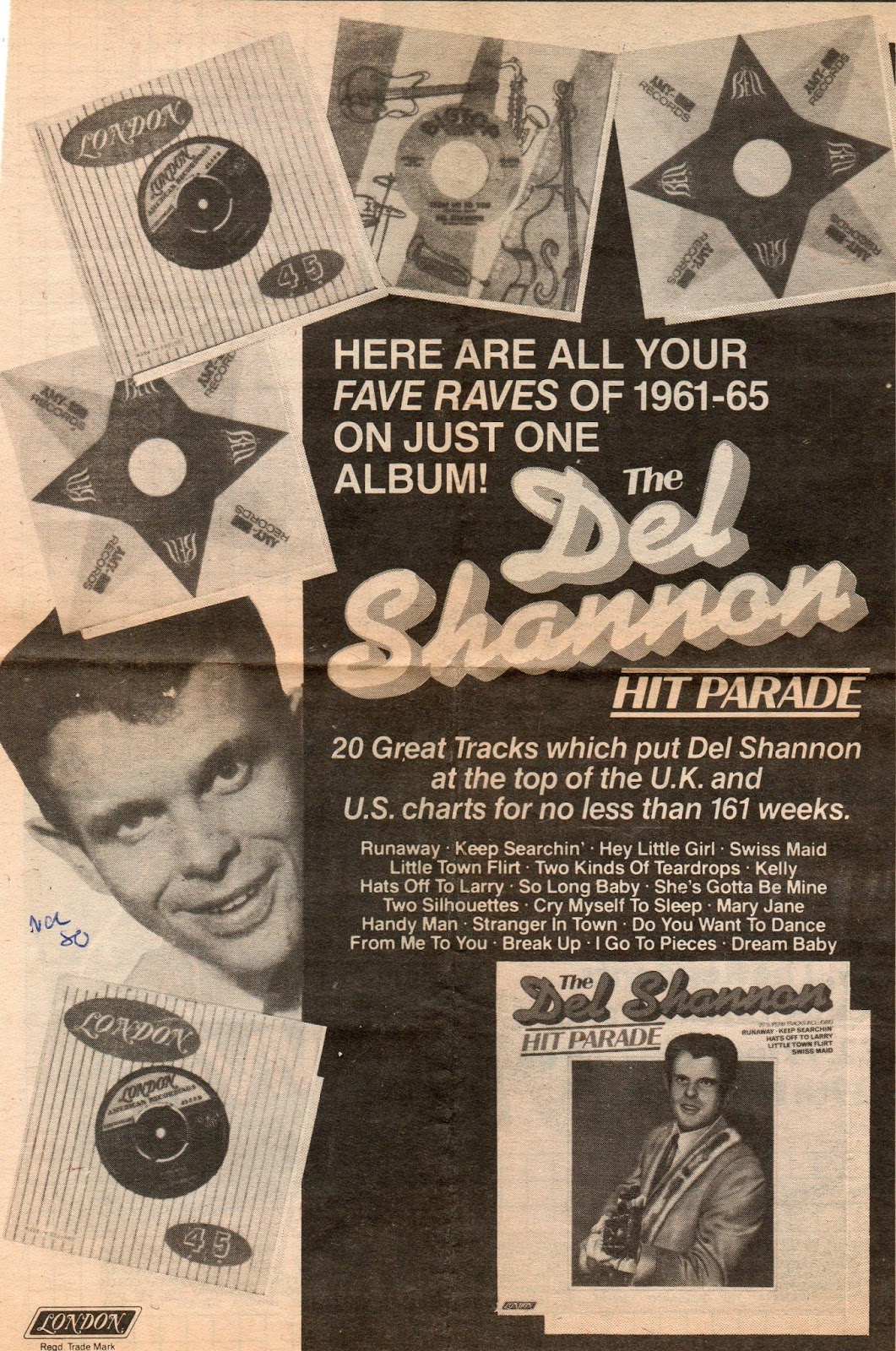
But if the ‘Swinging’ 1960s is often seen as a time of limitless freedoms, for the music industry it also happened within strict monopolistic restrictions. There was no ‘Indie’ label sector. Record marketing – and the advertising-space that was life-blood to the press, came largely from two monolithic companies, and their subsidiaries. When the Beatles failed their Decca audition, their only realistic alternative is to go to EMI. EMI had Columbia (Cliff Richard, The Shadows, Helen Shapiro) and Parlophone (Adam Faith, The Beatles, Billy J Kramer With The Dakotas). While Decca (Billy Fury, The Rolling Stones, Smallfaces), with RCA (Elvis), also valuably has the black-&-silver London label which leases titles from small American companies and was the first to issue much R&B and Spector sides, as well as Little Richard and Del Shannon. There was Pye (Kenny Ball, Searchers, Kinks). There was Oriole and Top Rank. Later there was Island (Traffic, and early Reggae) and Major-Minor (who famously over-buy ‘NME’ space to over-promote David McWilliams).

And even within those controlling factors there is writer-production control-freakery. Mickie Most (Animals, Herman’s Hermits, Donovan) and Howard & Blaikley (Dave Dee Dozy Beaky Mick & Tich, Herd) dominating release schedules (as Chinn-Chapman would do the seventies, or Stock-Aitken-Waterman for the eighties). While – aside from their obvious Beatles content, Lennon-McCartney’s writing-sponsorship for other acts (with Billy J Kramer, Peter & Gordon, the Fourmost, Cilla Black) equalled that of American teams Leiber-Stoller or Goffin-King. An example soon followed by Jagger-Richard (Chris Farlowe, Marianne Faithful, Mighty Avengers, and Andrew Loog Oldham’s ‘Immediate’ project).


Similarly, despite their apparent rivalry, both top music titles eventually found themselves emerging from the same publisher. Maurice Kinn sold ‘New Musical Express’ to publisher ‘George Newnes Ltd’ (later a part of IPC) in early 1964, shifting the offices from Denmark Street to Long Acre, then to 112 Strand. Later, realising that the archival-wealth of history back-catalogued in all that IPC history had a more marketable potential than it had foreseeable future, ‘NME’ launched a series of ‘Originals’, plundering their cuttings files to collect a highly-collectible ‘PUNK’ anthology, one on the Beatles, another on Nirvana, U2, and a ‘Madchester’ memorabilia special. While its eleventh compilation issue centres simply on ‘The Sixties’, which was surely the Music Press’ finest hour – wasn’t it?


Perhaps, but it’s salutary to realise how engagingly amateurish that decade was reporting itself live. The Beatles single “Hard Day’s Night” is ‘a bouncy finger-snapper with a pounding beat and catchy melody’ (3 July 1964). The Monkees “I’m A Believer” is ‘a wonderfully gay and happy disc, a compulsive toe-tapper with handclaps’ (31 December 1966). While Procul Harum’s “A Whiter Shade Of Pale” is ‘a gripping blues-tinged ballad warbled in heartfelt style by the soloist’ (13 May 1967). At this time – as Beatles and Byrds pressman Derek Taylor points out, there was only ‘the Pop press, there was no ‘Rock’ then, (and it) was far less languid than today, not at all knowing or hard. Fan magazines were uncritical journals – heart-warming precursors to ‘Hello’.’ Witness, ‘Disc’ interviewing Syd Barrett’s Pink Floyd as ‘The Kinky Pinkies’!, while Penny Reel reviewed the Rolling Stones Hyde Park concert. Caroline Boucher – who also wrote for ‘Disc & Music Echo’ at their Fleet Street office ‘located next to the ‘Golden Egg’, recalls how ‘many of our interviews were conducted over a greasy platter of eggs and bacon – Led Zeppelin, Genesis, Ten Years After and King Crimson all ate at the Egg in their smelly afghan jackets’ (to the ‘Observer Music Monthly’ November 2004).

But Pop was big. As a young comedian appearing on a 1966 screening of ITV’s peak-time ‘Sunday Night At The London Palladium’, Ted Rodgers’ act was built around references to chart newcomers the Troggs (with ‘Wild Thing, you make my head ring’ and ‘I want to send my wife to Whipsnade Zoo’ to the tune of “With A Girl Like You”) and the Monkees “I’m A Believer” – ‘what’s at no.1 now, religious monkeys?’ A routine that relied on the across-the-board ‘Family’ audience’s close familiarity with the latest chart-moves. Something impossible to get away with now – below, arguably Robbie Williams and Kylie Minogue. And while Rock was turning TV, radio – and the world, upside-down, for the compulsive Pop-Picker at the newsagent’s counter there were other false-starts and also-rans. ‘Rave’, a glossy colour Mod’s monthly. ‘Pop Weekly’ with glossy pics – even though they still appeared in monochrome, launched by publisher Albert Hand encouraged by his success with ‘Elvis Monthly’. And strangest of them all, ‘Record Songbook’ from McClennon Publications, which – for a mere nine-pence an issue, merely featured columns of sing-along song-lyrics...


‘DON’T KNOCK THE ROCK…’ 
“Psychedelic. I know it’s hard, but make a note of that 
word because it’s going to be scattered round the In-Clubs 
like punches at an Irish wedding…” 
 (‘Melody Maker’ 22 October 1966) 

The Music Press. Me, I got seriously addicted to the extent that it terminally wrecked whatever academic potential I may once have possessed. Buying as much pop-journalism as my vinyl-habit could afford, comparing charts, memorising positions and matrix numbers, compiling my own listings, devouring it all in massive gluttony when I should be studying French grammar or logarithms. Then writing my own fanzine… Does it matter? Does any of it really matter? Well yes. For me, yes. And for all those others down since 1926 to whom music is not just important, but vital. Bob Dylan writes about his own adolescence (in ‘Chronicles’, 2004), ‘when something was wrong, the radio could lay hands on you and you’d be alright.’ Me too. While the act of reading Musician’s opinions on what they do, why and how they achieve it, even when translated through the distorting lens of not-always impartial nicotine-stained hacks, helps draw you into an extended community beyond your immediate orbit, informs your opinions, fine-adjusts your taste, guides your purchasing and listening strategies. They provide the interface between worlds, your mundane life, and the exotic realm of music. Of course, the feuds are fun too. The ‘I can be more obscure than-thou-ism’. Even the ads provide style-indicators, their art setting the tone.

But are record-reviews and critical opinion important to the musicians themselves? To Graham Nash, ‘it’s very difficult to listen to somebody talk about what it is that we do, if they don’t do it themselves. If they don’t understand what that process of creation is, and that process of expression when songwriters are singing brand new songs that they’ve just created – and you get somebody, y’know, criticising you! I’m not quite sure. I mean, if it was Bob Dylan up there – y’know, I’d go ‘OK, you’ve got the right to criticise! He knows the ups and downs. He knows the way around this tree. But to someone who might be an insurance salesman who writes this at night, they’re not important to us. It’s nice to be appreciated, of course it is. But… y’know, it’s OK. It’s just part of the process that we have to deal with.’

Journalism is the first draft of history. I recall a journalist observing in print how the Beatles first singles all centre on direct me/you terminology – “Love Me Do”, “PS I Love You”, “Please Please Me”, “I’ll Get You”, “From Me To You”. Later, in a radio interview, Paul McCartney drew attention to the same thing, as though it had been a deliberately contrived strategy all along. He’d obviously read the same journalist. Perhaps he’d even begun to believe he’d thought of it first?

Sure, the Music Press is essentially parasitic. It feeds off changes in the music itself. And somewhere around the end of the 1960s, music itself was changing massively. Advance tremors could be traced back to Al Aronowitz’s pioneering work with Dylan and the Beatles, separately – and together. Until Jann Wenner’s ‘Rolling Stone’ (first issue dated 7 November 1967) adopts that more serious in-depth style of journalism. Prior to its launch there was much talk around the West-coast alternative-press community mooting a more counter-culture orientated music-journal. Chet Helms – discoverer of Janis Joplin and promoter of the radical Family Dogg concerts (who died 27 June 2005) suggested ‘Straight Arrow’. But while a series of collective meetings discuss the project ethics, Jann Wenner rushed his own title into print, taking the ‘Straight Arrow’ imprint. It encouraged epic analytical coverage of Bob Dylan and the Grateful Dead, all illuminated by Annie Leibowitz’ most artfully iconic photo-images of the Stones on tour, while reviewing albums as though they’re sacred artefacts to be deconstructed at previously unimaginable length.


All this, alongside the gonzo excesses of the iconic Hunter S Thompson, who re-made the writer into as much drug-munching outlaw protagonist as cool detached observer. He shifts the focal point. His own bad-craziness is always central to the story, viewing his subjects through the distorting lens of his own distinctive extremism, speed-writing ‘we were somewhere around Barstow on the edge of the desert when the drugs began to take hold’ in his meisterwork ‘Fear And Loathing In Las Vegas’, first published by ‘Rolling Stone’ in 1971. He adds the final punctuation by shooting himself in the head 20 February 2005.

Hunter J is the origin of the species of ‘new journalism’, hard-drinking, hard-writing, drug-loving, gun-loving gonzo. Such attitudes initially feed back into its UK counterparts only through the maverick ‘underground press’. Until, with the collapse of those ‘alternative’ titles the mainstream benefits from a huge influx of newly motivated acerbic renegade journalists including Nick Kent, Mick Farren (an SF novelist as well as being a member of the Deviants ‘underground’ group), and Charles Shaar Murray. They’ve all learned their craft with the more irreverent, more radically earnest ‘It (International Times)’, ‘Frendz’, ‘Zig-Zag’ or ‘Dark Star’. An eighteen-year-old Charles Shaar Murray had even worked on the notorious ‘Oz’ ‘Skool-Kids’ issue – in ‘frizzy hair and dashing kerchief’ according to Richard Neville (before becoming an ‘NME’ regular from 1972-1986, reviewing Bob Marley as early as the Lyceum 26 July 1975).


And if there ever was a ‘golden age’ of Rock writing, this is probably its finest hour. In the wake of ‘Rolling Stone’, fired-up on ‘Gonzo’-journalism and Lester Bangs, all stringers become stars in their own minds. They begin considering their own recreational drug-intake, savage opinions and decadent life-styles more profoundly significant than the cretinous one-chord one-hit glitter-punk bands they have the inconvenient necessity of having to write about.

Hasn’t ‘The Times’ conceded Paul McCartney’s melodies have Schubert qualities? Aren’t softback publishers rushing out articulate rationalisations of Rock music’s importance as social signifiers, George Melly legitimising its ‘Revolt Into Style’ (1970), poet-artist Jeff Nuttall crafting its protest-manifesto in ‘Bomb Culture’ (1968), Richard Neville adding his own anarchist Rock-based philosophy in ‘Playpower’ (1970)? While for the first time serious Rock histories – as distinct from fan-hagiographies, are being written, drawing conclusions, establishing critiques, analysing, arguing and discussing its finer points.


Unfortunately for journalism, at this point, just as its voice is breaking, just as its vocabulary is progressing beyond ‘A-Wop-Bop-A-Luma-A-Bop-Bop-Bop’, leapfrogging its puberty into a more mature reflective phase, the music itself is taking a dive. All the real progressions have already been made – “Please Please Me” to “Strawberry Fields Forever”, “Surfin USA” to “Good Vibrations”, “I Can’t Explain” to ‘Quadraphenia’ (1973). All the classic albums have been recorded – ‘Revolver’ (1966), ‘Pet Sounds’ (1966), ‘Forever Changes’ (1967), ‘Blonde On Blonde’ (1966), ‘Exile On Main Street’ (1972). What’s left is a truckload of pretentious C-list also-rans trading inspiration for tedious triple concept-albums. Cameron Crowe’s soft-centred 2000 movie ‘Almost Famous’ portrays young wannabe-journo Patrick Fugit hung up on sacred ‘Rolling Stone’ and ‘Creem’ texts pursuing interview-fodder in the vacuous new mid-American stadium-Rock in scenes both achingly shallow, and unerringly accurate.

‘The future?’ asks ‘Melody Maker’ editor Ray Coleman (in 1973), ‘we’re waiting for you to write it.’ Meanwhile, there’s Chris Welch, Chris Charlesworth and Colin Irwin, with future-Peace Activist Karl Dallas covering the Folk scene. Richard Williams who goes on to front ‘Old Grey Whistle Test’, writes a book on Phil Spector, and then becomes a respected sports writer. Through decades of change ‘MM’ has continued to nudge from a jazz-based agenda, celebrating Georgie Fame’s commercial breakthrough from the point of view of his album collaborations with the Harry South and Count Basie bands, welcoming Blood Sweat & Tears and Chicago (originally Chicago Transit Authority) as symptoms of newer jazzier directions largely through their big-band use of an extended horn-augmentation.


Yet if it seems – to Pop fans, that their jazz-specific pages consist of wrinkled old black men dying, it also helps soft-land the emerging careers of audaciously dexterous British musicians into their reader’s consciousness, by familiarising names and faces into accessibility, documenting the frenetic activities of Mike Westbrook, John Surman, Alan Skidmore, Norma Winstone, Barbara Thompson, Jon Hiseman, Ian Carr and beyond. So there’s a recognition-factor when ‘Radio Times’ lists them for its valuable ‘Live At Ronnie Scotts’ TV-slot. Here, of course, image can propel further in-roads. Surman’s fringe. American Gary Burton’s evolution from Stan Getz’ bespectacled side-geek to a smooth long-haired beads-wearer who slips Dylan’s “I Want You” into his set-list. The Modern Jazz Quartet (MJQ) even record for Apple. Miles Davis uses psychedelic sleeve-art for his free-electric ‘Bitches Brew’ (1970), which also promotes the careers of Wayne Shorter, Chick Corea, John McLaughlin, and ‘fusion’ into the increasingly blurred jazz-rock mix – or ‘elastic rock’ as Ian Carr re-brands it for his Nucleus project.

For with the 1970s, Pop Music is in a peculiar twentieth-century schizophrenic state. The massive adult expansion of album sales gets matched to the largest-ever teeny-bopper disposable-income, combining with coast-to-coast Radio One airtime dominance – unsullied by on-shore commercial opposition, to boost singles sales to an all-time high. And they respond by becoming both trashier and more junkable. Your pocket-money buys you a Pop single a week. You can pile seven or eight vinyl 45’s onto the Dansette… but play the latest Sweet three times, and it’s a Frisbee. ‘It’s almost like,’ in Paul Morley’s neat equation, ‘the criticism ran faster that the music.’ So, for the first time, journalists have to create their own aesthetic, mythologizing artists closer to what they perceive as the ‘correct’ party-line, and more responsive to their own self-image.


Hence the new celebrity of New York Dolls, MC5, Iggy Pop, Velvet Underground… Lou Reed, then Patti Smith, Flamin Groovies, and the immaculate Television. While the music press oscillates, seeking the edge. ‘Let It Rock’ survives from 1972 to 1976. Then the fortnightly ‘Street Life’ comes… and goes, collapsing in July 1976 after only sixteen issues, leaving memories of exclusive spreads on Roxy Music or Cockney Rebel. It bequeaths journalist Angus MacKinnon to ‘NME’, which by now has elevated Maurice Kinn to Executive Directorship, Nick Logan inheriting the editor chair (from 1973). And, operating out of a trendy new Carnaby Street address, it’s busy bribing sales with free cover-mounted flexi-discs that crease and ruck into instant un-playability, the Faces, ELP, Alice Cooper. Even Monty Python, until eventually ‘NME’ cover-mounts a cassette breaking new band Oasis with a free “Rock ‘n’ Roll Star”...

And all the while, ‘Inkies’ – why inkies? Check out these issues from the mid-1970s. Any title – they’re all the same. Dense heavy headlines. Block-photos with contrasting areas bleached to coke-white flesh-tones against sheer black shadow – hair, guitar-body, framing stage and amp-towers. Ad-pages monochroming album artwork set into solid tone. And all printed with inks that never completely bond into the paper’s absorbency, so coming off in messy smudges on your fingers.


But first, with the arrival of Punk, ‘NME’ finds its true voice. A movement almost custom-made to those preconceived journalistic blueprints, its arrival predicted by Mick Farren’s prophetic essay ‘The Titanic Sails At Dawn’. Here at last is a generation of bands worth all that inspired invective. A ‘permanent revolution’. Again, the oldsters fear this angry youth as musically illiterate vandals. While the young, the fucked-up and the Damned despise the old as tedious Luddites. The Julie Burchill and Tony Parsons gunslinger duo of enfant terribles (1976-1979) invest its coverage with authentic attitude and spiky stabs of truth, while they recruit stringers from snotty cut ‘n’ paste fanzines (a deliberately shoddy made-for-pocket-money DIY ethic filched from Mark Perry’s ‘Sniffin’ Glue’, ‘Search & Destroy’, ‘Toxic Graffiti’), while ‘MM’ continues to champion the more ‘musicianly’ musicians, down-shifting too late and less convincingly. It never quite recovers, although oddly – if it had still been around, it would’ve loved the Jamie Cullum, Joss Stone, Clare Teal, Amy Winehouse, Diana Krall, trend.

Meanwhile, as ‘Disc & Music Echo’ slid into limbo soon after the late Penny Valentine writes-up the career of recent-arrival Elton John, ‘Sounds’ was in the ascendency. Strap-lined ‘Music Is The Message’, it had begun uncertainly at the turn of the decade, with cover-stories framing counter-culture hairies, such as Family (27 February 1971), with the Moodyblues, and Robert Fripp in the ‘Talk-In’ column. Until it also found its metier with Punk – then Metal, the Mod Revival (by Gary Bushell in March 1979) and the contrived skinhead Oi – launching Jon Savage, Jane ‘Suck’ Jackman, and the iconoclastic persona of Britain’s ‘most hated loudmouth’ Gary Bushell. ‘Sounds’ survives from October 1970 through to 26 January 1991, while accidentally launching ‘Kerrang!’ from a one-off 6 June 1981 supplement. Simultaneously, in America there was the double-decade longevity of ‘Maximum Rock & Roll’, plus ‘Creem’ ushering in the next revolution when a twelve-year-old Kurt Cobain fixes on a 1979 photo of the Sex Pistols and realises ‘I wanted to be in a Punk band before I had even heard any Punk music.’ In a scene from ‘The Great Rock ‘n’ Roll Swindle’ (1980) movie, the first paper they burn is ‘NME’ with a Sex Pistols cover, the last is ‘Rolling Stone’, to neatly bookend their career.


‘Cut’ is published from Edinburgh from October 1986. While in Dublin, there’s the start of the unique Eire-centric success-story that is ‘Hot Press’

Grunge, Indie, Shoe-Gazing, New Romantics… the first, and second Gulf War. From around 1983, there’s colour. At ‘NME’, editors, writers, and editorial policies change, with Nick Kent and Roy Carr filing fine copy, Paulo Hewitt forging links with Paul Weller, Ian MacDonald compiling a three-part ‘Consumers Guide To 1984’, illuminated by Dutch photographer Anton Corbijn (especially U2), with editors Paul Morley (1976-1984, later of the ‘ZTT’ label), Neil Spencer (1978-1985), or David Quantick (1987-1993). Sometimes they get it all laughably wrong, but the music press is never less than loud, opinionated, impassioned. To Spencer his editorial regime is a time of ‘idealism, anger and artistic adventure. There was, for sure, a surfeit of earnest young men with George Orwell haircuts posing disconsolately in the shells of dead factories, one response to the ‘No Future’ we had been warned of by the Pistols’ (in ‘The Observer’ 3 July 2005). The period Simon Reynolds will retrospect in his ‘Rip It Up & Start Again: Postpunk 1978-1984’ (Faber, 2005), highlighting ‘Rock Against Racism’, the ‘Anti-Nazi League’ and the ‘Plutonium Blondes’ column.

As Pop-culture history comes and goes in its headlines and cover-stories. ‘Bowie Quits’ – or rather, Ziggy Stardust is retired (7 July 1973). The Sex Pistols Bill Grundy TV outrage ‘complete and unexpurgated’ (‘100 seconds That P*nk-Rocked Fleet Street’ – 11 December 1976). ‘Elvis: Remember Him THIS Way’ (27 August 1977). ‘Lennon Dead’ (13 December 1980). In September 1980 a ‘Sounds’ headline announces the coming of the ‘New Romantics’ while reporting Steve Strange’s Blitz Club. A homo-erotic ‘Frankie Goes To Hollywood: Wild, Wet & Willing’ (November 1983). Then there’s the long-drawn-out love affair with Morrissey...


What music critics can never appreciate is that Pop singles are impulse purchases. Like candy-bars at the check-out. People buy them not because they’re acknowledging their significance in the evolution of the art-form, but because it’s randomly snagged at their attention, because he’s the pretty guy on the TV-soap, or it’s the catchy hook they heard on the radio when they got up this morning, or because it was playing at the club where they met that special person. Critics can never reconcile the essential irrationality of Englebert Humperdinck preventing “Strawberry Fields Forever” reaching no.1, or Joe Dolce stopping Ultravox’s “Vienna” – or Crazy Frog doing the same to Coldplay. A musical nonsense, of course. Jim Reeves, Ken Dodd and Benny Hill get to no.1, while the Who never do. This is not a quantifiable science.

Bob Geldof and Chrissie Hynde had already tried the journo-thing for size. Neil Tennant worked on ‘Smash Hits’. Music writer Cliff Jones formed art-Indie band Gay Dad, whose biggest success came when Mitsubishi used their “Joy” for a TV-ad. Morrissey began with a published letter (about glam-duo Sparks) in a 1974 ‘NME’ ‘Gasbag’ column, then filed gig reviews for both ‘NME’ and ‘Record Mirror’, before role-switching into a Smiths’ column-inch domination that endured clear through to the 1 August 1987 shock ‘Morrissey/Marr: The Severed Alliance’ split. But there are always new gods. Each ‘New Thang’, each ‘New/Newer Wave’ ousts its predecessor, but barely has time to settle in when another one comes snapping at its suddenly very unfashionable heels. Kevin Cummins’ iconic photo of the Stone Roses ‘Jackson Pollock-ed’ in deluges of vivid paint (November 1989). And the curious incident of May 1991, when news editor Steve Lamacq interviews the Manic Street Preachers as Richey Edwards uses a razor-blade to carve ‘4-Real’ into his forearm. And ‘Kurt Cobain RIP’ (April 1994). Then Oasis. From their first sighting (7 August 1993) to their first cover-story (‘Totally Cool: What The World Is Waiting For’ – 4 June 1994), to ‘Blur vs Oasis: The Big Chart Showdown’ (12 August 1995). But throughout it all, circulations remain high, with the weekly inkies pivotal to the changes.

‘What a long strange trip it’s been’ says Jerry Garcia. ‘A mighty long way down Rock ‘n’ Roll, from the Liverpool Docks to the Hollywood Bowl’ adds Ian Hunter. All the way – in fact, from that January 1926 launch of ‘Melody Maker’. While Leonard Feather once speculated on ‘that distant year 2000’, and what it holds for weekly music publishing. From such a dominant hold on the pulse of the times, he couldn’t possibly have foreseen the virtual extinction of the weekly music press, and the total extinction of ‘Melody Maker’. By 2000 the once-proud title was reduced to a glossy all-colour A4 ‘Smash Hits’ format complete with pin-up section, before it was devoured in a merger with ‘New Musical Express’ – largely to acquire its still-respected musician’s classified-ads section. Then – finally, ‘NME’ itself.


So where did it all go wrong? Well, first the lower end of the market gets cut away by the glossy fun-trashy ‘Smash Hits’ (launched by ex-‘NME’ editor Nick Logan, who then does the same for ‘The Face’ – announced as ‘Rock’s Final Frontier’), indicating the celebrity-gossip direction it will all go in. ‘NME’s James Brown (1987-1992) quits to found Lads-mag ‘Loaded’, then life-style mini-mag ‘Jack’... while Neil Spencer eventually goes on to become an astrologer, and ‘I’m A Celebrity Get Me Out Of Here’ commentator. In the 1980s, a massive growth in page-numbers, more colour, and diversification from a pure music policy into movies, comic-books, TV, politics, novels, life-style, even a graphic ‘Youth Suicide’ special (8 November 1986)… and soon, computer games too. Whatever. It’s a haemorrhage of cult-exclusivity not always repaid in circulation hoist.

While it’s around this time that the daily tabloids make two magic circulation discoveries. The page three nipple… and an audience for celebrity Pop. The Brit-Pop wars are fought out as much through the pages of the ‘Sun’ (with its ‘Bizarre’ pages) or the ‘Mirror’ (through its ‘3am Girls’) as they are through the specialist music press. Isn’t Rock music supposed to be something you grow out of? Apparently not. It proves remarkably resilient, reinventing itself for each new audience, while never quite shaking off its first adherents. You can’t really summon up the required parental disapproval for Oasis when you’ve grown up through Beatlemania. You can’t condemn Acid House if you’ve done LSD to ‘Dark Side Of The Moon’ (1973). And what has Marilyn Manson’s manufactured outrage to offer when you’ve already bought into Alice Cooper or ‘Aladdin Sane’ (1973)? And the mainstream dailies dutifully both tap into it, and lap up each prurient detail. Music that once fed on its cult exclusivity, is now everywhere (the launch of MTV on 1 August 1981 made Pop more visual than ever). Even the broadsheets get in on the cerebral end of the act with critical coverage of the more ‘intelligent’ mature demographics, Neil Young, Leonard Cohen… Radiohead, and all points beyond. The ‘Observer’ even tucks-in its own ‘Music Monthly’ supplement. While the record companies re-exert absolute control, becoming increasingly adept at eating and regurgitating non-conformity into product, a music industry ruthlessly expert in appropriating and marketing anything remotely challenging and authentic, neutralising it into commodity.


 ‘IN THE YEAR 2525…’ 
‘We’ll be here, if you’ll be there, in the year 2026…’ 
 (Ray Coleman in ‘Melody Maker’ February 1976) 

Forever came today. Suddenly, the future those press pundits yakked on about for so long has started beaming down. And nothing – outside perhaps Mr Patel’s corner shop, works quite like it used to. Nor will it, ever again. The internet is continually undermining the structures that for the past fifty years have fostered charts and empowered major labels. The concept of having a ‘hit’ is becoming increasingly fragmented and difficult to assess. Identifying a track as either single or album-track, ‘A’-side or ‘B’-side becomes pointless and arbitrary. Fat monthly glossies continue to gobble-up ground lost by the weeklies. Some of them even get their own dedicated digi-TV channels. 

Former-‘Oz’ wunderkind Felix Dennis first hits American pay-dirt with his ‘Blender’. Its success forces three-decade-old counter-culture bible ‘Rolling Stone’ to appoint British editor Ed Needham (in 2002) with a remit to refocus its appeal downwards. Dumbing Down? – possibly. Shedding older Deadhead grizzlies in favour of a more airbrushed populist ‘Justin Timberlake: His Life, His Loves, His Music’ special editions? – certainly. But it’s still capable of cultural bite. Its June 2010 interview ‘The Runaway General’ by Michael Hastings directly resulted in the General in question – Stanley McChrystal, being fired by President Obama. Felix Dennis’ ‘Maxim’ stable is soon eying up European markets too. Meanwhile, 124-page glossy rock monthly ‘Bullit’, an independent launched in November 2003 under Steve Janes’ editorial guidance, leads on U2, ‘The End Of The Beautiful Ones: The Last-Ever Suede Interview’, plus movie-pages including a high-prestige Christopher Lee interview. It targets for the more mature reader perceived to be disillusioned by ‘Q’s equally down-dumbing shot for a more Britney Spears-friendly audience.


But these are high-risk strategies. Start-up publisher Development Hell launches ‘Word’ (no.1 dated March 2003 with Nick Cave on the cover), an ambitiously serious music mag ‘hand-made’ by ‘Q’-founder Mark Ellen (‘…and four of his friends’), although it’s soon rumoured to be falling short of its target 20,000 break-even circulation point. Emap’s ‘Kingsize’ – aimed at Nu-metal skatepunks, lasts just six months before wiping-out without trace, alongside the bands it covered. Future Publishing’s ‘Bang’, edited by Dan Silver, gets killed off in December 2003 after its sixth and final issue managed to reveal those ‘Ten albums you have to hear before the end of the year’. Dance is also prone to struggling, IPC’s ‘Muzik’ closes in July 2003, Ministry of Sound’s eponymous monthly shuts down when its sales dive below 50,000, while ‘Trash’ endures as long as a single issue… Elsewhere, cooler-than-thou style-mag ‘The Face’ was almost saved from extinction by S-Club 7 mastermind Simon Fuller whose rescue-talks with EMAP fail to prevent its demise. While ‘i-D’ not only survives, but celebrates its Twenty-Fifth anniversary in early 2005. Started up as a quarterly north London fanzine, it defined Eighties life-style and fashionista culture, becoming sufficiently prosperous for founder Terry Jones to buy back full control of the title. It also acted as a launch-pad for – among others, ‘GQ’s editor Dylan Jones. Dylan takes James Brown’s ‘GQ’ editorial chair in 1999, adding the likes of Boris Johnson, Piers Morgan, Tony Parsons and AA Gill to its journalistic contributor-roster.


Through the nineties, with ‘NME’ under editor Conor McNicholas, it was still very much a thing for white male obsessives. As the music press has always been. Only more so. Retreating ever-further into niche, even while celebratorily branding itself ‘Fifty Years Of Sex Drugs & Rock ‘n’ Roll’. There’s the same hormonal binge-excess of stimulants and bad behaviour, although it’s less about evolution, invention, or progression, as it is about career-choice, selecting the correct elision from long-established and predictably well-thumbed approved back-catalogues. Little black music. With the American music scene dominated by Urban and Rap – maybe due to demographic shifts, maybe not, but undeniable – the UK was still entranced by its longer-term crush on guitar-bands, the gulf between the two had seldom seemed wider in living memory. No jazz or Folk. Or women, other than for decorative purposes. All memory longer than the most recently contrived guitar-band wave – all history, has been hived off to ‘Mojo’.

‘NME’ routinely dismiss everyone over thirty until, when forced into the review-corner, have to concede the Stones made ‘the greatest Rock ‘n’ roll music of all time’ (12 March 2005). After McNicholas, another rebranding, in April 2010, saw Krissi Murison as the venerable old organ’s first female editor, with a revamped style reminiscent of the simultaneously demised ‘Observer Music Monthly’, slick and more grown-up. There was a choice of ten different covers, a new logo, and some innovatory editorial touches. Fewer in-jokes, less hype, she even put Simon Cowell on the cover! And, a long way from any resemblance to its origins, it continued to be a fixture on the newsagents display.


Even as downloading erodes the sales-figures of major labels (Apple launched its iTunes stores 28 April 2003 to combat online piracy), there’s now more recorded music simultaneously available than at any other time in human history. While every Shopping Mall Megastore recently covered everything from Blue Note Jazz, 1960s Acid-Punk, World Music from Mali and Ecuador, Dub to Doo-Wop, that spread of taste has shifted to online retailers. The Velvet Underground, Love and MC5 now sell more than they ever did during their initial releases. And they’re all competing for the same ears and pockets as the latest ‘X-Factor’ winners.

There’s always been music, while music has been dominated by record labels, and by the business-model of trading songs as pieces of ‘plastic ware’ for little over half a century. A remarkable longevity for any business-model to dominate any market. ‘I think records were just a little bubble through time and those who made a living from them for a while were lucky’ says Brian Eno (‘The Observer’ 17 January 2010). ‘There is no reason why anyone should have made so much money from selling records except that everything was right for this period of time.’ People have been making music for ten-thousand years, probably longer. Record labels have been around for mere decades. Things will change. They always do. Music will survive. Major labels may not. While reading itself is being gradually eroded by a kind of inevitable osmosis – more splash-pics, less text, bullet-point press reviews, movies, TV, DVD and the internet, iPods, web-blogs, plus the old-fashioned word of mouth. Where music publishing takes it all from here is anyone’s guess…

The Music Press is in a state of crisis… apparently. Same as it ever was. Same as it ever was...


“MUSIC MUSIC MUSIC…!!!” 

‘Beat Instrumental’ glossy specialist monthly. Future soft-porn magnate Richard Desmond started out in publishing as advertising editor for ‘Beat Instrumental’. (October 1964, no.18) 1s/6d, Hank Marvin cover & column, win George Harrison’s guitar, player of the month: Keith Richard. (December 1965, no.32) 2/-, Buddy Holly, Stones recording in States. (February 1966, no.34) 2/-, Shadows cover, Ventures, Stevie Winwood. (November 1966) 2/6d, Keith Moon colour cover. (October 1969) The Return of Graham Bond, ‘Full Ahead For Blodwyn Pig’. (May 1970) 4/-, Frank Zappa, Hollies, Strawbs


‘Blues And Soul’ began as ‘Blues & Soul: International Music Review’ 5 August 1975 to 27th January 1976, then ‘New Weekly Blues & Soul’ 10 February to 16 March 1976, ‘Blues & Soul: Weekly Music Review’ 23 March to 24 August 1976, ‘Blues & Soul & Disco Music Review’ 7 September 1976 to 30 July 1984, then ‘Blues & Soul’ from 31 July 1984

‘Creem’ ‘America’s Only Rock ‘n’ Roll Magazine’, (no.1) 5 March 1969 to 1989

‘Dazed And Confused’ founded by London College of Printing students Jefferson Hack & Rankin Waddell in 1992, the first issue cover-yelled ‘This Is Not a Magazine’, smudgily, ‘this is not a conspiracy to force opinion into the subconscious of stylish young people. A synthetic leisure culture is developing – plastic people force-fed on canned entertainment and designer food. Are you ready to be Dazed & Confused?’ A 1995 issue added ‘If you can’t afford it, steal it’ above the barcode, resulting in a three-issue John Menzies ban and a threatened WH Smith expulsion. Despite being named after a Led Zeppelin title this independent publication is a fashion, culture and arts magazine (an early adapter to online digital format) championing new literary and photographic as well as music talent, from a 1998 issue guest-edited by Alexander McQueen, a 2004 ‘South Africa’ celebration with Bob Geldof, to Jake & Dinos Chapman 2011 cover-art protesting student fee increases, to a 2011 BoyoncĂ© cover. Has survived ‘Twenty Years Of Getting Away With It’


‘Disc’ edited by long-time Beatles’ follower and friend Ray Coleman. Launched as ‘Disc’ – no.1 (8th February 1958). (No.23, 12 July 1958) has Malcolm Vaughan cover, with Jerry Lee Lewis, Tommy Steele & Elvis stories. (No.159, 8 April 1961) has Shirelles cover, with Dean Martin, the Allisons & Guy Mitchell stories. From 5th December 1964 it continues as ‘Disc Weekly’. (22 May 1965) ‘Mr Send-Up’: Laurie Henshaw interviews Bob Dylan. (31 July 1965) Ringo talks about ‘Help’. (26 March 1966) ‘Why Does Mr Lennon Keep A Stone Frog’ by Ray Coleman. From 23rd April 1966 it incorporates ‘Music Echo’ and continues as ‘Disc and Music Echo’. (23 April 1966) first combined issue carries half-page NEMS notice confirming that Brian Epstein has dropped Tommy Quickly and the Rustiks. (7 May 1966) Crispian St Peters one-night stand in Cromer. (6 August 1966) Ray Coleman interviews George Harrison about Pirate Radio, ‘why don’t they make the BBC illegal as well – it doesn’t give the public the service it wants.’ (1 October 1966) ‘Disc & Music Echo’ 9d, The Who: Why Pop Art is now just OLD HAT!’, Dave Dee ‘when we admit our act is sexy, we don’t mean something revolting’, Dusty, Scott Walker. (25 November 1967) Long John Baldry, The Fool, Traffic, DJ Emperor Rosko. (20 January 1968) Monkee Peter cover, Peter Frampton, Grapefruit ad, Simon Dupree. (17 August 1968) Simon & Garfunkel, Jefferson Airplane, Idle Race, Sly & Family Stone. (5 November 1968) ‘Five Great Years of Dusty Springfield’. (7 December 1968) 1/- ‘Scaffold Blasted by Jonathan King’ cover, Beach Boys back on a smash tour, story and pictures’. (26 April 1969) ‘Herman Quits’, ‘Lennon Could Go Bald’. (26July 1969) ‘Congratulations on a hit, everybody’ – on the Plastic Ono Band’s “Give Peace A Chance”. (6 December 1969) Tremeloes, The Nice, John Peel. (25 December 1971) Marc Bolan Goes Solo, Paul Simon Talks About Split From Art Garfunkel, & Merry Xmas from Frank Zappa. It reverts to ‘Disc’ from 15th April 1972. And incorporated with ‘Record Mirror’ 30th August 1975

‘Downbeat’ (Chicago, US) January 1937 to December 1995 (Jazz)


‘Fabulous’ colour fan magazine. 1/- In ‘Hard Days Night’ the schoolgirls in the train-carriage are reading a copy. With photographers Fiona Adams, Bill Francis and David Steen. (18 January 1964) with Beatles cover, Tommy Quickly and Gerry Marsden pin-ups, and ‘This Is Emperor Epstein’ article. (8 February 1964) Richard Chamberlain cover, Trini Lopez, Everly Brothers. (15 February 1964) all-Beatles issue. (3 October 1964) ‘Shaking London Town’ issue with ‘Ready Steady Go!’ spread, and Vicki Wicham’s ‘Pop Guide To London’. (2 February 1965) 1/- ‘World’s Pop Stars In Colour Colour Colour’ ‘Nine King-Size Full Colour Pin-Ups’ Moody Blues, Billy Fury, Manfred Mann, Julie Grant. (14 August 1965) guest-editors ‘those gorgeous’ Kinks, with Goldie & The Gingerbreads, Who, Animals and Manfreds. (18 September 1965) Yardbirds fact-file. (30 July 1966) Hollies, Cathy McGowan, Paul Ryan centre-spread. (18 November 1967) Tony Blackburn cover, Peter Frampton, Kiki Dee. Became ‘Fab 208’ for 1968-1977 (19 March 1977) David Soul, Girls Will Be Boys feature

‘The Face’ no.1 dated May 1980, with Jerry Dammer cover ‘The Specials: 2-Much Pressure’, The Clash, Madness, Public Image, Dexy’s, plus Ian Dury on Elvis Presley. In 1981 designer Neville Brody used clashing and distorted typography to create vivid attention-grabbing spreads

‘Fan’ from October 1972 to December 1976

‘Fast Forward’ from 1 November 1989 to 29 August 1995 (girls’ magazine)

‘Fat Angel’ semi-pro fanzine launched Spring 1972 by Andy Childs, later of ‘ZigZag’ (no.7) 7p, Grateful Dead, Mad River, Commander Cody: Lost In The Ozone. (no.9) John Cale, Jerry Garcia. (no.10) 10p, Terry Reid, Medicine Head, Kaleidoscope. (no.11) Stooges, Sopwith Camel, Brinsley Schwarz. (no.12) Ritchie Havens, Jefferson Airplane. (no.13) Allman Brothers, Insect Trust, Paul Butterfield. (no.14) Andy Roberts, Glenn Phillips, Buzzy Linhart

‘The Fly’ launched in 1997 in Camden, to promote Barfly events. Went national two years later. First of the free ad-funded magazines ‘Celebrating The True Originals Of New Music’

‘Hot Press’ from 9 June 1977 (Irish music news)

‘Jazz News’ began November 1956 to 24 October 1963, ‘The Wednesday Jazz Weekly’, continued as ‘Jazz News & Review’ 7 November 1963 to December 1963 (21 March 1962) Kenny Ball Reaches To The Top Ten. (28 March 1962) Count Basie: Chairman Of The Board, Alexis Korner. (23 May 1962), 9d, Fletcher Henderson, Billie Poole, A Reader Answers The BBC. (5 September 1962) Sonny Criss: Jazzman In Paris, Steve Race. (12 September 1962) Sam Jones, Alexis Korner, Manfred Mann. (Vol.7 no.11, 14-20 March 1963) 1/- Festival Season 1963, Traditional, Modern, Mainstream, Rhythm & Blues, Fringe

‘Kerrang’ (no.1, June 1981) 50p with AC/DC cover and page-header ‘Sounds Heavy Metal Special’. (no.7, January 1982) Motorhead cover, (no.68, May 1985) Sisters Of Mercy, (no.473, December 1989) Nirvana, (no.490, April 1994) Kurt Cobain 1967-1994, (November 1996) Prodigy, (July 2008) Slipknot

‘Let It Rock’ runs from no.1 (October 1972) with Bowie, Burritos, Doors. (no.2, December 1972) Robert Calvert, George Harrison, Heinz. (no.5, February 1973) CSN&Y, Buddy Holly, Tim Buckley. (No.6, March 1973) reviews Stevie Wonder ‘Talking Book’, Traffic ‘Shoot-Out At The Fantasy Factory, Slade ‘Slayed’, Moody Blues ‘Seventh Sojourn’. (no.7, April 1973) Chuck Berry, Argent, JJ Cale. (no.10, July 1973) Dr John, Hawkwind, Roy Buchanan. (no.11, August 1973) Beach Boys, Andy Bown, Carole King. (no.18, March 1974) Beatles, Bonzo Dog Doo Dah Band, Grateful Dead, Sandy Denny. Continues until no.35 (December 1975)


‘Melody Maker’ began January 1926 with various subtitles (including ‘Melody Maker & British Metronome’). (10 April 1960) ‘Jack Good Back With A – WHAM!’ plus Sister Rosetta. (24 September 1960) ‘Quincy Jones Talks to MM’, plus Connie Francis, the Shadows and Duke Ellington. (7 July 1962) ‘Round The Clubs’ page paragraph ‘The Rollin’ Stones and the new Long John Baldry Blues Band will play the rhythm-and-blues session at the Marquee, London, on July 12’. (8 May 1965) ‘Dylan Digs Donovan’. (24 September 1966) Georgie (Fame) Snuffs Flames, Jim Reeves, Roger Daltrey. (27 March 1971) Syd Barrett by Mike Watts. Final issue dated 20 December 2000

‘Music Echo’ began in Liverpool by Bill Harry as ‘Mersey Beat’– with a no.1 print-run of 5,000 dated 6th July 1961. After Brian Epstein became share-owner it became ‘Music Echo & Mersey Beat’ from 6 March to 7 August 1965, then as ‘Music Echo’ 14 August 1965 to 16 April 1966 (12 February 1966, ‘Win Jimmy Savile’s Bicycle’), until it was incorporated with ‘Disc’ (23 April 1966)

‘Music Week’ began as ‘The Record Retailer & Music Industry News’ from 10 March 1960 to 26 December 1970, then as ‘Record & Tape Retailer’ from 9 January 1971 to 11 March 1972, then as ‘Music Week’ from 18 March 1972 on (subtitled ‘Music & Video Week’ from 17 January 1981 to 27 August 1983)

‘NJF Newsletter’ (official monthly of the National Jazz Federation’) from January 1960 to February 1961


‘New Musical Express’ began as ‘Accordion Times & Musical Express’ 4 October 1946 to 30 January 1948 (nos. 1-69). Continues as ‘Musical Express’ 6 February 1948 to 22 February 1952 (nos. 70-268). Then relaunched as ‘New Musical Express’ 7 March 1952 (no.269) by London music promoter Maurice Kinn. Editor: Ray Sonin. 16-pages, cover photo-spread includes Ray Ellington with the Goons, bandleader Ivy Benson boarding the Dusseldorf plane, The Keynotes with Johnny Johnston… and Big Bill Broonzy, inside Ted Heath, ‘Britain To Have Commercial Radio!’ news, Earl Hines, Johnny Dankworth record reviewer, Jack Bentley radio reviews, Roger Dee on TV, Humphrey Lyttelton, US Singles chart Johnny Ray Cry’ no.1, UK Sheet Music chart, ‘The Alley Cat’ gossip-column. (14 November 1952) first singles chart, “Here In My Heart” by Al Martino is no.1. (13 September 1958) with “When” by Kalin Twins at no.1, Cliff Richard makes his chart debut with “Move It’ at no.29. (12 August 1960) ‘Girls Who Give Lads Quivers Down the Membranes Inspired My Hit’ says Johnny Kidd. (5 November 1960) Elvis Presley’s “It’s Now Or Never” enters at no.1. (27 October 1962) with “Telstar” by the Tornados at no.1, The Beatles make their chart debut at no.27 with “Love Me Do”. (26 March 1965) Keith Altham ‘A Kink A Week’, Sue Mautner visits ‘Brian Jones New Pad’ and photos of ‘Ready Steady Go Motown Special’. (April 1966) circulation peaks at 230,000. (25 December 1976) with “When A Child Is Born” by Johnny Mathis at no.1, Sex Pistols chart debut with “Anarchy In The UK” at no.27. (1987-1990) editor Alan Lewis. (18 November 1989) ‘Never Mind The Pollocks’ Stone Roses paint-cover photo by Kevin Cummins. (January 1994) launches ‘The Brits’ awards, Suede win Best Band. (1996) launch of online www.NME.com (2002) following gradual shift ‘NME’ drops newsprint for glossy format. (28 November 2007) Morrissey ‘racist’ interview by Tim Jonze – ‘the gates of England are flooded, the country’s been thrown away’, litigation ensued and continued. Editor was Conor McNicholas. (September 2009) first female editor, 28-year-old Krissi Murison. (December 2009 Xmas Double issue) ‘The Grinch Speaks’ Simon Cowell interview. (4 April 2010) relaunch with Rihanna cover, circulation around 27,650. (29 September 2012) 60th Anniversary Special includes reproduction of the first issue. With sales falling to 15,000 from 18 September 2015 it becomes a free give-away with editor Mike Williams. First free issue has Rihanna cover. (23 October 2015) Sam Smith ‘James Bond’-theme cover, TV Hollyoaks at Twenty feature, films, books, games, Joanna Newsom CD review. (4 December 2015) Coldplay cover, Adele ‘25’ data, Katherine Ryan ‘being female is a chronic illness’, Album of the year: Grimes ‘Art Angels’. (11 December 2015) ‘Music-Film-Style’, ‘The Myth and Mystery of Lana Del Rey’, Star Wars: A New Hope, 10 Most-Liked Instagram Posts of 2015, Album of the week Coldplay: ‘A Head Full Of Dreams’. (22 April 2016) ‘Topman’ advertising wrap-around cover, Biffy Clyro interview, ‘Game Of Thrones’, three albums reviewed, no gig reviews. (10 June 2016) ‘100 Things To Do This Summer’, no.1 Vote in BrExit Referendum. (9 Sept 2016) Kings of Leon cover and interview, ‘Is Banksy 3D of Massive Attack?’ Reading Fest Supplement, Beatles ‘Eight Days A Week’ movie-review. (16 Sept 2016) Britney Spears cover and interview. (2 December 2016) Deadmau5, ‘Blue & Lonesome’ album ‘the (Rolling) Stones sound their youngest in years on an album of Blues standards’. (17 March 2017) Stormzy: Depression. Agenda: Leonie Cooper on Disney’s ‘Beauty And The Beast’ gay content. CDs Zara Larsson ‘So Good’ and Spoon’s ninth LP ‘Hot Thoughts’. (31 March 2017) NME Festival Guide 2017, Glastonbury, Reading & Leeds, Download, Latitude, Iceland, Belgium, Lollapalooza. Future Island interview, Mastodon (‘Emperor Of Sand’) and Lydia Ainsworth (‘Darling Of The Afterglow’) CD review. (1 December 2017) ‘Music.Film.Style’ Loyle Garner: It’s A Rap, Charlie Brooker’s ‘Black Mirror’, U2 ‘Songs Of Experience’ fourteenth album ‘50 minutes of very plain sailing indeed’ (5 December 2017) ‘The Last Jedi: Mark Hamill on the rebirth of Luke Skywalker’, Liam Gallagher NMEs Godlike Genius, CD ‘QTY’ straight-up indie bliss from New York’s hottest new talents. (9 March 2018) Final print edition. End of the era of the weekly Music Press.

‘Number One’ began as ‘No.1’ 7 May 1983 to 5 September 1987, then as ‘Number One’ from 12 September 1987

‘Pop Star Weekly’ from 24 March to 23 June 1979, then incorporated into ‘Record Mirror’

‘Popular Music & Dancing Weekly’ from 28 January 1924 to 23 October 1926


‘Pop Weekly’ Survived four distinct relaunch series. It began (no.1, 1 September 1962). (no.12, 17 November 1962, with Cliff, Hank and Bruce cover). (no.26, February 1963) with Elvis cover, Billie Davis, Mike Sarne, Joe Brown. Relaunched ‘Second Series’ 1/- (no.1, August 1963) Cliff Richard cover. (no.2, September 1963) Billy Fury cover, Billy J Kramer, Bobby Vee, John Leyton. (no.5, September 1963) Elvis ‘It Happened At The World’s Fair’ cover. (no.6, 5 October) Frank Ifield poster, Lee Sterling, Helen Shapiro. (no.7, 1963) Billy J Kramer cover, Rolling Stones, Overlanders, Del Shannon. (no.9, 26 October) Gerry Marsden cover, Peter Aldersley DISCussion, Pat Harris And The Blackjacks. (no.13, 23 November) Billy J Kramer cover and ‘Listen’ LP review, London’s Answer: Rolling Stones, Mark Wynter. (no.16, 14 December) John Leyton, Glenda Collins, review of Everly Bros ‘Sing Great Country Songs’ LP. (no.17, December 1963) Beatles cover. (no.22, January 1964) Cliff Richard with Susan Hampshire, Elvis back cover. (no.25, 15 February 1964) Dave Clark 5 cover, Elvis in ‘Fun In Acapulco’, Top 30, ‘The All Stars ‘64 Tour’, Manfred Mann, Ronettes. ‘Third Year’ 1/- (no.5, 26 September 1964) McCartney cover, double-page Stones pin-up, Honeycombs, Nashville Teens. (no.13, 21 November) Is Mick The Stones Odd Man Out? Is Ringo Married? Is This The End Of The Road For PJ Proby? Finally ceases 12 February 1966, when it was incorporated into ‘Pop Shop’. At one time owned by Robert Stigwood


‘Rave’ (George Newnes Publ). Colour Mod’s glossy at just 2s 6d. (No.1, February 1964) Beatles with 007-badges cover, with Searchers, Crystals, Susan Maughan, Gerry Marsden, Billy Fury ‘The Billy No-one Knows’. (no.2, March 1964) Cliff Richard cover, Rolling Stones, Mark Wynter, Gene Pitney. (no.3, April 1964) Paul McCartney cover, Rolling Stones, Ringo, Shadows, Dave Clark Five, Swinging Blue Jeans visit Portobello Road. (no.4, May) Mick Jagger cover, Pete Best, Cilla Black, Billy J Kramer. (no.6, July) Beatles cover, Rolling Stones, Cilla Black, Mojos, Merseybeats. (no.7, August 1964) PJ Proby cover, Yardbirds, Animals, Gerry Marsden. (no.8, September) Jagger cover, Stuart Sutcliffe, Brenda Lee, Pretty Things. (no.9, October 1964) Ringo cover, Jane Asher, Peter ‘Herman’ Noone, Brian Poole. (no.10, November 1964) Cilla Black cover, Bachelors, PJ Proby, Animals, Dave Clark 5. (August 1966) Marriott & Lane cover, The Action, Brian Jones, Gene Pitney. (February 1967) Paul Jones ‘Privilege’ cover plus ‘Fantastic Rave Offer: Boyfriends By Computer’. (April 1967) ‘At A Small Face’s Place: Ian McLagan’ by journalist Maureen O’Grady. (January 1968) ‘Peter Frampton: This Is The Big Pop Face Of 1968’ cover. (February 1969) with Mick Jagger, Love Sculpture. At its 1966 peak ‘Rave’ was selling 125,000 a month, and included contributions from Cathy McGowan, Maureen O’Grady and Dawn James, with photographers Jean Marie Perier, Terry O’Neill and Marc Sharratt

‘Raw’ from 31 August 1988 to 13 March 1996 (‘Rock Action Worldwide’)


‘Record Mirror’ began as ‘The Record Mirror’ from 17 June 1954 (no.1) with editor Isidore Green ‘The Sparkling Record And Show Business Newspaper’, then as ‘Record & Show Mirror’ from 29 August 1959, then as ‘The New Record Mirror’ from 18 March 1961 with new numbering sequence, then as ‘Record Mirror’ from 16 November 1963. (14 December 1963) Norman Jopling interviews Johnny Kidd. (no.150, 25 January 1964) Beatles top in the US, the Blue Jeans, cover-ad for Zephyrs “I Can Tell”. (no.162, 18 April 1964) 6d Swinging Blue Jeans colour cover, Great New LP for Stones, cover-ad for Merseybeats “Don’t Turn Around”, page 7 exclusive Manfred Mann story. (no.181, 29 August 1964) Kinks cover, Herman’s Hermits, Beach Boys, Chuck Berry. (26 September 1964) reviews ‘Electric Album From Honeycombs’ plus Dean Martin, Count Basie and Percy Faith. (3 October 1964) ‘New Stones EP’ cover story. (no.199, 2 January 1965) Georgie Fame, Zombies, Twinkle. (no.216, 1 May 1965) Yardbirds cover, Bob Dylan & Cilla Black, Dave Berry, Unit 4+2. (no.223, 19 June 1965) ‘Poetry From Donovan’, Byrds, Ivy League. (no.225, 3 July 1965) Yardbirds cover, Britain’s first R&B chart, Elvis new film pix. (November 1965) ‘Yardbirds: Five Hearts Full Of Soul’ Alan Freeman meets the Yardbirds. (no.245, 20 November 1965) Who cover with Zoot Money LP ad. (3 September 1966) The Who “I’m A Boy” back-page story, The Face gossip-column. (1 October 1966) The Who colour cover, Paul Jones, Cream, The Singing Postman, Los Bravos. (15 October 1966, no.292) 6d ‘Largest Selling Colour Pop Weekly Newspaper’ Dusty Springfied cover. (19 August 1967, no.336) colour cover Scott McKenzie and Dantalian’s Chariot, also Cat Stevens, Peter Green. (16 December 1967) Norman Jopling reviews Rolling Stones ‘Their Satanic Majesties’. (21 December 1968) Beach Boy Dennis Wilson ‘I live with 17 Girls’ talks to David Griffiths about LSD, the ‘Friends’ LP and ‘a guy named Charlie (Manson)’. (7 September 1974) as ‘Record Mirror and Disc’, Showaddywaddy cover. (20 March 1978) As ‘Record Mirror & Disc’, 12p, ‘Diana Ross: Fantasies And Facts’ cover plus David Cassidy and Kenny. Before the Smiths, Morrissey contributed reviews to ‘Record Mirror’ as ‘Sheridan Whiteside’. To final issue 6 April 1991 – with Transvision Vamp cover. The chart-section continues as a 4-page ‘Music Week’ supplement


‘Rolling Stone’ (US, with a UK edition from 24 October 1974 to 5 August 1982) from 9 November 1967. The first issue includes a free ‘roach-clip’. (29 March 1973) Dr Hook make the cover – in cartoon form, after scoring a massive hit with “Cover Of Rolling Stone”. (No.169, 12 September 1974) has Paul Morantz article about Jan Berry’s (of Jan & Dean) recovery from his ‘Dead Man’s Curve’ autowreck

‘Seventeen’ (US) not so much a music magazine, more a way of life. Launched September 1944 – as Frank Sinatra was hitting his first bobby-soxer high, and aimed at the teen-girl demographic defined by its title, it editorialised that ‘you are the bosses of the business’. An immediate success, it was soon selling 500,000-copies. Offering a non-patronising approach that hit a chord, it focused the American market on the barely recognised purchasing power of adolescents. Bought and sold through various publishers, Primedia sold it to Hearst in 2003, where it still sells well


‘Smash Hits’ from 8 February 1979, with a circulation peaking during 1983 when it sold 800,000 every fortnight. (23 August 1979) Martyn Ware ‘Sheffield Rising’ feature on Sheffield music scene. (20 September 1979) 25p, Secret Affair, song-lyrics to ‘Cruel To Be Kind’, Joe Jackson in colour. (March 3-16th 1983) Eurythmics cover, a Free Badge (Get 7 More – See Inside), plus Musical Youth, Depeche Mode, Joboxers, Kajagoogoo, & many more. Final issue dated 13 February 2006


‘Sounds’ billed ‘Music In The Message’ from no.1, 10 October 1970, priced at 1/-. (17 October 1970) Joan Baez poster, Alvin Lee, Otis Redding, Muddy Waters. (7 November 1970) Frank Zappa cover, Graham Nash, Dave Mason, Free Taj Mahal poster. (23 January 1971) Stevie Winwood, John Cale, Pink Floyd, Tina Turner. (25 May 1971) ‘A Split In The Crows’, Melanie, Joe Cocker’s Mad Dogs tour. (24 August 1971) ‘British Dates For Traffic’, Edgar Broughton, ‘Bo Diddley: R&B’s Muhammad Ali’ (23 November 1972) ‘Allmans: A Question Of Survival’, Beach Boys Tour, Russ Ballard colour poster. (20 December 1972, 7p) ‘Alice Cooper Elected”, Dave Cousins talk-in, Noddy Holder. (31 May 1975) ‘Robert Wyatt: Singles Are Out’, ‘Yes Say Yes’ – to Reading Festival, ‘Traffic Have Retired’. (27 January 1979) ‘Stars In Embryo’ cover, Cure, Deep Purple, Joe Jackson, Aerosmith. (9 June 1979, 20p) Hawkwind Family Tree, ‘Secret Affair: Mods Without Parka’, Lene Lovich. Final issue dated 6 April 1991, when parent company United Newspaper is sold to EMAP

‘Spin’ no.1 May 1985, US title founded by Bob Guccione Jr with a loan from his ‘Penthouse’ father. Despite its success as an Indie college-Rock rival to ‘Rolling Stone’ Dad withdrew financing, but a November-December 1987 relaunch worked covering Punk & Hip-Hop, until Guccione Jr sold the title to Miller Publ in 1997. From the July 2006 issue, with BeyoncĂ© cover, it has appeared through Spin Media LLC with a strong online presence

‘Strange Days’ edited by Mark Williams, (No.1,dated 11-25 September 1970) with MC5, Humble Pie, IOW Festival), to October 1970 (prices 2s 6d)

‘Street Life’ sixteen fortnightly issues, with spreads on Roxy Music or Cockney Rebel. (17-30 April 1976) Mick Brown on the ‘Perfect Master & Unholy Squabbles’ of Maharaj Ji. Survives until July 1976. It bequeaths journalist Angus MacKinnon to ‘NME’


‘ZigZag’ ‘The Rock Magazine’ edited by Peter Frame who compiled their famous ‘Rock Family Trees’. (No.1, 16 April 1969) priced at two shillings. (No.2) John Tobler writes as John HT. (no.3, July 1969) with Frank Zappa cover, and Jeff Cloves on ‘The Amazing Adventures Of Liverpool Scene’ and Music Poetry. (No.12, May 1970) with Pete Frame on Brinsley Schwarz much-hyped Fillmore East debut. (No.14, August 1970) with Pete Frame’s Byrds Family Tree. (No.17, December 1970) John Mayall Family Tree. (No.21, July 1971) Marc Bolan, Amazing Blondel, Kevin Coynem Al Kooper Family Tree. (no.22) Jack Bruce Tree, Mott The Hoople, Allman Bros, link Wray, Terry Riley. (no.23) John Sebastian, Colin Bluntstone, Fairport Tree, Big Brother. (no.25) Elton John, Lou Reed, Flamin Groovies, Zappa-Mothers Tree, early Floyd, Love Tree. (no.28, February 1973) Byrds cover, Jimmy Page on Led Zeppelin, Kim Fowley, Stealers Wheel, Love and Arthur Lee. (no.32) Pink Floyd, Steve Ellis, Spirit, Clifford T Ward, Byrds Pt6. (no.33) Robert Plant, Sir Douglas Quintet Tree, McKendree Spring, Clarence White. (no.34) Family, Lou Reed, Capt Beefheart, Asleep At The Wheel. (no.36) Van Morrison, Stan Tracey, Kevin Coyne, Grateful Dead Pt2, Byron Berline. (no.42) Nick Drake, Albert Hammond, Moby Grape, Dr Hook, Free, Lovin Spoonful. (No.43) The Erik Jacobsen Story Part 2: Being The Tale Of The Maiden Flight Of The Sopwith Camel, Tim Hardin, Jachie Lomax, Bees Make Honey, Love, Camel. (no.44) Tim Buckley, 10cc, Blue Oyster Cult, Tangerine Dream. (No.45) Russ Ballard, Bruce Springsteen, New Riders Chart, Bert Jansch, Poco. (no.46 Vol.5 no.6, 20p) Phil Lesh, Ron Wood, ‘The World Still Hasn’t Caught Up With Poco Yet’, Leonard Cohen, Kevin Ayers, American Newsletter. (no.47) Ricky Nelson history Pt3. (No.48) interview with Curt Boetcher, writer-producer and Association, ‘The Continuing Story Of John Sebastian’ by Jerry Gilbert, Butts Band. (No.53) reviews Flamin’ Groovies “Sneakers”. (No.59, April 1976) With James Burton, Gram Parsons, Country Joe, Kaleidoscope. (No.65) Linda Ronstadt talks about Tim Buckley. (No.100, April 1980) Nostalgia archive. After stuttering relaunch it closed with a final issue dated January 1986.

Tuesday, 27 February 2018

Poem: 'The New Moral Gospel Of The Fall'


THE NEW MORAL 
GOSPEL OF THE FALL 


she plucks the rosy red apple from the forbidden tree
holds it out for me, I say I prefer Golden Delicious
why not eat it yourself? she says I only eat apples
when the skin’s shaved away, it’s cut into
neat segments with pips and core removed,
and lightly sprinkled with demerara,
I know it’s organic and locally-sourced
but there may be bugs or maggoty-worms,
reasonable hygiene precautions make sense…
and the Satan-Snake says sod this
I’m giving the apple to the orangutans…
things have never been quite the same since


Friday, 23 February 2018

Interview: MARK E SMITH & THE FALL


MARK E SMITH: 
“THE MAN WHO’S 
HEAD EXPANDED...?” 

 Mark E Smith (5 March 1957-24 January 2018) 
I can’t recall exactly when I first interviewed The Fall
 But this is the full text of the encounter, and judging 
 by references to album titles it must have been around the 
 middle of 1987. Yet the issues dealt with here – the problems 
 of being a ‘Career Punk’, an ‘Establishment Outsider’ 
 remain as valid today. I saw the Fall most recently at a Festival 
 in August 2000. Mark E Smith had collaborated on some 
 tracks with Elastica. Elastica play the same Festival. Same tent. 
 Same day. But they don’t guest with Fall. And he doesn’t 
 appear with them. Instead, he prowls the stage in a kind 
 of unpredictable edginess, vanishing behind the amps for 
 long stretches of the set as the riffs continue, then – to the 
 consternation of the drummer, he becomes preoccupied with 
 dismantling the drum-kit, the annoyed Stage Crew hastily 
 re-assembling it as he wanders off to seek new toys. 
 The Fall may have added years and albums to their history, 
 but they are still not fully assimilated into the mainstream. 
 As ‘Career Outsiders’ they’ve succeeded better than most... 
 ANDREW DARLINGTON interviews THE FALL 


 (1) HEX INTRODUCTION HERE... 

False-colour photos from the dark side of Uranus (pronounced Your-Anus or Yura-nus). A switch-back of black rings no unlensed eyes have yet seen, a dance of ten new unpaced black moons in lost frigid orbits, beautiful and complex... but what the hell FOR? For whose benefit? If those moons, those rings, didn’t exist would it REALLY upset some vast eternal cosmic plan? The system runs in total impersonal isolation, according to its own illogics and for the apparent benefit of no-one.

A Wonderful and Frightening World... like the Fall. Ring-systems of black vinyl noise across some ten albums, a spatchcock of LP’s with tracks not so much posed or even composed - more decomposed. A more extensive back-catalogue than that racked up by either Velvet Underground or the Doors. But a band hermetically sealed off in its own space-time continuum run on its own devious motives. As real, and as irrelevant as Uranus.

The Fall are something of an enigma, and one worth probing.

‘Shall we go for a drink, and do the interview there?’ leers Mr Hip Priest, ‘I’ve always enjoyed the idea of a Yorkshireman buying me drinks!’ I’m working out the logistics of cross-town traffic between here – the Leeds Poly, and the local hostelry most conducive to civilised discourse over a cassette machine, and decide on the close shot – ‘The Cobourg’. We go down a cascade of ferrocrete stairs and out into that vinyl-black night. People recognise the hunched-up guy by my side – ‘Hello Mark E’ they yell matily (that’s ‘MARK E’ pronounced ‘Markey’, as in Ramones), and he replies to each and every one of them in an affable and equally matey way. And so – across the flesh-pale argon-lit tarmac to ‘The Cobourg’. They used to have live Trad Jazz here (the Ed O’Donnel Band) before they lowered the ceiling. Poet Jeff Nuttall – who wrote the excellent ‘Bomb Culture’, was oft to be found sprawled semi-sober over these very beer-pumps. And I was once savaged by an alsatian dog just there, I bear the scars to this day...

A pint of ‘Stones Bitter’ for Mr Fall slouched in behind the black intricately wrought-iron lacings of the table set in the scuffed mock-Victorian decor. A theatrically quick grin, artificially cheerful, and ‘well, Andy, what do you want to ask me...?’ You’ve prob’bly read a lot of Fall interviews, right? and you therefore know they conform to a set pattern. Writers set up a topic which Mark E then demolishes with scornful contra-think wit, before setting up the next target. It’s a mutually supportive game that reinforces the roles of the awkward sod bugger-all dour Mancunian, versus the scribe’s post-Watergate journalistic delusions of probe/ controversy/ significant-statements and the like. This interview is not like that. I don’t want knee-jerk blanket-negativity. That’s been done to death and then screwed some more. This probe wants to orbit Mark E’s enthusiasms. Find out what excites his interest. The positivism side of it all.


So – Gene Vincent. The Fall don’t usually do cover versions, so why choose Gene Vincent’s “Rolling Danny” – why that particular track, as an ‘A’-side single a year-and-plus ago? ‘That’s the first one we did, yeah’ he concedes. ‘The first cover version. Gene Vincent – yes. I’ve always been into him (or he might have said ‘interested in him’ – I’m still getting adjusted to the rise and fall of the Mancunian drone). I think he’s great. I like him ‘cos he used to... er... do you ever listen to his records?’ Nod. ‘He never used to have any production on them, or lyrics, or anything ready – it’s all noise ‘n’ stuff. REALLY. And if you read up on him you’ll see that, apparently, when he used to go in the studio, like – nobody knew what they were recording. So Gene Vincent just used to make up lyrics. That’s why I’ve always liked him, y’know. There’s a lot of NOISE on his records, which phased down some to the latter end of the Fifties. Y’know what I’m saying? I think a lot of it was unconscious – but it was really good. I like all his stuff. I don’t play it all the time – but I played it last night when I got in.’

Did you ever see Gene Vincent in the Jayne Mansfield/ Tom Ewell movie ‘The Girl Can’t Help It’ (20th Century Fox, 1958)? Enthusiasm – Mark E Smith? This one near scores on the Richter scale. ‘Good film that, in’it? Ridiculous script (Frank Tashlin take a bow). It’s all innuendoes, the script – it’s all double entendres. And you know the guy who made it was a Marxist? He was a Marxist, right? And that was the last film he made – ‘cos he was subsequently banned. Senator McCarthy got him right after that film (Tashlin again!).’ And in that film Gene Vincent & The Bluecaps perform “Bee-Bop A-Lula” upstairs in the ‘Beaux Arts Rehearsal Rooms’ ($5 an hour) – and it completely epitomises the vital brat-energy spirit of what Rock is supposed to be. ‘Yeah, it’s brilliant.’ Then he adds more conspiratorially, ‘apparently – you know in that film-clip they’ve got those pictures of Beethoven and that, on the wall? Well – apparently in the out-takes, when he hits the climax of “Be-Bop A-Lula” THEY ALL FELL OFF, ‘cos the band was playing too loud! All the pictures in the room fell off, but they didn’t put it in the film. Sounds great that. You know where they go DANG-DANG-DANG-DANGDANG-KRRRRRANG!!!! – all the pictures of Beethoven on the wall go ‘PWOO PWOOO’ – all smashed! They never used that take. Bit silly that, won’it?’

Perhaps we’ll see it on one of the TV out-take shows – ‘It’ll Be Alright On The Night No. 126’? Mark E don’t seem impressed by my attempted humour. ‘I very much doubt it,’ delivered with withering scorn.


(2) PHOTOS FROM THE FALL-GUISE 

The Fall: a Wonderful and Frightening World...?

In the battle for the hearts, minds, and wallets of the Indie consumer, the Fall are old stagers. In his twenty-plus years of radio babble DJ John Peel has consistently championed just three names – The Undertones, Captain Beefheart... and the Fall. The Fall are the only band to record a full ten studio sessions for his programme. Yet Peel himself confesses confusion. While describing them as ‘my favourite band since the Undertones ceased trading’ he goes on to add that ‘my enduring admiration for their unwholesome racket is not something that can be sensibly analysed’ (‘Observer’ 24th August 1986). And still into Tens – the Fall capped their decade’s career with an integral slot on Factory’s G-MEX ‘Tenth Summer’ gee-up celebration of Manchester’s glorious musical heritage. And isn’t ‘Bend Sinister’ (September 1986) their tenth (or, if you count the ‘Slates’ (April 1981) twelve-inch EP – eleventh) album? That’s a l-o-n-g time. What exactly IS the Fall?

‘It’s Punk’ chirps Brix (aka Mrs Smith) pre-gig by way of definition, emphasising her assertion by stubbing her cig into the plush maroon Students Union upholstery she’s decorously draped over. I point out what she’s doing – is that the last residue of Punk disrespect? She smiles delightfully, ‘using the back of the chair as an ash-tray?’, and drowns it out in a gush of naughty sniggers so delightful it near-derails my investigative train of thought. Billy Idol comes to mind – he was Punk too, wasn’t he? I was watching a Billy Idol interview on TV... ‘I saw that’ burbles Brix. ‘Oh – he’s ADORABLE!’ In a Gary Glitter sort of way? He’s very stylised Punk. He’s exaggerated Punk into Showbiz. ‘Yeh, exactly. But in America THAT’S what Punk is, to them, you see?’

And isn’t it true that Rod Stewart used to play the Fall’s 1980 single “Totally Wired” over the p.a. prior to a gig – as warm-up? ‘I didn’t hear about that. That’s REALLY...’ Brix is probably totally mystified – BAMBOOZLED yet, by my line of enquiry by now. So into the punchline, don’t you think the punter on the street would see Billy Idol and Rod Stewart in a similar light. Both of them in the same category, both of them big Rock Stars removed from reality by their celebrity? ‘I don’t think so because, see – Rod Stewart is like Old School Rock ‘n’ Roll, do you know what I mean? Like Led Zeppelin, like those kind of – MEN, you know what I’m saying? That strut and prance, right? But Billy Idol is like – young, Punk, New Generation, the New Kids coming up, you know what I mean? So it’s sort of very different. I mean – I don’t think they’d see them the same. But they are both Big Business, Big Money – I see what you’re saying there. But to a kid, he’d think Billy Idol was cool, and Rod Stewart was for his M-a-a-a-r-m, y’know?’

But my point is that the Fall are now into their tenth (or eleventh if you count...) album, and that same kid on the street is going to look at the Fall and think – WOW!!!, eleven albums, that’s really something to achieve. ‘It is’ agrees Brix, ‘mmmmmm.’ So the Fall must now have something of that kind of ‘Star’ mystique. Not quite Rod Stewart, or even Billy Idol, but that same kind of logic applies. You’re a career musician because the Fall have been an established part of the scene for ten years. So how do YOU think that kid on the street would look at the Fall? She sits back carefully. ‘It’s like a contradiction, really. The only reason we’ve released so many albums is that we’ve got a lot of songs. We’re prolific. And the fact that we DO sell them. So we can – like, keep going. But we’ve only been going the same amount of time as Siouxsie & The Banshees or whatever...!’

Craig Scanlon (lead guitar) shrugs as I shift attention in his direction. ‘I don’t know. I missed the first section of your l-o-n-g question...!’ And the whole intricately constructed thesis falls apart in three-way waves of laughter. Conversation collapsing like a ton of brix (sic!).

‘I don’t know,’ he resumes. ‘I mean, I can’t judge anymore what the audience see and hear, ‘cos we’re on stage. It doesn’t matter. If they like us that’s great. ‘Cos each person’s got a different idea about what the Fall is – including the people in the band! Basically I don’t try to analyse it or do a MORI poll thing on it...’


(3) MORE PSYCHE-SPIEL 
FROM THE WORD-SMITH 

‘This is a cool group. Here are your Wedding pictures, they are black...’

Mr Smith – how do you feel about being asked banal questions?

Stephen Hanley (bass) was born in Dublin in 1959 – just two years after Jackie Wilson’s “Reet Petite” was in the Top Twenty for the first time. He joins Fall twenty years later, following a stint with a gospel/ religious outfit called Staff Nine.

John S Woolstencroft replaces drummer Karl Burns in August 1986 in time to play on the garage-acid “Mr Pharmacist” single which scores the Fall’s highest Top Forty placing. Meanwhile, Burns was last reported to be in Geneva rehearsing with Iggy (‘Wild One’) Osterberg.

Simon Rogers (bass/ DX7) is also a recent Fall additive. Classically trained, he was scoring a Mark E piece called ‘The Classical’ for Michael Clarke’s Ballet Ramba, and was subsequently requisitioned into the Fall full-time.

There’s also Craig and Brix in the current line-up, while ex-Fall Mike Leigh was last heard doing cabaret, and Mark (‘Creepers’) Riley is now scripting ‘Harry The Head’ for IPC’s pervy juve-zine ‘Oink’.

Then there’s Mark E Smith from Prestwich, ‘a name which inspires dread and respect’ (a self-blurb from Channel 4’s Teletext)... the only member left from the Fall’s 1977 inception.

So the Fall is not static. But as a band of ten years standing (and Fall-ing), is it still GOING anywhere? Is there a conscious progression? Are the Fall evolving in any particular direction? ‘I think so, yeah’ admits Mark E grudgingly. ‘A lot of people think it’s just the same old stuff all over again’ – staring me out, challenging me to argue. So – well, a ‘Melody Maker’ review DID say that album-wise you’ve re-recorded Captain Beefheart’s ‘Safe As Milk’ ten times over! ‘Yeah – right. That’s rubbish,’ mouthed around a sneer. ‘But I thought it was quite funny really. It’s all horse-shit, in’it?’

A long pause. ‘But I find that an AMAZING viewpoint. I think everything’s very very different. Different people. Different attitudes. Every time. In fact – I think that’s what a lot of people DON’T like about it! They try and pretend that they don’t like the fact that we’re just the same – when it’s the fact that we DO actually change that they don’t like. They always want you to come up with an album that sounds like the one before, so they can classify you. It’s always been the case. I mean – the easiest thing you can do – like, the best thing for us to do would have been to make ‘Bend Sinister’ another album like ‘This Nation’s Saving Grace’ (September 1985) – we’d clean up. I’ve always known this. People think you’re stupid. They talk to you like you’ve not quite cracked it, they talk to you like... (the repetition of the phrase is delivered with all the derisive vehemence of his stage-diatribes)... they say ‘why don’t you stick to this ?’, and you go ‘well – you know, don’t you think that’s REALLY TEEEEEDIOUS...????’’


‘You take something like U2 or Echo & The Bunnymen or – I’m not knocking them groups’ he hastily adds, ‘they’re... talented,’ and he coughs round the words in a way that might imply his Stones Bitter has got re-routed the wrong way, or may signify a certain choking on the word itself, I dunno. ‘But their second and third albums! There’s not much you can see between them is there? There’s NO difference! And the fourth and fifth... it goes on like that for fuckin’ ever, y’know. It’s the same bloody old...’ the word gets lost – it’s probably ‘treatment’, but might be something stronger. ‘All that’s happening is that they’re spending more money on it as they go along. Maybe the album after next has an orchestra on it. But it’s the same fuck’n album really. And I’ve always thought that was pretty obvious and pretty insulting. So I think it’s very IRONIC that people charge US – y’know, with just doing the same thing for y-e-a-r-s. I think that’s very odd. And very interesting.’

How do you define what is good Fall and what is bad Fall? ‘Er – there’s a lot of our early stuff that I don’t really like... if I listen to it. But I don’t knock it, y’know.’

I always thought ‘Hex Enduction Hour’, the fifth album – from March 1982, was quintessential Fall, eleven tracks, one hour’s playing time, cuts like “Iceland” and “Hip Priest”. ‘Exactly. I mean – ‘Hex Enduction Hour’ went down very well.’ And there’s quite a contrast between that – and ‘Room To Live’, which followed it, in September of the same year, featuring the consciously art-house “Papal Visit”, the twinned guitars of Scanlon and Riley stand-outing on “Marquis Cha Cha” and “Detective Instinct”. ‘Right. It’s deliberate. If we’d done ‘Hex Enduction Hour II’ – even though ‘Room To Live’ was very heavy and noisy – if we’d followed that up with something really similar, people would really love you, ‘cos they’re getting used to you. Which is not the point. I mean, once you’re doing something you should do it for the fun of it. You should do it for the CREATIVITY of it. You shouldn’t – like, go round repeating what you’ve done. That’s why the Fall lasts a long time.’

Do you consider that you’re working inside the Rock tradition? ‘No. I’m just saying there’s a lot more things here than people give us credit for. The trouble with Rock music is that it’s too easy for a lot of idiots to play it.’ A pause. ‘But that’s also its greatest beauty.’ But don’t you think there’s any cross-over in attitude between what you’re saying about the value of spontaneity, and the way that Gene Vincent worked? ‘I don’t think so. No. I just think that the way he worked is great.’ No continuity in that use of pure noise? ‘I don’t know. I just like the fact that there’s NO LYRIC SHEETS with Gene Vincent for sure. It’s all like ‘WIRR WIRR WIRR!! – WHAT WHAT WHAT!! – UH-HUH UH UH-HUH!!!’ You know what I mean? I like it... with the Fall we can get very literal a lot of the time.’


(4) PERVERTED BY LANGUAGE 

Uranus is 18.181843 astronomical units from Earth, and has a surface temperature of 57 kelvin. With its stubbornly inverted poles and oceans of methane gasses, the system runs in total impersonal isolation, according to its own illogics, and for the apparent benefit of no-one.

A Wonderful and Frightening World... like the Fall.

Brix: ‘I would hate for the Fall to be like the Damned. That’s my worst fear. To just evolve into a ‘Rock’ band and not have anything really unique about us, or stop the experimentation – that is my WORST fear. That will never happen.’

Craig: ‘That’d be just like doing the cabaret circuit, doing that. We NEED to play. We do get rusty if we don’t play. It helps us a lot.’

Brix: ‘We need to play to EAT! To play to live, you know? – that’s what keeps us vital. Within ourselves we HAVE to do it.’

The Fall tend to engender fierce extremes of reaction, from uncritical devotion to vociferous revulsion. Me? I’ve always found them consistently ‘interesting’. That’s the kind of smug word people use as a patronising put-down, but in the case of the Fall it’s used fairly accurately. They are a band who suggest and imply all manner of intriguing possibilities while masking it all in what looks to be webs of deliberate obfuscation. Can it be that it’s all just prick-teasing? Perhaps the blurry definition is an essential part of the Fall’s Working Class Prole-Art conception? It is ideologically uncool – as well as flash, to wear your culture too conspicuously. Hints and nudges are all that’s necessary. Audience suss will do the rest. But then – catalysed by Brix’s more Pop-attack orientation (‘I never met a girl who was so HUBBLY-BUBBLY!!!!’), ‘Bend Sinister’ is not only their most invigoratingly direct and accessible album, but also their most commercially successful seller to date. I like it a lot. It provides evidence that – even after ten years, the Fall ARE still evolving.

But do you see a point where the Fall will exhaust the permutations of their style? A long silence. ‘Bend Sinister’ is your eleventh album...? ‘Yeh – so what? I don’t see anything wrong with that! It’s just that... a-w-w-w-w-w-w... I always take it day by day. I always have. I don’t look more that three months into the future. I never ‘ave. There’s endless possibilities with lyrics. There’s endless possibilities with music. You can go on forever really. The danger is that you don’t become ridiculous, or start taking yourself seriously ‘n’ stuff!’

Another thoughtful pause, then ‘is that it then Andy? Is that it now? You finished then?’

No. Not really. The Fall are still something of an enigma, but they remain one worth probing. But I guess it will do to be going on with.

Until the next time...

Published in a slightly revised form in my book:
‘I WAS ELVIS PRESLEY’S BASTARD LOVE-CHILD’ 
(Headpress/ Critical Vision - UK - December 2001)


Thursday, 22 February 2018

Cult Albums: Two by THE FALL


HOW BEAUTIFUL IT 
WAS TOMORROW: 
THE FALL’S SAVING GRACE 

 Album Review of: 
‘THIS NATION’S SAVING GRACE’ 
by THE FALL 
(September 1985, Beggars Banquet BEGA 67) 


Fall (Ger: Sturz. Fr: Chute. Sp: la Caida)

What is this thing called Fall?

Is it Fall: as in the verb – to fall (did he FALL or was he pushed? I’m not FALLing for this crock of crapola no more! FALLing in and out of love).

Or is it Fall: as in the noun – The FALL. FALL from grace, vis theology.

Does it even matter? Mark E Smith’s a word-scrambler of some eight years standing (and FALLing). That irresistible rise and rise of Fall has taken him into a niche midway between upwardly mobile and horizontally frozen. This album, their tenth – and first for Beggars Banquet, will give both Fallophiles and Fallophobes pretty much what they’ve come to expect; some further conjugations of the verb ‘to Fall’ (in which everything’s delivered and nothing much is revealed). Same as it ever was… same as it ever was…

The inner sleeve collage shows Mr E Smith situated beneath posters for Billy Cobham, Bo Diddley, and The Trio. Are we to draw conclusions from these references? Chances are they’re scat-random, much like the use, miss-use and abuse of language within. ‘What have you got in that paper bag?/ is it a dose of vitamin C-ee?’ now is that heavy or is that HEAVY?!? The collage also cannibalises press-cuttings (‘punk is strung somewhere between the Fall and the Doors’), and a Music-Biz small-ad for a kit to change your unwanted vinyl albums into Picture Disc Wall Clocks (for a mere £3.95). Is this (a) commercial sponsorship, (b) a significant statement… about ‘Hex Enduction Hour’ perhaps?, or (c) an instruction on the recommended use for THIS album?

Vinyl-wise the album fades in and fades out with an identical motif – the first one (“Mansion”) at 01:21, both brief and instrumental, the final one (“To NK Roachment: Yarbles”) the same but with some tacky lyrics tacked on – ‘ev’ry day I have to cry some/ wipe the tears from my eye some’, didn’t Dusty Springfield sing that? Side one continues through “Bombast” with its ‘feel the wrath of my bombast’ vocals lost inside John Leckie’s labyrinthine mix, audible fragments drifting free like the bubble-patterns working their way through the surface of your own backlit aquarium; and “Barmy”, a huge cavernous dense dissonant echoing slithering interlocking imbroglio of noise threaded onto an irritating riff litigation-close to “Satisfaction”. Then there’s a rowdy rabble of vocalese leaden down with brain-dead bass (from Dublin-born Stephen Hanley) listing all the things “What You Want” – Watneys, a censor who cuts out pals like these, etc. And “Spoilt Victorian Child”, a twangy laser-knife Brix guitar cutting around a classic non-constructed song-structure in jerky zigzags of repetition just this side of cacophony – an exercise in the fine art of (almost) FALLing apart that Fall specialise in.

Side two’s a whole lot more interesting – “My New House” will probably become this album’s stand-out – its saving grace, it matches an acoustic intro and a near-Rockabilly slap-kick backtrack to Mark’s expressionless voice-over; but the one I keep jacking the stylus back to is the intriguing “Paintwork”, intercut with odd meanderings of tape and megaphone-distortion voice declaiming a stream-of-conscious narrative of notebook jottings. An acid-rain of drums (from ex-PiL and ex-Nuclear Angel Karl Burns) and “I Am Damo Suzuki”, a skewed reference to Can, maintains the interest quotient while remaining infuriatingly unmistakeably Fall.

‘All the groups who hit it big/ make the Kane Gang look like an Einstein chip’ sneers Mr Hip Priest (on “Gut Of the Quantifier”), a neat couplet, and an even neater encapsulation of the inverted snobbery of the Indie aesthetic that snares him. Does it matter? What is this thing called Fall? Is this man deep or is this man DEEP?!?

…I’ll get back to you on it.


Album Review of: 
‘IN: PALACE OF SWORDS REVERSED’ 
by THE FALL 
(1987, Cog Sinister COG 1 
compilation of early singles 1980-1983) 

Fall’s latest vinyl evidence up for analysis is an odd and eccentric compilation of obscurities and curios trawled mid-period from their ten years of recording. It could be said that ANY Fall album is – by definition, odd and eccentric. But this one fields clues simply by its being a personal assemblage served up as launch issue by Mark E Smith’s own label. ‘Cog Sinister’ is presumably a twist on the previous album title ‘Bend Sinister’ (September 1986), a tag lifted from a Nabokov tale, which therefore might betray some kind of literary bent. Contents-wise things get a little less exact – “How I Wrote Elastic Man” and both sides of “Totally Wired” c/w “Putta Block” go back to 1980 and the debut singles from the Rough Trade phase. Then there’s “The Man Whose Head Expanded” and both sides of the “Kicker Conspiracy” c/w “Wings” single. Plus “An Older Lover”, “Fit And Working Again” and “Prole Art Threat” salvaged from the now-rare ‘Slates’ ten-inch EP a year later. Followed by Mark’s Falklands babble-logue “Marquis Cha-Cha” which should have formed instalment three of a 1983 singles-triad before Fall flitted from Rough Trade to Beggars Banquet – if it wasn’t for the fact that this third title was pressed up and advertised but never officially released (until the Kamera-label ‘Room To Live’ mini-album track).

There’s more… all core-samples drilled from Fall’s most fertile formative time-zone, when their initially directionless gut-liquefying sonic dementia was being sculpted into the most distinctively idiosyncratic noise in Indie-Pop. You know it by now, they all operate on the same long-established Fall principle that forbids any construction of sounds that are too obviously well-finished, surly non-audible rants delivered with the air of practiced boredom all wrapped up in a neurological devastation of riffs at head-kicking eye-thumping power. It still sounds smashed, blocked, and as exhilaratingly stunning as it ever did. And whatever it is they did – and are still doing, they did – and are still doing, pretty damn right. Theirs is a practiced and professional shambles, and if this retrospect, this Greatest Non-Hits doesn’t exactly unpervert the language or uncover the Fall-guise, then it does dig around the Prole-Art Threat some, and that makes it worth the price of admission hereabouts.


Wednesday, 21 February 2018

Interview: MARK E SMITH talks about 'HEY! LUCIANI'


‘HEY! LUCIANI, AND 
THE FALL FROM GRACE’: 
MARK E SMITH 
AND THE FALL 


Mark E Smith of the Fall has written a play 
about the mysterious death of Pope Paul I. 
Andrew Darlington finds out more 


‘Hey Luciani, Pop Stars in your cell, 
Hey Luciani, a Polish son of Hell…’ 


The record and the Play of the single “Hey! Luciani” (December 1986), according to the sub-title, concerns ‘the life and codex’ of Albino Luciani. The story, in other words, of Pope John Paul I who, you may or may not recall, died in 1978 under mysterious, and – some say, sinister circumstances, just thirty-three days into his Papalcy. You DO remember, don’t you? It’s H-E-A-V-Y subject matter, provoked by the heavily investigative tome ‘In God’s Name’ (Bantam Books, 1984) perpetrated by arch conspiracy-theorist David Yallop. Mark E Smith, the thinking head of Fall, magicked the tract into a play that received its London premier at the ‘Riverside Studios’ through the fag-end of 1986 to a plethora of baffled brain-numbed reviews. Trevor Stewart plays the title role, Leigh Bowery, Lucy Burge, and ‘The Comic Strip’s Lanah Pellay do dance-ons, while the Fall collective mill around dragged up as priests, Mafioso, terrorists, and – occasionally, post-tonalist musicians. A strange time was had by all.


Mark E Smith. Is this man deep?

Andrew Darlington: Is the name ‘Fall’ used in the Catholic sense of the ‘fall from grace’? Is that a deliberate reference?

Mark E Smith: Well, that’s the idea of the name, yes. But there’s loads of connotations you can pick.

AD: Religious connotations? You once did a ‘B’-side called “Papal Visit”.

MES: All sorts on connotations. There’s loads of things it means. If you go to America the name Fall means fuck-all (F-all?). All it means is bloody autumn. So everybody thinks you’re called the fucking Autumns! So sometimes you lose out, y’know. Or in Germany, the Fall means, like, making an idiot out of yourself. You know that? It means you walk down the street, and you can’t bloody walk – in German, like Prat-fall. So you’re Das Fall, and it means like, you come a cropper…

Mark E Smith. Is this man deep? I’m just looking for clues.


--- 0 --- 
‘You should always read these things slowly, 
on the look-out for clues or give-aways’ 
(Martin Amis in ‘Money’, Penguin paperback) 

Before voyaging out tonight I’m watching ‘TV Wipe-Out’, a Double-Vision video compilation with extensive live footage of Fall at the ‘Venue’, blurry figures in streaky darkness. ‘Good evening, we are the Fall, and these are the words of expectation/ these are the words of success, expectation/ every now and then I would like to do something like this…’ Fast-cut spool forward to Mark E Smith sat on a floral-print couch. He toys abstractly with a cigarette, stub-stub-stubbing at the ash-tray resting precariously on the couch-arm. There’s a stereo speaker cabinet behind his head, level with his left ear. His left leg arches up over his right knee. He’s saying ‘…’cos I, in my sort of… dreamlike world,’ uncrosses his legs, stub-stubs his cigarette absently, ‘…I sort of see myself as a writer, and the Fall is a very good vehicle… and it’s the only vehicle for me to do it…’

Now we’re sitting face-to-face in the ‘Cobourg’, a low-rent Leeds hostelry. His hair’s hacked back from the video mop-top, such hair as remains is as multi-directional and styleless as a Fall guitar solo. He seems more relaxed too, so I probe him about the ‘I see myself as a writer’ spiel. Could this be a lead-in to “Hey! Luciani”? A laconic sneer. ‘I don’t think you should actually take that Double-Vision thing very seriously. I mean, the interview part is more a FARCE y’know? I’m basically just trying to get the blokes out me ‘ouse (house) really.’ He intercepts and censors my laughter – ‘no, genuinely. I’d had enough of them, you know. They were really slow! DEAD slow!!’

So you DON’T see yourself as a writer, in that case?

‘I do. And I don’t, y’know?’

Well, no, not really – I don’t know, so tell me. Is this the classic awkward-bugger Mark E face-out or what? ‘When I’m not working I think of myself as a writer. THAT’S what I DO. But you can’t like… eat from writing, can you? As I’m sure you know. You haven’t got a regular job then?’ He’s turned it around so that he’s interviewing me. ‘Do you write for anybody else? Like who?’ His interest seems to upturn as I tell him, and confess the occasional soft-core fiction-sale to ‘Knave’ and ‘Mayfair’. ‘OH! YOUR OWN STUFF – SMASHING. That’s good then in’it. Yeah, sure man, get in there y’know. I read ‘Mayfair’ once, I think I’ve seen your name – that’s a REALLY weird magazine isn’t it – ‘she touched my penis and then she…’. Do you review records and all that? Wow – what…?’

Yes, but it’s supposed to be ME interviewing YOU! ‘For sure, yeah,’ he slumps back into the scuffed leather upholstery, losing interest, like he’d prefer to duck outta the regular Q/A routine and just chat about the economics of freelance writing. But I persevere. Prior to ‘Luciani’ there’s other evidence of a literary bent. For example, there’s a page of absurdist ‘hoaly lunatic’ Mark E original tract in ‘New Musical Express’ submitted under his poet persona Zabadak Goolze and his alter ego Roman Totale XVIII. For completists there’s a newly-published twenty-one text verse compilation – ‘The Fall Lyrics’, setting out in messy transcript the full jaggedy acid-spiked word-scramble, the complete verbal terrorism of Fall-songs mangled through a dodgy print-job (from ‘Lough Press’ Bertin as a mere twenty pre-Euro Deutchmarks, from Der D Luff, Arndstrasse 39, W Berlin 61, 1000 Germany). So there’s a continuity of prose as prose, as well as poem as lyrics. And now there’s a play, supposedly written on a series of beer-mats and delivered to the director in a shoe-box…

Hence, according to the evidence, Mark E Smith IS a writer who writes in a number of different forms? ‘Yeah, I do. I’ve got… I’m big on diaries. I fill in loads of them. I write all the time – like, if I see a bit of paper, I’ll write on it. I enjoy it. It gets a lot out of my system. And I write stories as well. I’ve got a few books of them at home. I don’t… y’know, it’s not worth the effort to keep it up. But we can flog ‘em off when I’m fifty or something! When I’m feeling a bit more mature, mature enough to sort of put it all into context, y’know what I mean? Turn it into a book.’

Do extracts from these diaries become lyrics every now and then? ‘Yes, a bit.’

And are there any writers you particularly admire? ‘A few, yeah.’

Wyndham Lewis (‘he was a funny old stick’) gets a Mark E thumbs-up in a ‘Melody Maker’ Fall-file (27 September 1986), as does the mesmerising SF-writer Philip K Dick (‘I got a Dick book the other day called ‘The Man Whose Teeth Were All The Same Size’ (the actual title is ‘The Man Whose Teeth Were All Exactly Alike’, 1984), and I couldn’t believe it. It sounds like one of our song titles’). And ‘…erm, I like Martin Amis. KINGSLEY Amis was really bad I always thought – but his son MARTIN Amis is really good. Great books.’ A modern, abrasive style, I prompt – ‘Dead Babies’ (1975), ‘Success’ (1978), the black comedy sex and class of ‘Other People’ (1981). ‘He gets very pseudo in his journalism’ Mark E qualifies, ‘but his books are great.’


I can see the headline now, POP STAR READS BOOK: SENSATION! Or even POP STAR WRITES PLAY: SENSATION! Mark E Smith makes for a very STRANGE Pop Star. But then again – ‘Hey! Luciani: The Life And Codex Of John Paul I’ is a very strange play. Those seeking enlightenment on the whodunit complexities of Papal intrigue – the sinister involvement of the Masonic P2 Lodge, cliques of reactionary Cardinals opposed to John Paul’s liberalist tendencies, Vatican bankers found hanging beneath a Thames bridge… and their role in the Pope’s death, aren’t going to come away any wiser. The four-act ninety-minute Play works on the same obscurantist principle that governs Fall lyrics. Just that, in their naked Play-form the encoded loony-tuneism becomes that much more apparent.

‘Mmm-mmm. That’s part of the fun. I don’t like things on a plate, I think that’s revolting.’

Yet, although Mark E says – if grudgingly, that he thinks of himself as a ‘writer’, the song-lyrics, cryptic and impressionistic to begin with, are often mixed so far back on record that they’re practically inaudible. ‘I think everybody’s making records just for a mental age of three, y’know?’ He takes a contemplative slurp at his pint of Tetley’s Bitter. ‘They can’t work at things. They can’t constantly listen to things, they haven’t got the attention span for it, and they can’t deny it even. I think that’s very wrong. There’s a lot of things I don’t really want people to know I’m saying. A lot of things on Fall records. Sometimes it’s just the vowel sounds that are important.’ He laughs wheezily – ‘you make me sound like a bloody Professor, y’know that? I’d better shut up…!’

But sometimes the lyrics that DO surface through the mix require translation, there are few clues or give-aways, like ‘hey Mark, you’re messing up the paintwork’...? (“Paint Work” on ‘This Nation’s Saving Grace’, 1985).

‘Yes. They strike home a lot more if they’re garbled. I mean, it makes sense – it’s so OBVIOUS!’

Um, perhaps subliminally? Perhaps as absurdism through repetition?

‘I mean – what’s the whole point of having Rock music?’ he demands. ‘If you want everything clean you might as well listen to Classical Music, right? ‘Cos they do it a lot better. If you listen to Classical Music all the time, it’s very nice – it’s all very well recorded and you can hear what the person’s saying. Whereas the whole idea of Rock ‘n’ Roll is to turn that thing around. To make it into, like, a different sort of…er… art. A bit more drastic!’

Lookabar lookabar lookabar lookabar Ooooo-Weeee! Point taken.


The spin-off “Hey! Luciani” single, co-written with Fall-guys Stephen Hanley and Brix Smith, forms the third part of the group’s triple-tier ‘The ‘Domesday Pay-Off’ Triad-Plus’ (1987, US only), and – like the band’s most recent album, ‘Bend Sinister’ (1986), finds the Fall at its most UP, a mere heartbeat away from the mainstream charts. Probably Mark E’s deliberate obfuscations work better within the unique structureless structure of the Fall song than they do stripped and pegged out on stage as drama. But when his devious strategies work – as they do during the ‘Bend Sinister’ excerpts infiltrated into the Play – they do so ferociously well.

On the Double-Vision video, live from the ‘Venue’ Mark E is on stage, running off at the mouth over a Velvet Underground backbeat, ‘if we go on like this…’ he slurs, ‘we’re gonna end up like King Crimson, Echo And The Bunnymen, Wah Heat…’, which sounds an unlikely enough future for such a unique institution as Fall, but still sounds more likely than him ever becoming a Brecht/ Weill or a Lloyd-Webber. Which is prob’bly just as well.

This man is deep. Rock is a better place for his inputs.

--- 0 --- 

LAST SECTION RELATIVE TO THIS PERIOD: BRITISH MUSIC – A REAPRAIS, by Professor Bruce I Shepton: By the late eighties little could be done to salvage the English-based music system; a bleak future lay ahead subsistent mainly on recycled Dylanisms, courtesy of gentlemen whos main point was ‘Because of my handsomeness, you never took me seriously as an intellectual – for that, you and audience suffer.’ (Mark E Smith, ‘New Musical Express’ 21 December 1985).


SONGS FROM THE PLAY 

1986 – “Hey! Luciani” c/w “Entitled” (December 1986, Beggars Banquet), A-side collected onto 2004 compilation ’50,000 Fall Fans Can’t Be Wrong’

1986 – “Dktr Faustus” on the ‘Bend Sinister’ album

1986 – “Living Too Late”, single, issued on some formats of ‘Bend Sinister’

1987 - ‘The ‘Domesday Pay-Off’ Triad-Plus’ (Big Time 6039-1-B) US edition of ‘Bend Sinister’ with altered track-list also including singles “Mr Pharmacist” and “There’s A Ghost In My House”

1987 – “Mark’ll Sink Us”, “Haf Found Bormann” and “Sleep Debt Snatches” as ‘B’-sides of single “There’s A Ghost In My Mouse”, collected onto compilation ‘458489 B-sides’ 1990


Tuesday, 20 February 2018

Interview: BRIX SMITH, the Fall & the Adult Net


‘A FALL INTO 
THE HONEY TANGLE’: 
BRIX SMITH AND 
THE ADULT NET 

An interview with Brix Smith
in which the former 
Ms Mark E Smith talks about 
her group The Adult Net, and her 
other extra-FALL activities 


‘LIGHTS FROM THE BACK TO THE CENTRE! OBJECTIONS, OR NOT?’

Brix scruffs her immaculately pre-scruffed hair. ‘Not if they’re not to HAAAAAAT.’

‘All lights are hot – otherwise there’s no STRENGTH in ‘em’ reasons the Lightman with the Black Uhuru T-shirt.

Brix smiles. ‘Well, like half-dimmer or something?’

For a moment it seems he’s going to argue back, then he capitulates, ‘well – I’ll get the lights up, and if you wanna come around, we’ll switch all the houselights down and you can just have a look and make sure you’re happy.’

‘OK, thanks.’ She beams delightfully, then turns back to me, ‘now – ask me some more questions.’ And who could resist? Certainly not me.

Rock spouses – as a species, have not always rated highly on the credibility profile. Let’s name names here, Angie Bowie, Linda McCartney, Bianca Jagger – remember? But ‘Brix’ Laura Elisse Smith (Smith as in Mark E Fall) is the exception proving the rule. To describe her as ‘attractive’, ‘vivacious’, or even ‘effervescent’ sounds at the worst, a sexist condescension and at the very least tabloid idiot-speak. But the qualities of attraction and vivacity are REAL qualities that go beyond such banal stock usage, and in the final analysis there are few other adjectives that so accurately describe her.

She ignites the aforesaid Fall, on stage, page and vinyl with an energy, adrenalin and visual splash this erstwhile dour but worthy band have never before enjoyed. While – wearing a different hat, she’s served up a series of delicious 45rpm concoctions in her own right, as Adult Net. No Suzy & The Red Stripes they – Adult Net are distinctly different and definitely Brix. Reviewing their third single – “White Night (Stars Say Go)”, ‘New Musical Express’ struggles to find a prose sufficient to cross ‘Hawkwind with the Shangri-Las’, and wind up commending a sound they find ‘nicely individualised with a series of quarter-demented guitar breaks’ (28 June 1986). ‘Melody Maker’ fares better – their Jonh Wilde describing Brix’s “Take Me” single as simply ‘a shimmering cascade of syrup and speed’ (15 July 1989).


Brix is here now, awaiting a Fall soundcheck. She punctuates our conversation with ‘you know what I’m saying?’, with a dance of highly expressive verbal emphasis, and the kind of laughter you last heard in a ‘Swinging London’ movie. She’s sharp, very alive, enjoys being in a band or two – ‘guitars, they’re my FAVOURITE things.’ She enjoys being interviewed too… 

Twenty-six years young, she comes from ‘L-L-L-L, A-A-A-A’, carefully spelling it out. ‘I wrote that song’ she swanks (side one, track six of Fall’s 1985 ‘This Nation’s Saving Grace’ album), and name-drops like a fan about how she used to hang out in Los Angeles with girls who would later be Bangles. And she’s still new enough to all this to be suckered on celebrity, to be refreshingly excited by this whole Rawk ‘n’ Roll life-style. Billy Idol for example – ‘I lurve Billy Idol’ she gushes. ‘Oh – he’s SO cute. I met him once and he was s-o-o-o nice to me. He was the n-i-c-e-s-t boy in New York…’

“Incense And Peppermint” was the first Adult Net single, a charting debut covering what had been originally a cheapo quasi-Doors US no.1 by the bizarrely named Strawberry Alarm Clock, an anonymous Santa Barbara-based six-piece. ‘I chose that song because I saw this movie called ‘Beyond The Valley Of The Dolls’ (a 1970 Russ Meyer exploitation)’ she explains. ‘And Strawberry Alarm Clock were playing it in this movie, and I just fell in love with it.’ July 1967 I muse, I remember the song first time around. ‘You do?’ Brix laughs prettily, ‘I was four years old, ha-ha-ha!’

Something snags deep in my memory-cells hereabouts, some rusty synapses close making odd conversational connections – Billy Idol/ Strawberry Alarm Clock/ Generation X… didn’t THEY do an album called ‘Valley Of The Dolls’ (1979)? But maybe that’s a tenuous link too far…?

‘Sure’ says Brix in a bemused kind of way, ‘but whaddya mean? That’s just the name of one of their records – ‘Valley of The Dolls’.’ She looks at me oddly, yet I get a sneaky suspicion that, like her friend Susanna Hoffs (of the Bangles), Brix is something of a sixties-ophile. She decides on a course of intensive instruction – ‘‘Valley Of The Dolls’ was a book, right, about these three girls, one of them is – like, addicted, because they all take these pills – called ‘dolls’ or whatever. And one gets her breast cut off, and one – y’know, dies. It’s tragic. But ‘Beyond The Valley Of The Dolls’ – you see, is nothing whatsoever to do with ‘Valley Of The Dolls’, and it says so. It’s just a movie, but it’s a REALLY weird movie. It’s like an acid trip. It’s like the California sixties. It’s completely different.’ Then, to ram her point home, ‘I didn’t like Generation X so much anyway! But go on…’


Suitably chastened I move on hurriedly to November 1985, and the second Adult Net single – “Edie”, ‘about Edie Sedgwick.’ Not a cover, she adds, ‘I wrote it myself this time.’ The record’s based loosely around the book ‘Edie: An American Biography’ (1982) by Jean Stein, a biography of the suicided New York socialite that was issued ‘a l-o-n-g time ago. About seven years ago. But it was good.’ The book was made up interview-style, of block-type sections. ‘Yes, by all the different famous people that knew her and stuff, those who just hung around in the Andy Warhol crowd.’ The Cult subsequently issued a single about Edie, and it’s alleged that Bob Dylan wrote his “Just Like A Woman” for Ms Sedgwick, with her ‘amphetamine and her pearls.’ If so, then Brix’s song about Edie ‘in the death-seat of Warhol’s car’ is a worthy successor – albeit in a parallel dimension. Brix’s universe draws its energies more from the ‘California sixties’ – witness the surf-warm Beach Boys harmonies on the next-but-one single “Waking Up In The Sun”, with energy inputs from the like of the aforesaid Shangri-Las. In fact, Adult Net revive THEIR classic weepie “(Remember) Walking In The Sand” on its B-side.

Any more cover versions lined up, Brix? ‘With Adult Net? I’m gonna do a song…’ A pause to decide what is and what is not safe to reveal. ‘An album will come out, I think there will be a cover on there, but I won’t say what it is in case someone snatches it…!’ You have to check out ‘The Honey Tangle’ (1989, Fontana 838 125-1) album to trace out her references. Following the up-switch from Indie to major, from Beggars Banquet to Fontana (distribution through Phonogram) Brix issued her Adult Net version of the Grassroots’ “Where Were You (When I Needed You)”, a 1967 American hit written by legendary eccentric PF Sloan. It’s there, as she tells it, on the album.


But she’s already proved herself by writing a clutch of fine originals for Adult Net – contributing “Get Around” and “Phantom Power” to the original “Edie” twelve-inch, and “Naughty Or Nice” for the flip of “White Night (Stars Say Go)”, before writing the bulk of ‘The Honey Tangle’ material. She’s also written songs for Fall. She was fronting her own group, Banda Dratsing, when she first met Mark E at a Chicago concert, and subsequently found herself in Manchester in time to contribute “Hotel Blöedel” to the ‘Perverted By Language’ (1983) album. Then some of the more accessible titles on ‘Bend Sinister’ (1986) – like “Riddle” and “U.S. Eighties-Nineties” are hers. A member of Fall for six years, her contribution shouldn’t be underestimated. Indeed, not since the departure of Kay Carroll, former manager and Mark E’s girlfriend, has anyone got to input so much material. It’s surely no coincidence that her tenure with Fall coincided with their hit covers of “There’s A Ghost In My House” (no.30 in May 1987) and “Victoria” (no.35 in January 1988), the closest Fall would ever get to the ‘Top Of The Pops’ mainstream?

‘Now – ask me some more questions’ she demands. And who could resist? Certainly not me.

For Brix, Adult Net is ‘just a separate band which is just sorta like – a release. Y’know what I’m saying, just like – fun!’ Being in the Fall is ‘the day job’. Adult Net is one of a number of extra-curricular activities – the details of which are often kept cagey. Apart from Brix, Adult Net members have been – according to various hand-outs, either odd names like Ottersley ‘Der Golem Of Romford’ Kipling (aka Simon Rogers), Mask Aiechmann (aka Karl Burns), and Silki Guth (Craig Scanlon) possibly fabricated at Beggars Banquet invention, or a pool of star pick-ups for the Fontana line-ups, including ex-Blondie/ Eurythmics drummer Clem Burke and former Smiths guitarist Craig Gannon. The album also credits Cassell Webb (support vocals), Luis Jardin (percussion) and James Eller (bass) – while Smiths Andy Rourke and Mike Joyce, as well as Morrissey’s sideman Gannon, fell into the Adult Net to play the band’s one-off live ICA gig!

Various adventures in other guises tend to suggest such a flip and flexible attitude. Brix and other Fall-members cameo on the video for Tom Watts – Lofty from BBC-TV’s ‘Eastenders’, first single. That, too, was a sixties retread – Bob Dylan’s word-scrambler “Subterranean Homesick Blues”. It was issued on Tom’s own ‘Watt The Duck’ label around mid-1986. A month or so earlier Brix and some other Falls could be seen, and heard, on the Channel Four screening ‘Hail The New Puritan’, an avant garde ballet predating ‘I Am Curious Oranj’ by dance’s enfant terriblĂ© Michael Clark. The film was made up of twelve odd sequences following Clark through a seedy travelogue of decadent symbolist London. Directed by a ‘Charles Atlas’, it was supposedly inspired by the Fall-song “New Puritan”…

And Brix, she looks attractive, vivacious, and yeah – effervescent too. You know what I’m saying? But whatever the full details of Brix’s covert activities, she’s staying schtum…

‘Hmmmmm – I’m SO tired’ she yawns distractingly.

…and lets the music stand on its own merits.

The Lightman with the Black Uhuru T-shirt hovers, waiting for her approval, and it’s time for me to go.


A FALL INTO 
THE ADULT NET 

July 1985 – ‘Incense And Peppermint’ c/w ‘Searching For The Now’ (Beggars Banquet BEG 137) with ‘Fat Hell’ on the twelve-inch

November 1985 – ‘Edie’ c/w ‘Get Around’ and ‘Phantom Power’ (Beggars Banquet BEG 148) Producer: John Leckie

June 1986 – ‘White Night (Stars Say Go)’ c/w ‘Naughty Or Nice’ Beggars Banquet BEG 164)

August 1986 – ‘Waking Up In The Sun’ c/w ‘(Remember) Walking In The Sand’ (Beggars Banquet BEG 171) Producer: Ian Broudie

1987 – ‘Spin This Web’ (Beggars Banquet) unissued LP, the tapes aborted at ‘the request of Brix Smith’

March 1989 – ‘Take Me’ c/w ‘Sea Of Rain’ (Fontana BRX1) CD and twelve-inch EP also includes ‘Going Nowhere’ and ‘Incense And Peppermint’. Producer: Craig Leon

May 1989 – ‘Where Were You (When I Needed You)’ c/w ‘Over The River’ (Fontana BRX2) twelve-inch also has ‘Edie’ and gatefold sleeve

July 1989 – ‘The Honey Tangle’ (Fontana 838 125-1). Produced by, and additional keyboards by Craig Leon. With Side One: (1) ‘Take Me’, (2) ‘August’, (3) ‘Waking Up In The Sun (re-recorded)’, (4) ‘Spin This Web’, (5) ‘Sad’. Side Two: (1) ‘Where Were You (When I Needed You)’, (2) ‘The Honey Tangle’, (3) ‘Tiffany Tuesday’, (4) ‘Tomorrow Morning Daydream’, (5) ‘It’s The Way’, plus ‘Baby You’re Away’ on the cassette edition, and ‘Going Nowhere’, ‘Over The River’ and ‘Incense And Peppermints’ on the CD version

August 1989 – ‘Waking Up In The Sun’ c/w ‘August’ (Fontana BRX3) with ‘Baby You’re Away’ on the twelve-inch

(Since this interview took place it was announced that Brix had ceased to be a member of Fall, and would concentrate her energies on Adult Net, who were then dropped by Fontana in October 1990, and subsequently split. She currently works with Brix And The Extricated)


Monday, 29 January 2018

Poem: 'Ken Barlow's 115th Dream'


KEN BARLOW’S 
115th DREAM 


waking with the strangest suspicion
my entire life has been a Soap Opera,
all my passions and greatest fears
nothing more than plotlines,
yet it’s all ice-clear, I remember
it so real, the anger and tenderness
the lovers and friends written out,
uncle Albert, Ena and Elsie, Len,
and Deirdre… ah, always Deirdre,
the glisten of vinegar on chips
the warm smell of stale beer,
walking these familiar cobbles
hunting cameras from my eye-corner,
rerun memories in black-&-white
down from uni, impatient
to change the world, yet
still here on this same street
memorizing script prompts
watching the credits run
haunted by that endless plaintive theme…
William Roache wakes in strange confusion,
am I really Ken Barlow dreaming I’m me
or me, dreaming I’m Ken Barlow…?