Saturday, 29 October 2022

Cult Album: Fleetwood Mac 'Tango In The Night'


TANGO’D…
 
Album Review of: 
‘TANGO IN THE NIGHT 
(DELUXE EDITION)’ 
by FLEETWOOD MAC 
(Warner Bros Records R2-554813 /018227946388) 


As if scoring the biggest-selling white Rock LP of all time isn’t enough, to follow it with a fifteen-million-selling sequel is pure ostentation. By bolting the sweet LA songwriterly harmonies of the Stevie Nicks-Lindsey Buckingham duo onto the rusting rhythm section of three tired Blues-boom veterans, the Mac went unexpectedly floaty soft-rock stellar. They follow ‘Rumours’ (1977) with the more eccentric ‘Tusk’ (1979), get back on safe AOR form with ‘Mirage’ (1982), but go mega all over again when they get Tango’d (1987), their final ‘classic’ line-up outing. The various formats of this 3CD+DVD box-set are an embarrassment of radio-friendly riches. Of course you know the hits – “Little Lies”, “Everywhere” and the copulatory ooh-ahs of “Big Love”, it’s impossible not to. For those who really need more there’s the full remastered original album, plus the inevitable demos (including “Tango In The Night”), early versions (“Seven Wonders”), alternate mixes (“Isn’t It Midnight”), extended takes (“You And I”), dub twelve-inch remixes (Jellybean Benitez’s “Little Lies”), and instrumental demos (“Mystified”), as well as gathering previously non-album B-sides – Christine McVie’s “Ricky” and “Down Endless Street”, plus the “Book Of Miracles” instrumental and “Juliet” run-through of what would subsequently be Stevie Nicks solo album track. Classic Rock seldom came more classic, and chances are, it never will be again. 


Side One: 
(1) ‘Big Love’ (Lindsey Buckingham, 3:37) 
(2) ‘Seven Wonders’ (Stevie Nicks-Sandy Stewart, 3:38) 
(3) ‘Everywhere’ (Christine McVie, 3:48) 
(4) ‘Caroline’ (Buckingham, 3:50) 
(5) ‘Tango In The Night’ (Buckingham, 3:56) 
(6) ‘Mystified’ (Christine McVie-Buckingham, 3:08) 
Side Two: 
(1) ‘Little Lies’ (Christine McVie-Eddy Quintela, 3:40) 
(2) ‘Family Man’ (Buckinghan-Richard Dashut, 4:08) 
(3) ‘Welcome To The Room… Sara’ (Nicks, 3:37) 
(4) ‘Isn’t It Midnight’ (Christine McVie-Quintela-Buckingham, 4:06) 
(5) ‘When I See You Again’ (Nicks, 3:49) 
(6) ‘You And I, Part Two’ (Buckingham-Christine McVie, 2:40) 

Published in: 
‘RNR: ROCK ‘N’ REEL Vol.2 No.63’ 
(UK – May 2017)


Cult Album: Fleetwood Mac 'Then Play On'


IF MUSIC BE… 


Album Review of: 
‘THEN PLAY ON’ 
by FLEETWOOD MAC 
(Reprise/ Rhino Records Deluxe Edition 8122796443) 


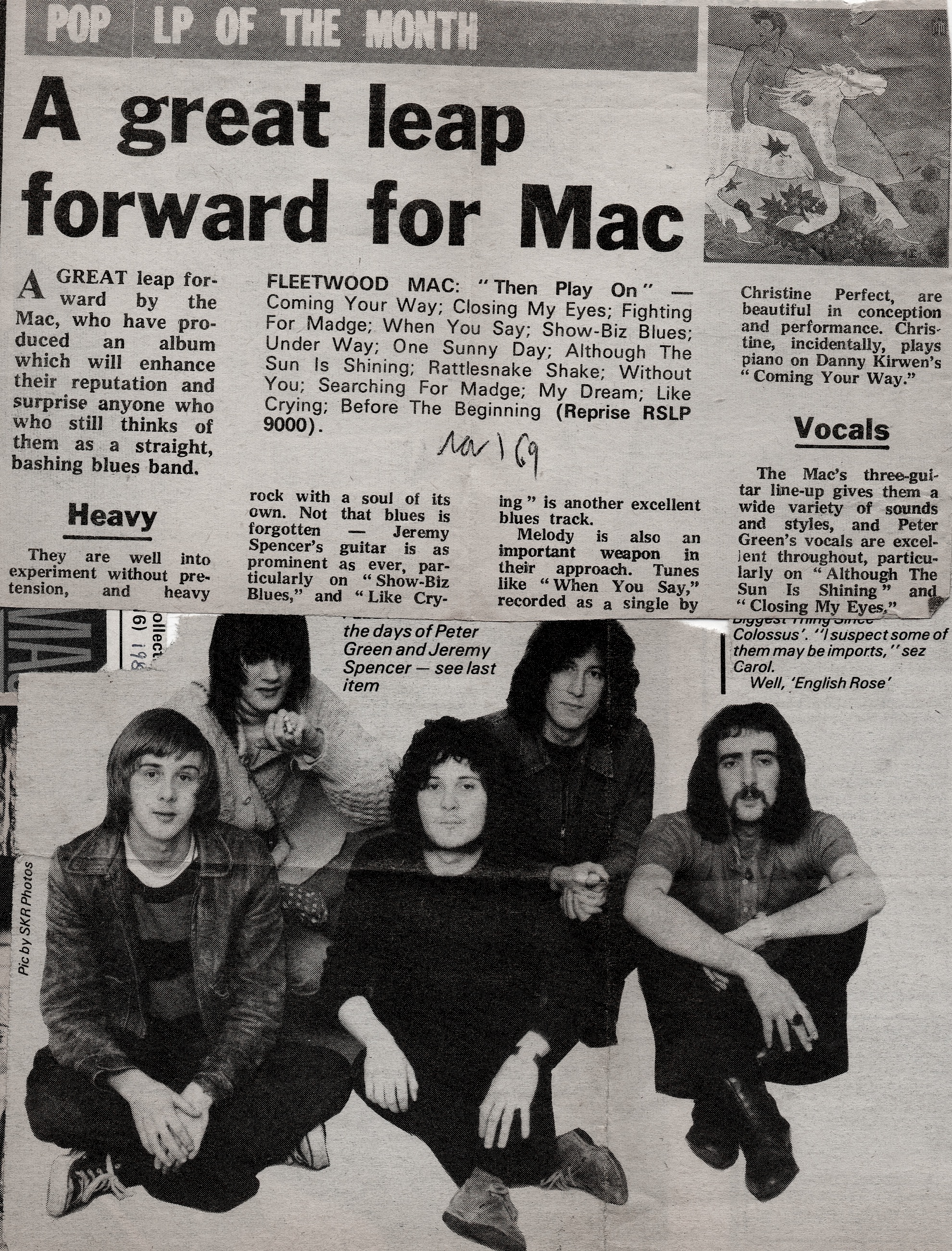
A stunning, complex, astonishing, conflicted, beautifully baffling, exquisitely problematic album, unlike anything they’d previously released, and nothing like anything that ever came after, anywhere in the vinyl cosmos. ‘Then Play On’ was the Mac’s third studio album. The John Mayall kudos had them rated as the most authentic Blues outfit around, but by 1969 their restless creativity was taking them way beyond such genre restrictions. Think of their no.1 single “Oh Well” – both sides of which are here. It’s soft-loud dynamic is something of a touchstone, although the fourteen original (and four bonus CD) tracks range much further. The 54-minute playing time allows jamming-space, but Peter Green’s spiritually charged improvisations are always immaculately interplayed and never self-indulgent. A vital element of the album’s incandescence is its unstable fragility. On the tipping-point of cataclysmic implosion, with Green’s traumatic state of disintegrating mental health scarily apparent on ‘The Green Manalishi’, Jeremy Spencer equally messed-up, soon to flee to a Christian commune, and with troubled Danny Kirwan’s first album contributions to the Mac canon, this line-up wouldn’t survive a moment longer. Leaving all these doors of potential wide open. This is one of the most breathtakingly mystifying albums of the decade. 

Published in: 
‘R2: ROCK ‘N’ REEL Vol.2 Issue.42’ 
(UK – November 2013) 


(1) ‘Coming Your Way’ (Kirwan, 3:45) 
(2) ‘Closing My Eyes’ (Green, 4:51) 
(3) ‘Fighting For Madge’ (Fleetwood, 2:42) 
(4) ‘When You Say’ (Kirwan, 4:31) 
(5) ‘Show-Biz Blues’ (Green, 3:51) 
(6) ‘Underway’ (Green, 3:04) 
(7) ‘One Sunny Day’ (Kirwan, 3:13) 
(8) ‘Although The Sun Is Shining’ (Kirwan, 2:25) 
(9) ‘Rattlesnake Shake’ (Green, 3:30) 
(10) ‘Without You’ (Kirwan, 4:35) 
(11) ‘Searching For Madge’ (McVie, 6:56) 
(12) ‘My Dream’ (Kirwan, 3:31) 
(13) ‘Like Crying’ (Kirwan, 2:25) 
(14) ‘Before The Beginning’ (Green, 3:30) 
Bonus tracks: 
(15) ‘Oh Well, Part One’ Bonus mono track (Green, 3:32) 
(16) ‘Oh Well, Part Two’ Bonus mono track (Green, 5:39) 
(17) ‘The Green Manalishi (With The Two-Pronged Crown)’ (Green, 4:37) 
(18) ‘World In Harmony’ (Kirwan-Green, 3:26)


Friday, 28 October 2022

Interview: Peter Green


PETER GREEN AND 
THE DEVIL BLUES 


PETER GREEN 
29 October 1946-25 July 2020


Peter Green, British Blues Legend and Acid-Damaged 
founder of Fleetwood Mac returns from the Dead Zone 
with a tribute album to Robert Johnson, the genius, womaniser, 
gambler and Blues Pioneer who sold his soul to the Devil 
and was then poisoned at twenty-six by a jealous husband. 
From strange... to stranger... 
A previously unpublished interview.


“Got those Fleetwood Mac, Chicken Shack 
John Mayall, can’t fail Blues...” 
 Adrian Henri/ The Liverpool Scene (1969)
 

There’s a Bill Hicks routine which goes ‘if you don’t believe that drugs have done some good things for us, go home tonight, take all your albums, all your CD’s, all your tapes – and BURN them, because the musicians who made all that great music that’s enhanced your lives throughout the years...? they were all real fucking high on drugs, man.’ He’s right. Of course. And that list of musicians who made all that life-enhancing music has got to include Syd Barrett... right? Brian Jones and Jimi Hendrix... right? Kurt Cobain and Peter Green too. 

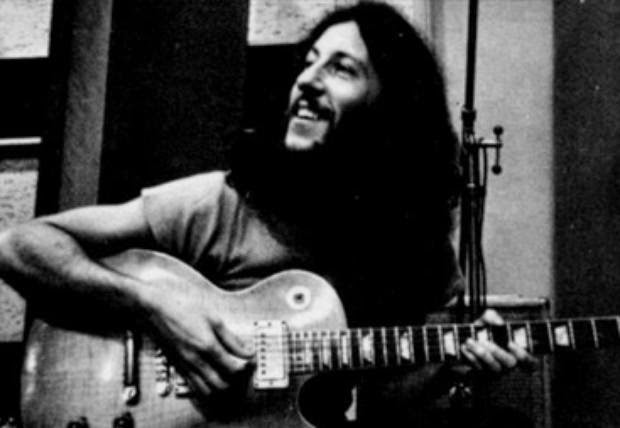
In Peter Green’s garden there’s a dim coffin-smelling gloom, sweet and oversweet with twice-blooming apple-blossom, and there’s lilac beyond the outer wall by the savage quiet sky, the sun impacting, distilled and hyperdistilled. Peter Green is sat across the rustic table from me. His is no designer slouch, just the unkempt growth of a genuine couldn’t give a shit. Look at the early photos. The Mayall shots. The first Fleetwood Mac line-ups. A nation bracing itself for decimalisation. The days before Alcopops. This is a man who began with the Blues. Now he’s returned to it again. Blues is the colour. 

And he’s returned to touring too, with possible Irish dates? ‘I’ve done lots of tours’ he says dismissively. ‘About six. Yeah. They were good. Ireland? We’ve played in Ireland. And yeah, we’re going back again. I fink we are. I enjoy playing most everywhere. And Ireland is a good place. It’s OK. It’s got a... what’s the word? a good bill – you know? They’ve got their things, you know? when you go there, it’s different. With different sort-of experiences and that.’ 

‘He enjoys most of the gigs he does’ adds live-in friend Michelle helpfully. 

‘I don’t’ he snorts. ‘Germany and (with heavy emphasis) TWO other places. But Switzerland, yeah. It was lovely in Switzerland. But everywhere we go to do our show, you have to appreciate it for what it is. When we go to Austria there’s not much night life there, not much going on in the way of shops and things. But it’s just nice. An old feeling, y’know. There’s an OLD feeling to it. And Naples. Naples was good. It was great there. Beautiful weather. The weather was... like being in Africa. It was so beautiful that it just cleared the head of all futuristic sort-of... er, futuristic er... I don’t know what to call it, all futuristic weather, with acclimatisation to where we were it just cleared the head completely. I felt marvellous. It was like Africa, so African.’ 


The album? Oh yeah – we’re here to talk about the remarkable ‘The Robert Johnson Songbook’, recorded by Peter with his current ‘Splinter Group’, a sixteen-track tribute to the Spookily near-mythic ‘King of the Delta Blues’, featuring heavy inputs from Nigel Watson (Michelle’s brother) and guest vocals by Paul ‘Superlungs’ Rodgers on “Sweet Home Chicago”. That’s Paul Rodgers as in Free, Bad Company, and that annoying Chewing Gum TV-ad about the two kids on the bus. No mean Blues-Wailer in his own right. But it’s never less than Peter Green’s album. Neil Spencer (in The Observer) comments that ‘sadly, the emotional demands of Johnson’s often harrowing songs prove beyond Green’s ravaged voice, while the guitar licks he would once have rattled off are now merely adequately played.’ Mr Spencer, I suggest, misses the point. 

This album is the work of a musician who started out with the Blues, with the fanatical purist’s devotion to reproducing its every detail in pristine academic perfection. The sparse “Stop Breaking Down” here most closely resembles the raw force of those old John Mayall days, with brief but precise solos. But now Peter Green has gone beyond that. He’s lived it. His voice is more scuffed and cracked than it was then. He knows the music inside out. It still benefits from those countless hours spent poring over albums, meticulously replicating their sounds. But now the ache comes direct from authentic lived experience. “Love in Vain” for example. The song about waiting at the station, suitcase in my hand. It was last sighted on the Rolling Stones’ ‘Let It Bleed’ (1969) album. They do it stark, electric, and extreme. Peter opts for less histrionic drama. But his is a weary, truer, more convincingly Gospel-edged reading. Closer, probably, to Johnson’s original intention. Like the easy-rolling harmonica-edged “When You Got A Good Friend”, or the mood of abstract desolation caught by Roger Cotton’s slow Blues piano as it perfectly matches Peter’s cracked vocals on “Phonograph Blues” 

‘But I might never be allowed past the Blues Pearly Gates’ he admits, ‘‘cos it seems that there’s a magic somewhere on those old records. A lot of people say there’s trickery under the recording, or in the production. That they’re completed through certain processes. They sound sort-of, really unique. Sounds that you can’t copy. You can’t do it. Elvis Presley’s records used to sound a bit like that, didn’t they? “Blue Suede Shoes”. A special sound. “Hound Dog” as well – all that (he handclaps “Hound Dog” in perfect sync), all that sort-of clapping, it all sounds like it’s as NATURALLY HAPPENING as it is when you pull the toilet chain. It all sounds SO NATURAL. Like a fried egg or something. It just sounds so natural. But you don’t know how long they worked on it. There might be 122 takes on it or something.’


‘He likes Robert Johnson’ coaxes Michelle. 

‘I like Robert Johnson’ he confirms. ‘Me and Nigel are great fans of Robert Johnson.’ The Splinter Group comprises Peter and Nigel, plus former-Whitesnake bassist Neil Murray and keyboardist Spike Edney, ex-Bob Geldof. There was also Cozy Powell on drums, until his untimely death in a 104mph auto-wreck earlier this year (‘a super bloke, no doubt about it, and he’d got a beautiful place to go, if we wanted to go somewhere. A lovely cottage’ says Peter now). His drum-chair has since been taken by Larry Tolfree. 

Meanwhile, a Todd Terry remix shoves the highly videogenic Corrs into the Top Ten with their Mac-relic “Dreams”. And the ‘Rumours’-vintage platinum albums/ platinum noses MOR Mac reform for ‘The Dance’ (1977) and its attendant commercial feeding-frenzy. But Fleetwood Mac would never have existed without Peter Green. Mick Fleetwood acknowledged as much. There’s a new compilation of studio out-takes and oddities to prove it, ‘The Vaudeville Years Of Fleetwood Mac 1968-1970’ (Receiver Records Ltd RDPCD 14Z) consisting of long unedited seventeen-minute Blues jams complete with pauses and false starts, but between the sound of nails scratching the bottom of barrels there are also alternate takes of “Green Manalishi”, “Man Of The World”, “Oh Well” and forgotten gems like “Someone’s Gonna Get Their Head Kicked In Tonight” (originally credited to Earl Vince & The Vincents), essential ingredients from the most vital of the ‘Fleetwood Mac, Chicken Shack, John Mayall can’t fail Blues’ days (Chicken Shack – for those too young to remember, was Christine McVie’s highly rated pre-Mac band). All recorded with Peter, prior to his fateful meeting with New York Acid Guru Stan Owsley III, the Willy Wonka of LSD, and hello to the drugs hell that left his brain as limp as a salad in a sauna. ‘We went to the States, y’know. And we... erm... crossed paths with the Grateful Dead. I remember sitting on stage with them taking this acid and then trying to sing...!’ Bill Hicks fails to mention that. And Fleetwood Mac? ‘It was a load of clowns of some kind’ he muses now. ‘I don’t know what to make of all those guys. They’re very secretive. They turn up in all kinds of places, in all kinds of situations. But – um, I dunno. That’s a long while ago. It’s a sharky business as well. Not just the managers, you’ve got to watch out for everything (he pronounces it ‘everyfing’). Anything can fool you...’ 

Now he’s an ageing Boy Scout relearning how to tie all those tricky Blues knots. Despite the acid shrapnel in his head. ‘I couldn’t... sort-of... get back. What I learned on those LSD trips was so special to me, meant so much to me that I was told I could have this all the time. Your mind is in a state. You can’t locate yourself. You just see a mist and you don’t feel clear. I’m not really clear now, but at least I can see little things.’ At one point he suddenly asks me ‘John Bonham’s dead, isn’t he? Who plays drums for Led Zeppelin now?’ Bonham died in September 1980. There’s been no Led Zep at least since Live Aid in July 1985. But who knows where the time goes? ‘Jimmy Page’ he adds, ‘he became a great personality, didn’t he?’ 

And the legendary long nails? They’re still long... ish, but chopped off square, as though hacked off with scissors just prior to my arriving. He’s unfazed. More at ease and content with his life than he’s been for years. Decades even. ‘I’ve been doing millions of interviews’ he grins. ‘Saying anything and everything that comes my way. Saying all kinds of queer things.’ 


“I’d rather jack than Fleetwood Mac ...” 
(single by Stock-Aitken-Waterman’s REYNOLD’S GIRLS 
which hit no.8 1st April 1989)


‘THE ROBERT JOHNSON SONGBOOK’ 
by PETER GREEN & THE SPLINTER GROUP 
(Artisan Records SARCD 002)
 and 
‘THE VAUDEVILLE YEARS OF 
FLEETWOOD MAC 1968-1970’ 
(Receiver 2CD Digipack Receiver Records Ltd RDPCD 14-Z, 
including 56-page Booklet, issued 21 September 1998)


Peter Green: Man Of The World (DVD)


‘MAN OF THE WORLD’: 
THE PETER GREEN STORY 


DVD Review of: 
THE PETER GREEN STORY: 
MAN OF THE WORLD 
A Dougie Dudgeon and Henry Hadaway film 
Scanbox Entertainment (2018, Wienerworld) 


Where is Peter Green now? 

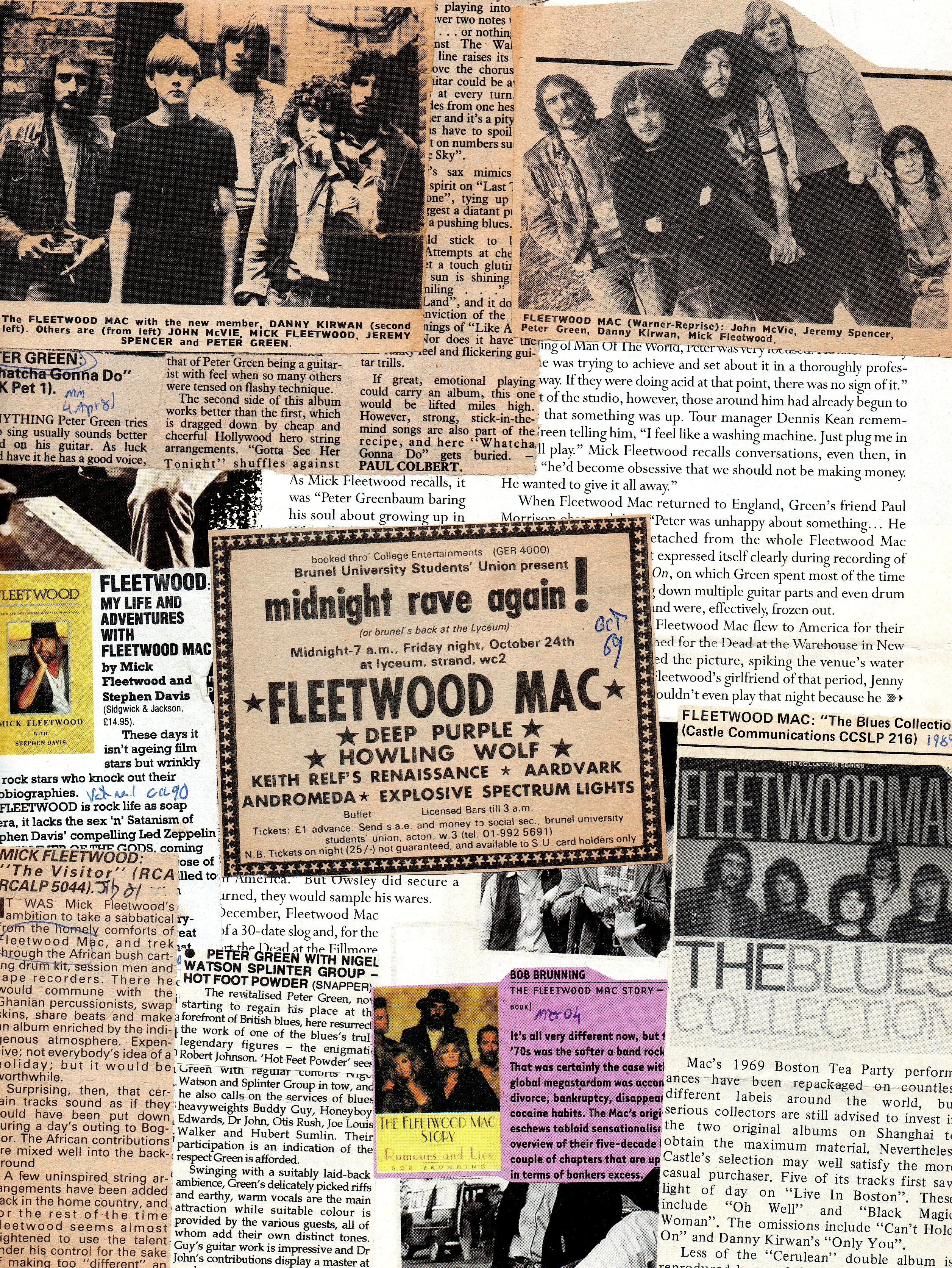
‘It was an incredibly short run’ says Mick Fleetwood, ‘and yet we’re still talking about it, nearly forty years or so later.’ And he’s correct. Peter Green was with Fleetwood Mac two years and eight months. In the vast cosmic scheme of things, that’s not long. Yet that’s where the kernel of the legend exists. This valuable documentary, directed by Steven Graham for the BBC, thoroughly details that arc of years, across a generous 150-minutes. It takes a bemused Peter Greenbaum wandering back to where it began, all the way to ‘my very first memories’ of Flat 18, Antenor House, off Old Bethnal Green Road E2 6QS, ‘coming across this road here, and then up there.’ Shuffling along the pavement, beside black railings and neatly-spaced saplings, indicating up at the white first-floor balcony of his childhood flat. He’s a survivor, who’s been to hell and back. Yet, ‘It’s nice to revisit yourself’ he adds brightly. 

Brothers Mike and Len Green take up the story of Peter’s first guitar. Born 29 October 1946, he honed his skills through skiffle and the Blues, his debut single came as a twenty-year-old part of Peter B’s Looners, a four-piece led by Peter Bardens. An organ-led shuffle-instrumental version of Jimmy Soul’s risqué calypso, “If You Wanna Be Happy” c/w “Jodrell Blues” (1966, Columbia DB7862), it makes an inauspicious start for Peter Green, despite the stinging guitar solo on the B-side. Yet, produced by impresario Rik Gunnell, Mick Fleetwood also happens to be there on drums, billed according to his previous group as ‘ex-Bo Street Runners’. 


Then Peter was playing with the Bluesbreakers at ‘The Flamingo’. John Mayall explains how ‘Peter in his prime in the sixties was just without equal, he was a force to be reckoned with.’ Replacing Eric Clapton in the line-up was a poison chalice, which he accepted decisively by not replicating what ‘Slowhand’ had done – avoiding playing the hard fast virtuoso style, but taking his Les Paul down other routes. For the ‘A Hard Road’ (Decca, February 1967) album – with drummer Aynsley Dunbar and John McVie on bass, Peter sings lead on “You Don’t Love Me” and his own “The Same Way”, but it’s the haunting instrumental “The Supernatural” that stands out, playing what journalist Keith Altham defines as ‘ethnic Blues’, a spirit that underpins it all. Many years later, after the maelstrom that swept him away, Peter would play “The Supernatural” again, with the Splinter Group. And it still sounds magical. 

‘There’s no word for it’ Peter struggles to explain to me, ‘I copy them (the Blues Masters) as best as I can. I’m Jewish. So I’ve got a little trapdoor there. The old Hebrew Testament thing, right back to Moses. It could be worse, couldn’t it?’ 

Soon Mick Fleetwood replaced the ‘too technical’ Dunbar, and the core of Fleetwood Mac was in place, initially freelancing without Mayall on dates with bluesman Eddie Boyd. Jeremy Spencer gets recruited into Peter Green’s new venture from the Midlands-based Levi Set, following just the exchange of names ‘Elmore James, BB King’. Encouraged by Mike Vernon, their debut album together – issued in February 1968, is a ‘plug-in and play’ exercise according to Mick Fleetwood, cut at the New Bond Street CBS studios with Vernon producing. Apparently the name Fleetwood Mac was Peter’s deliberate legacy to his friends, in anticipation of further adventures – although he could never have imagined how those further adventures were to play out, and he was outraged when Blue Horizon choose to promote the record as ‘Peter Green’s Fleetwood Mac’. It was preceded by debut single – Jeremy Spencer’s “I Believe My Time Ain’t Long” c/w Peter’s “Rambling Pony” (November 1967, Blue Horizon 3051), followed by the startling classic “Black Magic Woman” (c/w “The Sun Is Shining”, March 1968, Blue Horizon 57-3138). With the song’s background story narrated here by celibate girlfriend Sandra Elsen. It climbs to no.37 in the UK chart, but soon gets taken up as a key recording by Santana. 


Blue Horizon had a community feel to it, and as part of the label house band both Peter and Mick sit in on sessions for Duster Bennett’s first LP ‘Smiling Like I’m Happy’ (1968), and Peter helps out on the Brunning Sunflower Blues Band’s ‘Trackside Blues’ (1969). Studio jams and back-up sessions from this phase continue to be released under various guises for a number of years, from ‘Blues Jam At Chess’ (1969) with Muddy Waters and Howlin’ Wolf, to ‘The Complete Blue Horizon Sessions 1967-1969’ (1999) 6CD box-set with previously-unreleased outtakes, studio talk and alternate takes. 

Always a self-deprecating man of fragile sensitivities – the lines ‘I can’t sing, I ain’t pretty and my legs are thin’ reflects Peter’s own sense of bewilderment and lack of self-worth, he was already caught up in destructive contradictions. Always prone to reflective moments, even in the studio recording of the straight-Blues ‘Mr Wonderful’ (August 1968), amid the band’s bawdy excesses. “Rattlesnake Shake” on ‘Then Play On’ (September 1969) is Peter’s ribald commentary on Mick Fleetwood’s masturbation habit. Yet he’s deeply troubled by white-liberal guilt over the band’s accumulating wealth, when contrasted with TV images of the Biafran famine. Seeing real human beings starve to death on-screen, with the same sense of moral outrage that would later power Bob Geldof to kick-start Band Aid. Resolving not only to channel his royalties into charity, but to persuade other members of Fleetwood Mac to do the same. Suggestions not always sympathetically received. 

Those anti-materialist tendencies were exacerbated by meeting Jerry Garcia during the band’s first American trip, as well as the Grateful Dead’s chemist LSD-guru Stanley Owsley. Initially suspicious, Jeremy Spencer was the first to sample the new lysergic-acid wonder-drug, then Peter drank laced kool-aid. The textbook version is that he was unaware the drink was spiked. The way he tells it now, with an amused twinkle, he was more than a willing accomplice to the pretence. ‘I didn’t talk to god’ relates Mick Fleetwood, ‘just felt a bit strange’. They play ‘The Warehouse’ in New Orleans with the Dead, all stoned. ‘I did feel a bit… effervescent’ recalls Peter, about LSD. The tour climaxes into acid-horror in the Frisco Gorham Hotel after jamming with the Grateful Dead at the Fillmore. Mick hallucinating every band member as skeletons as they sit around the floor holding hands, phoning Owsley to talk them down, in vain. It was ‘horrible’ concludes Mick.


The continuing John Mayall kudos had Fleetwood Mac rated as the most authentic Blues outfit around, with ‘Mr Wonderful’ rarely straying from the Elmore James blueprint despite a ‘dirtier, gutsier’ horn-section and Christine Perfect (soon to be McVie) on piano, but by 1969 their restless creativity was taking them way beyond such genre restrictions. Blues was the spine, and would continue to be, underpinning diverse new bands and evolutions across the seventies. But it was already becoming porous, flexible, open to positive mutations in the light of new lifestyles. The single “Need Your Love So Bad” (c/w “No Place To Go”, Blue Horizon 57-3157), a cover of Little Willie John’s 1956 original, antagonises purists with sweeping strings offsetting Peter’s raw pleading vocal lines. Yet it climbs to no.31 on the chart, and is successfully reissued a number of times, collected onto the compilation ‘The Pious Bird Of Good Omen’ (August 1969), alongside both sides of the earlier singles, plus two tracks from Eddie Boyd’s ‘7936 South Rhodes’ (Blue Horizon, 1968) album on which the Mac play back-up. A re-jigged version of this album becomes ‘English Rose’ for the US Epic label, with a fright-wig cover-art photo of Mick Fleetwood in drag. He’d already appeared naked but for battered hat and strategically-positioned shrubbery on the ‘Mr Wonderful’ gatefold cover! 

Danny Kirwan was brought in (from Boilerhouse) as third guitar in time for what Peter calls the ‘Santo and Johnny’ sound of the next single, “Albatross”. Peter plays his Stratocaster lap-style, plucking the title from Samuel Taylor Coleridge’s “The Rime Of The Ancient Mariner”, months before Procol Harum use the epic poem as the base for their “A Salty Dog”. Although the label was initially dubious, an appearance on the ‘Simon Dee’ TV-show shoves it into the charts, and all the way up to no.1. There were two charts in general use. In ‘Record Mirror’ it was no.1 for the single week 29 January 1969 – but would return on re-issue to no.2 in 1975! In ‘New Musical Express’ it nudges Marmalade’s Beatles-cover “Ob-La-Di, Ob-La-Da” from top slot and stays there three weeks until 8 February, when it’s dislodged by Move’s “Blackberry Way”. 

Then the achingly-heartfelt “Man Of The World” single was ‘the first cry for help that we heard from Peter Green’ opines Altham, direct-to-camera. ‘Almost like a suicide note’ agrees a pensive Jeremy Spencer. The voice, ‘I’m not saying that I’m a good man, oh, but I would be if I could,’ is painfully autobiographical. Issued through a one-off deal with Andrew Loog Oldham’s Immediate records, it peaks at no.2 – just below the Beatles “Get Back” (24 May 1969). Although it’s stop-start loud-soft structure makes it impossible to dance to, I recall playing it in a sense of awed wonder to other students at the Hull College Of Technology, frustrated that they can’t see how starkly revelatory it is, the chillingly confessional line ‘I just wish that I had never been born’ is still spine-tingling. 


The single also spells goodbye to nurturing producer Mike Vernon. Leading to the Mac’s third studio album, ‘Then Play On’, arriving through a lucrative up-deal with Reprise. A stunning, complex, astonishing, conflicted, beautifully baffling, exquisitely problematic album, unlike anything they’d previously released, and nothing like anything that ever came after, anywhere in the vinyl cosmos. The soft-loud dynamic of their no.1 single “Oh Well” – both sides of which are included, is something of a touchstone, although the fourteen original (and four bonus CD) tracks range much further. The 54-minute playing time allows jamming-space, but Peter’s spiritually charged improvisations are always immaculately interplayed and never self-indulgent. A vital element of the album’s incandescence is its unstable fragility. It was Peter’s ‘last calling card’ according to Fleetwood. With his traumatic state of disintegrating mental health even more scarily explicit on “The Green Manalishi”, which not only reveals ‘the Brian Wilson side of Peter Green’ in its overdub builds, but shows him on the tipping-point of cataclysmic implosion. Jeremy Spencer was equally messed-up and soon to flee, alongside troubled Danny Kirwan’s first album contributions to the Mac canon, this line-up wouldn’t survive a moment longer. Leaving all these doors of potential wide open. This is one of the most breathtakingly mystifying albums of the decade. 

Meanwhile, “Oh Well” completes a trilogy of Top Three singles, with Peter playing a Michigan guitar. It reaches no.1 for the single week of 15 November 1969, if only in the ‘New Musical Express’ chart – replacing the Archies cartoon-comical Bubble-Pop “Sugar Sugar”. Now, Peter dismisses the vocal lead-in verses, in preference to the more reflective instrumental passages following the mid-point storm (reminiscent of Love’s “Seven And Seven Is”). 

By now there were strange scenes during a German tour involving a Munich cult, ‘weirding out big time’ according to Jeremy Spencer. Precipitating the crash into Peter’s dark years. ‘That was the fork in the road’ according to John McVie. ‘I had an ultimate respect for Peter’ adds Fleetwood wistfully, ‘and we had so much fun.’ Without Peter ‘we were all… lost’ admits Mick. Although soon after, Jeremy quit too – ‘I heard the voice of the lord say ‘go’’ and he went. In the sad burned-out come-down from the hippie loss of innocence there were any number of phony opportunistic cults on hand to offer spiritual solace, and Jeremy was seduced away by the Children Of God religious sect. Loyally, Peter returns to play the rest of the US dates, climaxing in an amazing version of “Black Magic Woman” at the Fillmore East in New York, which Clifford Adams recalls with a sense of wonder. 


Now Peter was ‘exorcising the demons within him’ (according to Fleetwood) on an intense instrumental solo album called ‘The End Of The Game’ (Reprise, December 1970). Leading only to further mental collapses. ‘A lot of strange experiences inside my head’ he comments, straining to make sense of it all. Retreating into a kind of Syd Barrett ‘Twilight Zone’ of legendary limbo. As, after a confused directionless period, the rest of Fleetwood Mac hook up with Stevie Nicks and Lindsay Buckingham to go mega-global, Peter was sedated in psycho-house mental institutions, undergoing electro-convulsive therapy in a living nightmare, with myths and rumours multiplying. He was working as a hospital porter, or a gravedigger. He threatened his accountant with an air-rifle. He spent time in prison. ‘I was quite happy in prison’ he comments, totally without guile. 

Interviewing Peter Green, sitting at a table in his back garden, was both the strangest and most touching experiences of my journalistic career. Afterwards, he shows me his guitar collection, lifting them down from the wall and passing them across to me, asking ‘Do you play?’ And I have to admit, no. Which is the closest I’ve ever got to jamming with a guitar hero. 

By turn poignant, candid, always informative, with mesmerising electrifyingly evocative black-and-white clips, this DVD constitutes the definitive story. Noel Gallagher adds respectful comment, across the arc of those forty years. 

‘I can outplay Sooty’ says Peter now with typically self-deprecating humour, ‘but that’s it, don’t put Sweep on that xylophone whatever you do.’ He was brought back into playing and recording through the recuperative process of the Splinter Group, with a supportive Nigel Watson – and initially drummer Cozy Powell. His ‘Me And The Devil Blues’ (Snapper 1998, 2001) remains a classic interpretation of the Robert Johnson catalogue, and one of eleven albums taking him from the late nineties into the new millennium. Although some unspecified altercation led to Peter leaving in 2004, he re-emerged in 2009 touring as Peter Green And Friends – around the time this DVD was compiled. ‘Whatever I’m expecting, it never arrives,’ he muses. Then, more brightly ‘It’s nice to revisit yourself.’ 

So, where is Peter Green now?
 

Bringins Multimedia Ltd 2007 
Bonus DVD features: 
‘Peter Takes Us Through His Guitar Collection’ 
‘Clifford Adams Reads Out Peter Green’s Letter From Hawaii’ 
‘Jeremy Spencer, Mick Fleetwood as John McVie Reminisce About The Old Days’ 
‘Rick Veto Tells How He Saw Fleetwood Mac For The First Time’ 

Published in: 
‘R’N’R: ROCK ‘N’ REEL Vol.2 Issue.67’ 
(UK – January 2018) 
Expanded version featured online at: 
‘IT: INTERNATIONAL TIMES’ (14 March 2018) 


Peter Green: The Splintered Years


PETER GREEN, 
THE SPLINTERED YEARS 
 

‘TIME TRADERS’ and 
‘REACHING THE COLD 100’ 
by PETER GREEN SPLINTER GROUP 
(2014, Eagle Records EDG1015262) 

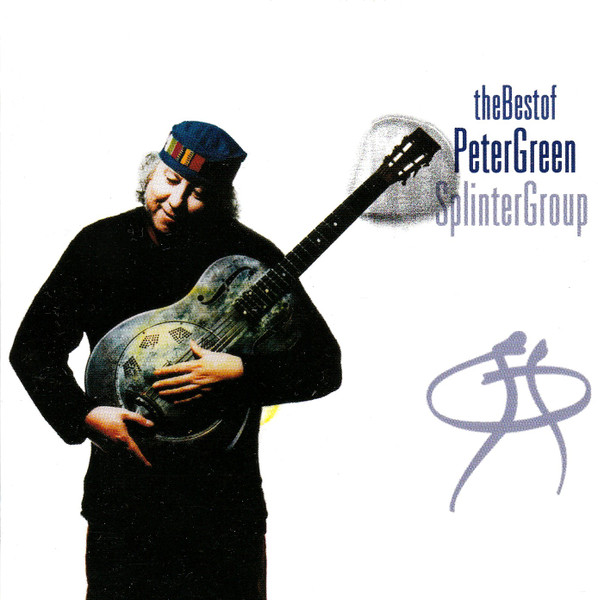
‘Time Traders’ is from 2001, ‘Reaching the Cold 100’ from a few years later – in 2003, now repackaged together into a neat slipcase 2CD edition. They are made up of thirteen tracks each, consisting of songs written by Splinter Group member Nigel Watson (rhythm guitar), Roger Cotton (keyboards), and Pete Stroud (bass). Drummer Larry Tolfree is content to hold down the steady backbeat. Peter Green – credited by his birth-name Peter Greenbaum, gets just one writer credit, for the instrumental “Underway”, and that a retread of a track from Fleetwood Mac’s ‘Then Play On’ album, albeit with a guesting Snowy White helping out. “Uganda Woman” another track with Peter’s strong input, had previously been a 1972 B-side. This nevertheless marks the albums out from Peter’s more regular fare of Blues standards, and particularly the Robert Johnson catalogue. ‘Reaching The Cold 100’, the Group’s eighth and final album together, includes “Legal Fee Blues” perhaps hinting at symptoms of the group’s litigious demise. Whatever its internal politics, the Splinter Group proved vital as a support vehicle enabling Peter to resume live working and recording. We should be grateful for that, and it leaves some fine material here to enjoy. 

Published in: 
‘R2: ROCK ‘N’ REEL Vol.2 No.44’ 
(UK – March 2014) 


‘PETER GREEN SPLINTER GROUP: 
ME AND THE DEVIL’ 
(2008, Snapper SBLUECD 501X) 

Robert Johnson exists in the twilight zone where truth spirals into haunted myth, hard facts are uncertain and legends shadow in the details. As such it’s entirely appropriate that Peter Green, a musician with more than his own share of tales to tell, used the Johnson songbook as part of his route-map back into Blues prominence. This 3CD set invites direct comparison between the full existing Robert Johnson catalogue, with the Splinter Group’s versions of exactly the same twenty-nine songs. It does considerable merit to both. There was Blues before Robert Johnson, but after him it could never be the same again. He invested it with a literacy and stripped-down poetry that remain spine-chillingly effective even across the decades since. “Ramblin’ On My Mind”, “Hell Hound On My Trail”, “Cross Road Blues” and “Me And The Devil Blues” stand as the cornerstones of the entire Sixties British Blues revival, covered and reinterpreted by everyone from Cream and Dylan, to Led Zep and the Stones, but seldom has the harrowing soul of the songs been as well captured as it is by Peter Green, less by meticulous replication, as through bone-weary empathy. 

Published in: 
‘ROCK ‘N’ REEL Vol.2 No.12’ 
(UK – November 2008)


‘THE VERY BEST OF 
PETER GREEN SPLINTER GROUP’ 
by PETER GREEN SPLINTER GROUP 
(2012, Madfish SMACD987) 

Even if his adventures, and misadventures of the late-Sixties had never happened, Peter Green would still have written himself into Brit-Blues credibility with his series of eight Splinter Group albums and tours from 1997 through to 2003. As the curator of the Robert Johnson legacy he brings more than mere note-by-note replication to those seminal originals, he reinterprets them through his own bone-weary experience and battered soul, into contemporary demon-haunted relevance, singing and playing harp on “Steady Rollin’ Man”. This two-disc selection also includes two revisions of Peter’s tortured Fleetwood Mac originals – an abrasive rasp-voiced “The Green Manalishi” done live at his ‘Ronnie Scotts’ Soho Session, and an effectively understated instrumental “Man Of The World” that burnishes its sensitive beauty, plus the smoky Santana-esque samba “The Supernatural” from his John Mayall period. Plus Freddie King’s “The Stumble” with its long Peter Green association. New composition “Hiding In Shadows” even evokes the memory of “Albatross”. Guesting contributers include Paul Rodgers on “Sweet Home Chicago”, and Dr John, plus Otis Rush and the late Hubert Sumlin. There’s some gospel-flavouring from the Street Angels, and Peter’s “Underway” features some classy Snowy White guitar interplay. But Peter Green remains the solid centre of this fine album.  


‘BLUES DON’T CHANGE’ 
by PETER GREEN SPLINTER GROUP 
(2012, Eagle Records ER202622) 

Begun as part of Peter’s rehabilitation following his long post-Fleetwood Mac lost years, the Splinter Group is now very much a respected integral part of the Blues scene. Although recorded in 2001, this album was only previously available at gigs or through the ‘Splinter Group’ website. So this is its first proper release, and it’s worth the wait. The eleven tracks don’t stray too far from standard Blues repertoire – “Little Red Rooster”, “Crawlin’ King Snake” and a spooky “Honey Bee”, but done with such easy authority they emerge renewed as part of a living tradition. Peter started out with the Blues, it’s embedded in his DNA, with the sympathetic supporting structure provided by Nigel Watson (bass), drummer Larry Tolfree, Roger Cotton adding keyboards and the second guitar of Pete Stroud. There’s no striving for histrionics. It flows natural. Peter’s lived-in rasp says all that needs saying about living the Blues life. With minimal rehearsal, done ‘live’ and pretty-much spontaneous in the studio, drawing from their touring set, this is an object lesson in Blues, the genre that ever-evolves, and yet, essentially don’t change… 

Published in: 
‘R2 (ROCK ‘N’ REEL) Vol.2 No.35’ 
(UK – September 2012) 


‘ALONE WITH THE BLUES’ 
by PETER GREEN & 
THE ORIGINAL FLEETWOOD MAC 
(2015, Metro Select METRSL118) 

The music industry has not always treated Peter Green kindly. His natural unworldly quality has left him vulnerable to abuse and misuse from numerous unscrupulous agencies throughout his explosive rise, long decline and painful climb back into visibility. But his ability has never been in doubt. This 2CD 34-track anthology is no exception. Blues is Peter’s lodestone, the single constant that defines each life and career-phase. And although the track provenance is not always obvious, without scrupulous reference to Joel McIver’s liner-notes, it runs from early Brit-Blues “Long Grey Mare” lifted from Fleetwood Mac’s 1968 debut LP, woozy live versions of “Black Magic Woman” and no.1 single “Oh Well”, before sampling “Ride With Your Daddy Tonight” – his harmonica-driven contribution to the 1969 Brunning Sunflower Blues Band album ‘Trackside Blues’, plus session-outtake “Uranus”. The second phase is inaugurated by tracks from the 1979 ‘In The Skies’ set, with Snowy White and Peter Bardens on hand, through his neglected solo albums up to ‘A Case For The Blues’ (1985) with Vincent Crane and Ray Dorset. Stopping short of his relaunch with Splinter Group this set revisits familiar material, mixing it with lesser-known and rare tracks. Throughout, Peter’s ability has never been in doubt, no matter what company he’s found himself in. 

Published in: 
‘R2: ROCK ‘N’ REEL Vol.2 no.54’ 
(UK – November 2015)


Thursday, 29 September 2022

Poem: SHELF-LIFE


SHELF LIFE 
(For Stephen Singleton 
circa Vice Versa-Neutron Records)


This is 
post-modernist po/ 
etry designed for use in 
hypermarkets, offices, 
telephone answering services, 
air-terminals, in-car systems, 
and pedestrian precincts. 
Functional poetry with 
stylistic malleability, 
angle-poise connotations and 
audio-visual connectivity. 
Conceptual poetry that 
is its own medium, 
modified and attuned to taste. 
This is post-modernist po/ 
etry with the appliance 
of science. 
Ideologically unsound sound 
for limited attention spans. 
Post-modernism is a 
synthesis placed at the 
correct cultural nexus, and has 
interchangeable/ mix and match 
influence components. 
It is shrink-wrapped 
and date-stamped for 
an ideal shelf life 
of three and a half minutes. 
This is post-modernist 
environment-specific poetry 
for subliminal subversion. 
Soundtrack jingles for discord 
imprinted on/ symptoms of 
rapid eye movement. 
Retinal shadow-shows in 
hygienic cellophane packs, 
ready for use. 
This is post-modern po/ 
etry with a disposable 
bio-degradable 
shelf-life 
of the next 
three and a half minutes…


Published in: 
‘TEMPUS FUGIT no.8’ (Belgium – December 1988) 
‘WORKING TITLES no.2’ (UK – February 1990) 
plus my collection: 
‘POWER LINES’ 
(Unibird Publications) (UK – October 1988) 
on cassette: 
‘ULISES DOG NR.9’ (C60 Vec Audio) 
(Netherlands – July 1981) 
‘L.P.G no.2’ (UK – July 1981) 
my own cassette: 
‘SLITS IN AEROSOL GREEN’ (Eight Miles Higher) 
(UK – January 1981) 
and on: 
‘DIAL-A-POEM’ telephone service 
(8 August 1980, Liverpool) 
‘G.A.S. POETRY, ART AND MUSIC’ 
edited by Belinda Subraman 
(YouTube, 6 June 2020)


Wednesday, 28 September 2022

SHEFFIELD ELECTRO - THE BE-BOP OF ROCK


SHEFFIELD ELECTRO -

THE BE-BOP OF ROCK:
 
THE BIRTH OF A NEW COOL 


‘None of The Human League have any orthodox musical 
 training, but prefer to regard composition as an extension of 
 logic, inspiration and luck. Therefore, unlike conventional 
 musicians their influences are not so obvious’ 
(Fast Product Press Pack, June 1978)


Rock ‘n’ Roll was never intended to be about virtuosity. It was more a DIY Folk music. 

Skiffle was a 1950s fad championed by Lonnie Donegan, which ignited a thousand ad-hoc austerity groups repurposing household items – a washboard, an old tea-chest impaled with a broom-handle and tension-strung to create a stand-up bass, and maybe a couple of battered acoustic guitars played with more energy than technique. Two decades later Sheffield created a new kind of Electronic Skiffle. 

Why Sheffield? 

The M1 slip-road 34 takes you into the small South Yorkshire industrial city, but with a greater music tradition than that description would imply. We could start with Wurlitzer organist Reginald Dixon, famous for his radio broadcasts from the Blackpool Tower Ballroom. But we probably won’t. Instead we’ll begin in the Beat Boom era with Dave Berry, his distinctive creepy stage persona and hits that included ‘The Crying Game’, his cover of Bobby Goldsboro’s ‘Little Things’ and the Ray Davies-penned ‘This Strange Effect’. Dave was born in Woodhouse, to the south-east of Sheffield in February 1941. Then there’s Joe Cocker who took the Woodstock Festival by storm with his anguished take on Ringo’s modest singalong ‘With A Little Help From My Friends’. He was born at 38 Tasker Road in the Crookes suburb of Sheffield in May 1944. Tony Christie might have been born in nearby Conisbrough, but his long association with the steel city includes his 2008 ‘Made In Sheffield’ album, produced by Richard Hawley with contributions from Alex Turner and Jarvis Cocker.


Of course there’s Def Leppard, jazz guitarist Derek Bailey, singer Paul Carrack, jazz drummer Tony Oxley, Pulp, Arctic Monkeys and beyond. But this book is largely centred around the cluster of electro-musicians who were feeling their way through the 1970s, to upsurge into the 1980s as the ‘soundtrack for the second industrial revolution: 45 and 33-&-a-third rpm.’ 

The first time I visited Sheffield, where now there is the labyrinthine Meadowhall temple to opulent consumerism, there were still foundries you could smell in the air and that shook the street beneath your feet, ‘like a metronome, like a heartbeat for the whole city’ according to Ian Craig Marsh. ‘We all come from pretty strong working-class backgrounds’ Ian told me, ‘my Dad’s a bricklayer and my Mum used to work at Bassett’s Liquorice Allsorts Factory. My Grandfather got burned clear down his right side when he was splashed with molten steel at a steel works!’ De-industrialisation left abandoned factory units to colonise as rehearsal rooms and studio space for insurrectionary anti-musicians who ‘discarded natural sound source in favour of synthetic instrumentation because of its convenience, mobility and vast source of, as yet, untapped potential’ (the Vice Versa manifesto). 


And there was cheap front-room technology easily adaptable, Skiffle-style, sufficient to bend to purpose. Original – in the sense of not using drums, which were just too tedious to learn, and guitars which were considered obsolete. ‘We wanted to sound like a proper Pop group, but we were not prepared to put in the five or six years that it would have taken to learn a traditional instrument’ explained Philip Oakey. The non-Sheffield Nick Rhodes of Duran Duran described his discovery of synths as ‘this is a new planet that I could live on.’ And yes, that’s how it was. 

It was a time of dense-black Xeroxed fanzines, Sheffield had its own ‘GunRubber’ produced since February 1977 by Paul Bower and Adi Newton, as well as ‘Modern Drugs’ from Martin Fry, ‘NMX’ from Martin Russian and the photocopied ‘Steve’s Paper’ from Stephen Singleton, all documenting the burgeoning local music scene, centred around Cabaret Voltaire and The Future. And the cassette-underground where, for the first time, bands and musicians as well as poets could use their bedrooms to home-record their own experimental sounds, then cheaply reproduce and circulate limited edition C30s or C60s among a proto-internet of linked like-minded activists. It was ignited by the Punk energy and ethos that anyone could get up and do it. It was new. It was exciting, combining the dissident samizdat self-publishing spirit of insurgency with mischievously incendiary early-Dada art-confrontational energies supercharged by the relentlessly dark cut-up strategies of Beat-Generation writer William S. Burroughs and his SF New Wave disciple J.G. Ballard. Each bubblepack package that arrived in the morning mail was ripped open up to reveal new bulletins from the innovative edge of luring and sometimes-scary tomorrows. ‘NME’ carried its own weekly review-column with the addesses of more DIY weirdnesses a mere postal order away.


The first experimental synthesizer system had been devised in 1955 by RCA, but it was a certain Dr Robert Moog who gave his name to the cheaper more marketable modular version that began to infiltrate awareness during the late-sixties, as demonstrated on the first entirely-synthesized ‘Switched On Bach’ (1968) album by Walter – later Wendy Carlos, followed by ‘The Well-Tempered Synthesizer’ a year later. Martyn Ware recalled hearing Carlos on the Clockwork Orange (1971) soundtrack. Heaven 17 would take their name from the same movie.


Bands such as The Byrds, The Pink Floyd, The Moody Blues and others began to dabble in the effects that electronics could produce, with Terry Riley, Tonto’s Expanding Headband and The United States Of America taking it incrementally further, nodding to John Cage as a kind of spiritual godfather. The cosmic synth genre was an extension of the psychedelic ‘music to take trips by’ drug culture, an avant-garde trance deployment of otherworldly textures. Then, incorporated into banks of keyboards, the synthesizer became an exotic embellishment to the assault arsenal employed by virtuoso Prog-Rock musicians. Synths were bulky, heavy, fragile and temperamental, utilising voltage-controlled oscillators and related devices that respond to room-humidity and temperature. Heat changes from the lighting-rig could affect tunings. A Moog required a two-hour warming-up period. 


While in Germany Tangerine Dream, Neu and Kraftwerk were not only adapting and developing their own rhythmic variations but were inventing new ones through the use of sequencers. Kraftwerk – ‘the most important group of the century’ according to Philip Oakey, compressed eccentrically catchy musical ideas into the appropriately stimulating shape of wires, programmes, images, trackers, scanners, impulses and screens. 

Championed by DJ John Peel, Tangerine Dream grew out of the Berlin Zodiak Free Arts Lab, where they evolved the hypnotic pulsations of their LP ‘Phaedra’ (1974), a first charting album for them as well as for Virgin Records. Abstract solo albums by Klaus Schulze and Tangerine Dream’s Edgar Froese dissolved into sound-pixels which absorbed the listener into a Rorschach eyelid-movie of aural fantasia. The 1976 success of ‘Oxygène’ took Jean-Michel Jarre as close as Space music could get to conventional Pop, with brisk programmed percussion and melodic synth-lines that made it both accessible and relentlessly catchy. Yet it was closer to soporific mood-music, conjuring an aid-to-getting-high mindscreen for recumbent sofa-surfers. To gonzo journalist Lester Bangs ‘the men at the keyboards send out sonar blips through the congealing air… three technological monoliths emitting urps, hissings, pings and swooshings in the dark’ (in his ‘Psychotic Reactions And Carburetor Dung’, Serpents Tail, 1987).


In Sheffield it was different. ‘We didn’t need to spend a lot of money to be creative’ said Martyn. The Sheffield answer was to leap obliquely into exploratory voyages to uncharted areas of electronic experiment, sidestepping both conventional musical standards and accepted modes of Rock celebrity. It was innovation inspired by the can-do attitude of Punk, and the art-school Bowie cool. On one side of town was Cabaret Voltaire, on the other there was The Future, a ‘more adventurous but less commercial’ version of The Human League which cannibalised Ian Craig Marsh and Martyn Ware alongside Adi Newton – who operated tape machine-loops and treatments and was destined to form the excellent but much undervalued Clock DVA. 

If there was a pre-existing language, Kraftwerk had utilized tape-loops, while Holger Czukay used random bursts of short-wave radio interference for his work with Can. Cabaret Voltaire began in trainee telephone-engineer Chris Watson’s attic, inspired by a brief eighty-page book called ‘Composing With Tape Recorders: Musique Concrète For Beginners’ by Terence Dwyer (1971, Oxford University Press). So first Chris – then Chris in cahoots with Richard H Kirk, played collage sound-games with reel-to-reel tape recorders, speeded-up, slowed-down, spliced and looped, adding a Farfisa drum-machine with rudimentary mail-order ring-modulator signal processing patched together by Chris – no keyboard, just knobs to twiddle and tweak. ‘I was never a musician’ Chris explained, ‘I had no interest in playing a musical instrument. I had no interest in that sort of discipline. I just wanted to make some noise… we didn’t really know what we were doing, but we knew we wanted to do it!’ 


Later the acquisition of an EMS Synthi AKS titled no less than three tracks on their ‘Methodology ’74-’78: Attic Tapes’ (Industrial Records, 1980, expanded for Mute Records, 2002). Where Cabaret Voltaire are concerned, definition remained nebulous. How to classify a 01:10-minute ‘Jet Passing Over’ which is simply a doubled electronic sound-replication of aeroplane jets in the sky, phasey, like a radio tuning itself in and out of focus? Or ‘Jack Stereo Unit’ which is a confusion of conflicting speech, ‘Treated Guitar’ is splodge-sounds, at least the 01:47 ‘Sad Synth’ recognizably utilizes a synthesizer, while the 39-second ‘Space Patrol’ uses cheap TV Sci-Fi effects in the way that The Future would. These were what Chris Watson described as the ‘new-found freedoms.’


Adding Stephen Mallinder’s bass guitar, their first gig was a ‘Science For People’ Student Disco at the University Upper Refectory on Tuesday 13 May 1975, percussion consisted of a tape-loop recording of a steam-hammer – recorded by Chris in Belgium, while Richard improvised on clarinet while bedecked in flashing Xmas-tree lights. Needless to say, reception was not even mixed – it was hostile, resulting in Mallinder’s trip to the A&E department as a consequence of a fracas with the unruly and unappreciative audience. But if there has to be a date for the Big Bang ignition of Sheffield Electro, this is it. The E=MC2 moment. Martyn Ware and Ian Craig Marsh were taking note.


Lest we forget, there was still a Soviet Union and a Cold War going on, the world seemed breathlessly paused on the brink of mutual assured destruction. But if the crack of doom wasn’t to be heard on some hydrogen jukebox, it just might uncoil from that next C60 in the mail. 

What semantic references, mythological splendours and glittering epithets can be attached to The Human League? Their career was lived forwards, but must be understood backwards, from today back to then. An exercise in de-structuring images and image-making. But all that’s really essential to know is that The Human League brought Pop from the age of the Flintstones to the age of the Jetsons virtually overnight. This is my chance to set history straight, for they were as original as the solar system. 

Sheffield is a small city, and isolated from what was happening in London. In the same way that Liverpool had been isolated from the fads and fashions of the Southern-based music biz in 1963… and by the end of the 1970s simple Casio synths were as cheap and easily-available as guitars...


This is the ‘Introduction’ of my book:
‘ON TRACK... HUMAN LEAGUE &
THE SHEFFIELD ELECTRO SCENE,
EVERY ALBUM, EVERY SONG’

(SonicBond Publishing, 2022)