Thursday, 16 February 2017

Can: HOLGER CZUKAY... How To Recognise Decadent Music


HOLGER CZUKAY: 
CAN... HOW TO 
RECOGNISE 
DECADENT MUSIC 

 Can are the group who form the sonic link between Stockhausen 
and Hip-Hop. They were Germany’s most seminal subversive 
audio terrorists of the 1970’s, and their influence lives in the work 
of  Radiohead, Leftfield and beyond. Now ex-Can Holger Czukay 
talks about Jah Wobble’s ‘hundred hands’, about why Old Movies 
are better than New Movies, and his surprising debt 
to WC Fields and Charlie Chaplin... 


 HOW TO RECOGNISE 
DECADENT MUSIC - 
1: SNAKE-CHARMING 
IN THE COOL 

‘I love concentrating. Listening to music makes it a real event, an event in time. How time is condensed. How it makes something with you. People call it magic. Whatever that is. But actually it is the flowing of time. Music is time. Somehow it is lived time. Or condensed time...’ Holger Czukay deals in scrapbooks of sound. He’s possibly some kind of manic genius. The Mad Scientist mixing and matching racks and retorts of tapes, wires, and odd chemicals of alchemaic noise into a phantasmagoria of aural sorcery. He’s sat in front of me now, here in London’s EMI House. And he looks the part. Walrus-bewhiskered, absent-minded, undeniably Germanic. He emphasises in huge surges of energy that assault the listener, while defusing tension with mischievous sparks of Einsteinian eccentricity. Sometimes he seems to be sending you up. But it’s such a vastly entertaining experience you enjoy the ride.
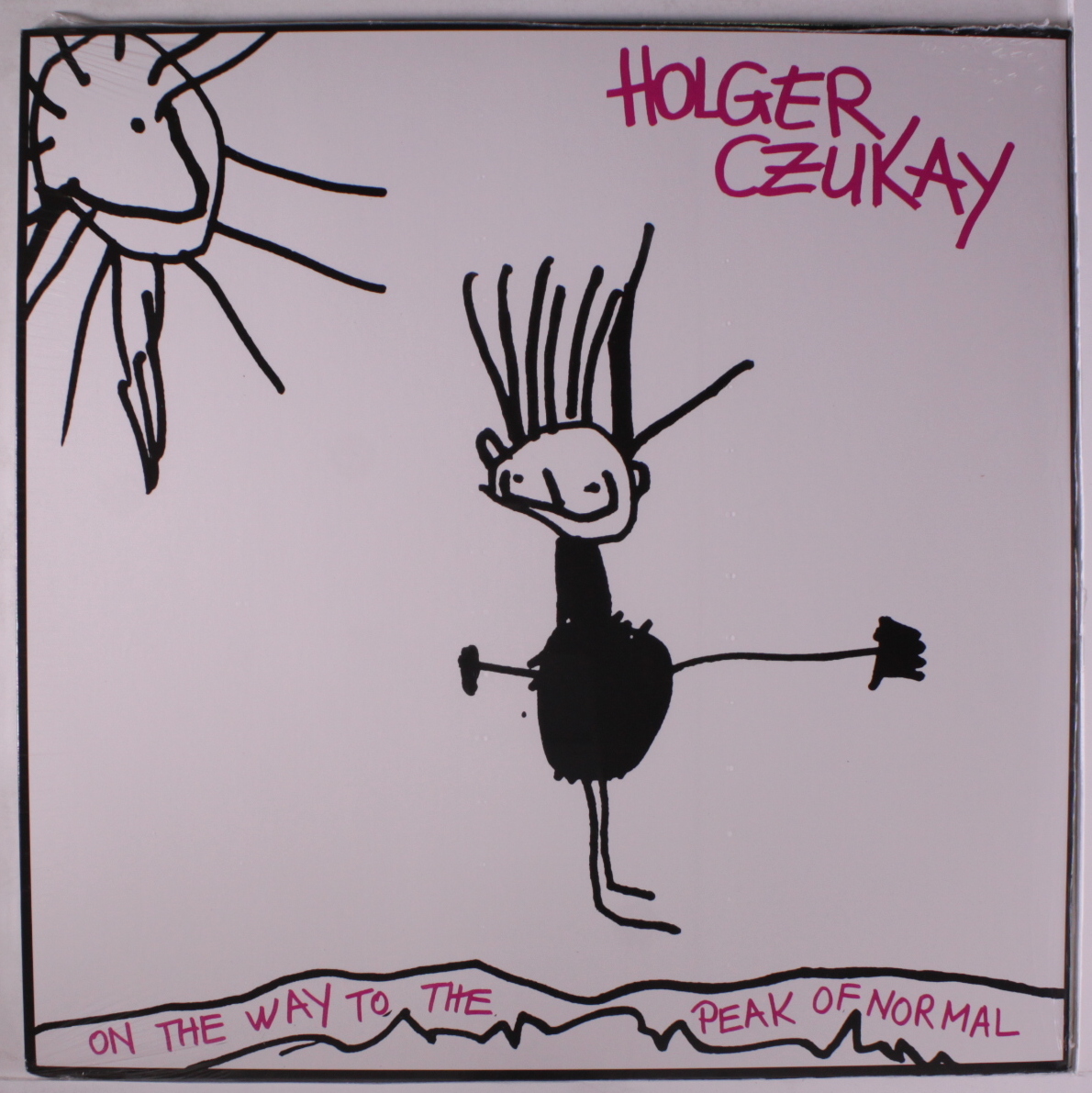

He’s explaining his ‘personal attitude towards listening to music.’ You with him so far? No, neither am I, but then again, I was never the guy at the front of the class with his hand up. Nevertheless, he goes on, ‘my composition “Ode To Perfume” (on his album ‘On The Way To The Peak Of The Normal’, 1981), is two years of work compressed into eighteen minutes. But also, I like to have silence. Silence and music belong together. It’s this quality in music that sometimes gets lost. A lot of New Music is so good because people want to be direct. But I wonder about those people. Maybe because they are young they don’t know about the quality of meditation? What I mean by meditation is just calmly thinking about something. That is why I take care editing my music – it takes such a long time. But that makes it a meditating process. And I love it when that quality is there because it means it has the ability to survive...’

We were talking – at some considerable length, during an extended promotional trip undertaken to Thatcher’s blighted isle, doing press for his album ‘Der Osten Ist Rot’ (1984), issued through a hook-up with Virgin. And it is a CD that remains – or in his words ‘survives’, as an idiosyncratic tour de force of oddities running from the title-piece, a seven-minute cut-up reworking of the Chinese National Anthem (“The East Is Red”), through to the concurrent novelty single – “The Photo Song”. But his work simultaneously extends out into a variety of other avant garde settings too, with Brian Eno (as ‘Cluster’) and the Eurythmics. He also contributes to David Sylvian’s ‘Plight And Premonition’ (March 1988) album – an association growing out of their mutual involvement with producer Conny Plank. While Holger’s partnership with equally off-the-wall bassist Jah Wobble – who he pronounces ‘Shah Vo-Bell’, is ongoing They turn up on each others records. Czukay guesting on Wobble’s critically acclaimed ‘Snake Charmer’ (1983) mini-album, a favour Wobble returns by contributing to Czukay’s entrancing ‘On The Way To The Peak Of The Normal’.

So, taking this cue from this discussion of New Music, what is Wobble like to work with? ‘He’s playing bass with two hands. OK?’ OK. ‘But he’s also playing with his whole body. And when he’s sitting at the recording or mixing desk he will have MORE than two hands. And he knows it. He’s well aware of it.’ Czukay deals in the technology of magic. Before commencing work on his ‘...Peak Of The Normal’ album he even rebuilt his own Inner Space studio in Cologne, re-rigging and customising it to by hand to his own rigorous requirements. For the studio is part of his art. It allows him to edit, arrange, and re-arrange sound. And it is here that recordings made over a two-year period can be compressed down into just eighteen minutes of completed product. With multi-tracking and dubbing, the studio can give a musician the ability to operate on a multitude of levels simultaneously – giving him ‘more than two hands’.


But this technology also has its downside. ‘Now, people can now just use an expensive synthesiser with everything inside. It plays just on its own! But tomorrow they will find out ‘oh, this effect – this effect, how boring!’ That’s why I say ‘the more the technology gets perfect, the more you can use it EASILY, the more the ‘Kremlin’ aspects come into it.’ The eyes of the Kremlin – if you understand what I mean? The grey administration. The company or whatever. It makes everybody just the same, grey, depressive amounts of walking weed. That’s what I HATE! Because music is also something that is made out of privacy, it’s just sheer privacy. Therefore, when it comes to the production of my albums, for years they are private. Then I say ‘it is ready’. And then I take people and invite them to listen to it, and I listen with their ears. Nobody has listened to it before, and in this way I’m listening to it for the first time myself. I know immediately when they like or when they don’t like something. And when they don’t like it I ask myself ‘why don’t they like it? Is what I have done here really necessary? Does it really make sense?’ And I think about it very strictly. Perhaps they are right not to like it? Sometimes they don’t dare to say it – but I can feel it. So then they go and I work again, and play it again until at last it reaches that stage where I don’t change anything. I listen every day for at least one month. Then I say ‘alright’. And this is the first time the record company can listen to it. Because NOW it goes public...’


HOW TO RECOGNISE 
DECADENT MUSIC - 
2: REMEMBERING 
FUTURE DAYS 

Czukay – born Holger Schüring, has a personal bio-file extends back as far as the final twitchings of World War II, and on up through the tutelage of oddball electronics guru Karlheinz Stockhausen, a composer who remains ‘a very good man – still, today. He is always thinking in terms of music, never just effects.’ In those pioneering early days of electronic sound-Lab experiments Stockhausen was forced to work with very rudimentary technology – ring modulators and sine-wave generators. ‘So think how big the musicianship had to be to make those things sound so far ahead! When he mixed those electronic sounds he was transforming them into a new kind of musical quality. He worked on whatever he had, filters or whatever. But his fingers were always the concentrating points of the music. He had a plan – an idea. And the plan was that there must be a balance in the whole compositional concept. That’s what fascinated me most of all, and it convinces me still.’


Czukay’s own first real ignition-point, as far as recorded history is concerned – was Can. A group whose separate components all came from different musical disciplines, but evolved together – around Summer 1968. Holger came from his avant garde electronics background, but found himself playing bass to drummer Jacki Liebezeit who had previously worked with jazzer Manfred Spoof. Both of them allied to keyboardist Irmin Schmidt and guitarist Michael Karoli. Their first big-label album together – ‘Monster Movies’ (May 1970), was recorded on primitive two-track equipment in their own hand-made studio, but its sound spins off into double helixes of concentrated sonic mugging. There are vague Velvet Underground cadences solid with acid-riff sequences, and part-spontaneous some-time scat some-time sublingual vocals overlaid with improvised Jazz doodles. ‘There is no Can piece which is ever finished...’ Irmin Schmidt once explained. Signed to UA they follow it with ‘Tago Mago’ (February 1971) a blend of lateral thinking and extreme violence high on the ESP weirdness scale, the stark seismic ‘Ege Bamyasi’ (November 1972), ‘Future Days’ (June 1973) and a further succession of fine albums with a variety of peripheral additives, crazed vocalists, telepaths, percussionists and underground movie scores. With these albums Can form the dark primal intuitive obverse side to Kraftwerk’s clean hygienic New German society.

‘To destroy something is the beginning of building up something. If you put these two aspects together then you make an interesting act, ya? That is exactly the quality of Can in those early days.’ Its energy was based on the internal tensions thrown up by conflicts in style and ideas, and the compression necessary to unite them. ‘Ya, so Can’s only chance was that everybody would reduce themselves as far as they could with what they did? Otherwise it would just be a group of four egos, and no-one likes to listen to that.’ But even after the demise of Can – alongside people like Conny Plank, drummer Jaki Liebezeit gets to play on ‘Der Osten Ist Rot’, so if the old associations persist, can Can really be said to be truly dead? ‘No. I wouldn’t say that. We still work together. But not as Can. Jaki said ‘Can has made a kind of cell division’ – do you say that?’ A cellular division, yes. ‘That is what Can did. And for me this is what life is. A group one day gets born, it’s an organism, really an organism. One hand works with the other hand – ‘hand in hand’ as we say in Germany. So OK, Can made something important – I think. And then, after a while – it died.’

So what category would you place your music in now? He explodes – ‘categories don’t mean anything. I say – just use EVERYTHING! There is NOTHING that should prohibit you. You contribute whatever your spiritual power is.’


HOW TO RECOGNISE 
DECADENT MUSIC - 
3: CHARLIE CHAPLIN 
& W.C. FIELDS 

The early 1980’s was a period generally unsympathetic to ‘legends’. But Can proved to be the exception. When John Lydon’s Public Image Ltd first issued their dense barrages of sound, it set reviewers scuttling back to early Can as the only place to find suitable comparisons. And the German band began to be re-assessed and fully credited with the significance of their torturous innovation. In fact, throughout the 1980’s Can’s legacy in general – and Czukay’s contribution in particular, was regarded with something approaching supernatural awe by experimentalist electro-industrial musicians such as Cabaret Voltaire, Throbbing Gristle and Clock DVA. The Fall even issued a single – “I Am Damo Suzuki” as a tribute to Can’s one-time vocalist (who once claimed he sang in a ‘Stone-Age language’). But even within the confines of Can, Czukay was an extremist. Richard H Kirk (of Cabaret Voltaire) once confided to me that ‘we really respect Can, and particularly Holger Czukay’s stuff. When we saw them working live he’d actually stopped playing bass with them. That was when he was using old radio sets on stage. He was surrounded by a mass of tape recorders and radio receivers, just standing there in the middle of all this equipment. And it was nice to see somebody using that solely as their instrument.’

It was into this kind of near-reverential atmosphere that ‘Der Osten Ist Rot’, and Czukay’s related projects – including his idiosyncratic stop-gap single “Cool In The Pool” c/w “Oh Lord, Give Us More Money” (consisting of edited extracts from his second solo album, ‘Movies’, 1979) attracted such positive attention and reams of good reviews. Later, in the 1990’s, it would be Radiohead (particularly on their 2000 ‘Kid A’ project) and Leftfield who would be speaking of their respect for the example and inspiration provided by Can. And this is even more exceptional, because Czukay’s celebrity value throughout this period was maintained without any live promotion whatever. ‘I was on stage with Can for ten years’ he confesses. ‘And sometimes I felt, when I was on stage, that I was not always ready for it. You feel responsible after a while in front of an audience. And I thought ‘I am not ready to feel that responsibility again’. Therefore I wanted to explore the media first, and find out about myself. When I’m ready for it, I’ll go back on stage again. And when I do go back on stage I know it will be somehow like the early Can days.’


So instead he’s using the medium of film or video as an alternative to live work? Can had a recurring TV and Movie fetish, with Czukay’s own post-Can work betraying a wealth of sly cinematographic references too. ‘Der Osten Ist Rot’ itself is wide open to a vivid visual interpretation. He explains how the idea for the title-piece evolved out of a Chinese cultural leaflet headed ‘HOW TO RECOGNISE DECADENT MUSIC...’, which attacked Rock ‘n’ Roll as the most offensive example of vile musical disease. So on record, Czukay mates the two together, the decadent capitalist music, and the ‘approved’ National Anthem, to create a stunning juxtaposition of styles. One that works just as well on the related video-tape edition as it does on CD. ‘That is what I do’ he concedes. ‘And the reason why I like to work with film is that music is very much like a film event. Because it is also a way of condensing time. And it is because I like to listen that I like to watch movies.’

Of course, the technology for making films is far more accessible now than it was, say, even twenty years ago. ‘Yes, but think about how it was FIFTY years ago. Remember when you see an old Hollywood movie of the 1930s or the 1940s, that the film media was at that time not highly developed. It was ‘unperfect’. They had to be very skilful with everything that they did. No zooms for example – how wonderful! They had to move the cameras, and they were big cameras. But look at how the picture is coming out on the screen. It’s not just simply ‘photographed’ or ‘filmed’, it is painted onto the celluloid. Those people had to put so much into their work. Today, that spirit is gone. When I see modern Movies or television – they put the cameras on something, let’s say a street scene, a Volkswagen comes by and I switch off immediately. I say ‘thank you, a Volkswagen I have of my own’. Better I drive it or touch it, but I don’t want it on the screen. Then see how an old movie is done – how a car comes from off the camera and disappears. It is a real poem. It is this quality in the music that also sometimes gets lost.’


So there could be a Holger Czukay movie – or at least, more exciting developments in the video field? He pounces on the suggestion like a moustache-twirling Silent Movie villain, as though he’s been waiting for the opportunity to vent his enthusiasm on a willing volunteer. ‘I have already decided that this is what I will do,’ he twinkles conspiratorially. ‘I thought maybe one day television might ask me if I could make a show. So I thought ‘what will you do if they ask you? Could you do it?’ And I thought ‘no, you couldn’t’. So I borrow a video recorder and I put myself in front of the camera as if I am a Pop Star, ya? Like – let’s say, Tom Jones. But even worse than that. And when I watch myself on the screen I say ‘my god, this is IMPOSSIBLE’. But I know, somehow, that there is somewhere the solution. So I go on recording for months, but all the time I’m thinking that there is this task that I have to do. This technique that I have to master. I name it ‘Cool In The Pool’, and now I have to get ‘Cool In The Pool’ over, and make other people fascinated by it. But how do I do it? That depends on your fantasy! So I develop it out more and more, then I made a video out of it to show to some people, and it’s somehow funny.

 I studied WC Fields. I studied especially Charlie Chaplin at that time too, because I knew that he has this quality. These are the people who have everything in their own hands. Charlie Chaplin edited. He was standing behind the camera. He standing in front of the camera. He was writing the scripts and he was making the music. That is really something, I thought. To get that special quality out, you have to be those hundred hands. WC Fields is the same. He fascinates me. And it took me a long time until I understood why. Until I understood that quality of his. I didn’t understand it all in the beginning. But now I EAT HIM like crazy. I can watch his Movies – ‘Never Give A Sucker An Even Break’ (1941, Universal) I can see that 1000 times and laugh always about the same thing. And I say ‘why is it you’re able to laugh 1000 times at the same things?’ That is something where the humour goes beyond the joke. And that’s what I like to achieve in my music. Exactly that. That people can listen to it after twenty years, in the same way that I enjoy watching WC Fields. Because when you see a fascinating movie, you are banged on the screen. You don’t dare to look left or right. Whereas what you usually do when you listen to music is to use it as a background for all kinds of housework. That doesn’t happen when you watch a Movie. So I say ‘I make this kind of music where people LISTEN again’.’

Hey, I’m listening...


HOLGER CZUKAY: 
THE CAN PROJECTS 

Aug 1969 – DELAY 1968 500 privately-pressed limited edition, officially released in 1981

May 1970 – MONSTER MOVIE (UA) with vocalist Malcolm Mooney, includes ‘Father Cannot Yell’, ‘Outside My Door’ and 20-minute ‘You Doo Right’

Sept 1970 – SOUNDTRACKS(UA) with Malcolm Mooney, includes ‘Mother Sky’, ‘Deadlock’


Feb 1971 – TAGO MAGO(UA double-LP) with vocalist Keni ‘Damo’ Suzuki, includes ‘Aumgn’ and ‘Peking O’ Nov

1972 – EGE BAMYASI (UA) with ‘Spoon’ and ‘I’m So Green’

Jun 1973 – FUTURE DAYS (UA) final album with Damo Suzuki, includes ‘Moonshake’ and ‘Spare A Light’

Nov 1974 – SOON OVER BABALUMA (UA) with ‘Quantum Physics’ and ‘Chain Reaction’

Sept 1975 – LANDED (Virgin) with ‘Hunters And Collectors’ and ‘Vernal Equinox’

Oct 1976 – FLOW MOTION (Virgin) with ‘I Want More’ and ‘Smoke’, features Pink Floyd’s Dave Gilmour

May 1976 – UN/LIMITED EDITION (EARLY RARE) (Caroline) compilation

Nov 1976 – OPENER (Sunset) compilation of 1971-1974 period

Mar 1977 – SAW DELIGHT (Virgin) with ‘Animal Waves’ and ‘Fly By Night’, features Rosko Gee and Reebop Kwaku formerly of Traffic

July 1978 – OUT OF REACH(Harvest/ Lightning) with ‘Serpentine’ and ‘November’, Holger Czukay is not featured on this album

Oct 1981 – INCANDESCENCE(Virgin) compilation

Oct 1978 – CANNIBALISM(UA) compilation

Feb 1985 – INNER SPACE (Harvest/ Lightning) re-issue of 1979’s ‘CAN’ LP with Holger Czukay credited as ‘tape editing’ only, includes ‘All Gates Open’, ‘Safe’, ‘Sunday Jam’, ‘Sodom’, ‘Aspectacle’

Oct 1989 – RITE TIME (Mercury) re-formed original line-up complete with Malcolm Mooney, includes ‘The Without Law Man’ and ‘Like A New Child’

1993 – CANNIBALISM 2


1995 – CAN: THE PEEL SESSIONS (Strange Fruit SFR CD 135) radio slots from an 18:41-min ‘Up The Bakerloo Line With Annie’ from 20th Feb 1973 with Suzuki, through ‘Return To BB City’ and ‘Tape Kebab’ from 8th Oct 1974, to ‘Mighty Girl’ 14 May 1975

HOLGER CZUKAY: 
THE SOLO PROJECTS 

1968 – CANAXIS 5 (Factory) as by HOLGER CZUKAY WITH ROLF DAMMERS, other Can members contributing

Jan 1979 – MOVIES (Electrola, EMI) as by HOLGER CZUKAY, features singles tracks ‘Cool In The Pool’, ‘Oh Lord Give Us More Money’ plus ‘Persian Love’ and ‘Hollywood Symphony’. Features Rebop Kwaku Baah (organ), Jaki Liebezeit (drums), Michael Karoli (guitar) and Irmin Schmidt (grand piano). Bonus ‘Cool In The Pool’ instrumental on 2006 CD re-issue

1981 – PHEW (Pass) Holger Czukay and Jaki Liebezeit teamed with vocalist PHEW


Feb 1981 – ON THE WAY TO THE PEAK OF THE NORMAL(Electrola, EMI), features ‘Ode To Perfume’ (18-minutes), ‘On The Way To The Peak Of The Normal’ (with Harry Rag), ‘Witches Multiplication Table’, ‘Two-Bass Shuffle’, ‘Hiss ‘n’ Listen’ (with Jah Wobble), with Jaki Liebezeit (drums), Conny Plank (synthesiser violin)

1982 – FULL CIRCLE (Virgin) as by HOLGER CZUKAY, JAKI LIEBEZEIT & JAH WOBBLE

Oct 1983 – SNAKE CHARMER (EP, Island) as by HOLGER CZUKAY, JAH WOBBLE & THE EDGE

May 1984 – DER OSTEN IST ROT (Virgin) as by HOLGER CZUKAY, features ‘The Photo Song’, ‘Das Massenmedium’, ‘Collage’, ‘Michy’ and ‘Esperanto Socialiste’

Jan 1987 – ROME REMAINS ROME(Virgin) features ‘Sudentenland’, ‘Perfect World’ and ‘Blessed Easter’ which controversially mixes a cut-up of a Papal speech

1989 – FLUX AND MUTABILITYwith DAVID SYLVIAN

Jan 1991 – RADIO WAVE SURFER(Virgin) with Sheldon Angel (vocals), Michael Karoli (gtr) Jaki Liebezeit (drs), features ‘Voice Of Bulgaria’, ‘We Can Fight All Night’ and ‘I Got Weird Dreams’

1993 – MOVING PICTURES(Mute Records) with U-She vocals on ‘Dark Moon’ and ‘Longing For Daydreams’, Romie Singh vocals on ‘All Night Long’ and ‘Rhythms Of A Secret Life’, plus ‘Radio In An Hourglass’ and ‘Floatspace’

1997 – CLASH (Sideburn) collaboration with DR WALKER

1999 – GOOD MORNING STORY (Tone Casualties) with U-She vocals on ‘Invisible Man’, ‘Atlantis’, ‘Mirage’, ‘World Of The Universe’, remastered and expanded 2006

June 2000 – LA LUNAone extended electronic gamelan track, remastered and expanded 2007

2001 – LINEAR CITY (Dignose DIG002) with ‘Africana’, ‘Echogirl’, ‘Ten Steps To Heaven’ (23:02-minutes), ‘Africana Suselita’, remastered and remixed 2006

2015 – ELEVEN YEARS INNERSPACE(Grönland Records LPGRON143) with ‘In-Between’, ‘Secret Of My Life’, ‘My Can Axis’, ‘My Can Revolt’, ‘A Maiden’s Dream’, ‘Breathtaking’

Also seek out:
THE CAN BOOK by PASCAL BUSSY &
ANDY HALL (SAF Publishing – Tel: 0181 904 6263)


Saturday, 28 January 2017

Poem: NO MORNING AFTER


NO MORNING AFTER 


kissing your fingertips, 
a perfection 
in stillness and silence 

every time we love 
we make 
new vocabularies 

across a million years 
of dead leaves and dying suns 
in songs that remain unsung 

our fingers confide 
secrets 
onto another skin


Calligraphy: Karen Smithey

Thursday, 26 January 2017

Interview: CAMEL - Tales From The Emerald Exile


CAMEL: 
 TALES FROM THE 
EMERALD EXILE 

‘Harbour Of Tears’ is CAMEL’s sixteenth album. 
But this time it’s personal. Camel’s history 
begins with Van Morrison, and THEM
 But the history of the album goes back further – 
to ANDY LATIMER’s family roots in Ireland, 
and their forced migration from 
Cóbh Harbour in County Cork


You couldn’t – as they say, make it up. Unless you are Andy Latimer.

I mean, 1996 need concept albums like Arnold Schwarzenegger needs more muscles, right?

And yet here come Camel with ‘Harbour Of Tears’, their twelfth studio album. Camel, you may recall, are the Progressive Rock band whose previous finest hour came with a full high profile orchestral version of their epic extended work ‘Snow Goose’ (1975) performed live and lavish at the Albert Hall. Yet here they come again with not so much a concept album, according to their PR, as more ‘an album of concept’. And oh, the unbearable brightness of its being. Here there be newly minted neo-classical string arrangements, horns and flutes. There are exquisitely marbled swooping guitar solos, melancholy and reflective. All the kind of ingredients cred-conscious reviewers normally dismiss as things that will not unduly interfere with listener’s sleeping habits. But wait – ‘Harbour Of Tears’ is something more. It’s a documentary-style ‘Roots’ project too, one that takes the band’s Andy Latimer down through his own personal DNA gene-trail to his Irish ancestry, a time when ‘winds blew our lives, and scattered our seeds…’

These are tales from the Emerald Exile. And it deserves your attention. At least once.


‘This happens when you get the death of a parent’ he divulges carefully. Reticently. For this is personal stuff. ‘It’s a natural thing. I’m sure a lot of people come up against it. The idea came after my Dad died. I realised that I knew very little about his side of the family. So I started to enquire. I tried to discuss his past. And I discovered things I hadn’t realised before. His mother – my grandmother, was Irish, and as I got deeper into it I found out that a lot of her family members had left Ireland from this place called Cóbh Harbour (Cove Harbour) in County Cork. But the story ended there. Nobody remembers more. Nobody knows anything about what happened to them or where they went to. The story came to an abrupt halt. So I thought ‘where is this place called Cóbh Harbour?’ I found different stories relating to its history and how people came and went. I learned that it was dubbed ‘The Harbour Of Tears’ because it was the place that all these families left Ireland from. It was their last sight of Ireland. And that really did strike a chord. That’s how it started…’

The album opens in Gaelic mode with former Ultravox backing singer Mae McKenna’s high Folk vocal enveloped in traditional instrumentation picked out by Latimer’s keening Floydian guitar. From there it follows the diaspora of migrants to America, ‘I am one of seven brothers,/ five of us must leave to start again,/ in the land of saints and martyrs’, in strands of stories and letters home. Rich in the history of ‘Sending Home The Slate’ (about which more later), embroidered with strings and linked by haunting instrumentation, it’s an obvious work of intelligent premeditation. If occasionally you feel it’s one lacking flesh, flash, fire or – despite its highly personal genealogy, in emotional commitment. There are passages as emotionally involving as the Maxwell Brothers trial.

But is the concept album itself – sorry, the ‘album of concept’, really still a viable currency in 1996?


‘I don’t know. I only do it ‘cos I enjoy doing it. It’s a challenge to me. I love the idea of weaving all the melodies and themes together. I don’t necessarily KNOW whether it’s a commercial thing or not. The fans who buy the records seem to like it. A lot of them write to me and say ‘you’re the only person doing this’, and I love that aspect of it. So – although it may not be hugely commercial, it’s very satisfying. ‘Harbour Of Dreams’ was a nice project to do. And… I mean, I might just have American relations! I don’t really KNOW where all those people went to. So it’s possible.’

It’s that personal angle that gives the album its unique relevance. Previously, and more esoterically, Camel had worked from literary sources. ‘Hey, I haven’t done THAT many concepts!’ he protests. ‘But yes, I like the challenge of doing a book. And a lot of the albums are loosely based on conceptual ideas. ‘Snow Goose’ (adapted from a children’s story by Paul Gallico) was one, of course. And then ‘Nude’ (1981) was a story very much based in TRUE FACTS actually. And then – I think, ‘Stationary Traveller’ (1984, with lyrics by partner and long-term collaborator Susan Hoover) was a sort-of looser concept. And then I came back to it with ‘Dust And Dreams’ (1992), based on John Steinbeck…’

A project followed by no less an artist than Bruce Springsteen. His ‘The Ghost Of Tom Joad’ (1995) is also an ‘album of concept’, also drawing on Steinbeck’s same ‘The Grapes Of Wrath’.

‘He got a lot more coverage than we did.’ Latimer laughs so exuberantly that the last word comes out d-he-he-he-he-id. ‘I bought the Springsteen album actually, to listen to it. It’s interesting. A bit too low-key for me though. A little one-dimensional.’

The multi-dimensional ‘Harbour Of Tears’ by contrast, seems in some ways to be as much to do with a novel or a movie soundtrack as it is to do with Rock ‘n’ Roll. ‘Yes. A lot of my music is like that. It has different scenes and sounds. A lot of people say…’ he drops his voice to a suggestive whisper, ‘‘how come you don’t get into movies?’ They don’t seem to realise that it’s bloody difficult!’

--- 0 --- 

It’s a little like speaking to a hologram. A telephone interview, I mean.

It’s like the holo-suite sequence in ‘Star Trek: The Next Generation’ where Data talks to computer-simulated replicants of Isaac Newton, Albert Einstein and Prof Stephen Hawking. A little like that, but not quite. Andy Latimer is in Mountain View, California, where it’s warm and fragrant. Even in February. San Francisco is just down the road apiece. I can construct a facsimile of him from bits of old photos on album sleeves and CD inserts. His face lost in shapeless cascades of hair. His sharp features animated by a slanting grin. I can assemble these impressions photofit-style and morph them onto the likeably unassuming and pretention-free voice on the other end of the line. But I could be wrong.

Time inflicts changes. And Camel’s had more changes than most. You couldn’t – as they say, make it up.

The name Peter Bardens – of Van Morrison fame, initially looms large in the story. In fact, at one stage, the band was even known as Pete Bardens’ Camel, to distinguish it from the then-current Peter Frampton’s Camel. ‘Yes – yes, of course. Pete was a late member of Them. He was definitely with Them when Van was in the band, but I don’t think he actually played on “Gloria” or anything.’ Andy could be wrong. When Van Morrison roared out of Belfast as vocalist with the Angry Young Them his potential as Van The Man was instantly recognised by producers Bert Berns and Tommy Scott, but during the initial recording sessions that resulted in the debut album – as was common practice at the time, the group themselves were not deemed up to the technical demands of studio work. So Van sang, but the rest of Them were excluded in favour of session players, including Jimmy Page and keyboardist Pete Bardens. So it’s likely that – yes, he played on “Gloria”, “Here Comes The Night”, or at least some of the other classic Van sides. And when this practice understandably provoked resentment within the group, and Belfast Gypsies Jackie and Patrick McCauley split, Bardens stepped in to assume full Them membership. He subsequently went on to join struggling young Blues-shouter Rod Stewart and Peter (Fleetwood Mac) Green in the short-lived Shotgun Express, recording the highly-collectible single “I Could Feel The Whole World Turn Around” with them.

Meanwhile, Andy Latimer with other proto-Camels Andy Ward and Doug Ferguson, were working as part of the back-up band for singer/songwriter Philip Goodhand-Tait, DJM’s failed answer to Elton John. A guy who nevertheless wrote hits for the likes of Love Affair (“A Day Without Love”) and Roger Daltrey (“Ocean’s Away”). ‘It was tough because we were doing our own Roadie-ing and driving at the time, and hardly getting any money either. A fiver (£5) a gig between the three of us. But we were young and you do these things, don’t ya! Until basically, we got the sack. Goodhand-Tait was a good writer, but he didn’t like stage performing at all, and when we played live we were kind-of overshadowing him. The record company who were handling him didn’t like that. So they got rid of us.

 ‘Which, in retrospect, was very good. It worked out very well for us. Because by then Andy, Doug and myself had had this band together for two years. We put an advert in ‘Melody Maker’ for a keyboard player. And Pete (Bardens) answered it. He came along. He didn’t have any gear. He didn’t even have an organ or anything. And yet it worked. It was fantastic. It had this tremendous energy and we all felt really good about it. He said ‘look, I’ve got these gigs lined up in Ireland’. So we said ‘yeah, let’s go and do them’. We weren’t too together. We were doing bits and pieces of new material, and then padding the set out with bits of Blues. But this was at the time when they (the IRA) were blowing up Pubs and all sorts of things, and everyone was frightened of going over to Northern Ireland, hence they were starved of musicians. And as a result the gigs were absolutely fantastic, they went down a storm. I’m sure that was more because they were starved of music – because we weren’t THAT good. I loved Ireland. We went up north to the Giant’s Causeway. Ah, it was so beautiful…’


Hence Camel. A contract with MCA followed soon after, resulting in albums ‘Camel’ (1973) – with writing credits split equally between Bardens and Latimer, and ‘Mirage’ (1974, Deram), with Latimer’s multi-part “The White Rider” suite drawing on JRR Tolkien. Yet it was assumed to be Bardens’ band. There’s even a suggestion that – to draw a Pink Floyd analogy, that Bardens was Camel’s Syd Barrett to Andy Latimer’s Roger Waters. That Bardens was the initial creative force whose burn-out allowed Latimer to wrest control of the band.

‘Was he our Syd Barrett?’ Andy muses thoughtfully. Then laughs. ‘It WAS a kind-of weird thing for us. Pete had already had two albums out before joining us (‘The Answer’ in 1970 as The Village, and the US-titled ‘Write My Name In The Dust’, 1971), and because he had that track record everybody said ‘oh, it’s Pete Bardens band’. But that was very much something that was dubbed on from the outside. I was writing most of the material at that time, as I have all the way through Camel. Within the band it was NEVER his band. He was just a PART of the band. Pete and I just used to laugh about it at times.’ He says all this completely without irony.


But it WAS ironic that just as Camel were breaking really big with their third album – ‘The Snow Goose’, and seemed on the brink of even greater things, that the squalling brat of two-minute one-chord-wonder Punk arrived to destroy the whole Progressive Movement that they were very much a part of. Again there seems little bitterness or rancour. ‘Y-e-e-e-s. We did sort of have a bit of success with ‘Snow Goose’, and then the Punk scene came in which really did knock everything sideways. But I think it was, on the whole, a reasonably healthy thing. It did knock all the pompous Superbands who were making fortunes in the studios and it turned them upside-down. But we… survived it. We just continued to gig and keep going.’

It occurs to me at around this point that Andy Latimer is something of a self-contained continuum. In a fiercely independent Indie/Trip-Hop jungle which claims to champion freedom and innovation, yet in many cases produces a mere alternative conformity, it is determined contra-trendies like Camel who are both truer and more honest about their music, by cheerfully ignore the zeitgeist to follow their own muse despite the ridicule of their peers.

Pete Bardens quit ‘in 1977? No – 1978 wasn’t it!, ‘cos it’s nearly eighteen years ago now. Gor Blimey! Yes. He left us and he went straight back to Van Morrison to do an album with him.’ Other musicians came and went. But Camel continued. And continues. Bassist Doug Ferguson quit and ‘the whole dynamics of the band changed.’ Mel Collins came in from King Crimson. Dave (and Richard) Sinclair from Caravan and Duncan MacKay from Cockney Rebel joined up, while Andy Ward left for a brief link-up with Marillion during the Prog-resurgence of the early-eighties. The band’s centre of gravity simultaneously shifted to America where a sizeable audience for mature intelligent adult Rock remained, unaware, or unconcerned by shifts in musical taste. But ‘Camel has always been about the same sort of thing. It’s always been a direction. In a way, it doesn’t matter who’s in the band. You keep the direction together, and that’s what it’s all about.’

And now… ‘Harbour Of Tears’. Album number sixteen (including live and compilation sets).

‘I always do a lot of research’ he volunteers. ‘I read so many Irish stories and things that relate to Ireland during that period. And ‘Sending Home The Slate’ was a thing that they did. I found out that when a lot of the Irish people went to America they sent home money for all sorts of things, for other family members to come out to America, or for things like putting new slates on the roof. And that’s how it became ‘Sending Home The Slate’. And yes, that song is like an open letter home (‘I’ll not send empty letters/ I know you need the rent’). ‘Gandy Dancing’ – mentioned on the same track, is something that they used to do when they were building the railroad. One guy would be the Gandy Dancer, and he’d shout out this tune, so they’d all move the rails in time. It was a work song. And it was called Gandy Dancing…’

I mention Sinead O’Connor’s “Famine”, with its roots in the same period.

‘I’m not a political person’ he admits. ‘But it’s hard not to get too political when you see what the Irish went through. It was an awful time.’ He gives a slightly self-conscious little laugh. ‘The English have got a lot to answer for.’

The album closes with the sound of waves breaking on a shingle beach while gulls soar above the speakers. This goes on for some time. It’s like one of those New Age Ambient Relaxation Tapes designed to cleanse and purify the polluted urban soul. ‘It was just an afterthought. An idea that I had’ he explains, ‘I thought yeah, why not put it on for twenty minutes, it’ll give you time to reflect on the album. Whether it works in that way or not is another thing.’

The waves probably come from a Library Sounds Effects disc. But before probing deeper I give Andy Latimer the opportunity of constructing just one more holo-suite image. He could, as they say, make it up. So you went on a Roots-style pilgrimage all the way to Cóbh Harbour. You sat on the very beach that was your ancestor’s last glimpse of Ireland. And for twenty minutes reflective homage you taped the sound of the waves?

‘That’s a lovely thought. Yes – I DID go to Cóbh Harbour. And yes – I recorded the waves.’ He lies straightfaced.


Pete Bardens 
19 June 1944 – 22 January 2002 

HARBOUR OF TEARSreleased 20 January 1996, produced by Andy Latimer, with Andy (guitars, flute, keyboards, vocals), Colin Bass (bass) and Mickey Simmonds (keyboards). Songs written by Andy with lyricist Susan Hoover. With ‘Irish Air’ (traditional), ‘Irish Air (Instrumental Reprise)’, ‘Harbour Of Tears’, ‘Cóbh’, ‘Send Home The Slates’, ‘Under The Moon’, ‘Watching The Bobbins’, ‘Generations’, ‘Eyes Of Ireland’, ‘Running From Paradise’, ‘End Of The Day’, ‘Coming Of Age’, ‘The Hour Candle (A Song For My Father)’. Running time: 01:02:08


Wednesday, 25 January 2017

Cult Comedy: LORD BUCKLEY


HIPSTERS, FLIPSTERS, 
AND FINGER-POPPIN’ DADDIES
 - LORD BUCKLEY SAYS 
WELCOME TO HIGH MASS


‘Now I’m goin to put a cat on you who was the coolest, grooviest, sweetest, wailin’est, strongest, swingin’est cat that ever stomped on this jumpin’ green sphere, and they called this here cat…’ Lord Buckley. You remember Alternative Comedy? It was ‘Saturday Night Live’ launched by NBC in 1975. I was the ‘Comedy Store’, Steve Martin, Ben Elton, John Belushi, Rik Mayall, It was ideologically sound, it doesn’t condescend, it’s sharp, fast, smarts like a pepper-spray and cuts like Stanley Knife blades, right? But the hip stand-up monologue goes deeper. Little Brother might name-check Stanley Holloway and hence plug his routines into the North-of-England tradition that goes with Rob Wilton and Frank ‘King Twist’ Randall. Whereas American lines of influence can’t fail to trip over Lenny Bruce who brought self-psychoanalysis to the Supper Club circuit, Slim Gaillard’s ‘Vout Orooni’ BeBop babble… and the very great Lord Buckley. Lauded by Henry Miller and Jack Kerouac, as well as Bob Dylan and Frank Zappa, it was Buckley who opened up language with the holy ghetto-cleaver of hip verbal jumpin’ jive.


Born 5 April 1906, Richard Myrle ‘Lord’ Buckley invented vocabularies, the first to recognise the speed-energy and liquid fluidity of Black slang – and make it dance to his own ecstatic vision. He played sleazy burlesques, saloons, and strip joints, before OD-ing on a booze-induced stroke on 12 November 1960. But ‘the bad jazz that a cat blows wails long after he’s cut out’ – and through the good graces of the Demon Verbals record label, three historic Lord Buckley albums were once again circulating in the mid-1980s. And they stood with the best of the newest New Waves around. Buckley – ‘Lord Of Jive’, rasps a bizarre tongue from the record sleeves, with a Salvador Dali moustache, the kind of pith helmet last seen in ‘Carry On Up The Jungle’ (1970), and a tuxedo, a ludicrous combination he’d augment with hash-pipe on stage to lube the free-scat jargon of routines like “The Nazz” or “Willie The Shake”, each goof eulogy structured like jazz solos in fractured Black street-rap that’s now amazing, and must THEN have been staggering – near incomprehensible to all but the hippest of the hipster cult fliers of the seedy jazz underworld.


‘Lord Buckley In Concert’ (1985) includes both those stand-out stand-up routines, plus “Black Cross” and “God’s Own Drunk”, and more, with ‘Blowing His Mind (And Yours, Too)’ (1985) continuing the esoteric Beat vibe live at Hollywood’s ‘Ivar Theatre’ in 1959 and the World Pacific Studios 1960, and ‘Bad Rapping Of The Marquis De Sade’ (1986) completing the trilogy with newly-discovered live performances like “H-Bomb” and “The Chastity Belt”, recorded during the year of his death in Oakland, California. Gutter monologues for nighthawks, hip-zig-zag-urmphs wired into the groove subterranean. But in one ear and out tomorrow? Doncha believe it. ‘When he laid it down – WHA-BAM – it stayed there!’ Lord Buckley’s an original, was – is, and further. That’s a commodity that’s too rare to ignore. So don’t ignore it.


LORD BUCKLEY IN CONCERT(1959 Liberty Records, 1964 World Pacific WP-1815 & UK Fontana 688-010ZL, 1985 Demon Verb 4) with side one: ‘Supermarket’, ‘Horse’s Mouth’, ‘Black Cross’ and ‘The Nazz’. Side two: ‘My Own Railroad’, ‘Willie The Shake’ and ‘God’s Own Drunk’

BLOWING HIS MIND (AND YOURS, TOO) (1966 World Pacific WP-1849 & UK Fontana TL-5396, reissued 1985 Demon Verb 3 with original inner sleeve) with side one: ‘Subconscious Mind’, ‘Fire Chief’, ‘Let It Down’, ‘Murder’ and ‘The Gasser’, recorded live at the Ivar Theatre, Hollywood 12 February 1959, and side two ‘Maharajah’ and ‘Scrooge’ recorded at the World Pacific Studios in 1960


BAD RAPPING OF THE MARQUIS DE SADE(1969 World Pacific WPS-21889, 1986 Demon Verb 6, reissued on CD 1996 World Pacific CDP-7243-8-52676-28) with side one: ‘Bad Rapping Of The Marquis De Sade’ (16:10-minutes) and ‘H-Bomb’, and side two: ‘The Chastity Belt’, ‘The Ballad Of Dan McGroo’ and ‘His Majesty The Policeman’ all recorded live at the ‘Golden Nugget’ in Oakland (1960) plus two bonus tracks on the CD ‘Maharajah’ and ‘Scrooge’ reproduced from ‘Blowing His Mind (And Yours, Too)’


Monday, 16 January 2017

Rock 'n' Roll Pioneer: MERRILL E MOORE


MERRILL E MOORE: 
ROCKIN’ AT THE 
HOUSE OF BLUE LIGHTS 

 26 September 1923 – 14 June 2000 


I can accept that, at the time of his greatest hits Duane Eddy was no Segovia. And Sandy Nelson was no Buddy Rich. In the same way, Merrill E Moore was never a great keyboard technician. Even within the narrow confines of his peer group – that of the odd music-form known as Rockabilly, he never attained the accomplished highs of those who’d come before him – the Boogie-woogie and Western Swing piano players that he’d listened to, and learned from during the 1940s. But then, anyone who loves Rock ‘n’ Roll for the right reasons, know that virtuosity is a small part of what it takes to become great. Rock ‘n’ Roll is all about passion, and not precision.

So why is Merrill E Moore remembered? He represents a musical cul-de-sac, his recordings were few, and even these are flawed. Yet they change hands for large sums of money, and his name has become the centre of a minor cult, a password into the inner sanctum of Rock cognoscenti. Moore had fire.

Rockabilly and Country-boogie were hybrids. The initial tentative fumblings to reach out across the great racial divide and sniff out what the Blacks were doing on the other side of the tracks. The first steps of what was to lead to Rock ‘n’ Roll. It began with the addition of a drum-kit to the standard line-up of the C&W group. An innovation that was to have far-reaching implications, but it was not yet Rock… it was not Black enough, not infused with the earthy power of R&B enough for that. But within Rockabilly – and within the Rockabilly piano-playing of Moore (and Moon Mullican) lay the seeds of a style that would be adopted by Jerry Lee Lewis, and many others.

‘Merrill E Moore’ wrote journalist Tim Johnson, ‘is one of those legends of the Country Rock era who, although they’ve never had complete commercial success, have been hailed as The Start Of it All’ (‘Dalkeith Advertiser’, 22 May 1969). Therein lies his importance.

Merrill Everett Moore was born in 1923 in Algona, in the state of Iowa, and started playing piano as a child. He studied keyboard for several years and was diversely influenced by styles ranging from Jazz and Classical to Church and Country music. By the time he was seventeen he’d already developed his boogie left-hand style which would later be augmented by his pounding right-hand improvisations, chopped rhythms and steady drum back-ups.


In the late 1940s, following radio and ballroom work – and a US Navy wartime spell, he moved to San Diego, California, with a burning thirst to play wherever he could get work. This ‘Good Old Boy’ steeped in the music of the country, was soon working the lucrative club scene. Initially both he – and Ella Mae Morse on the West Coast, plus Boyd Bennett in the mid-West, were developing a boogie-beat and band-shouting style vaguely derived from that of Amos Milburn and Wynonie Harris. Rock historians Phil Hardy and Dave Laing opine that the variant was ‘technically crude but well-received’ (in the Panther ‘Encyclopedia Of Rock Volume 1’, 1976). It may be true that they lack the authentic intensity of the artists they drew from, and to an extent rely on the flashy excitement generated by the instrumental back-up rather than through keyboard skills alone.

In 1952 – aged twenty-nine, Moore signed a deal with Capitol Records, and was to remain with them for the six years during which the various strands of Rock ‘n’ Roll came together to explode across the sleepy face of the Western World. The label also recruited Gene Vincent – in 1956, prodded from its complacency by the commercial necessity of answering RCA’s Elvis Presley hegemony. But – aside from producer Ken Nelson who accomplished this coup, Capitol had a condescending attitude towards its ‘down-market product’, which – at the time, also included Johnny Otis and Esquerita.

Moore’s recording success was erratic. He had regional and national hits with his solo sides, laying down the classics on which his later reputation would be based. Although “House Of Blue Lights” had been written in 1946, and had already provided hits for Ella Mae Morse and the Andrews Sisters, Moore remakes it into his own definitive version. As much a part of Rock mythology as ‘Heartbreak Hotel’ the ‘house’ was referenced by Little Richard in “Good Golly Miss Molly” and nudged the title of Deep Purple’s twelfth studio album in 1987. There’s a story that Moore was unable to take advantage of the single’s gathering momentum with hard national touring, due to the insistence of the ‘Buckaroo Club’ – or maybe it was the ‘College Inn’? that he fulfil his six-nights-a-week performing contact with them. If true, he seemed to bear no grudge.

“Down The Road Apiece” was another song with previous history going back to its 1940 debut by the Will Bradley Trio, and Chuck Berry also did a version which the Rolling Stones use as a template for their own remake, but Moore’s revision stands its place with them all. While “Rock Rockola” is another slab of pyrotechnical crude R ‘n’ R energy. Each of them fuse Moore’s unique boogie piano with the then-embryonic white Country end of the Rock spectrum. Yet he never achieved a hit record big enough to brand his name across a mass market, or to reach UK record buyers. Indeed, only three of his singles from this period were issued here – through Decca. His wild barrelhouse playing with contrastingly cool vocals set him apart from the more commercial approach of frenetic vocals dominating the mix.


As well as his solo recordings Moore was doing prolific studio session work, appearing on Tommy Sands “Teenage Crush”, plus records by Kay Starr, Faron Young and Wanda Jackson’s Capitol hits. Often playing alongside guitarist Roy Clarke and Vincent’s Blue Caps on such occasions. His playing can be heard on Wanda Jackson’s ‘Rockin’ With Wanda’ LP and her 1960 hit “Let’s Have A Party”. Later, she was to return to C&W, while Moore dropped out of the recording scene for a decade, in favour of club and radio work, appearing on the LA ‘Hometime Jamboree’ with Tennessee Ernie Ford. By 1962 he was doing hotel lounges back in the San Diego area.

A situation that lasted until the end of the sixties, when proto-Rock and Rockabilly had become highly-collectible, with enthusiasts searching out rarities and obscurities. To meet this specialist market, some of Moore’s best solo material from those Capitol years were collected by Ember, and would form the basis of his second period of recording activity. In July 1967 ‘Bellyful Of Blue Thunder’ was issued, the first of two Ember albums of reissued material from Moore’s rocking past. The album features “House Of Blue Lights”, ‘Bell Bottom Boogie”, “Rock Island Line” and “Rock Rockola”.

It was followed in May 1968 by ‘Roughhouse 88’, a set featuring “Sweet Jenny Lee” and “Snatchin’ And Grabbin’” aligned against Moore’s unique reading of “Five Foot Two, Eyes Of Blue” and “Cooing To The Wrong Pigeon”. A single – “Down The Road Apiece” c/w “Buttermilk Baby” was lifted from the second set. The albums were largely well-received by a coterie of Rock fans, and probably represent one of the few solid worthwhile achievements of that year’s much-touted Rock revival. Reviewing ‘Roughhouse 88’ ‘Record Mirror’ proclaimed ‘Merrill is alone now, no-one else plays like this and his wild, yet musically superb piano work surpasses anyone else on the scene.’


Moore’s grassroots reputation, which had lain fallow since the demise of the first Rock ‘n’ Roll wave, was – at least in the UK, on an upward turn. Max ‘Waxie’ Needham wrote an authoritative revaluation of Moore for ‘Record Mirror’ (October 1967), and later commented ‘Country Rock, as Merrill Moore plays it, is music of special brilliance, played by a brilliant specialist’ (from ‘Rock Chunks’ in ‘Top Pops’, 26 April 1969). Oddly enough it appears the wheel has turned full cycle, for not only were the records enjoyed as the good vibrant Rock that they undeniably were, but they were being analysed and examined as valuable artefacts by the new breed of Rock academics.

With a wide open grin and a big Stetson hat, this new prestige was vividly made flesh by the reception Moore received during the Easter 1968 UK ‘Wembley C&W Package’ on which he shares the bill with Conway Twitty, Bill Anderson, George Hamilton IV, and other such luminaries. He appeared on BBC-TV’s ‘Late Night Line-Up’, and reminisced to the press (to Wesley Laine of ‘Record Mirror’) about watching Hank Williams arrive an hour late for concerts – ‘a most miserable man, just like the lyrics of his songs’, about meeting Elvis Presley on the Southern Californian set of Elvis’ TV special, and of his respect for British artists Lonnie Donegan, Tom Jones, and Jazz pianist George Shearing.


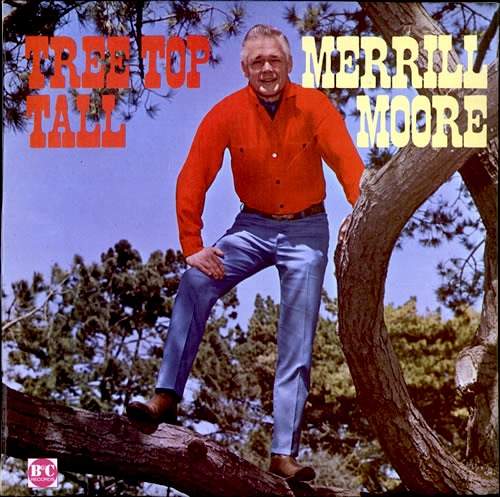
It was a direct result of these subcultural rumblings of interest in the pioneering piano-pounder that prompted the next album. In March 1969 the Action organisation, preparing to launch their B&C label, sent British executive John E Abbey out to Los Angeles to record some new Moore material at Randy Wood’s Crestview Studios. The first manifestation of the session was a single issued a month later, coupling “Sweet Mama Tree-Top Tall” – on which a rousing Jazz violin is laid over Moore’s signature boogie-woogie playing, with Roger Miller’s sentimental “Little Green Apples”, set to a steady shuffle-beat offset by some nice steel-guitar. The 45rpm was a taster for the album ‘Tree-Top Tall’ issued in May of the same year. ‘This is the sort of music that had Teds rockin’ in the aisles around the Elephant and Castle a few years ago, and it’s still as good as ever’ enthused reviewer Richard Green (‘New Musical Express’, 17 May 1969).

Yet it’s an odd collection of material. The opening track revamps his early hit as “House Of Blue Lights ‘69”, while from the same vintage he takes Wilbert Harrison’s “Kansas City” and Shirley & Lee’s “Let The Good Times Roll”. Yet the same mellowing that afflicted the concurrent Jerry Lee Lewis output was apparent in the selection of Esther Philips’ hit “Release Me”, which he sadly chooses to interpret from the Engelbert Humperdinck blueprint.

But, if it didn’t exactly live up to everyone’s expectations, it was certainly a benchmark LP, and – for the forty-six year old Rocker, an impressive achievement. Inevitably the contents and style of the album reflects his live repertoire of the time, which used a trio format with Bob Henkle on sax and bass-fiddle, and Mike Johnson supplying drums and occasional vocals. Moore’s wife – Doris, also sang with the group some weekends, playing San Diego cabaret spots, where the vintage Rock content jostles uneasily against the slicker side of their act, the Latin tempos and ballads.

Moore confided to Max Needham that ‘I have learned a little more – five years of studying Theory and Composition, and we work better places than the old style calls for. Not that I don’t enjoy playing as I once did – indeed, I do!’

Cancer took him at the age of seventy-six. Merrill E Moore’s genre was essentially a hybrid thing, catching fire only when Rock ‘n’ Roll first became a viable commodity, and losing its relevance soon after, as Rock continued to evolve. In the wake of Moore’s innovations, Rock developed into a separate entity while C&W relaxed back into its interrupted somnambulism for a further decade. But various white working-class Southern performers in the small towns of Mississippi, Louisiana, Tennessee and Arkansas would look back on Rockabilly and the Boogie-woogie piano-playing of people like Merrill E Moore, as one of the roots of Country Rock.


MERRILL E MOORE 

His collectible records may still be found on specialist websites (if you’re lucky)…

THE SINGLES… 

May 1968 ‘Down The Road Apiece’ c/w ‘Buttermilk Baby’ (Ember EMB-S 253)

April 1969 ‘Sweet Mama Tree-Top Tall’ c/w ‘Little Green Apples’ (B&C CB100)

THE ALBUMS… 

BELLYFUL OF BLUE THUNDER (Ember EMB 3392, July 1967) with ‘House Of Blue Lights’, ‘Rock Rockola’, ‘Fly Right Boogie’, ‘Corina Corina’, ‘Hard Top Races’, ‘Bartender’s Blues’, ‘Tuck Me To Sleep In My Old ‘Tucky Home’, ‘Red Light’, ‘Bell Bottom Boogie’, ‘Big Big Boogie’, ‘Barrell House Bessie’, ‘Rock Island Line’, ‘Nursery Rhyme Blues’, ‘Doggie House Boogie’

ROUGH-HOUSE 88(Ember EMB 3394, May 1968) with ‘Buttermilk Baby’, ‘Ten Ten A.M.’ ‘Cow Cow Boogie’, ‘Sweet Jenny Lee’, ‘Five Foot Two, Eyes Of Blue’, ‘One Way Door’, ‘Down The Road Apiece’, ‘Gotta Gimme Watcha Got’, ‘Nola Boogie’, ‘King Porter Stomp’, ‘Yes Indeed’, ‘She’s Gone’, ‘Snatchin’ And Grabbin’’, ‘Cooing To The Wrong Pigeon’


TREE TOP TALL (B&C Records CAS 1001, May 1969) with ‘House Of Blue Lights ‘69’, ‘Wabash Blues’, ‘Kansas City’ (by Jerry Leiber and Mike Stoller), ‘Born To Lose’, ‘Texas In My Soul’, ‘Bring Me Sunshine’, ‘Sweet Mama Tree-Top Tall’, ‘Release Me’, ‘Let The Good Times Roll’, ‘She Won’t Let Me Forget Her’, ‘Wabash Cannonball’, ‘Little Green Apples’

BOOGIE MY BLUES AWAY(Bear Family Records BCD 15505, 1990), German 44-track 2CD compilation including previously-unreleased material, with rare EP version of ‘Nola Boogie’, plus ‘Barrel House Bessie’, ‘Music Music Music’, ‘Sun Valley Walk’, ‘Lazy River’, ‘Back Home In Indiana’, ‘South’, ‘Shanty In Old Shanty Town’, ‘Sweet Georgia Brown’, ‘Nobody’s Sweetheart’, ‘Jumpin’ At The Woodside’, ‘Somebody Stole My Gal’, ‘Moore Blues’, ‘Sentimental Journey’ and more


Published in:
‘RED HOT Vol.1 No.1’ 
(UK – December 1977)


Friday, 30 December 2016

Poem: 'Mars Is A Robot World'


MARS IS A 
ROBOT WORLD 


even planets rust…
Opportunity touches down on
Meridiani Planum, 25 January 2004,
then 9 March 2005, Spirit Rover pauses
to see a vortex of dust devils spin by,
Curiosity sets down, Bradbury Landing
6 August 2012 in Aeolis Palus…
now Mars is a robot planet, where
each and every small soft apocalypse
 that falls, is seen and calibrated,
a sniff that tastes thin Martian air,
lenses that glimpse the pale green star
recorded forever beyond returning,
treads etch patterns in tumbled grit,
encrypting it into the topography,
setting up ghost-ripples in dead rivers
immersing in shimmering tides
 within the memory of shallow pools,
in evidence-trails of evaporation
left across a rim of scars, in a
squiggly striation-chain of eddies,
transient in the endless curve,
warping whims of hardpan where
soft wind is the only other sculptor…

in a million years from now
others will enter this star drift
seeking us and find no trace,
but for stilled machines
on this rusted planet…


Published in:
‘ASIMOV’S SCIENCE FICTION no.485 (Vol. 40 No.6)’ 
June (USA – May 2016)


Thursday, 29 December 2016

Album Reviews: Status Quo's 40 Years Of Hits


‘STATUS QUO: 
 FORTY YEARS OF HITS…’ 

 Album Review of: 
‘THE COMPLETE PYE COLLECTION’ 
 by STATUS QUO 
 (2004, Sanctuary Midline 3CD) 

‘Technicolour dreams are all I see, technicolour dreams of you and me…’ Could that lyric come from any year other than 1968? It’s a film already playing inside your mind, the wistful long-haired teen-girl in Bridget Riley Op-Art dress slipping through a false-colour trip-treated enchanted forest. And that’s just one title from this lost trove of what the liner-notes accurately define as ‘bubblegum psychedelia’. Not the hard-edged manic ‘Nuggets’-style USA acid-garage-punk (apart from their early shot at the Blues Magoos’ “We Ain’t Got Nothin’ Yet”), more the kaleidoscopic whimsy of its UK ‘sunny cellophane skies’ variant. It’s only the name beneath the song-titles, and the subsequent riffing twelve-bar Quo notoriety that tends to devalue the historic integrity of this stuff.

In fact Rick Parfitt himself admits that this is Quo ‘before they’d invented themselves.’ A group who stumbled into the charts by happy accident with “Pictures Of Matchstick Men”, and spent the next couple of years trying to replicate its success – most obviously with “Black Veils Of Melancholy” which randomises the guitar-hook only slightly and shifts the phase-control along a bar or two. And of course, they’re not all stone-gems, although some are – “Ice In The Sun”, “When My Mind Is Not Live”, or “Make Me Stay A Little Bit Longer”. Then there are contract-fillers when inspiration fails, covers of the Lemon Pipers’ “Green Tambourine”, Tommy Roe’s “Shelia”, or the Bee-Gees’ “Spicks And Specks” (twice, the second one abruptly curtailed by a voice cutting in ‘alright, come on’).

 This triple-set opens with that first ‘Picturesque Matchstikable Messages’ (1968) album plus all the a-&-b sides made under their earlier incarnations as The Spectres (a ridiculously over-the-top “I, Who Have Nothing”), and Traffic Jam (“Almost But Not Quite There”). They then spend the other two CD’s evolving towards their next career-phase, with the contents of three more complete vinyl albums, plus some lost archive rarities from the 1981 and ’98 vaults. Ain’t CD wonderful? Through the prettified, more self-consciously orchestrated harmonies – and less fun, of ‘Spare Parts’ (Sept 1969), developing their song-writing skills with Rossi, Parfitt, roadie Bob Young, and frequently overlooked bassist Alan Lancaster all strongly contributing. Until their own “In My Chair” rightfully returns them to the charts. Nudging them into the more Blues-Heavy ‘Ma Kelly’s Greasy Spoon’ (Sept 1970) with “Spinning Wheel” already recognisably ‘Quo’, plus the entendre-strewn “Lazy Poker Blues”, and “Is It Really Me” extending to a full 9:30min jam. Then ‘Dog With Two Heads’ (Dec 1971) with the downright weird “Gerundula”, and chart-hit “Mean Girl”. But me?, I’m flipping back to album one for ‘I see your shadow slipping through a silver glade, tip-toeing over crimson sands, moving me onwards into a sea of jade, leading me gently by the hand…’ Dayglo psychedelia at its most bubblegum trip-tastic.


Published in:
‘SONGBOOK no.2’ (UK – Feb 2004)


Album Review of: 
‘PICTURES: 40 YEARS OF HITS’ 
by STATUS QUO 
 (2009, Universal 2CD) 

If Status Quo had terminally totalled their Transit van into a motorway support bridge in the late-sixties, or if they’d deep-fried their brains to iconic LSD vegetables like Syd Barrett, or Brian Wilson, then chances are their cult-credibility would now be critically unassailable, with “Pictures Of Matchstick Men” up there with the Smallfaces’ “Tin Soldier”, Pink Floyd’s “Point Me At The Sky”, or Smoke’s “My Friend Jack” as quintessentially pristine examples of Freak-Beat. Then again, had their 747 fallen out of the sky in the mid-seventies they’d be remembered as monolithic metal monsters, the London variant of martyred Lynyrd Skynyrd perhaps, by those metal-heads who get dewy-eyed with nostalgia for far lesser entities such as Saxon or Uriah Heep. John Peel was an early champion, Bob Harris on ‘Old Grey Whistle Test’ too. Trouble is, they are the band who never forgot how many bars make twelve. Everyone knows what a Quo record sounds like, those paralytic licks that go chinga-chinga-chinga at mind-numbing repetitions. No other group is so readily identified by so instantly recognisable a sound. It’s also universally adaptable and can be grafted onto just about any song you care to think of – as they prove through personalising a series of oldsters such as “The Wild Side Of Life”, “The Wanderer” – and that old John Fogerty track “Rockin’ All Over The World”. Not that all Quo hits necessarily conform to blueprint. ‘Cos they don’t. Think “Marguerita Time”, “Living On An Island”, or “In The Army Now”. But then again, enough of them do to give substance to the image. Sure, maybe their career’s long since gone beyond its commercial or credibility peak. Too bad. No defiant apologies required. Quo were hip, for a while, something we may need to remind ourselves of every now and then.

Published in:
‘ROCK ‘N’ REEL Vol.2 No.13 (Jan/Feb 2009)’ 
(UK – January 2009)