
CARRY ON CARRYING ON
Forget Powell & Pressburger, forget Stanley Kubrick
and ‘Hammer Horror’, the most distinctively British post-war film genre,
like it or not, are the ‘Carry On's’. Thirty-one ludicrous comedies
filmed between 1958 and 1978, with occasional attempted revivals.
They have entered our vocabulary. They are part of our culture.
But were they any good…?
Andrew Darlington re-watches them all, and decides.

CLEO, CAMPING, EMMANUELLE & DICK…
Joking aside, it was the brand that was most important. We all know the ‘Carry On’s…’ Sid James’ lecherous laugh. Hattie Jacques’ billowing voluminous matron. Barbara Windsor’s perky boobs. Kenneth Williams anguished braying ‘no’. But not all of these distinctive ingredients are present in all of the films. The recipe altered. And although we feel cosily over-familiar with the format, it was never as constant or as predictable as we imagine, it even evolved. The first few plots involve romantic, rather than merely saucy encounters. The films don’t hit their defining seaside-postcard stride with arguably their best moments, until say, ‘Carry On Camping’ or ‘Carry On Up The Khyber’… or maybe ‘Carry On Cleo’. Through repetition and familiarity many of the moments and phrases from those trashy exploitation films are firmly fixed in the national consciousness, funnier now when viewed in clip-compilation shows, than they were then. Barbara Windsor’s career may have graduated to become the respected matriarch of ‘Eastenders’, but she’ll never be allowed to escape the exercise routine in ‘Carry On Camping’ where her bra spectacularly releases and achieves escape velocity. And people use the ‘infamy, infamy, they’ve all got it in-for-me’ Kenneth Williams line from ‘Carry On Cleo’ in the way that they used to quote lines of verse, even when they’re not fully aware of its provenance.
As a cine-addicted teen I was more obsessed with ‘Saturday Night And Sunday Morning’ (1960), George Pal, ‘King Creole’ (1958), ‘If’ (1968), ‘Up The Junction’ (1968), Jean-Luc Godard, ‘Blow Up’ (1966)… but as a regular gawper from the stalls of the Hull ‘Tower’ or ‘Regent’ fleapits on Anlaby Road, the ‘ABC’ beside the bus-station, or the ‘Criterion’ on George Street, sometimes with girlfriends, sometimes not, the ‘Carry On’s’ were unavoidable. Some were better than others, and oddly, in retrospect, the best of them now seem funnier and better than they were at the time. An odd series of quirkily distinctive snapshots of a lost Britain, populated by a familiar cast of eccentric characters.
Sixties British cinema was sustained by three lucrative franchises, Hammer Horror, the James Bond films that began in 1962… and the regular ‘Carry On…’ instalments. Each of them provided varieties of the social glue, or achieved the status of national institution, that TV soaps tend to provide today. ‘Carry On Sergeant’ was the first of what ‘Observer’ film critic Philip French acknowledges as both ‘a cinematic landmark’ and the first ‘an interminable series of British comedies’. During the hot summer of 1958, a time of declining cinema attendance, it was pulling in big crowds. Although it starred Bob Monkhouse and an irascible central performance by William Hartnell – later the first and grumpiest ‘Doctor Who’, it also introduced the nucleus of the familiar team of Charles Hawtrey, Kenneth Williams and Kenneth Connor. Its premise was a fairly obvious target for cinema comedy at the time too, with direct connections to most lives. The ‘call-up’ was a defining aspect of late-teen reality. Everyone had experience of it. As French adds, ‘its treatment of National Service Army life was rooted in reality’.

In fact the Norman Hudis screenplay was based around RF Delderfield’s play ‘The Bull Boys’ – a serious thesis about the effects of conscription on a pair of ill-prepared ballet dancers. It was filmed for a modest £75,000 at Stoughton Barracks, just two miles from Guildford centre, in Surrey. Now turned to residential use it’s possible to occupy a two-bedroom flat in the Cardwells Keep block – named after Edward Cardwell, one-time Secretary of State for War. Back then, it was still a genuine functioning barracks. Hartnell was reprising the definitive platoon sergeant role he’d played in Carol Reed’s 1944 ‘The Way Ahead’. Another member of Hartnell’s unlikely squad was Norman Rossington in an early example of small-screen crossover, since he was by then established as Private Cupcake in ITV’s ‘The Army Game’ – a series mining the same comedic vein that was commercial television’s first comedy smash in the era of two-channel TV.
Despite its poor critical reception the film hit no.3 in that year’s UK box-office listing. With the team in place, Producer Peter Rogers and Director Gerald Thomas – who would jointly oversee the whole series, and Norman Hudis screenwriting the first six, the potential for sequels based around other institutions was obvious. So the NHS, Comprehensive Education, and the Police provide targets for the next three. The Navy? – well, there was already Leslie Phillips’ HMS Troutbridge on the radio, so a neat sidestep into the new leisure industry introduced ‘Carry On Cruising’, opening up a further range of variants. To Rogers it was a case of ‘same story, different title’. While Thomas was a director with lots of class. All of it bad. If the Ealing Comedies dealt with class, the Carry On’s reflected the classlessness of the sixties. They had no class at all. By the time the series had run its full arc into the seventies – twenty-nine films across twenty years, social changes had made the world of Hartnell’s call-up squaddies virtually unrecognisable. They reveal England in a curiously dated way, a time when reference to widdles, hamptons and sennapods provoke gut-laughs, words that mean little or nothing today.

To some extent the ‘Carry On’s’ reflect the altering moral climate, not always in a positive way. Conscription ended on 31 December 1960, soon after the first film (although for some squaddies, deferred service dragged on until May 1963). ‘Carry On Nurse’ was doing no.1 UK box-office the year ‘Raymond’s Revue Bar’ opened in London, sparking the sexual revolution. One interpretation claims that when Talbot Rothwell took over writer-duties, often working up scripts from title-ideas thrown out by Peter Rogers, the plots became less music-hall slapstick, and more nudge-nudge sexually upfront. More likely they were merely keeping pace with social changes.
The ‘Carry On’ continuum was seldom overtly political. But in the zones where the personal is the political, it charts the shifting gender divide and the loosening up of the restrictions that apply. From the proto-Woman’s Lib of ‘Carry On Cabby’ where the wives and girlfriends of cabbies set up their own rival taxi concern, clear through to the reactionary ‘Carry On Girls’ championing the rights of a trashy seaside Beauty Contest over dour Feminist objections, mocking Women’s Lib with a bra-burning sequence – ‘call the Fire Brigade someone’ panics June Whitfield. Trapped in the mid-decade cultural crossfire, ‘Carry On Camping’ opens with a retro-glimpse of those sly naturist films which offered the only opportunity to see naked bodies on the big screen – ‘so this was paradise, she stepped out from her tent as naked and free as nature intended’ (‘it’s disgusting, that’s what it is, disgusting’ protests Joan Sims. ‘What’re you talking about – disgusting’ protests Sid James, ‘it’s ARTISTIC!’), until the film ends with a rather poorly contrived love-in festival with The Flowerbuns hippie group performing to represent the decade’s new freedoms. Then there’s ‘Carry On Matron’ where Hattie Jacques’ matron asks Kenneth Williams if he believes in Free Love – ‘well, you don’t believe in paying for it, do you?’ he snorts! Actual politics, of a kind, crops up… and is flushed away in the Trades Union activism of ‘Carry On At Your Convenience’.

Instead, Gay sex is the great unspoken theme that runs through the films. When Charles Hawtrey warns ‘beware the Ides of Mars’, in ‘Carry On Cleo’, Kenneth Williams tartly retorts ‘Oh shut up, you silly old faggot!’ Later Kenneth complains ‘oh, I do feel queer.’ Double-entendre, of course. Even if the audience didn’t know, it suspects. After all, until well into the cycle of films, homosexuality was a crime punishable by prison. But it was an ever-present subtext. ‘I’m sure sex with a woman is nice, but it’s not as good as the real thing’ Charles Hawtrey is quoted as saying in his biography. At its best the ‘Carry On’ is ‘cinematic pantomime’ in Janet Street-Porter’s phrase. Jack Douglas defines its formula as ‘naughty, but not filthy.’ Until, into the late-seventies, forced to compete with the greater gratuitous-nudity content of the ‘Confessions Of…’ series, it fell into a sad decline. By the time of ‘Carry On Emmannuelle’ it’s not that the content was necessarily offensive, I’ve viewed more offensive soft-porn material, but worse, it wasn’t funny. That was unforgiveable.
As regards comedic innovation, for those who enjoy the ‘Austin Powers’ or ‘Johnny English’ spoof-spy romps, ‘Carry On Spying’ was doing the James Bond send-up thing as long ago as 1964. Sure, Ian Fleming’s Double-O agent presents such an obvious target for satire he was instantly pounced on for laughs. Kenneth Williams was already appearing as inscrutable villain Chou-En Ginsberg versus Kenneth Horne Super-Spy in weekly instalments of the BBC Light Programme ‘Round The Horne’ shows. On balance, perhaps Michael Myers films are funnier. But compare and contrast, say, ‘Carry On Cleo’ with Mel Brooks recreation of Ancient Rome for ‘History Of The World, Part 1’ (1981) and the ‘Carry On’ crew vindicate themselves very favourably indeed. Amanda Barrie stands, in my estimation, among the teasingly best Cleopatra’s in movies, Liz Taylor notwithstanding. Sid James as a lustfully ribald Mark Anthony. Kenneth Williams, of course, as Julius Caesar. And a wonderfully absurd performance by Charles Hawtrey as the mad Seneca, complete with historically inaccurate spectacles.
The film commences in a prehistoric confusion of cave-dwelling Briton Hengist Pod (Kenneth Connor) – inventor of the square wheel, whose mother-in-law was eaten by a brontosaurus! With the arrival of Mark Anthony’s legion, reciting ‘SINISTER DEXTER, SINISTER DEXTER’ (left right, left right, and maybe a future-reference to the ‘2000AD’ characters?), Hengist and Horsa (Jim Dale) are captured and taken to Rome to be sold as slaves at Warren Mitchell’s ‘Marcus & Spencerus’ auction. There are a number of irresistibly stupid comic sequences, Caesar’s non-sensical Churchill-ian speech to the senate is Kenneth Williams at his ludicrously best oratorical style. While Mark Anthony complains about the emperor’s dalliances, ‘while I’m busy trying to wage war he’s busy trying to make a piece.’ Or more simply, mangling Latin further, he exclaims ‘blimus!’ Cleopatra recognises Caesar because ‘I have seen your bust.’ He pointedly responds ‘I wish I could say the same.’ In an epic tale ‘immortalised in McCauley’s famous poem ‘The Lay Of Ancient Rome’ – ‘although certain liberties have been taken with Cleopatra’, the action shifts to Egypt where ‘they’re intense lovers’ says Seneca. ‘Of course, they do everything in tents’ confirms Sid James. And the slaves scheme their escape. ‘If anybody asks, say we’re eunuchs’ advises Horsa. ‘Yes, what have we got to lose?’ adds Hengist disingenuously. Until Caesar admits ‘I am undone, my end is in sight.’ ‘Then you’d best do them up again’ suggests Mark Anthony helpfully. The Carry On’s seldom came better. Or maybe they did, once or twice…

From first take to final edit the entire cod-epic was done between 13 and 28 July 1964. Two weeks. With Peter Rogers ruling proceedings with a rod of iron and a famously tight-fist. Notoriously autocratic, he quipped that he would ‘do anything for my actors except pay them,’ and rarely budgeted more than £200,000 on a film. Top names Sid James and Kenneth Williams would pocket £5,000 tops. So they enjoyed celebrity, without proportionate financial reward which led – for Charles Hawtrey in particular, to an obsession with his position on the bill. He grumbled he was paid £5,000 in 1958, an inadequate pay-cheque that stayed the same for twenty years. But the female stars were even less favoured, they got around half that amount – £3,000 for the bubbly Barbara Windsor, £2,500 for Joan Sims. To make matters worse, they were one-off payments with no royalties.
Rogers and Gerald Thomas, by contrast, prospered, picking up £15,000 from each film, plus a reported one-third of the spoils. Rogers treated himself to a new Rolls-Royce each year, while ensuring expenditure was screwed ever lower. All thirty-one films were shot at Pinewood, and even when venturing beyond the studio’s back-lot location-shots were restricted to Snowdonia standing in for the Khyber Pass, Kew Gardens for the African jungle, Buckinghamshire for France, and Camber Sands representing the Sahara. Yet at their best the films transcend age and gender. Forget Powell & Pressburger, forget Stanley Kubrick and ‘Hammer Horror’, the most distinctively British post-war film genre, like it or not, are the ‘Carry On’s’, where no entendre is left undoubled. The formula, to academic Malcolm Bradbury, reflects the ‘folk-loric figures’ of saucy Donald McGill postcards – ‘bottoms, bosoms, bodily functions of every kinds, going to the lavatory or FAILING to do so, a very important theme. The idea of humour as a broad expression of English vulgarity is actually very famous. The English were always famous for that. In the eighteenth century people were amazed at the things the British laughed at. And that has gone on. The British do have a quite different tradition which is elegant wit – but that’s not here, is it?’ Some may call Rabelaisian what others find something slightly more than the sum of their often rather ropey parts. Jack Douglas adds that ‘if a ‘Carry On’ is innocent, then I’ve been doing it wrong all these years. Maybe there IS an innocence ABOUT them. Maybe that’s why they get away with the comedy?
Joking aside, it was the brand that was most important. But knowing the cast better, through repetition, through various bio-pics recreating their troubled lives, through biographies and critical re-evaluation reclaiming them for their good-bad trash-aesthetic, the best of the films even seem to grow in stature. No one member of the crew was in every film. With Kenneth Williams as the most consistent presence, amassing twenty-six ‘Carry On’s’ to his credit, including narrating the ‘That’s Carry On’ compilation. It’s something of a cliché to suggest that he amounted to far more than the visible sum of his slapstick parts. But in this case it’s probably true. Kenneth Williams was both an immensely talented, yet intensely private man who refused to own a TV set and wouldn’t allow visitors to use his toilet due to hyper-hygiene issues. A master of the camp riposte and eloquently flared nostril, but also a whingeing, doom-laden mother’s boy, given to complaining about either his fee or his haemorrhoids. In his radio and screen performances he affects outrageousness, but despite his haughty-camp screen affectations, his fiercely-controlled sexuality contrasted to Charles Hawtrey’s later uninhibited ‘out’ life-style.

‘Kenneth W isn’t able to have sex properly with man or woman’ gossips Joe Orton in his candid diaries, ‘his only outlet is exhibiting his extremely funny personality in front of an audience, and when he isn’t doing this he’s a very sad man indeed.’ A gulf between public persona and personal torment that is deeply apparent when he decries the superficiality of his critics, ‘one spends a great deal of energy, time and vulnerability trying to raise a laugh, and one is accused of being outrageous…!’ Probably the most meaningful relationship of his life was with his mother. Brought up in Islington’s Caledonia Road, with a homophobic father, his assumed ‘superior’ persona – adopted as early as 1949 by mimicking the old character actor ‘Felix Aylmer’, deliberately disguises this working-class childhood. He revelled in the fame and recognition the ‘Carry On’s brought him, but considered the films themselves intellectual slumming. He ‘loathed playing that part’ recalls Ken Russell, ‘he was a terribly good actor’ who only suffered the ‘debasing experience’ of doing ‘Carry On’s’ because all that cinematic slap-&-tickle paid his income tax. According to Michael Freedland’s biography, the ‘Carry On’s’ were the day job he was terrified to give up for monetary, rather than cultural motives. His sad and cynical diaries and letters (edited by Russell Davies) are deliciously catty, with a caustic wit he was equally capable of turning on his own ‘spiritual nihilism’. Reviewing his autobiography, George Melly points out that ‘someone who disliked him intensely couldn’t have done a better hatchet job.’ Kenneth Williams died in his Euston flat from an overdose of barbiturates, a self-confessed ‘suicidalist’. The coroner recorded an open verdict. The press for Saturday, 16 April 1988 announced the death of the ‘Tragic Lonely Genius’.
Kenneth Williams once made a platonic marriage proposal to Joan Sims. And in terms of screen-presence, she comes next, with twenty-four appearances. Sid James’ crinkly battered mug, combined with the dirtiest laugh in film history, provides the core ingredients of nineteen ‘Carry-On’s’. Yet the self-assured cockney spiv, the eternal ‘rough-diamond’ with the face of a walnut, was of Jewish South African origins. Married to Berthe Sadie ‘Toots’ in his native Johannesburg from 1936-1940, and already a father to Elizabeth, with three illegitimate children, his self-invented history had begun long before he left for England. Following army service, he arrived in London aged thirty-three, and ran directly into fresh complications. Married to wife number-two, dancer Meg Williams from 1943-1952 he began picking up bit parts as crafty cockneys in post-war cinema, including Ealing classic ‘The Lavender Hill Mob’ (1951). A character-actor rather than a comedian, he played a journalist in the second ‘Quatermass’ (1957) film. Recognisably himself, yet interpreted through a straight role. An occasional wife-beater, his characteristic visage ‘etched with the joint pleasures of whisky and sex’ he was also enjoying new affairs.

In 1952 third wife Valerie Ashton tried to control his race-horse gambling addiction by applying restrictions to his spending money. Then came his first ‘Carry On’. And it was only the timely intervention of the celebrity it brought that funded his lifestyle. Even then he would seldom share lunch with the rest of the team, preferring to stay in his dressing room entertaining a succession of ‘lunchtime ladies’. Yet the tumble of ‘Carry On’ roles includes his finest screen moment, the climax of ‘Carry On Up The Khyber’ where he conducts the stoic colonial dinner-party in defiance of the Burpa bombardment going on all around them. If his homophobic tendencies, detected by Kenneth Williams in his diaries, were hardly best-placed on the drab ‘Carry On’ sets, the friction it generated added frisson to their comedic exchanges. Unlike Kenneth Williams, Sid harboured few pretensions. ‘I’m just a jobber, not a star. I just act myself.’ Sixty-two year-old Sid died on stage at the Sunderland Empire while touring ‘The Mating Game’ through the spring of 1976.
Among other regulars, Peter Butterworth manages eighteen, Kenneth Connor seventeen, with Bernard Bresslaw and Hattie Jacques scoring fourteen apiece. In the restricted world of British comedy, the connections inevitably extend beyond the films themselves. Hattie had emerged through radio work, first as Sophie Tuckshop in Tommy Handley’s ‘ITMA’ (1948-1949), followed by her Agatha Danglebody in ventriloquist Peter Brough’s ‘Educating Archie’ (1950-1954), then – as Griselda Pugh, forming the supporting cast for radio’s top-rated ‘Hancock’s Half-Hour’ alongside Sid James and Kenneth Williams. Rumour suggests that the notoriously insecure Hancock later dispensed with them all because their popularity was eclipsing attention away from himself. John Le Mesurier, Hattie’s indulgent cuckolded partner in their unconventional marriage also featured in ‘Hancock’. Hattie, a women of formidable appetites, not too far removed from her man-devouring ‘Matron’, enjoyed a successful post-‘Carry On’ career as Eric Sykes’ unlikely brother in the long-running TV sit-com ‘Sykes’.
Those off-screen connections extend into the confused postcard-glamour world of Barbara Windsor, who recalls Kenneth Williams accompanying her on her honeymoon. One of the most instantly recognised names, Barbara Windsor, only actually managed ten films. To me, there had been far prettier and sexier ‘Carry On’ girls before her, but she arrived with exactly the correct balance of dead-common dodgy-bird tarty-innuendo to steam up Doctor Nookie’s stethoscope and provoke the rich throaty ‘COR!’ from lusty Sid James. A chirpy, cheeky, flirtatious Cockney sparrow, she was as shrewd as she was warm-hearted. Notoriously married to gangster Ronnie Knight from 1964-1985, she nevertheless found time for a three-year affair with a married Sid James. Twenty-five years her senior, he’d pursued her since her first ‘Carry On’, across rain-drenched locations between shots, with her crouched scantily-dressed over an electric heater in Sid’s trailer while Sid and Kenneth Williams sniped at each other. But it wasn’t until they were thrown together overnight following a live Pete Murray radio show guest appearance from the Victoria Palace in 1973. They were filming ‘Carry On Girls’ together, and she reasoned ‘I like Sid. I’ve slept with plenty of men I don’t like, so why shouldn’t I sleep with him?’ Soon, with Barbara still living with her first husband in Stanmore, there were assignations in a shared Pimlico flat. Once the affair, and the ‘Carry On’s’ themselves were history, she went on to enjoy a new career as Peggy Mitchell, landlady of the Queen Vic in ‘EastEnders’. Frankie Howerd – who was in two ‘Carry On’ movies, died Easter Sunday 1992, the same day as Benny Hill, who wasn’t in any of them.

But favourite ‘Carry On’ star? Own up. It has to be Charles Hawtrey. The child star and former boy soprano had appeared with Will Hay in the silent 1930s and 1940s, and worked with the top comedy stars of the day, Max Miller, Groucho Marx and George Formby. His penchant for self-invention deluded people that he was the son of theatrical actor-manager Sir Charles Hawtrey. He wasn’t, but – like Kenneth Williams, his early career was more serious than his legend allows. He appeared in the classic Ealing comedy ‘Passport To Pimlico’ (1949), but of greater relevance he was cast in the first two series of ‘The Army Game’ (1957-1958), as Private ‘Professor’ Hatchett, as well as its big-screen spin-off ‘I Only Arsked’ (1958) – a film titled for Bernard Bresslaw’s catch-phrase as Private ‘Popeye’ Popplewell. With William Hartnell already playing the grouchy Sergeant too, it formed a vital precedent to ‘Carry On Sergeant’. Although the film rescued Hawtrey from years of sporadic unemployment, the typecasting across twenty-three ‘Carry On’s’ soon became a source of profound frustration. If he was not always an easy colleague to work with, a desperately frugal alcoholic who talked to his dead mother in his hotel room, he was ruder to his fans, telling autograph-hunters to ‘piss off’. His part in his final ‘Carry On’ – ‘Carry On Abroad’, satirised an alcohol habit that had taken him ‘from the Khyber Pass to the bottom of a glass.’ Kenneth Williams diaries conscientiously record that his co-star’s ‘average evening tippling comprised two-&-half bottles of port, a quantity of whisky and a pot of tea.’
Long-running friction over his billing and what he considered Roger’s shabby treatment, was brought to a head by Hawtrey pulling out of the 1972 ‘Carry On Christmas’ TV special. Sacked from the series, but lacking the intellectual compensations of literature and the circle of arty friends enjoyed by Kenneth Williams, he misbehaved his way through a gay and increasingly eccentric retirement. 6 August 1984 found him trapped upstairs in his Deal residence by a fire rumoured to have been ignited by a disgruntled rent-boy, only for him to be rescued in a state of undress carried across the shoulder of a young fireman, yielding the local press headline ‘NAKED ORDEAL’. He was no longer loved, described by one neighbour as ‘a nasty piece of work’ (in ‘Charles Hawtrey: That Funny Fella With The Glasses’ on Radio 4, April 2009), another recalled him passing out in one of the few bars in Deal that would still serve him, ‘people was spitting on him, they were’. A few years later, although a blood-clot threatened the amputation of both legs, complications from his alcohol abuse killed him before an operation was possible.

Although Charles Hawtrey’s seafront smuggler’s cottage now bears a blue plaque commemorating his stay, his post-‘Carry On’ career was never rewarded with Sid James’ safe sit-com popularity, or Barbara Windsor’s iconic Soap afterlife, although – to be honest, it’s difficult to imagine a tele-context in which he could have done either. So did this lack of creative fulfilment mean his life was essentially sad? If so, to Ben Summerskill, it was nothing to do with any psychological analysis of his sexuality, his tragedy was merely ‘to become old, even more drunk and lonely,’ something ‘hardly exceptional for retired actors’ (in ‘The Observer, 18 November 2001). But he’d appeared in some seventy films, even if his most high-profile legacy was chirpy ‘Carry On’ moments. It’s the delightfully absurd persona he conflates around his skeletal physique and exaggerated ‘Oh Hello’ mannerisms – character acting rather than gag-based comedy, that survives him. The backpacker in ‘Carry On Camping’ who encounters the farm-girl leading the bull across the lane to its breeding assignation with the cow – ‘can’t your father do that?’ he enquires helpfully. ‘Oh no, it has to be the bull!’ she tells him.

The ‘tears-of-a-clown’ slant is a useful journalistic device, and the tormented personal lives of the central ‘Carry On’ crew has been valuably well-documented in recent years. Until it sometimes seems the flexible ensemble nature of their teamwork made their variously dysfunctional lives possible. It’s important that these back-stories and known and related to their on-screen performances. But it’s just as vital to enjoy the films, as they are. The ludicrous comic mayhem these oddball misfits create together, is still being reissued in new digital formats, rerun on a variety of media-channels and spliced into compilations. A cornucopia of comic genius pass through the films, Frankie Howerd may only have managed two (‘Carry On Doctor’ and ‘Carry On Up The Jungle’), but his contributions are as priceless as they are iconic. And there’s a wikipedia-full of less prominent characters who appeared, came, and went. Norman Rossington first appeared on screen in a weak 1956 adaptation of ‘Three Men In A Boat’. Two years later, he featured in ‘Carry On Sergeant’, which led to three more ‘Carry On’ roles (including the 1972 TV-only ‘Carry On Stuffing’), but more significantly to appearances in the Beatles’ ‘A Hard Day’s Night’ (1964) and Elvis Presley’s ‘Double Trouble’ (1967).
Leslie Phillips seems rather put out that he’s so associated with the ‘Carry On’ series in the public mind – ‘I only did three of them’ he protests, ‘people seem to think I did a hundred-and-three.’ He admits he only appeared in the sad final instalment of the series – 1992’s ‘Carry On Columbus’, as a favour to Gerald Thomas. The announcement of a planned follow-up to the poorly-received ‘Columbus’ was greeted with little more than curious interest. Meaning that the omens for yet another revival of the franchise are less than good. Leslie Phillips’ attack on the prospect was reported in the ‘Independent’ (10 October 2003). He condemned it as ‘a cheat’ while labelling the producer Peter Rogers as ‘too old’. ‘The Carry On’s are gone, they’re in the past’ he declared in an interview at the Loaded Comedy Awards, ‘they haven’t asked me to do it, but I wouldn’t anyway. I think it’s a cheat.’ Yet when Peter Rogers died in April 2009 he was said to be still working on new title – ‘Carry On London’.
If there’s a contemporary version, it’s best to look elsewhere – albeit with an American spin, it’s there in the Zucker-Abrahams ‘Naked Gun’ and ‘Airplane’ films with Leslie Nielsen, with their genre send-ups, scattergun good/bad gags and non-stop silliness. When the joke doesn’t work, don’t worry, there’s another coming along hot on its heels. And if Michael Myer’s ‘Austin Powers’ films do all the same old innuendos with a knowing postmodern awareness that ‘Carry On Spying’ merely did straight, the laughs are the continuity that unites them.
But joking aside, it was the brand that was most important. We all know the ‘Carry On’s…’
CARRYING ON… THE CARRY ON’S…

(1958 August) ‘CARRY ON SERGEANT’ (Producer/Director team of all 31 ‘Carry On’s’. Producer: Peter Rogers. Dir: Gerald Thomas) Script: Norman Hudis (who writes first six ‘Carry On’s’). Distributed by Anglo-Amalgamated. A relatively realistic National Service comedy, in which Sergeant William Hartnell attempts to knock new recruits Charles Hawtrey, posh Kenneth Williams and hypochondriac Kenneth Connor into shape. Bob Monkhouse is an unlikely romantic lead. The music is by Bruce Montgomery, a prolific composer who wrote the music for both ‘Doctor In The House’ and the script and music for ‘Raising The Wind’ (see ‘Related Carry-Ons’). A lifelong friend of his Oxford contemporaries Kingsley Amis (with whom he collaborated on an opera) and Philip Larkin, Montgomery is most famous for the whodunits written under the pseudonym Edmund Crispin – who also edited seven volumes of ‘Best Science Fiction’ during the sixties (84-minutes)

(1959) ‘CARRY ON NURSE’ The ‘Carry On’ crew enjoy hospital high jinks in the second of the series. Hattie Jacques is the matron trying to keep control as the rest of the gang, including Kenneth Williams (studying nuclear physics), Kenneth Connor (as Boxer Bernie Bishop), Michael ‘Ginger’ Medwin (as his manager) and Charles Hawtrey, run riot. There’s Bill ‘Compo’ Owen as Percy, wed to Irene Handl. Joan Sims as accident-prone Nurse Dawson, and Joan (Miss Marples) Hickson as Sister. There’s gender-humour, but romance and pathos too, plus the famous Wifred Hyde-White daffodil-up-the-bum thermometer gag (later reprised by Frankie Howerd in ‘Carry On Doctor’ with ‘oh no you don’t, I saw that film’ as a nurse arranges daffodils in a vase by his bed-side). ‘The sex-mad fools!’ accuses Williams (86-minutes)

(1959 August) ‘CARRY ON TEACHER’ ‘You ROARED at Carry On Sergeant, HOWLED at Carry On Nurse, You’ll be CONVULSED by Carry On Teacher’ promised the posters. Chaotic classroom fun in a venture into ‘Bash Street Kids’ territory with Drayton Green Primary School, in West Ealing standing in as rowdy ‘Maudlin Street Secondary Modern’. ‘Do you favour the Swedish method?’ enquires the School Inspector. ‘Well, I always say it’s the same the whole world over’ suggests gym teacher Sarah Allcock (Joan Sims) helpfully. ‘Shall we have a demonstration, Miss Allcock?’ prompts harassed headmaster William ‘Wakie’ Wakefield (Ted Ray in his only ‘Carry On’). There were problems with the censor over Leslie Phillips’ (as Alistair Grigg) pronunciation of ‘All-Cock’. But with Kenneth’s Williams & Connor, Charles Hawtrey, & Hattie Jacques (as Grace Short), things can only go from bad to worse. There’s a young Richard O’Sullivan (as pupil Robin Stevens), Carol White (later of ‘Poor Cow’ movie, as a schoolgirl saboteur), and schoolboy Larry Dann who would return for three more ‘Carry On’s… Behind, England, & Emmannuelle’. Music by Bruce Montgomery (86-mins)

(1960) ‘CARRY ON CONSTABLE’ Three new recruits – PC Charlie Constable (hypochondriac Kenneth Connor), PC Stanley Benson (intellectual Kenneth Williams) and PC Tom Potter (womanising Leslie Phillips) overcome their own comic ineptitudes to arrest the robbers and succeed in the end. Sid James is Sergeant Frank Wilkins and Joan Jims as WPC Gloria Passworthy. Highlight is Kenneth Williams and SPC Timothy Gorse (Charles Hawtrey) as ‘Ethel & Agatha’ in a drag sequence, ‘Do you know, I haven’t done this since I was in the army. At a Camp Concert’ says Hawtrey (86-minutes)

(1961 April) ‘CARRY ON REGARDLESS’ (premiered April Fool’s Day) Bert Handy (Sid James) & Miss Cooling (Esma Cannon) launch ‘Helping Hands’ job agency. Their confused clients get into predictable comic scrapes. The first ‘Carry On’ with Liz Fraser (as Delia King), Kenneth’s Williams & Connors (Sam Twist), Charles Hawtrey (Gabriel Dimple), Joan Sims, Bill Owen, Hattie Jacques, Stanley Unwin (as the Landlord), Betty Marsden (Mata Hari) and Fenella Fielding (Penny Panting) (90-mins)

(1962) ‘CARRY ON CRUISING’ The first colour ‘Carry On…’, and the last to be written by Norman Hudis (from a story by Eric Barker) – the title alone is enough to cause sniggers these days. The sixth and one of the most charming in the series is an old-fashioned farce, which favours slapstick over the smut of the later films. Sid James is the grizzled veteran Captain piped aboard the luxury cruise liner ‘SS Happy Wanderer’ for his final voyage before retirement. ‘I want to do my packing in the bags beneath your eyes’ one girl says to him. He’s saddled with a crew of hapless recruits attempting to find their sea legs, and has to keep his beady eyes on lovesick passengers too. With Kenneth Williams, Liz Fraser, and Kenneth Connor. Charles Hawtrey was ‘unavailable’ – his demands for star-rating above other names results in his absence, according to Peter Rogers, so Lance Percival’s role was expanded to fill in (89-mins)
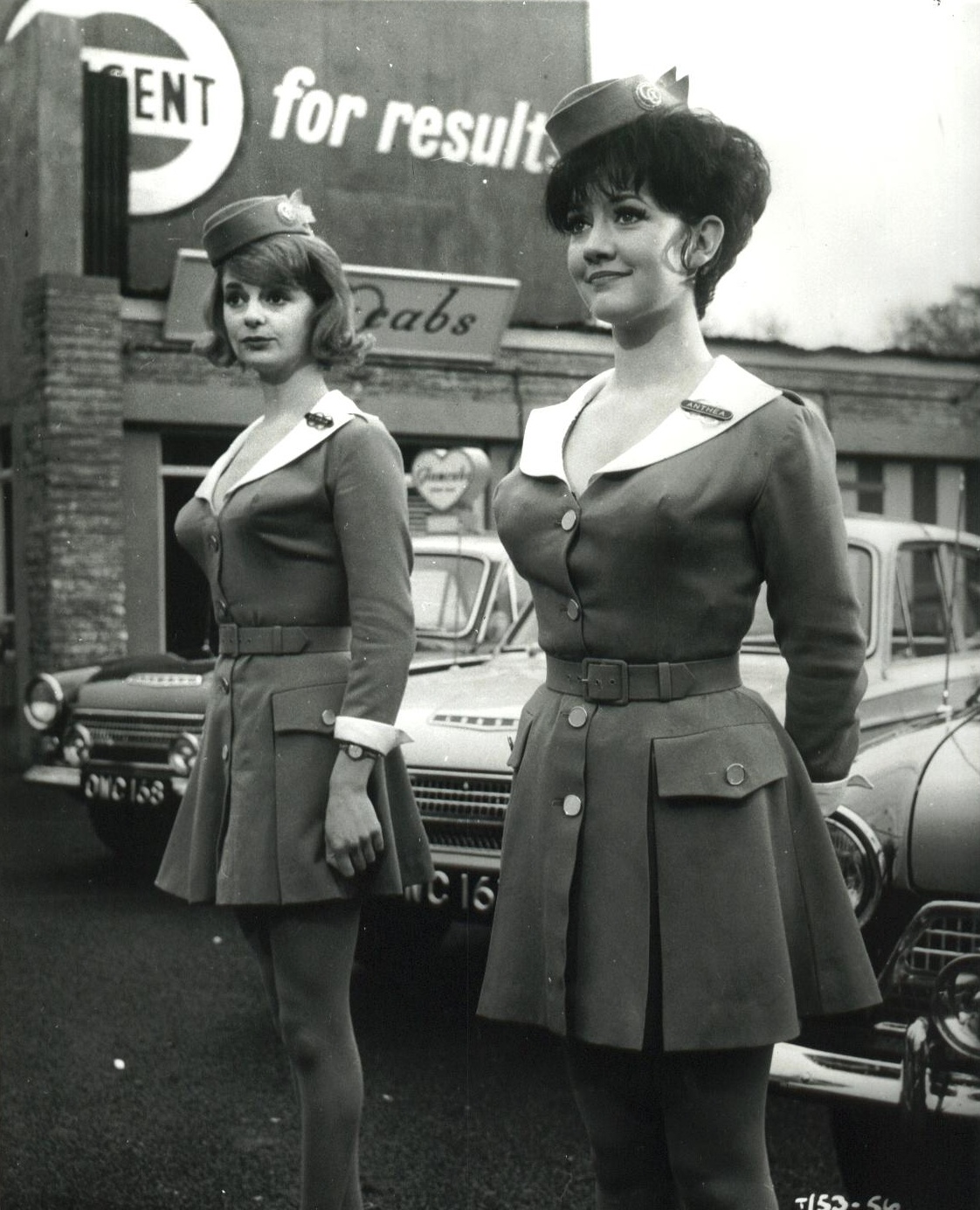
(1963) ‘CARRY ON CABBY’ Screenplay by Talbot Rothwell (from a story by ‘Morecambe & Wise’ script-team Sid Green & Dick Hills). Back to black-&-white. Taxi wars break out when minicab boss Sid James finds his firm, Speedee Cabs competing with the comely charms of Glamcabs – run by his wife Hattie Jacques. How can our Sid possibly compete? Features prominent use of Ford Consul Cortina’s as an early example of product placement. Told to collect a ‘gentleman’ from 32 Dortan St, dolly-bird cab-driver Anthea (Amanda Barrie) says ‘of course Darling, I’ve been picking up gentlemen since I was seventeen.’ Then Hattie Jacques advises her on how to attract customers – ‘just flash your headlamps at them!’ Although Kenneth Williams is missing, Charles Hawtrey is Terry ‘Pintpot’ Tankard, with Kenneth Connor, and Sid carries his role as ‘Charlie Hawkins’ over into ‘Sid Stone’ for the TV spin-off series ‘Taxi’. This is the first of eleven ‘Carry Ons’ to feature Jim Dale, in the minor role of ‘expectant father’. Prior to that he’d tried out for Parlophone records as a proto Rock ‘n’ Roll singer – reaching no.2 in the charts with “Be My Girl”, and appeared in the film spin-off of BBC-TV’s ‘6:5 Special’ serenading young ladies in a railway compartment with “The Train Kept A-Rollin” (91-mins)

(1963) ‘CARRY ON JACK’ ‘Naughty, Bawdy & Hilarious’ – according to the movie-posters, the first foray into historical ‘Carry On’s’ is seafaring camp taking the mickey out of movies such as ‘Mutiny On The Bounty’, following the maritime misadventures of the motley crew of ‘HMS Venus’ (‘twas on the good ship Venus’) on its way to fight the Spaniards. With Kenneth Williams as Captain Fearless, Anton Rodgers, C Cecil Parker, Charles Hawtrey (as Walter Sweetly) and bumbling adversary Bernard Cribbins (as Midshipman Albert Poop-Decker – ‘with a hyphen’, RN), and Juliet Mills (as Sally from ‘Dirty Dicks’ bawdy house, who assumes Poop-Decker’s role in disguise to search for her lost love, Roger). Patrick Cargill is Don Luis, with Jim Dale and Donald Houston. Despite their best attempts, this is a limp contribution to the cycle (Dir: Gerald Thomas. 91-mins)

(1964) ‘CARRY ON SPYING’ For the last black-&-white ‘Carry On’, the gang are licensed to take the mickey as an incompetent group of spies in this James Bond spoof with Desmond Simpkins (Kenneth Williams) as 003-&-a-half – ‘that three-&-a-half is very important, Darlin’, and Barbara Windsor in her debut ‘Carry On’, as ‘Trainee Agent Daphne Honeybutt, sir.’ ‘Number?’ ‘38-22-35’ ‘No, your number, not your vital thingamyjigs’ ‘Oh, I’m sorry sir, I forgot where I was for the moment, actually it’s 4711’ ‘Have you had any experience?’ ‘Oh yes – a little!’ Also set on foiling the plans of STENCH – the Society for the Total Extinction of Non-Conforming Humans, is Bernard Cribbins (as Harold Crump), Charles Hawtrey (Charlie Bind), Jim Dale (Carstairs) and Eric Barker as ‘The Chief’. Oddly, decades later it was still considered funny to spoof Bond films with Michael Myers ‘Austin Power’ and Rowan Atkinson’s ‘Johnny English’ both doing good box-office (87-minutes)

(1964) ‘CARRY ON CLEO’ Screenplay by Talbot Rothwell, ‘from an original idea by William Shakespeare’, although it warns that ‘certain liberties have been taken with Cleopatra.’ Kenneth Williams, as Caesar, sits on the throne with his feet in a bowl of water, says he has ‘sniffed the sweet smell of success and eucalyptus.’ Sid James – as Mark Anthony, refers to Cleopatra as ‘that bird that rules Egypt.’ ‘I’m sorry, Vestal Virgins are off tonight’ warns Peter Butterworth. Jon Pertwee, another ‘Doctor Who’, is ‘Soothsayer’. Amanda Barrie had appeared in ‘Carry On Cabby’, and would later be Alma in ‘Coronation Street’, but some may feel her portrayal as Cleo in the best thing she ever did! One of the most enjoyable Carry On’s (92-mins)

(1965) ‘CARRY ON COWBOY’ ‘I wonder what they wanted?’ enquires black-clad gunslinger the Rumpo Kid (Sid James) after shooting three men dead in a ‘High Noon’ spoof sequence, before altering the Stodge City population sign from 204 to 201. ‘We are fully temperance’ the mayor warns him. ‘I don’t care if you’re full of flatulence’ retorts Rumpo. Jim Dale is sanitary engineer P Knutt who travels to the Wild West and ends up as the new Stodge City marshal after some confusion about him ‘cleaning up’ the town. Unfortunately, he can’t shoot to save his life, which is a shame, as Rumpo Sid is out to get him. ‘My, but you’ve got a big one’ says ‘Belle’ (Joan Sims, indicating his pistol). ‘I’m from Texas Ma’am, we all have big ones down there’ drawls Sid. Fortunately, sexy Annie Oakley (Angela Douglas) is quite handy with the six-shooters. Also stars Kenneth Williams and Joan Sims, with both Bernard Bresslaw & Peter Butterworth in their first ‘Carry Ons’ (93-mins)

(1966) ‘CARRY ON SCREAMING’ Distributed by Warner-Pathé. A mash-up of two great British sixties franchises as the ‘Carry On’s’ spoof ‘Hammer Horror’, one of the best and maybe one of the funniest with great sight gags and silly innuendos. There’s no Sid James, but Harry H Corbett stands in brilliantly as a Sergeant Sidney Bung, the police detective investigating the mysterious disappearance of Doris Mann (Angela Douglas). ‘You took her into the woods, how far did you go?’ he enquires. ‘Oh, not very far, ‘cos I’ve only known her a year’ admits Jim Dale. Bungling Constable Slobotham (Peter Butterworth) is not much help. Could the mystery have anything to do with vampish Fenella Fielding and her camp, deranged brother Kenneth Williams (who, as mad-scientist Doctor Orlando Watt, utters his famous ‘Frying Tonight’ – as he fries in his own vat)? The voluptuous Fielding soon has Corbett all steamed up – maybe he’ll overlook the two hulking hairy werewolves in the cellar of her spooky ‘Bide-A-Wee Rest Home’ mansion. Also stars Charles Hawtrey, Jon Pertwee (as Dr Fettle), Frank Thornton (later of ‘Are You Being Served’), Bernard Bresslaw (as ‘Lurch’-like Butler Sockett) and Joan Sims (as Emily Bung). An un-credited Ray Pilgrim sings the title song (97-mins)

(1966 December) ‘CARRY ON, DON’T LOSE YOUR HEAD’ (Director: Gerald Thomas) For the thirteenth ‘Carry On’, and the first from the Rank Organisation following changes at Anglo-Amalgamated, the team visit the home of the double entendre, adding vulgarité to the liberté, égalité and fraternité of their French Revolutionary japes, sending-up Baroness Orczy’s ‘Scarlet Pimpernel’. ‘Paris 1789. The Great Revolution has begun’ opens Patrick Allen’s voice-over narration, ‘the hands of the masses are smeared with the blood of the poor bleeding aristocracy… Dukes and Duchesses, Lords and Ladies, men and women of both sexes.’ Sir Rodney Efing (Sid James) – pronounced ‘effing’, assumes the persona of ‘The Black Fingernail’ to rescue Aristos, along with pal Lord Darcy Pue (Jim Dale). Their antics enrage Citizen Camembert (Kenneth Williams) – ‘I’m the big cheese’, and dim-witted Citizen Bidet (Peter Butterworth). ‘Remember, we must be circumspect’ cautions Camembert. ‘Oh, I was Sir. When I was a baby!’ Charles Hawtrey at his best as the Duc de Pommfrit, receives a letter just as he faces Madame Guillotine – ‘toss it in the basket, I’ll read it later!’ While the dashing Sir Rodney hosts a lavish dance, to be complimented ‘I must congratulate you, you’ve always had magnificent Balls’, by Lady Binder (Elspeth March) (90-mins)

(1967) ‘CARRY ON, FOLLOW THAT CAMEL’ The Rank Organisation brings in Phil (‘Sergeant Bilko’) Silvers in an attempt to gain access to the US market – and also as a philandering replacement for Sid James following his heart-attack. Songster Anita Harris also gets sand in her shoes (as Corktip) for a ‘Beau Geste’ Foreign Legion romp, with no expense spent. Broken-hearted Bertram Oliphant ‘Bo’ West (Jim Dale) with manservant Simpson (Peter Butterworth) leave England to join the Legion. Assisted by Sergeant Nocker (Silvers) – but only after they discover his ‘on patrol’ duties involve amorous liaisons with café-owner Zig-Zag (Joan Sims). Meanwhile, Bo’s lost love Lady Jane Ponsonby (Angela Douglas) follows the pair, to make amends, but ends up being abducted into Abdul Abulbul’s harem. There’s the oasis El Nookie, the Legion Fort Zaussantneuf (‘69’), Charles Hawtrey as Captain Le Pice (which allows Kenneth Williams’ ‘Commander Maximilian Burger’ to ask ‘Are you taking Le Pice?’), and gags such as ‘The pill? What do you suppose they use that for?’ asks Silvers, ‘I can’t conceive’ says Kenneth Williams. Finally Abdul (Bernard Bresslaw) attacks the Fort, which the mismatched cast heroically defend until relief arrives. Filmed among the Sussex sand-dunes (95-mins)

(1967) ‘CARRY ON DOCTOR’ aka ‘Life Is A Four-Letter Word’ or ‘A Bedpanorama Of Hospital Life’. Rank’s ‘Don’t Lose Your Head’ and ‘Follow That Camel’ were both tentative attempts to drop the ‘Carry On’ prefix – with their last-minute loss of nerve resulting in their unwieldy restoration. So ‘Carry On Doctor’ serves as a return to basics, to a direct title, to the present day, and to the series’ original public service premise. A skewed glimpse of hospital life in which most of the patients are middle-aged lechers and the nurses are nubile sexpots. Patient Ken Biddle (Bernard Bresslaw) tells Nurse Clarke (Anita Harris) ‘I dreamt about you last night.’ ‘Did you?’ she replies. ‘No, you wouldn’t let me’ he responds glumly. Faith healer, Francis Bigger (in Frankie Howerd’s first ‘Carry On’) won’t take his own medicine, when he has an accident on stage. Instead, he finds himself at the hands of Doctors Jim Kilmore (Jim Dale) and preening Dr Kenneth Tinkle (Kenneth Williams). Kilmore, through a series of misunderstandings, soon loses his job and it’s up to the patients to convince Doctor Tinkle and Hattie Jacques wonderful Matron to give him his job back. Meanwhile, Tinkle is amorously pursued by Matron – ‘Young chickens may be soft and tender, but older birds have more on them’ invites Hattie, ‘true, and take a lot more stuffing’ – Tinkle is not impressed! The patients rebel against the medical staff, but it’s really the gags that are revolting. Patient Sid James (Charlie Roper) is henpecked by wife Dandy Nichols, while Charles Hawtrey (Mr Barron) frolics. Nurse Sandra May (Barbara Windsor) is lusted over. Also Deryck Guyler, Pat Coombs, Peter Jones (of TV’s ‘Rag Trade’ and ‘Hitch-Hikers Guide To The Galaxy’) – and the Invisible Man! (94-mins)

(1968) ‘CARRY ON UP THE KHYBER’ Kiplingesque Raj-set frolics, with the kilted ‘Third Foot & Mouth Regiment’ – the Devils in Skirts, showing their true colours – mainly blue! along the North-West Frontier in imperial Victorian times, with a five-bar gate in Wales standing in for the Khyber Pass. ‘May his radiance light up your life’ sneers Kenneth Williams (as Randy Lal, the Khasi of Kalabar). ‘And up yours’ responds Sid James (in top cackling form as aptly-named Provincial governor Sir Sidney Ruff-Diamond). ‘This will teach them to bang two-pence on the buses’ says Bernard Bresslaw (Bungdit-Din, chief of the revolting Burpa tribe) as he bombards Ruff-Diamond’s immaculate colonial dinner party. But the visual proof of the rumour that the regiment wear no underpants beneath their kilts is enough to scatter the attackers. Cardew Robinson, as a Fakir, allows Bresslaw to say ‘Fakir Off!’ There’s a romantic sub-plot with Captain Keene (Roy Castle) and the Khasi’s daughter (Angela Douglas). Charles Hawtrey is Private Widdle, Joan Sims as Lady Ruff-Diamond, and Terry Scott as Sergeant-Major MacNutt all enjoy their tiffin (88-mins)

(1969 July) ‘CARRY ON CAMPING’ ‘The Carry-on Team: Refusing To Let Sleeping Bags Lie’ announce the posters. When scheming Sid Boggle (Sid James) and dim-witted pal Bernie Lugg (Bernard Bresslaw) take girlfriends Joan Fussey (Joan Sims) and Anthea Meeks (Dilys Laye) to see a ‘Naturist’ film at the local cinema it gives the ‘boys’ the idea that a nudist camping holiday might thaw the girl’s reserve (the clips of the naturist film they see onscreen gets chastely edited out for a 2012 TV repeat). Peter Butterworth is ‘Fiddler’, the grasping owner of the ‘Paradise’ campsite – disappointingly normal, until the girls of ‘Chayste Place’ Finishing School arrive, with Dr Soaper (Kenneth Williams) and Miss Haggard (Hattie Jacques) attempting to keep them in line! An equally amusing sub-plot shows magnificently absurd hiker Charlie Muggins (Charles Hawtrey) encountering reluctant camper Peter Potter (Terry Scott) and braying wife Harriet (Betty Marsden) (88-minutes)

(1969) ‘CARRY ON AGAIN DOCTOR’ More hospital high-jinks with Jim Dale getting his stethoscope in a twist (as Dr Jimmy Nookey) – his last ‘Carry On’ until ‘Columbus’, and Charles Hawtrey in drag as ‘Ladyship’. Opens at the Long Hampton Hospital with Nookey asking patient Peter Butterworth, ‘my friend and I, we’re doing spot diagnosis, and I was wondering if you could help us. Now I’d say you’ve got hemorrhoids, and he thinks it’s a slipped disc, now could you tell us?’ Butterworth replies ‘let me see now, you thought it was a slipped disc? I’m afraid you were wrong. And you thought it was hemorrhoids? I’m afraid you were wrong.’ ‘Well, what then?’ Jim persists. ‘As a matter of fact, I thought I was going to break wind’ admits Peter with pained expression, ‘I’m afraid I was wrong!’ With disaster-prone Nookie exiled to join old South Seas quack Sid James on the tropical Beatific Islands, then returning to England with a miracle native slimming potion Nookie sets up the Moore-Nookey Clinic. Full back-view nudity from saucy patient Barbara Windsor, and Joan Sims disrobes in front of a startled Hawtrey-in-drag. Also features Wilfred ‘Steptoe’ Brambell (86-mins)

(1970) ‘CARRY ON UP THE JUNGLE’ An inept expedition into ‘Darkest Africa’ led by lecherous white-hunter Bill Boosey (Sid James) and native guide Upsidaisi (Bernard Bresslaw) includes Professor Inigo Tinkle (Frankie Howerd) who is searching for the elusive Oozlum bird, comely June (Jacki Piper), botanist Claude Chumley (Kenneth Connor) plus Lady Evelyn Bagley (Joan Sims) who is hoping to find her lost husband and their son. They are captured by the all-girl Nosha tribe who have breeding in mind. June meets local ‘Tarzan’ and lost-son Ugg (Terry Scott) and educates him in the ways of ‘six’. While ‘Tonka The Great’ – lost-husband Charles Hawtrey, is quite happy to remain tribal chief (89-mins)

(1970) ‘CARRY ON LOVING’ In a partial reworking of ‘Carry On Regardless’ Sidney Bliss (Sid James) runs the ‘Wedded Bliss’ dating agency which claims to use hi-tech computer-matching for its Lonely Hearts, but clients are actually paired-up at random by Sid’s long-suffering girlfriend Sophie Plummett (Hattie Jacques). As Sid pursues Esme (Joan Sims), Sophie hires James Bedsop (Charles Hawtrey) to spy on his activities. All the while their clients have various confused adventures in Much-Snogging-In-The-Green. ‘The first wife died from eating mushrooms’, ‘Oh, I’m sorry to hear that’ ‘So was she.’ ‘The second wife died from a fractured skull’ ‘Fractured Skull? How did that happens’ ‘She wouldn’t eat the mushrooms!’ Confirmed bachelor Percival Snooper (Kenneth Williams) seeks a ‘career wife’, Terry Philpotts (Terry Scott) eventually ends up with Jenny Grubb (Imogen Hassall), Richard O’Callaghan (as Bertrum Muffett) and Jacki Piper (as model Sally Martin) are brought in as young new love interest (88-minutes)

(February 1971) ‘CARRY ON HENRY’ Filmed at Knebworth House. Tudor history put through the mangle, spoofing Richard Burton in ‘Anne Of A Thousand Days’. The posters call Sid James’ King Henry VIII ‘A Great Guy With His Chopper’ as he cackles and cavorts around Merrie Olde England. Sid has just executed his latest wife (Patsy Rowlands) in favour of garlic-scented Marie Of Normandy (Joan Sims) at the instigation of inept Cardinal Wolsey (Terry Scott), but he spies Bettina (Barbara Windsor) instead, and the customary smut and innuendo ensue amid much throwing of turkey drumsticks. As they dance a gavot. ‘you see, there’s these two things’ explains Barbara. ‘Yes, I’d noticed those’ leers Sid. ‘They call them castanets’ ‘Oh, that’s a new name for them’ ‘And all the time you’re dancing, they keep knocking together’ ‘Yes, I’d noticed that too.’ With the usual gang dressed up in period costume, the frustrated Marie gets it on with womanising Sir Roger de Lodgerley (Charles Hawtrey playing very much against type!) and Cromwell (a Machiavellian Kenneth Williams) schemes with Lord Hampton of Wick (Kenneth Connor) to kidnap the King, sizeable guffaws and comic complications ensue (89-minutes)

(1971 December) ‘CARRY ON AT YOUR CONVENIENCE’ The ‘Carry On’ team ‘plumb the depths of toilet humour’ puns the blurb, as Factory owner WC Boggs (Kenneth Williams) faces bolshy union shop steward Vic Spanner (Kenneth Cope). Foreman Sid Plummer (a subdued Sid James) helps smooth over tensions. Charles Coote (Charles Hawtrey) introduces a bidet into the product-range, to further unsettle the situation. Subplots include Sid’s wife Beattie (Hattie Jacques) getting horse-racing tips from her budgie Joey! Class-war differences are reconciled in a boozy works outing coach-trip to Brighton. Maybe this innuendo-strewn satiric skit on industrial unrest was too close for comfort, resulting in this ‘Carry On’ under-performing at the Box-Office (90-mins)

(1972) ‘CARRY ON MATRON’ Crook Sid Carter (Sid James) schemes to nick contraceptive pills from a maternity ward, by sending his son Cyril (Kenneth Cope) in drag as a nurse. Cyril winds up sharing a room with chirpy Nurse Susan Ball (Barbara Windsor). Hattie Jacques is the formidable Matron, Kenneth Williams as Sir Bernard Cutting. The first ‘Carry On’ to feature Jack Douglas, and the last for Terry Scott (as Dr Prodd) and Jacki Piper (Sister) (87-mins)

(1972) ‘CARRY ON ABROAD’ Arriving in Elsbels, Package-Tourists find the hotel half-built. ‘Have you got a large one?’ asks Sadie Tomkins (Barbara Windsor). ‘I’ve had no complaints so far’ replies leering Bar-Man Vic Flange (Sid James). ‘Seeing’s believing’ she says. ‘You won’t need a magnifying glass, Haw-Haw-Haw’. Later ‘Bottoms up’ she says. ‘Is that what it is?’ he drools, looking down her cleavage, ‘you could have fooled me!’ The hotel is run by Pepe (Peter Butterworth) and wife Floella (Hattie Jacques). Jimmy Logan is tourist Bert Conway. During its filming Charles Hawtrey (as Eustace Tuttle) had a violent falling-out with Peter Rogers. He never appeared in another Carry On’ (88-mins)

(1973) ‘CARRY ON GIRLS’ Beauty Contests, bolshy Feminists and dirty old men are the targets of the twenty-fifth ‘Carry On’. There’s no Charles Hawtrey or Kenneth Williams. But Councillor ‘Sid Fiddler’ (Sid James) suggests a beauty contest will boost tourism for seaside resort Fircombe (with Brighton standing in). He’s supported by Mayor Frederick Bumble (Kenneth Connor), but kill-joy women’s libbers led by Augusta Prodworthy (June Whitfield) fight-back. Bernard Bresslaw acts as PR man Peter Potter, with Joan Sims as Connie Philpotts who owns the Palace Hotel venue. Contestant Barbara Windsor – as Hope Springs, has a bikini-clad catfight with Margaret Nolan. There’s also Robin Askwith (of the later ‘Confessions Of…’ film-series), Arnold (‘Dad’s Army’ Private Godfrey) Ridley, and Wendy Richard (88-mins)

(1974) ‘CARRY ON DICK’ Some claim this as the last genuine ‘Carry On’ – the last to be written by Talbot Rothwell, and the last full outing for Sid James (as both Reverend Flasher & his secret identity ‘Big’ Dick Turpin) and Hattie Jacques, with Barbara Windsor who will return only to narrate ‘That’s Carry On’. Bow Street Runner’s chief Sir Roger Daley (Bernard Bresslaw) assigns Desmond Fancey (Kenneth Williams) and Jock Strapp (Jack Douglas) to catch Dick, working on information that the notorious Highwayman has a birthmark on an unusual extremity not unrelated to his name (91-mins)

(1975) ‘CARRY ON BEHIND’ Rank. Written by Dave Freeman, replacing long-serving Talbot Rothwell. One of the last, and least ‘Carry On’s’. Uptight archaeologist Kenneth Williams (as Professor Roland Crump) and his lovely assistant Elke Sommer (Russian Professor Vooshka), excavate a Roman ‘NAAFI’ while sharing a caravan site with a motley crew of ne’er-do-wells and sexy young babes, where the usual mayhem results. Peter Butterworth virtually reprises his ‘Fiddler’ role from ‘Carry On Camping’. Regulars, Joan Sims, and Bernard Bresslaw are joined by Windsor Davies and Ian Lavender, but by this stage much of the cheeky charm has gone (90-mins)

(1976) ‘CARRY ON ENGLAND’ A return to the military – eighteen years on from ‘Carry On Sergeant’, with Captain S Melly (Kenneth Connor) striving to impose discipline on a carousing mixed-sex anti-aircraft battery somewhere defending England in 1940. ‘Carry On’ newcomers khaki-clad Patrick Mower and Judy Geeson are joined by Windsor Davies, and although Joan Sims and Peter Butterworth make welcome appearances, it suffers from having few of the original team on board. Saucy innuendos and topless girls can’t rescue the film. ‘The cold wind of change is going to blow through this camp’ warns Connor, unfortunately he’s right (89-mins)

(1977) ‘THAT’S CARRY ON!’ (Compilation) Kenneth Williams & Barbara Windsor narrate highlights from earlier films. Linking screenplay by Tony Church. Original cinema release as ‘B’-feature to Richard Harris film ‘Golden Rendezvous’ (95-mins)

(November 1978) ‘CARRY ON EMMANNUELLE’ Rank/Hemsdale. ‘When It Comes To Foreign Affairs… It’s Carry On Emmannuelle!’ Suzanne Danielle as the spoof erotic-heroine, trying to amorously arouse her French Ambassador husband Emile (Kenneth Williams), in the only ‘Carry On’ to yield an ‘AA’-rating. Kenneth Connor, Joan Sims and Peter Butterworth feature. Written by Lance Peters. Music by Kenny Lynch and Eric Rogers (88-mins)

(October 1992) ‘CARRY ON COLUMBUS’ ‘Up Your Anchor For A Well-Crewed Voyage’ Gerald Thomas’ ill-advised return and last film (1920-1993), with Leslie Phillips retained from the original crew, as King Ferdinand to June Whitfield’s Queen Isabella. Jim Dale is Columbus ‘Sharks? Man-eating sharks? You don’t think they’d eat me whole?’ ‘No, I’m told they spit that out’ responds Jack Douglas. With Bernard Cribbins joined by Jon Pertwee (a third ‘Carry On’ Dr Who), Richard Wilson, Peter Richardson and New Wave comedians Rick Mayall (the Sultan), Nigel Planer, Julian Clary, and Alexei Sayle. Written by Dave Freeman & John Antrobus (91-minutes)
RELATED CARRY-ON’S…

(1951) ‘THE LAVENDER HILL MOB’ Dir: Charles Crichton. A sparkling comedy, one of the most authentic jewels in the Ealing Studios crown, directed by the man who made the first authentic Ealing comedy, ‘Hue And Cry’ (1947). Crisply scripted by Ealing stalwart TEB Clarke, it was the model for John Cleese’s ‘A Fish Called Wanda’, which Crichton was brought out of retirement to co-direct. Alec Guiness plays a timid bank clerk who, with his sly sculptor friend Stanley Holloway, stages a large-scale bullion robbery. So why the ‘Carry On…’ connection? they are assisted by two ineffably inept ‘professional’ crooks – Sid James and Alfie Bass. Sid also appears as gangster ‘Benny’ in ‘The Belles Of St Trinians’ (1954, Director: Frank Launder), which also features Joan Sims (as Miss Dawn), Beryl Reid and Irene Handl. Stars Alastair Sim (in drag as Miss Millicent Fritton, and also brother Clarence), Joyce Grenfell and George Cole… and an uncredited schoolgirl Barbara Windsor!
(1960) ‘OUR HOUSE’ (ITV sitcom) written by Norman Hudis. Season One: 11 Sept – 4 December 1960 (13 episodes), Season Two: 16 September 1961 – 21 April 1962 (26 episodes). House-share comedy with Hattie Jacques as librarian ‘Georgina Ruddy’, Bernard Bresslaw as ‘William Singer’, Charles Hawtrey as ‘Simon Willow’, plus Hylda Baker as ‘Henrietta’, Joan Sims & Frank Thornton
(1961) ‘RAISING THE WIND’ Dir: Gerald Thomas. A ‘Carry On…’ in all but name, to Philip French, in ‘The Observer’, it is a ‘predictable combination of the ‘Carry On’ and ‘Doctor’ cycles’, with the same director and the same style of instantly familiar humour. Set with some accuracy in a London music academy where students Sid James, Leslie Phillips, Kenneth Williams and others blow some blue notes and deliver the usual corny and un-politically correct gags with great skill, much to the annoyance of, and beneath the twitching whiskers of, their stuffy old tutor, the venerable James Robertson Justice. Badly dated, but still good fun and in many ways more palatable than some of the later, smuttier efforts. The great radio comedian Eric Barker gives a lovely performance. Music by Bruce Montgomery
(1969) ‘CARRY ON CHRISTMAS’ the first of four fifty-minute Thames-TV specials, based around a Pantomime version of Dickens’ ‘A Christmas Carol’, with Sid James as Scrooge, Frankie Howerd & Hattie Jacques as the poet Robert Browning & his lover Elizabeth Barrett. A Frank N Stein sketch too with Terry Scott, Barbara Windsor as Cinderella, and Charles Hawtrey as the Spirit Of Christmas. Less ribald that the by-then current cinema content, with writer Talbot Rothwell, 1970, 1971, 1972 & 1973
(1972) ‘BLESS THIS HOUSE’ Prod: Peter Rogers. Dir: Gerald Thomas. Sid James and Diana Coupland are the married couple with two grown-up children in this spin-off from the cosy feel-good seventies TV sitcom. Terry Scott, June Whitfield and family move in next door and the couples soon grow to loathe each other. However, there’s more trouble afoot when two of the kids from opposing houses fall in love. With Robin Askwith, Peter Butterfield and Sally Geeson. Dated, and not that funny
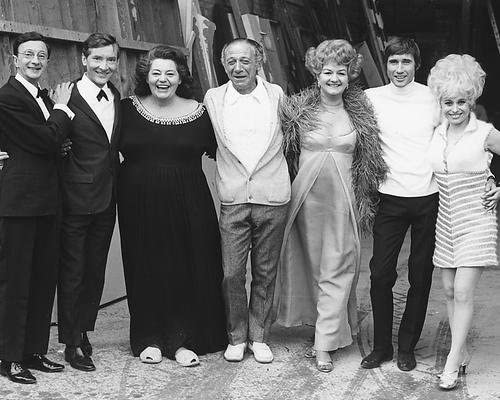
(1975) ‘CARRY ON LAUGHING’ two series of 25-minute episodes (13 in all) made for ITV, Rogers & Thomas in charge, with new writers Barry Cryer and Dick Vosburgh contributing. Some episodes feature Sid James, Barbara Windsor, Joan Sims, Peter Butterworth and Kenneth Connor – but no Kenneth Williams. (1) ‘The Prisoner Of Spenda’ 4 January 1975, to (6) ‘The Nine Old Cobblers’ 8 February 1975, then season 2 (1) ‘Under The Round Table’ 26 October 1975, to (7) ‘Lamposts Of Empire’ 7 December 1975
(1983) ‘WHAT A CARRY ON’ thirteen TV-episodes compiled from old movie-clips, screened 9 November 1983 to 1 February 1984
(1996) ‘STOP MESSING ABOUT: THE VERY BEST OF KENNETH WILLIAMS’ (Pearson New Entertainment, VHS) An exhaustive selection of ‘Carry On’ clips, plus Ken’s interview snippets from Terry Wogan and Michael Parkinson chat-show, plus Barbara Windsor reminiscing. Narrated by Barry Took who met, and scripted for him on the ‘Beyond Our Ken’ and ‘Round The Horne’ radio comedies
(1998) ‘A PERFECT CARRY ON’ Channel 4 celebrates forty years since ‘Carry On Sergeant’
(November 2001) ‘THE MAN WHO WAS PRIVATE WIDDLE: CHARLES HAWTREY 1914-1988’ by Roger Lewis (Faber, £9.99, 115pp)
(October 2009) ‘SID JAMES: THE AUTHORISED BIOGRAPHY’ by Robert Ross’ (JR Books Ltd)


