Sunday, 27 March 2022

SF Classic: 'The Genocides' by Thomas M Disch


THOMAS M DISCH:
 
‘THE GENOCIDES’ 

 
Review of: 
‘THE GENOCIDES’ 
 by THOMAS M DISCH 
(Berkley Medallion, December 1965 
Panther UK paperback, 1968 ISBN 0-586-02420-4)


It opens in the simple rural community of New Tassel, a ramshackle settlement of two-hundred-and forty-seven folk living on the northern shore of Lake Superior as the lake itself recedes to uncover new fertile arable land. With stern ‘strong-willed bigot’ father Anderson, and his two sons, Neil who is lumbering, mean and brutish, and younger more rebellious half-brother Buddy. Among the simple hardworking folk, the ‘Prodigal’ Buddy is the only one to have ventured into the cities of the greater world beyond, to University where the streets were swift-flowing rivers of light… before the fall. Now there are no more cities. There is only the endless green of the alien plant growths that have smothered the planet, stifling all rival forms of life. ‘They had come of a sudden in April of ’72, a billion spores… and within days every inch of ground, farmland and desert, jungle and tundra, was covered with a carpet of richest green.’ 

Neil is married to Buddy’s flirtatious former-girlfriend Greta, who gets wistfully nostalgic for the world they’ve lost. Buddy is married to mousey pregnant Maryann, survivor of a massacred Marauders party up from Minneapolis. The Anderson’s continue much as they always have done, simply adapting their methods by tapping bucketfuls of oozing honey-like sap from the towering smooth-skinned plants that soar to six-hundred feet, and using the sap to fertilise their patient rows of maize in plots hacked out of the growth. Until the next stage of the global take-over begins with the arrival of the ‘incinerators’, signalled when escaping cattle are reduced to ash, along with pursuing younger Anderson son, Jimmie. This levelling of ‘remaining artifacts’ (Disch’s spelling) prefigures the final ‘Good-Bye Western Civilisation’ phase. 

Life on Earth is a precarious thing. Humans have enjoyed ten-thousand years of relative stability. There’s a playful frisson to conjecturing that this condition will not continue indefinitely. The cover-art for the 1979 Panther paperback edition announces ‘The Genocides’ as ‘The Best Post-Disaster Yarn Since ‘The Day Of The Triffids’,’ evoking certain obvious parallels. There’s a suspicious familiarity that the scenario encroaches other post-apocalypse novels, particularly George R Stewart’s 1949 ‘Earth Abides’, even as it assumes elements of Wyndham’s ‘School of Cosy Disaster’ SF. As the ever-perceptive Brian Aldiss points out, although ‘Disch is an American. ‘The Genocides’ is curiously English. It is another story of a dwindling community which has survived a catastrophe, although Disch handles it in his own way’ (in ‘SF Impulse’ no.11). Yet there are other even more precise precedents. There’s a suspiciously similar plot to ‘Earth Our New Eden’ by veteran writer FG Rayer in ‘Authentic Science Fiction no.20’ (15 April 1952), where the Earth is seeded by alien plants, producing a ‘Green Twilight’. ‘The tops of the plants spread like giant ferns, each interlacing with its neighbours. Behind the precipice of alien growth, away to his right, the sun was outlined as a dull red orb. The patchy cloud above was ruby tinted, fading away to purple and black in the east. The whole made a scene so strange, so terrifying, that Peter felt his limbs grow cold’. The machines stop, with ‘Earth rapidly becoming uninhabitable for men’. 

As Rayer’s protagonists struggle to survive in this re-made world of final blackout they encounter images that eerily anticipate Disch. ‘Never since prehistoric times had there been such plants on the Earth, he thought, amazed. Now, once again, was an abundance of such vegetation as had existed when the great coal-beds of the planet had been laid down. He might have imagined himself plunged back millions of years into prehistory, but for one thing – the plants were alien...’


Born in Iowa in 1940 Thomas Michael Disch grew up in Minnesota, and was educated at New York University. He became a freelance writer in 1964 after working for a year in advertising, to be soon marked out as ‘a noted arrival in the SF field of the 1960s,’ according to Brian Ash (in ‘Who’s Who In Science Fiction’, Sphere, 1976). ‘The Genocides’ was Disch’s first novel, preceded by a series of impressively powerful short stories that gained him a strong reputation as an innovator. Yet strangely, for a supposedly New Wave classic, Disch also employs strong religious overtones, as early as the title-page quote from the biblical book of Jeremiah 8.20. ‘Anderson knew that the same angry and jealous God who had once before visited a flood upon an earth that was corrupt had created the Plants and sown them. He never argued about it.’ Perhaps this attitude is intended to reflect the unsophisticated morality of stoic rural people? 

The novel only becomes ‘New Wave’ when that religiosity is turned around, so that it’s viewed not only as a conscious part of the post-apocalypse genre tradition, but also as a knowing satire of them. Disch shifts the narrative focus, with each of the core figures given voice at different times. There are even brief sequences seen from the alien perspective; a date for the Estimated Completion Of Project (2 February 1980), and an instruction for the entire incineration of surviving terrestrial life-forms by 4 July 1979, exterminating human ‘indigenous mammals’ in the ‘Duluth-Superior artifact’. That the aliens are clearly working to a schedule not too far removed from human corporate mentality, with reports of ‘mechanical failures’ sent to the ‘Office of Supplies’ complete with appendaged carbons! could be seen as detracting from the existential crisis afflicting the planet. Might it not have been better to leave the alien thought-processes impenetrable, as FG Rayer had done, with the effect of his story heightened by the imprecisely-glimpsed but never-quite-seen extraterrestrial denizens of the alien jungle that Earth has become? But that is clearly not Disch’s intention. That their completion date coincides with ‘Independence Day’ – the movie had yet to happen, is further evidence of a satiric agenda. 

When the community share a grotesque family Thanksgiving meal that consists of nine-inch-long sausages recycling the human remains of slaughtered scavengers, there’s the moral justification of the ‘Donner party’ and the wreck of the ‘Medusa’ where survivors had also descended to cannibalism, with the implied ritual bonding of collective complicity in the murders that eating represents. But surely there’s also the darkest most repellent of back humour in there too? In balance there’s also a clear understanding of the interactivity of the natural world and its food-chain, as the extreme monoculture of alien plants smother all else, the world’s rich biodiversity goes into a freefall towards extinction, and even the soil, deprived of nutrition, turns to gritty dust that blows away. While colder winters result from climate-change induced by loss of carbon dioxide as the plants alter the balance of the atmosphere.


Meanwhile – switching focus, Jackie Whythe and mining-engineer ‘Jerry’ Jeremiah Orville watch as ‘incendiary mechanisms’ burn Duluth to the ground. Initially intoxicated by a strange sense of elation as he’s liberated from his formerly paunchy dead-end life-prospects, Jerry ‘learned to be as unscrupulous as the heroes in the pulp adventure magazines he’d read as a boy – sometimes as unscrupulous as the villains.’ After surviving in the safe-deposit vault of the First American National Bank with a store of scavenged cans and jars, they escape on bicycles, only to be stopped by former-nurse Alice Nemeron – ‘if you get sick, I can tell you the name of what you’ve got.’ They join her band of ‘Wolves’ travelling northeast on Route 61, until they’re overwhelmed by the Anderson Clan. When only Jerry and Alice survive, he pledges vengeance. 

In the grip of freezing snowbound winter New Tassel’s final cow dies giving birth, and then three spherical incendiaries reduce their sheltering common-room to ash, leaving them refugees. When the child Blossom leads them to a cave on the lakeshore that she remembers from a childhood incident, they huddle inside. It’s there that Jerry investigates some plant-roots that have grown down through the cave-roof and discovers not only that they’re hollow but that they’re interconnected into an endless network of navigable passages, with fruiting tubers large enough to provide a sanctuary rich with edible fibres, where they become drunk on an orgy of oxygen. The thirty-one survivors are reduced to ‘the puppets of necessity,’ little more than termites, ‘they were worms, crawling through an apple.’


Disch’s prose-style is highly readable, as he delineates the group’s internal rivalries, the strongly-sketched characters all the more believable for their flaws. Orville’s informed resourcefulness, backed up by Buddy’s support, erodes Anderson’s strict Bible-sanctioned authority, as they encounter hordes of rats driven to equally extreme measures. There’s a rebellion, and a breakaway group led by Greta. Then the crisis is tipped further into critical when an already ageing Anderson is gangrenously infected by a rat-bite, Neil suffocates him before he can nominate Orville as his successor, then has witness Alice thrown down a deep root-tunnel to die. Anderson’s death robs Orville of his long-delayed revenge, and he’s tormented by Jackie Whythe’s accusing ghost images. Yet Buddy and Orville form an uneasy temporary alliance with Neil and Blossom, until Neil is destroyed in madness. There’s implied incest, corpse desecration and the grotesque obesity into which Greta has devolved, as the plant-sap goes into spate and on the surface far above them the harvest is being prepared. They eventually return to the scorched-earth surface where a new crop of plants is already germinating. 

As Disch explained to Charles Platt, ‘it was always aesthetically unsatisfying to see some giant juggernaut alien force finally take a quiet pratfall at the end of an alien-invasion novel. It seemed to me to be perfectly natural to say, let’s be honest, the real interest in this kind of story is to see some devastating cataclysm wipe mankind out. There’s a grandeur in that idea that all the other people threw away and trivialised. My point was simply to write a book where you don’t spoil that beauty and pleasure at the end’ (in ‘Who Writes Science Fiction?’, 1980, Savoy Books). For the epilogue is called ‘The Extinction Of The Species’. There’s no upbeat ending. This is the New Wave shock. Earlier eco-disaster novels closed on a note of new hope, the dawn of new beginnings. Even for JG Ballard his characters transfigure into an acceptance of an Earth that’s undergone metamorphosis into surrealism. 

Not for Disch. Not for ‘The Genocides’. There’s no meaning, no salvation. Even the novel’s title is inaccurate – although an obvious genocide occurs, it is less a targeted focused genocide, more an irritable brushing aside. The implications are disturbing. Unlike Anderson’s belief in divine purpose and destiny, life on this planet happened as the result of a random accident of no great significance, and it can be snuffed out in a way that is equally random and insignificant. ‘It wounded his pride to think that his race, his species, his world was being defeated with such apparent ease. What was worse, what he could not endure was the suspicion that it all meant nothing, that the process of their annihilation was something quite mechanical: that mankind’s destroyers were not, in other words, fighting a war but merely spraying the garden…’ 

Although there would be further well-received novels, Thomas M Disch was never an easy fit within the SF genre, utilising its tropes instead for intellectual literary games. Readers were quick to spot that he marched to a different drum from the writers they were familiar with, and while celebrated by the ‘New Worlds’ coterie, others failed to warm to the high chill factor of his new realism. ‘Acerbic yet jolly, terse yet lushly Victorian, sardonic yet unwillingly romantic, ruthlessly modern yet operatic’ according to his entry in ‘The Ultimate Encyclopedia Of Science Fiction’ (1997, Carlton Books) edited by David Pringle, Disch proved himself to be ‘a deep well of many waters.’


THOMAS M DISCH 
2 February 1940 – 4 July 2008 

1962 – “The Double-Timer” (‘Fantastic Stories Of Imagination’, Vol.11 no.10, October 1962), collected into ‘Fundamental Disch’ (Bantam Books, 1980). 

1963 – “The Demi-Urge” (‘Amazing Stories’, Vol.37 no.6, June 1963). 

1963 – “Final Audit” (‘Fantastic Stories Of Imagination’, Vol.12 no.7, July 1963). 

1963 – “Utopia? Never!” (‘Amazing Stories’ Vol.37 no.8, August 1963) edited by Cele Goldsmith. 

1964 – “Minnesota Gothic” as by ‘Dobbin Thorpe’ (‘Fantastic Stories Of Imagination’, Vol.13 no.1, January 1964), with artwork by Lutjens. Plus short story “A Thesis On Social Forms And Social Controls In The USA” as by Thomas M Disch. 

1964 – “Death Before Dishonour” as by ‘Dobbin Thorpe’ (‘Fantastic Stories Of Imagination’, Vol.13 no.2, February 1964) also edited by Cele Goldsmith. 

1964 – “Now Is Forever” as by ‘Dobbin Thorpe’ (‘Amazing Stories’ Vol.38 no.3, March 1964) with Virgil Finlay artwork. 

1964 – “Genetic Coda” (‘Fantastic Stories Of Imagination’, Vol.13 no.6, June 1964). 

1964 – “Descending” (‘Fantastic Stories Of Imagination’, Vol.13 no.7, July 1964), collected into Judith Merril’s ‘Tenth Annual Edition: The Year’s Best SF’. 

1964 – “Nada” (‘The Magazine Of Fantasy & Science Fiction’, No.159, August 1964) collected into the fourteenth ‘Best From Fantasy & Science Fiction’ anthology. 

1964 – “Dangerous Flags” (‘Fantastic Stories Of Imagination’, Vol.13 no.8, August 1964).


1965 – ‘THE GENOCIDES’ (US) 

1965 – “102 H-Bombs” (‘Fantastic Stories Of Imagination’ Vol.14 no.3’). 

1965 – “White Fang Goes Dingo” (‘If’ no.89, April 1965) novelette later expanded into ‘Mankind Under The Leash’. 

1966 – “The Roaches” (‘SF Impulse no.9’, November 1966), plain Marcia Kenwell moves from Minnesota to find her own way in Manhattan but finds only ‘dull jobs at mediocre wages’ and cheap apartments with dread cockroaches she battles against. But when the insanitary Shchapoli trio move into the next room, she discovers she can will the bugs to obey her, and uses them to drive the three out. She is now mistress of every cockroach in the city. This story is advertised on the ‘In Our Next Issue’ page 159 of ‘SF Impulse no.8’ 

1966 – ‘MANKIND UNDER THE LEASH’ (US), ‘humiliations render people into pets’ (‘The Ultimate Encyclopedia Of Science Fiction’, 1997, Carlton Books). Also known as ‘The Puppies Of Terra’. Humankind is enslaved by aliens, who like our looks and the way we dance, until the hero – a wimp with brains, decides to drive away the new masters by annoying them, the way a dog might annoy its owner. They eventually leave because ‘they couldn’t stand the barking.’ 

1966 – ‘THE HOUSE THAT FEAR BUILT’ (Paperback Library) collaboration with John Sladek as by ‘Cassandra Knye’. 

1966 – ‘ONE HUNDRED AND TWO H-BOMBS’ (UK, Compact) short story collection, later revised as ‘White Fang Goes Dingo And Other Funny SF Stories’. 

1966 – “Three Points On The Demographic Curve” (‘SF Impulse no.10’, December 1966), vast time-spanning mini-epic ‘in a tone of wry humour’, in a ‘Make Room Make Room’ Malthus-overcrowded 2440, Investigator Darien Milkthirst tracks down mass child kidnappings to Prosper Ashfield – Last Man On Earth, from the future, who is trying to repopulate a lifeless Earth. When the stolen children lack motivation he sells them to Elijah Grasp in 1790 as factory child-labour, kicking off the Industrial Revolution. As his robots work, Ashfield places himself in stasis until the solar system’s bleak end. Plus ‘Hell Revisited’ Disch’s interview with Kingsley Amis, six years after the publication of ‘New Maps Of Hell’, Amis expresses his disappointment with the subsequent work of Pohl, Bradbury, Sheckley, Clarke and Blish. ‘Perhaps it’s the curse of ambitious science fiction that it goes outside the field of science fiction altogether and becomes something pretentious, fantastic and certainly obscure.’ 

1967 – Brian Aldiss reviews ‘The Genocides’ in ‘SF Impulse no.11’ (January 1967), ‘a new writer has come along, to delight us with an unadulterated shot of pure bracing gloom.’ 

1967 – “The Number You Have Reached” (‘SF Impulse no.12’, February 1967, with Keith Roberts art), astronaut Justin Holt returns from Mars to find he’s ‘the last man on earth’ in a winter city after neutron bomb war, everyone is dead although buildings remain intact, with bodies automatically removed by cleansing, except a woman keeps phoning him. Is she real? Or will admitting her reality be to accept his own madness? Keith Roberts editorial calls the story ‘a suave and polished account of a man’s obsessive fantasy. Or is it fantasy? One is never quite sure; and Thomas M Disch is far too skilled a writer to give too much away.’ 

1967 – ‘ECHO ROUND HIS BONES’ (US) an unexpected ‘echo effect’ produced by matter transmission, delves into the shadow existence of artificial, accidental doppelgangers. 

1967 – “The Affluence Of Edwin Lollard” (‘New Writings In SF no.10’, Dobson Books 1967, Corgi Paperback) edited by John Carnell, the consumer-satire of a man charged with ‘criminal poverty’, quoting George Bernard Shaw as source. 


1968 – ‘CAMP CONCENTRATION’ (US), a wicked book, one of ‘The Peaks Of Disch’s SF Career’, and a ‘New Wave bombshell’, intelligence in selected prisoners in a military Concentration Camp is temporarily enhanced, at the eventual cost of their lives, the diary of a character who is locked up and given a drug to heighten his intelligence; an unfortunate side-effect of the drug is that it induces death within a matter of months.’ To ‘Science Fiction: The Illustrated Encyclopedia’ (1995, Dorling Kindersley) edited by John Clute, ‘the analogy with syphilis is explicit – syphilis has very often been (wrongly) treated by writers as a disease that first inspires, then kills.’ 

1968 – ‘BLACK ALICE’ (US, Doubleday) a contemporary mystery-suspense novel written jointly with John T Sladek as ‘Thom Demijohn’. The UK cover-blurb on the Panther edition is ‘Heiresses aren’t usually found in whorehouses. That was the beauty of the plan.’ 

1968 – ‘UNDER COMPULSION’ (UK) short story collection. 

1969 – ‘THE PRISONER’ (US, Ace), novelisation of the cult Patrick McGoohan TV series, aka ‘The Prisoner: I Am Not A Number’. 

1971 – “Angouleme” (‘New Worlds no.1’, Sphere paperback edition) ‘The Science Fiction Quarterly’ edited by Michael Moorcock, art by ‘Glyn Jones’. Densely-written highly imagist story that approaches prose-poetry in its intensity. Angouleme is the name given to New York harbour by Florentine-born navigator Giovanni Verrazzano in April 1524. Samuel Delany devotes his critical work ‘The American Shore’ subtitled ‘Meditations On A Tale Of Science Fiction By Thomas M Disch: Angouleme’ to his analysis of this story. Pre-teen Alexandrians led by Little Mister Kissy Lips, with Sniffles, MaryJane, Celeste DiCecca and Amparo (of course) gather by the Verrazzano statue to debate and discuss who they should murder, deliberately referencing Raskolnikov from Dostoevsky’s ‘Crime & Punishment’ (as Raskalnikov). There are other arty references as they dance to Terry Riley’s day-long ‘Orfeo’. As others fall away there is only Little Mister Kissy Lips who follows homeless Alyona Ivanovna with his father’s French duelling pistol, and faces him. Does he shoot him? The ending is ambiguous. Whether this story can even he classified as SF is equally ambiguous. 

1971 – “Feathers From The Wings Of An Angel” (‘New Worlds no.2’, Sphere paperback edition) edited by Michael Moorcock, art by Claire Murrell. An experiment in overwrought melodrama, an exercise in Victorian sentimentality, a blind girl child, a dying mother, and Tom Wilson a man of ‘careworn aspect’. Through what seems an act of divine intervention his life-story wins a $10,000 ‘Life Magazine’ competition, which arrives too late to save the mother. ‘It cannot be that the earth is man’s only abiding place! It cannot be that our life is a mere bubble cast up by eternity to float a moment on its waves and then sink back into nothingness!’ 

1971 – ‘WHITE FANG GOES DINGO AND OTHER’ (UK, Arrow) short story collection, with the novelette magazine origins of ‘Mankind Under The Leash’, reconfigured collection from ‘102 H-Bombs’. 

1972 – “The Wonderful World Of Griswald Tractors” (‘New Worlds no.3’, Sphere paperback edition) edited by Michael Moorcock. Absurdist compressed four-page novel of wild invention. Chiropractor and dabbler in hypnosis Selbst has guillotined himself, or was he murdered? The Society for the Legalization of Death becomes a successful business specialising in exotic suicides and games of chance. Hired thugs (Puerto Ricans) set Colin against his father Nathan in gladiatorial contest, as Brooklyn burns. They escape by Staten Island ferry to ghostly abandoned suburb on Long Island. 

1972 – “334” (‘New Worlds no.4’, Sphere paperback edition) edited by Michael Moorcock, art by RG Jones. Running from p.58 to p.155 in Six Parts divided into forty-three sequences dated from ‘The Teevee’ (2021) to Mrs Hanson In Room 7 (2026), Amparo from ‘Angouleme’ joined by a new cast of odd characters. 


1972 – ‘334’ (UK, MacGibbon & Kee), a completely linked set of vignettes depicting an oppressive view of a dying culture in an over-populated future. There is no hero. M John Harrison reviews it in ‘New Worlds 6’, pointing out that excerpts had already appeared in NWQ, ‘the novel presents a detailed picture of a New York in the near future, describing the lives and ambitions of a group of people’ living in a vast and decaying apartment building (334 East 11th Street)… ‘if ‘334’ hadn’t been published as SF Disch would have been in line for the Booker Prize at very least and would certainly have received the serious critical attention his work must eventually get. Perhaps he is wasting his time working within the terms of SF’? The address, when written 3-3-4, represents an arithmetical pattern that governs characters, sequences and geography. The novel lives and breathes its author’s love-hate understanding with New York. 

1973 – “The Assassination Of The Mayor” (‘New Worlds no.5’, Sphere paperback edition) edited by Michael Moorcock. Twenty-two line poem written in the same compressed-novel style as his recent fiction, ‘dreadful garbage trucks that grew louder every day…’ 

1973 – ‘GETTING INTO DEATH: THE BEST SHORT STORIES OF THOMAS M DISCH’ (UK) 

1973 – ‘THE RUINS OF EARTH’ (UK) anthology edited by Thomas M Disch, reviewed in ‘New Worlds 6’ by M John Harrison, who says ‘the theme of the book is The Environment and what it does to us, what we do to it… Disch is an editor with exceptional intelligence and taste… and has combined SF and non-SF to make a particularly coherent statement on the theme.’ 

1974 – “Pyramids For Minnesota” (‘Harper’s Magazine’ January 1974), later included in the Disch-edited ‘The New Improved Sun’ (Harper & Row, September 1975). 

1974 – ‘BAD MOON RISING’ (UK) anthology edited by Thomas M Disch. 

1974 – “The Santa Claus Compromise” (‘Crawdaddy’, December 1974), selected by editors Brian Aldiss & Harry Harrison for ‘The Year’s Best Science Fiction no.9’ (Futura, 1976). 

1975 – “The Apartment Next To The War” (‘Science Fiction Monthly’, Vol.2 no.6, June 1975). 

1975 – ‘CLARA REEVE’ (Knopf) an enormously complicated Gothic tale, published as by ‘Leonie Hargrave’. 

1975 – “At The Pleasure Centre” (‘Science Fiction Monthly’, Vol.2 no.11, November 1975), New English Library colour tabloid edited by Julie Davis. 

1976 – “The Black Cat” (‘Shenandoah’, Summer 1976), later collected into ‘The Man Who Had No Idea’. 

1976 – “The Eternal Invalid: A Celebration Of Life With The Author Of Rash” (‘New Worlds no.10’) Corgi anthology edition edited by Hilary Bailey, a spoof interview with the morbid GG Allbard on his sickbed at his Ealing flat, 13 March 1975, ‘within five minutes I was having a bowel movement in rhymed couplets!’, the interviewer is seldom allowed space to speak, as he talks of ‘a literature of extremity’ in which ‘hospitals are the cathedrals of the twentieth century.’ 

1977 – “How To Fly” (‘Bananas’, Summer 1977), later collected into ‘The Man Who Had No Idea’. 

1977 – “Planet Of The Rapes” (‘Penthouse’, Vol.12 no.9), published in the UK edition of ‘Penthouse’, later collected into ‘The Shape Of Sex To Come’ edited by Douglas Hill (Pan Books, 1978). 

1978 – “Concepts” (‘The Magazine Of Fantasy & SF’ no.331, December 1978), edited by Edward L Ferman, novelette later collected into ‘The Man Who Had No Idea’. 

1979 – ‘ON WINGS OF SONG’ (Gollancz), set in a New York on the brink of disintegration, the central character longs for success in opera, his eventual triumph is deeply ambiguous. The ‘Science Fiction: The Illustrated Encyclopedia’ (1995, Dorling Kindersley) suggests ‘in this novel, Disch may have been making a veiled statement about his own SF career; since its publication, he has concentrated in other genres.’ 

1980 – ‘WHO WRITES SCIENCE FICTION?’ by Charles Platt (Savoy Books, 1980), ‘An Amazing Journey Into The Minds Of Thirty Top Science Fiction Writers’, Platt interviews Disch in his eleventh-floor apartment in a sixteen-storey ex-office building in New York’s Chelsea area close by Union Square, ‘a writer who is known in the science-fiction field for his almost elitist, civilized sensibilities.’ 

1980 – “The Vengeance Of Hera Or, Monogamy Triumphant” short story in anthology ‘Edges’ (Pocket Books, November 1980) edited by Virginia Kidd & Ursula K LeGuin, later collected into ‘The Man Who Had No Idea’. 

1982 – “Cantata ’82: An Ode To The Death Of Philip K Dick” (‘Interzone no.2’, Summer, June 1982) poem by Thomas M Disch. 

1982 – review of Thomas M Disch’s collection ‘The Man Who Had No Idea’ (Gollancz, April 1982) in ‘Interzone no.3’, Autumn, September 1982, originally published as a short story in ‘The Magazine Of Fantasy & SF’ (no.329, October 1978), in a world where licenses are required in order to participate in conversations, Barry Riordan risks failing his exam because he cannot think of anything original. 

1984 – “Canned Goods” (‘Interzone no.9’, Autumn 1984), an ‘all-star’ line-up, after an unspecified economic crash Mr Weyman barters artwork with art-dealer Shroder – for food, Motherwell is devalued, with a brief gag about trading Warhol for a can of Campbell’s Tomato Soup. 

1986 – “Hard Work Or, The Secrets Of Success” (‘Interzone no.17’, Autumn 1986). 

1988 – Gregory Feeley interviews Thomas M Disch in ‘Interzone no.24’ (Summer 1988). 

1988 – “The Village Alien” (‘Interzone no.25’, September/October 1988), reprinted from ‘The Nation’, Disch investigates the ‘True Story’ of real-life author Whitley Strieber’s ‘Communion: Encounters With The Unknown’, superficially convinced of his claims of alien abduction and anal-probe, even though it was expanded from short-story “Pain” (published in Dennis Etchison’s anthology ‘Cutting Edge’, 1986). There’s an exchange of phone calls, then Disch recounts his own alien abduction via a shrink-blaster into the Frisbee-sized saucer of the alien Winipi who warn him of Xlom money-making plans to take control of Earth, and that Strieber has already been transformed! 

1990 – “Celebrity Love” (‘Interzone no.35’, May 1990) Thomas M Disch short story. 

1992 – Book review of Thomas M Disch (‘The M.D.’) (in ‘Interzone no.60’, June 1992). A horror fantasy that unflinchingly plumbs the dark underside of the human condition, it features a doctor given a magic staff (or caduceus) by the Devil, he makes a terrifying mess of the wishes granted him by this tool. To ‘Science Fiction: The Illustrated Encyclopedia’ (1995, Dorling Kindersley) edited by John Clute ‘it is a harsh message, but a necessary lesson: Disch’s entire career, in a nutshell.’ 

1994 – “The Man Who Read A Book” (‘Interzone no.87’, September 1994), barely a whisper of SF, more a cynical humorous spoof on the declining book trade. People don’t read books anymore, instead they devise devious scams to make money out of naïveté. Responding to an ad for publisher’s readers Jerome Bagley reviews ‘A Collector’s Guide To Plastic Purses’, then meets aspirant novelist Lucius Swindling and agrees to read his manuscript ‘The Last Of The Leather Stockings’, plagiarizes it into ‘I Iced Madame Bovary’ in order to get various Literary Grants.


Saturday, 26 March 2022

Movie & DVD: 'THE MAGIC CHRISTIAN'


‘THE TRAGIC
 
MAGIC CHRISTIAN’ 


Review of: 
‘THE MAGIC CHRISTIAN’ 
(1969) Producer: Denis O’Dell. Director: Joseph McGrath. 
Based on the novel by Terry Southern. With Peter Sellers, 
Ringo Starr, Richard Attenborough, Leonard Frey, 
Laurence Harvey, Christopher Lee, Spike Milligan, 
Raquel Welch, Wilfred Hyde-White, John Cleese, 
Patrick Cargill, Hattie Jacques. Music by Ken Thorne, 
with songs “Come And Get It” written by Paul McCartney, 
performed by Badfinger. (DVD, Universal 2006)


It could have been better. It should have been better. All of the potential ingredients are there. The film arrived at the very event horizon of the swinging sixties lapping over into the opulent promise of the new seventies yet to come. As such it benefits from all the absurdist satiric weaponry and surreal oddness that had been fought for and won by a decade of startlingly innovative movie-makers. With gender freedoms and erotic possibilities open as never before, and in some ways, that would never be as open again. The cast is a dream of familiar faces, celluloid heroes and icons to drool over. Even the original novel upon which it’s based is by respected Beat counter-culture writer Terry Southern, who not only wrote ‘Candy’ for Olympia Press (1958), but scripted dialogue for ‘Easy Rider’ (1969) in ways that altered the vocabulary of film. 

And yet there’s something that indefinably doesn’t quite work, that fails to ignite lift-off. Maybe there’s a certain degree of complacency at work here? It’s not groundbreaking, because the ground has already been broken. It’s more a celebration than an innovation. A self-indulgence, a decade’s end party with a splendid time guaranteed for all. They have Peter Sellers in the lead role as eccentric Sir Guy Grand KG KC CBE whose immense wealth allows him to play pranks on the unsuspecting world to prove his assertion that ‘everyone has their price’. But if the intention is to prove the craven venality of predatory capitalism, it can hardly be considered salutary to use a position of social privilege in order to heap humiliation and indignity on a lowly-paid Traffic Warden. ‘I just wanted to see if you had your price’ explains Sellers, ‘most of us do.’ Unless the moral, or what could be dignified as the film’s underlying message, is the nihilistic blackest of black comedy ideas that all human striving and endeavor is equally corrupt and contemptible?


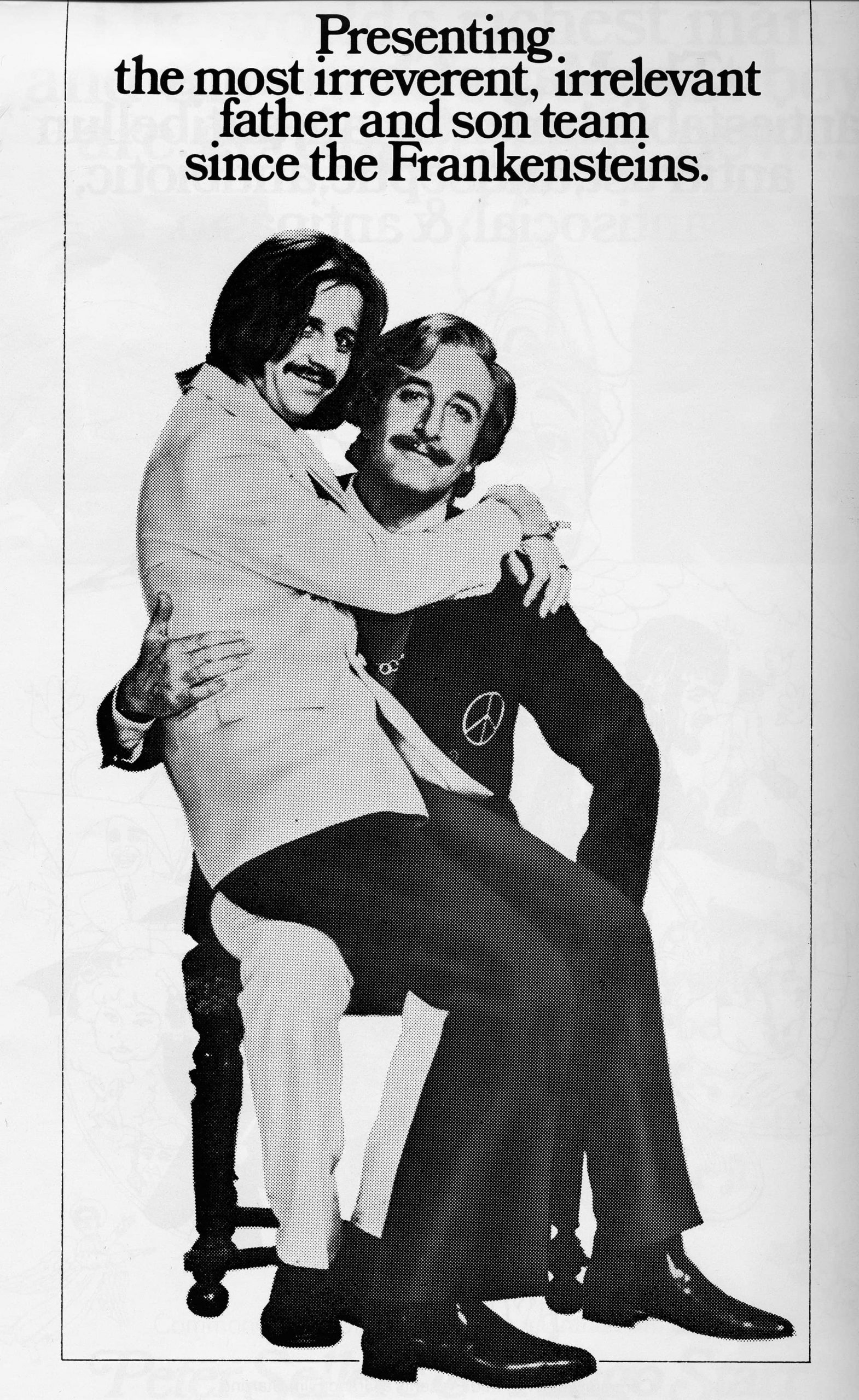
That they’d also recruited Ringo Starr as a character to be inserted into the plot purely in order to exploit his bankability was all the further effort they need to make the film a success. They need do no more. With the Beatles in an accelerated process of collapse, the film can be seen as the first of Ringo’s post-Fab projects in that all that’s required of him is to schmooze through the role as himself, exploiting his amiable likeability and celebrity value in a way that would underwrite the rest of his career. He had demonstrated a mild comic talent in ‘A Hard Day’s Night’ (1964), which was developed somewhat in ‘Help!’ (1965), but now he seems content to follow Sellers around like some affable shaggy dog, adding little to the film beyond his presence. 

And they’ve got an original Paul McCartney theme-song. I’ve always interpreted “Come And Get It” as a disguised appeal to the other three Beatles to concentrate on the core product instead of becoming increasingly distracted by their various side-projects, ‘if you want it, here it is… but you’d better hurry ‘cause it may not last,’ with Paul emphasizing his point by giving away a song with such obvious hit-potential to another Apple Records band. The song, played over the credits, with the bouncing ball following the lyric subtitles over the background of a ten-pound note, is featured at intervals throughout the score, and inevitably soared on to become a Top Ten single both in the UK and America. There are other more folksy songs on the score, including Badfinger’s own “Carry On To Tomorrow”, which pledges to ‘carry on till I find the rainbow’s end.’ 


The film opens to two contrasting mornings. The chimes of Big Ben wake Peter Sellers. He climbs into his stretch-Mercedes as a busker-violinist accompanies him (the car has a ‘Together We Chose A Mercedes’ sticker in the rear-window). Meanwhile, a park-keeper who sounds suspiciously like Spike Milligan wakes Ringo from his sleeping-bag in Green Park. He brushes his teeth in the fountain outside Buckingham Palace. Then the wonderful character-actor Rita Webb banters with him on the Park bench. Until, in a random encounter, Sellers happens to meet Ringo on the Park bridge where he’s tossing crumbs to the ducks. As the mismatched pair walk back towards the Mercedes they pass a black Nun playing tennis, as though she’s come adrift from Michelangelo Antonioni’s far superior ‘Blowup’ (1966). 

Sir Guy formally adopts the vagrant Beatle as ‘Youngman Grand’. When they embrace, Ringo exclaims ‘father’. There’s no reason or logic. Yougman has no back-story other than being a ‘young man’. He doesn’t need a back-story, he’s a cipher. Ciphers don’t need a back-story. Which is the whole point. Guy acts on impulse, an amusing whim. It was ‘love at first sight’ – paternal, of course. The family has no heirs, he and sisters Agnes (Isabel Jeans) and Esther (Caroline Blakiston) have failed to produce progeny – quite independently he stresses. Hence Ringo. 

The original novel was set in Los Angeles. That it has been relocated and extensively rewritten, with Terry Southern’s active participation, allows it to take advantage of London’s fading glamour. They use a private helicopter to fly to the theatre for a Rosencrantz & Guildenstern premier. ‘Thanks for the new suit’ says Ringo politely, ‘it’s very nice.’ ‘My pleasure, Youngman’ assures Sellers oleaginously, ‘one has to be smart when observing the effect of money on the arts.’ Guy introduces Youngman to his sisters who are already in the theatre box seats. They show no outwards signs of surprise at their brother’s latest eccentricity. As soon as the onstage Laurence Harvey goes into his Shakespearian ‘to be…’, Ringo dismisses it with ‘I’ve seen it.’ Yet the actor does a full bump-&-grind striptease to the soliloquy, as the audience gawp through theatre-glasses, the better to witness the ultimate fall of his posing pouch. ‘That fellow’s taking licence in my view’ says a disapproving Sellers, although the spectacle is due to his own intervention. ‘You’ve got to hand it to that Laurence Harvey, he really knows his job’ comments Yougman. 

There are spliced-in comic sequences. One of Sir Guy opening a low-price bargain shop, that’s indiscriminately emptied by eager shoppers. Then there’s an editorial meeting of a Grand-owned newspaper, ‘you’re thinking men of course, if memory serves,’ he tells them. Foreign words have been infiltrated into the paper, with an apology printed in Polish. ‘We are a nation on the move’ he lectures. ‘A nation of tiny cars.’ Cue a cartoon animation movie ‘New Concept in Motoring’ of a giant spaceship-streamlined Zeus auto rocketing between city blocks. As the animation concludes Sir Guy loses enthusiasm, ‘best sleep on it, eh. Don’t want to over-extend.’ Guy reads a rude limerick instead, credited to Rudyard Kipling – then the boardroom opens out and is revealed to be a train-carriage. He fires the board members, confiscates their red carnations, and abandons them at an isolated rail-station with ‘a map containing a clue to your present location.’ Except the maps are of Afghanistan or North America. 

In a new strand, Guy ‘rather fancies’ a hot-dog. So he buys a hot-doggy from a platform vendor – nine pence, but pays with a ‘fiver’ (a five-pound note) as the 3Z10 train begins to move, and the vendor runs to keep up as Sellers passes him more notes, wearing a grotesque pig’s head, causing the vendor to overbalance and fall in a spray of steam. ‘It’s not enough merely to teach, one has to punish as well’ Guy lectures reprovingly, as they stalk the train corridor. There’s a complicated stunt pulled on a ‘Times’ reader, as he’s faced by a revolving sequence of oriental men… only for him to be arrested and led away by two Nazi storm-troopers as they disembark from the train at Auchengillan accompanied by bishops, strippers and a wetsuit diver. 

‘These are strange times we live in’ Sellers tells Ringo. 

‘The old values are crumbling’ he agrees.


In a blur of absurdity, they go on a pheasant shoot, Guy uses a machinegun, then Army artillery Red Leader One opens up leaving the unfortunate bird crisped and served on a silver salver, accompanied by a military band. At the big country house, after Sellers has introduced the staff ‘Downton Abbey’-style, Guy plays harp and Youngman plays recorder as saucy French maids use feather-dusters while the TV-screen shows atrocities of riot-squad violence, race-riot brutality and a Vietnam street execution. Then the new breed of dog at Crufts is revealed as a panther which eats all the other show-dogs. Ringo and Sellers play War Games on a full tabletop display, destroying Cathedrals. ‘Why don’t we write a dirty filthy pornographic book’ suggests Ringo, but leave blank spaces where the dirty words have been omitted? 

Most of the scattergun sequences seem to be there merely for contrived effect. Even the few that promise a teasing gender ambiguity. The duo watch the Heavyweight Championship Boxing Match between the American Ike Jones and the British Joe Thompson on TV. ‘I have reason to believe this may be an exceptional bout’ Guy signals, as the pugilists embrace and kiss in the ring, collapsing in an intimate tangle of limbs, with the crowd ‘sickened by the sight of no blood…’ ‘I thought they were just good friends’ quips Ringo. Then there’s solitary drinker (Roman Polanski) serenaded by a vamp in green singing Noël Coward’s “Mad About The Boy”, who is revealed to be a transvestite Yul Brynner. And then the racially-offensive Major Trubshawe who is confronted by a black-and-white body-builder balletic team dancing in erotic poses as they stuff money down their skimpy glitter posing-pouches. Although these sketches are merely played for comic value, without any mitigating crusading intent, beyond the natural assumption of their vague liberal agenda. 

Yet all of the potential ingredients are there. The two most effective stunts are where Guy offers ‘an interesting proposition’ to Richard Attenborough as the Oxford team coach in the boat-race against Cambridge. ‘I think they’re trying to bribe us’ exclaims shocked oarsman Graham Chapman (uncredited), ‘Oxford men can’t be bought!’ But what ‘if the sum was large enough?’ suggests Guy, ‘as large as this,’ opening a case packed with neat packs of banknotes. Inevitably, Oxford men can be bought. Oxford cuts the Cambridge steering-cables then rams their boat, severing it neatly into two sinking halves. John Le Mesurier, observing events through binoculars, takes more exception to Ringo wearing an Oxford cap. Is he entitled to wear the hat? Why is he wearing it? ‘To keep me ‘ead warm’ says Ringo chirpily.


The other self-contained sketch has Spike Milligan as a grovelling ‘jobsworth’ Parking Warden paid £500 to devour the parking ticket he’s just stuck to the windscreen of the stretch Merc parked in a ‘Loading Zone’. A non-sequitur procession of sandwich-board men file past with placards declaring ‘You’re Telling Me God’, while Ringo reads a yellow ‘Isometric Exercises’ book, acting out the ‘Silent Scream’ and ‘Tiny Face’ facial expressions. He looks like a ‘bleeding nutcase’ accuses Spike, ‘why don’t you get your bleeding ‘air cut?’ As Guy induces ‘Grand is the name and money is the game. Would you care to play?’ ‘What’s yer game?’ protests the confused Spike before he eats not only the ticket but the plastic cover-envelope too, leaving a defiant ‘let that be a lesson to you’ as the Merc drives away. This is Spike playing against his former Goon colleague in a way that almost vindicates the preposterously overblown movie in which it is embedded. 

John Cleese also excels as the sniffy art expert extolling the virtues of ‘light and shade’ in the ‘school of Rembrandt’ painting up for auction at Sotheby’s. Guy offers £30,000. Cleese says ‘SHIT!’ Guy then takes out scissors and neatly snips the nose from the painting as Cleese watches in a controlled rictus of horrified shock. With the first episode broadcast by BBC-TV 11pm on Sunday, 5 October 1969, ‘Monty Python’s Flying Circus’ had yet to assume its cult status, although Cleese adopts the recognisably uptight persona he will employ for lethal comedic effect in the show. The scene where Guy dines at the posh restaurant that serves Rice Krispies, gargles a ‘plucky little Burgundy’, and is then strapped into his chair devouring caviar with his hands as staff sponge and spray him clean has future-echoes of the Python’s ‘Mr Creosote’ sketch. Meanwhile, Guy plays an elaborate charade bidding for a ‘sentimental’ Landseer at auction using harmonica, semaphore, siren and loudhailer, ratcheting the bids impossibly high against competing bids, before withdrawing at the last moment, ‘…mark it sold to the old American twit in the front row’ deadpans auctioneer Patrick Cargill. 

Yet the movie rises to its most extravagant centre-piece with the announced maiden voyage of the luxury cruise-ship ‘The Magic Christian’ itself, with popular TV presenter Michael Aspel speaking-to-camera to describe the ‘beautiful trendy people’ who will be aboard, and Alan Wicker covering the Tower Bridge embarkation as Jacqueline Kennedy, Aristotle Onassis, John & Yoko board behind him. Or is it John & Yoko? No, it’s look-alikes. Things immediately disintegrate into a ludicrously unleashed chaos. Sellers reads ‘Wind In The Willows as a bedtime story to his adopted son and heir, as the TV shows ship’s captain Wilfred Hyde-White being hijacked by ‘take me to Cuba’ terrorists. The ship’s physician smokes a joint to ‘tighten me wig.’ A background movie shows the first trans-racial head-transplant that results in face and feet facing opposing directions, as a vampiric Christopher Lee prowls the corridors seeking victims. A rampaging gorilla-suited figure carries off the captain. A Nun escorts an overweight man in a loincloth carrying a cross. ‘THERE IS NO CAUSE FOR ALARM!’ blares the speakers, causing alarm. ‘SMASH CAPITALISM!’ graffiti appears, as well as ‘Down With Pants’ sprayed on walls. A poster of Mao. The two homoerotic bodybuilders. 


When he’s asked ‘how do we get out of here?’ Ringo helpfully suggests ‘through the engine-room if memory serves.’ Yet the engine-room consists of a hundred topless girl galley slaves chained five-to-an-oar, driven by ‘Priestess of the Whip’ Raquel Welch as two bare-breasted girl drummers beat out the rhythm. But just as the earlier boardroom turned out to be a train carriage, now the confused passengers break through a plywood construct to emerge on the same wharf. The entire cruise-ship is a set. The final orchestral crash from the ‘Sgt Pepper’ album fades over Tower Bridge. 

Yet this is no conclusion, there’s more to come. Although there will be no ironic plot-reversal or poetic retribution. Sir Guy’s project simply continues, testing out new limits. To what extreme lengths will people humiliate or debase themselves in the quest for wealth? If ‘everyone has their price,’ does that include Guy Grand himself? We will never find out. It might have been an interesting detour to see a financial crash or an unwise investment go spectacularly wrong, wiping out his wealth, with a bankrupt Guy ending up street-sleeping through necessity, and dancing for tourist amusement and tossed coins. While Yougman is permitted no back-story, he could use his new heir status to settle dubious secrets from the past in various compromising ways? But nothing of that nature is allowed to happen. There’s no comeuppance to add moral equivalence to the otherwise unrelieved repetition of stunts. 

Instead, Ringo and Sellers use loudhailers to announce ‘Free Money’ as operatives wearing gasmasks fill a large vat on the Thames embankment with a hundred gallons of slaughterhouse blood, two-hundred gallons of urine and five-hundred cubic feet of animal manure. Thunderclap Newman’s hit record “Something In The Air” soundtracks the gathering gawking crowd who use handkerchiefs to muffle the stench, as banknotes are thrown and stirred into the sludge. A bowler-hatted brolly-brigade descend the stairs in precise step, masking their noses. They paddle and submerge in the disgusting mire of filth, using opened brolly’s and bowlers to fish floating notes as more plunge in to scoop and gather their share of free money. 

Not even hanging around to witness the outcome of their provocation Sir Guy and Youngman retreat to the Park where the movie opened, and squirm into adjacent sleeping-bags. ‘You’re quite right, Youngman, there must be a simpler way’ Sellers concedes. ‘This is it’ agrees Ringo. ‘Well, let’s give it a try.’ Interrupted by the Park Keeper, they bribe him too. ‘Sod the Regulations’ he says, ‘you can kip here any night you like. Goodnight Gents.’ 

They have Peter Sellers and the cream of celebrity cameos. They have Ringo Starr, plus a new Paul McCartney song. They need do no more. But it could have been better. It should have been better. 


‘THE MAGIC CHRISTIAN’ (December 1969 UK, February 1970 USA, Grand Films Limited, Commonwealth United Entertainment) Producer: Denis O’Dell. Director: Joseph McGrath. Adapted from Terry Southern novel, with screenplay by Joseph McGrath and Terry Southern by. With Peter Sellers (as Sir Guy Grand KG, KC, CBE), Ringo Starr as (Youngman Grand Esq), Richard Attenborough (as Oxford Coach), Leonard Frey (as ship’s physician Laurence Faggot), Laurence Harvey (as actor playing ‘Hamlet’), Christopher Lee (ship’s vampire), Spike Milligan (as Traffic Warden no.27), Raquel Welch (as Priestess Of The Whip), Wilfred Hyde-White (as Captain Reginald K Klaus), Isabel Jeans as (Dame Agnes Grand), Caroline Blakiston (as Hon Esther Grand), John Cleese (as Sotheby Director Mr Dugdale), Patrick Cargill (Sotheby Auctioneer), Hattie Jacques (as Ginger Horton). Music: composed by Ken Thorne, with songs “Come And Get It” written by Paul McCartney, performed by Badfinger, “Carry On Till Tomorrow” by Tom & Pete, “Rock Of All Ages” by Badfinger (written by Tom (Evans), Pete (Ham) and Mike (Gibbins)), featured on the ‘Magic Christian Music’ LP Apple SAPCOR12, plus “Something In The Air” by Thunderclap Newman (written by Speedy Keen and produced by Pete Townshend). (DVD, Universal 2006) 92 minutes


Monday, 28 February 2022

Poem: 'Who'll Be The Next In Line?'


WHO’LL BE THE NEXT IN LINE? 


Is this the end of the queue? 
Is this where we wait? It is? Thank you. 
I can’t even see the head of the queue. 
Can you? No. Me neither. 
Seem to spend our lives queuing. 
We pretend to be patient, don’t we? 
We try to endure the inconvenience. 
But it is annoying. In fact, it’s maddening. 
Did we move then? One pace forward? 
No…? Just wishful thinking. HaHa! 
It’s getting late. How long has it been now? 
There’s more people joining up behind us. 
An endless queue, one that goes on forever. 
Maybe I’ll sit down, take the weight off. 
Text-message home… oh, no wifi here. 
Time passes. Slips by, and we’re still here, 
an hour later, a day, a week, a month…? 
Don’t want to move in case I lose my place. 
Are you sure we’re in the correct queue? 
It’d be terrible to find we’re in the wrong line! 
Hungry, thirsty, tired… and I need the toilet. 
Strange, how all these patient people, 
barely shuffle forward, heads bowed. 
Does this queue even have an end? 
Are we here for eternity? HaHa! 
I just got this crazy unsettling thought… 
what if we’re all dead, and this is 
some kind of bureaucratic afterlife? 
Wait, did we move then, one pace forward, 
No…? Just wishful thinking… 


Published in: 
‘ALIEN BUDDHA PRESS: ANTHOLOGY Vol.2’ 
(USA – March 2018) ISBN 978-1986-907484 
Collected into: 
‘TWEAK VISION: THE WORD-PLAY 
SOLUTION TO MODERN-ANGST CONFUSION’ 
Alien Buddha Press (USA – March 2018)

Friday, 25 February 2022

Cult Albums: PROCOL HARUM


PROCOL HARUM: 

ALBUM BY ALBUM 

(Gary Brooker: 
29 May 1945 – 19 February 2022)


CD reviews of: 
‘PROCOL HARUM’ 
and ‘SHINE ON BRIGHTLY’ 
by PROCOL HARUM 
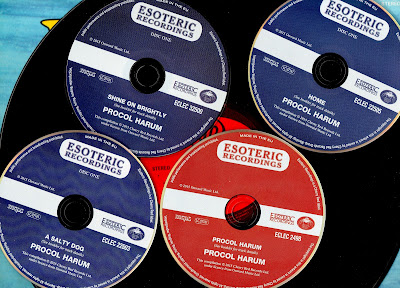
 (Esoteric Recordings) 


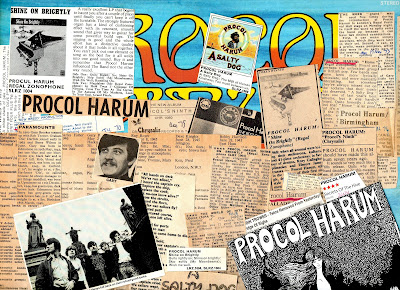
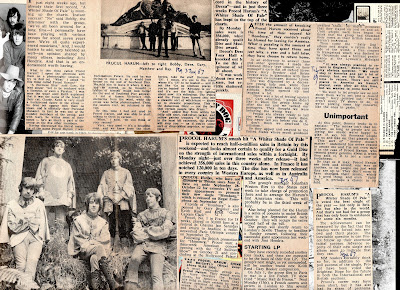
John Lennon had his psychedelic Rolls Royce fitted with a record player, so throughout the Summer of Love he could play “A Whiter Shade Of Pale” repeatedly to anyone who’d listen. The lilting surreal Bach-based single skipped the light fandango everywhere. Its massive success turning such cartwheels that it wasn’t until January 1968, following a line-up and label change, that the former-Paramounts managed this underrated debut album adorned in florid monochrome Aubrey Beardsley-style art, now re-mastered with bonus tie-in singles. Yet it contains literary-ambitious Gary Brooker-Keith Reid keyboard-led stand-outs such as “Conquistador” – a 1972 hit in its own right with live orchestration, and the beguiling “She Wandered Through The Garden Fence”. Despite its single “Quite Rightly So” barely registering chart-wise, the second LP (December 1968) is an even more dazzlingly flawless set. The vinyl second side structured into the esoteric seventeen-minute suite “In Held Twas In I”, shifting from vaudeville through balladry into heavy Rock adorned with stately pseudo-classical twiddly bits. Their distinctively English qualities of wit, intelligence and confidently obscure poetic lyrics stand up to repeated listening, while the group were vindicated by ‘Salad Days’ of recording and touring successfully until 1977. 

Published in: 
‘R2: ROCK ‘N’ REEL’ Vol.2 no.53 
September-October (UK – September 2015)


‘SHINE ON BRIGHTLY’ 
‘A SALTY DOG’ 
and ‘HOME’ 
by PROCOL HARUM 
(Esoteric Recordings, October 2015) 


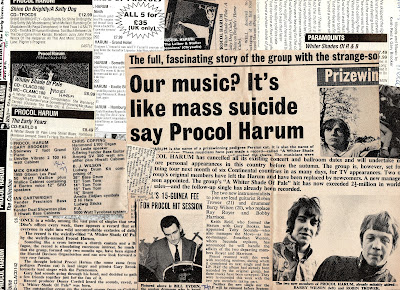
I could pen a dissertation about ‘A Salty Dog’, in fact, I probably will. About how, when other Prog-Rock units were cranking up their tedious virtuoso soloing into mind-numbing improvisations, Procol Harum simply lift a quill from romantic poet Samuel Taylor Coleridge’s narrative epic about a damned voyage to ‘parts unknown to man’ where ships come home to die. I bought the single after hearing it on the radio – maybe Peel? and although it barely rippled the charts, subsequent long-tail sales and critical reappraisals have deservedly elevated it to classic status. For the title track of this, their third album, they abandon the playful obscurantism of skipping light fandangos for a song rifted with literate wit and puns, laced with spectral pizzicato strings as stately and doom-laden as the Ancient Mariner’s accursed vessel itself. From ‘all hands on deck, we’ve run afloat’ – ships don’t run afloat, they run aground, accompanied by a ‘piped aboard’ instrumentation, through ‘how far can sailors fly?’, to close with the legal document testimony ‘you’ll witness my own hand’. In a show of bravura, Brooker-Reid even flourish the oldest cliché-rhyme in the songwriter’s arsenal, ‘many moons and many Junes’ with casual assurance. Mournful gulls wail, waves lap, the Captain weeps as they ‘fire the gun’ and the mast burns, and it’s all spine-shiveringly unique. The nautical theme, suggested by the pastiche ‘Players Navy Cut’ cover-art, continues with “Wreck Of The Hesperus”, then there’s the stand-out “The Devil Came From Kansas”. 

As part of a trilogy of lavishly packaged digital reissues – alongside a 3CD ‘Shine On Brightly’ (1968), and fourth LP ‘Home’ (1970), each definitive edition is expanded with a bonus CD of outtakes and radio sessions, lyric-poster and memorabilia. Procol Harum may be an acquired taste, but every now and then they’re a taste very much worth acquiring. 


Published in: 
‘R2: ROCK ‘N’ REEL’ Vol.2 no.54 
(Nov-Dec) (UK – November 2015)


Interview: SUZI QUATRO


SUZI QUATRO: 

NO CONTROL, THE REAL SUZI Q 


Suzi Quatro has a new album – ‘No Control’
 and a stadium tour with David Essex. 
 But she’s not about to take that 
 ‘I’m A Celebrity Get Me Out Of Here’ 
 reality-TV route just yet… 


Everyone knows Suzi Q. 

She gets recognised on the street. ‘Oh yes. That happens all the time. But funnily enough I had to decide when this all started, and I made up my mind, was I going to hide behind sunglasses all my life, or was I going to be normal? So, I don’t wear those sunglasses, and mostly it’s fine. Of course there are jerks. There are always jerks. But it’s just how you treat it.’ 

There were wild women in Rock before Suzi Q. Brenda Lee and Wanda Jackson. Honey Lantree was drummer with the Honeycombs and Megan Davies played bass with the Applejacks. After Suzi there was Gaye Advert and a deluge of Riot Grrrls. But there’s never been anyone quite like Suzi Q. 

She has two homes. One in Hamburg. But today ‘I’m at my home in Essex’ doing a mind-numbing series of non-stop interviews. And she’s not wearing the all-over black leather? She laughs, ‘No. I’m sorry to ruin your fantasy.’ 

Is putting on that leather stage-outfit a way of assuming the ‘Suzi Quatro’ persona, as David Bowie used to become Ziggy Stardust on stage? ‘For me, I can only speak for me. There is a separation. If you read my book ‘Unzipped’ (2007), I write it in two voices. But nothing is manufactured, they’re both me. Both are totally me. Nothing about me is phony. I pride myself on being a real person. It depends to a degree on what I’m wearing. When I’m playing live I like to go watch the other bands from the side of the stage. Then I go and put on a little make-up. I’m not really a make-up girl. But then I’m ready to be ‘Suzi Quatro’.’ 

Doesn’t it get hot inside all that leather? ‘It is really hot. But it’s a timeless image. I chose it, it suits me and I’m happy with it. I’m comfortable in my skin, leather though it may be. I’m sixty-four, I’m still up there shaking my ass, in a leather suit, how ridiculous is that, when you think about it?’


Her ‘No Control’ tour bears all the hallmarks of a Seventies Golden Oldies package, with David Essex, Les McKeown’s Bay City Rollers, and Suzi’s former chart-mates Smokie. Do those nostalgia-audiences accept the new songs, or do they just want the old hits? ‘Well, this is my second time headlining an arena tour. We had such a good time last time. There has to be space for four acts. So I’ll do the single off the album – “No Soul/ No Control”, and a few others. But you will get to hear your favourites.’ 

After all, there’s shared history at work here. Surely she must have met David Essex backstage at ‘Top Of The Pops’? ‘Yes. Many times. We did a TV show together in Spain too. He’s a good guy.’ And she had “Stumblin’ In” – a big duo hit with Chris Norman, who was then lead voice with Smokie. ‘There have been line-up changes with Smokie, of course. But this Smokie has been together for twenty years. And they’re good.’ 

She talks quickfire fast and confidently, but on-message too. ‘I’m a communicator, that’s actually who I am. I don’t do smalltalk.’ When it seems I’m not enquiring enough about the new album, she prompts me. There’s nice Punk lettering on the ‘No Control’ cover-art. But it’s unmistakably Suzi from the Power-Pop title-song guitar play-in, the defiant ‘you can’t take away my soul’ chanted over crashing pile-driver drums. ‘The message is ‘don’t let go of yourself for anyone’, this is my personal mantra, all you have in this world – is you.’ 

‘Yes, this album is me’ she insists. ‘It’s true to what I am, and true to my story. It’s good if it feels uncomfortable, that means that it’s truthful. It’s now. I’ve gone around the block, and I’ve come home again. I’m back now. I’ve gone full circle. This is me now, this album has a contemporary sound, wouldn’t you agree?’ 

I hedge. It’s difficult to say what ‘contemporary’ consists of. I’d hazard more at timeless. She seems happy with that. 

The album was largely written with son Richard Tuckey, while sitting on the garden patio with acoustic guitars during the long balmy English summer of 2018, with an iPad recording app and lots of song-lyrics on paper. ‘It was just strange. It was an accident’ she ponders, as though she’s still working it out herself. ‘This album happened by accident. My son Richard plays, and he’s a fine musician. We were just in the RAK London Studios with KT Tunstall, working towards maybe an EP of duets, and Richard was playing session guitar and overdubs. Richard and I had often talked about working together, but it never seemed like the right time. Then I was sitting on the patio and he said ‘I want to write some songs with you’, and I said ‘OK Richard’. The time was right. He played me what was to become “Don’t Do Me Wrong”, and I thought ‘I can work with this.’ I didn’t know where it was going, but it was happening. Next thing we’re making an album, and it’s like… it was flying. I’m not that clever, although I’m clever. I’ve not tried to recreate anything. Oh no no, it’s now. I didn’t want to plan it. I didn’t want to overthink it. It’s just like, whatever it is, there’s a connection, he pushed the ‘Suzie Quatro’ button. Whatever that is, he pushed that button. I can’t explain it any better than that. Whatever the song is, it is. Each song has its own character. It’s a very honest album.’ 

There’s boogie-romp and quivering reverb on “Going Home” where she’s staring at the ceiling asking ‘how can you lay by my side, you always withdraw and hide.’ While “Strings” has the classic anthemic chorus – E, F, F-sharp, with a horn arrangement from long-term collaborator Ray Beavis, and words about the ties that hold us all together, less cosmic string-theory as the relationships that bind us, and maybe the guitar strings of the songs we sing. “Love Isn’t Fair” – one of two solo Suzi compositions, is chiming steel-band swaying sing-along catchy-Pop, with lilting horns and rim-shot drums, as she protests at the unfairness of amour… M-mmmm. ‘I wanted to create a Blondie (“The Tide Is High”) meets Mavericks, and I think I accomplished that.’ And the killer head-banging hard-riff of “Macho Man”, strutting and swaggering ‘down where the feelings go’.’ 

With forthright candour, she once told German Teenage magazine ‘Bravo’ how she plays bass guitar because the sound and vibrations go just where she needs them. Right between her legs. Down where the feelings go… 


--- 0 --- 

Some found it strange that when she presented her Radio Two series it focused not on her seventies chart heyday – but was a more 1950s-based ‘Rockin’ With Suzi Q’. But that’s entirely consistent. Just – genealogy roots-wise, DON’T EVER ask Suzi about her misleading old Wiki entry, as I naively do. She doesn’t like it. In fact, she HATES it! Yes, her mother was Hungarian, but it was when her Italian paternal grandfather arrived at Ellis Island as an immigrant, that the official takes one look at the name ‘Quatrocchi’ on the papers, and says ‘no way, you’re Quatro’. So she was always Quatro and ‘it’s going into four generations now.’ Susan Kay Quatro was born 3 June 1950 in a Detroit the way it was before ‘Robocop’ (1987) and Eminem’s dour ‘Eight Mile’ (2002), when Motown rhythms made it the ‘Sound Of Young America’. The fourth of five children in a musical family, she made her show-biz debut as an eight-year-old playing bongos with her father’s moderately-successful jazz combo – The Art Quatro Band. At fourteen she was a TV go-go dancer as Suzi Soul. But as in her poem “Self Discovery” – yes, she writes poetry too, ‘that’s what your soul keeps screaming, there’s got to be more.’ That’s when the sisters saw the Beatles on the ‘Ed Sullivan Show’, and at fifteen they formed mini-skirted five-piece girl-group Suzi Soul & The Pleasure-Seekers with sisters Arlene, Patti and later, little-sister Nancy. Her father gifted her a Fender Precision bass – ‘the Rolls Royce of basses,’ which decided her future. 

Is Suzi still a pleasure-seeker? ‘A hedonist? Nope. I never was. No, it was just a name for a band. And it was great training. A nine-year apprenticeship.’ 

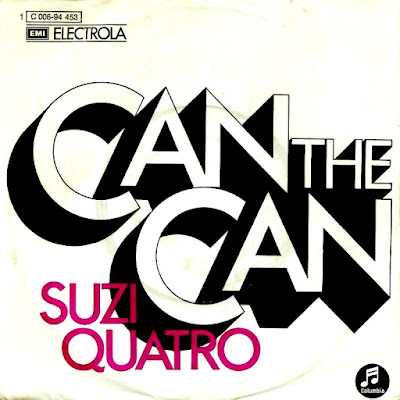
The Pleasure-Seekers release two singles – including Suzi’s composition “Brain Confusion”, and “What A Way To Die” which later features in revenge sexploitation-movie ‘Blood Orgy Of The Leather Girls’ (1988), and they play dates clear across from Las Vegas to Vietnam. In late-1970 veteran-hitmaker Mickie Most heard her playing with the group – by then renamed Cradle, when he was in Detroit recording Jeff Beck at Motown. He saw potential and promptly snatched her across to the UK. PJ Proby had come to England to find that breakthrough success. Jimi Hendrix had come to England to do the same. Now it was Suzi’s turn. She toured downbill with Thin Lizzy and Slade, and released some singles, including 1972’s “Rolling Stone”, co-written with Errol Brown, and Pete Frampton playing session guitar. Until in early-1973 she was teamed with the Chinnichap hit-machine. The Nicky Chinn-Mike Chapman duo – responsible for Sweet, Mud, New World, Arrows and the Knack, who were to the seventies what Howard-Blaikley had been to the sixties, and what Stock-Aitken-Waterman would be the eighties. They wrote and produced the thumping “Can The Can” – which got to no.1 in May 1973, between Wizzard and 10cc, on Most’s RAK label. ‘Put your man in the can, honey, get him while you can’ is maybe an early lyric-shot for Beyoncé’s “Single Ladies (Put A Ring On It)”?


Although she slots seamlessly into the Chinnichap stable, the songs they write are carefully crafted around her persona, but did she have any input into their writing? Were the songs pre-discussed with Nicky and Mike? ‘It was an incestuous relationship’ she explains. ‘I mean that figuratively. I was here, and we did the tour with Slade. And we were getting good responses. But nothing was really happening. I did what I did. I was doing all my own songs. Then one night Mickie (Most) asked if it was alright to bring these two guys around to see me play. So they came and they saw me. They went away and wrote “Can The Can” based around what they’d seen me do on stage. They wrote it for me’ she asserts firmly. ‘They didn’t offer those songs to anyone else. And it worked fine for me. I’m quite a prolific writer. I wrote ‘B’-sides, album tracks, and some ‘A’-sides too (sometimes with future first husband Len Tuckey). In fact, it got confusing at times. We were in the studio recording “Mama’s Boy”, and I turned to Mike (Chapman) who was producing and I said ‘you’ve given me no breathing space on this one.’ And he said ‘Suzi, this is one of yours.’ And it was.’ 

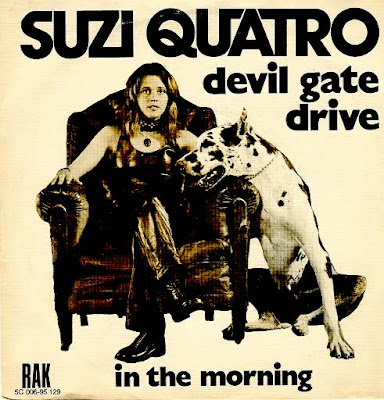
Her image arcs back to Emma Peel and forward to Joan Jett, suited and booted, her diminutive five-foot figure in leather jump-suit, playing bass in a group of heavy guys – Len Tuckey (lead), Alistair Mackenzie (keyboards), and Dave Neal (drums). Kicking ass, beating the guys at their own hard-rocking game. And it made her a ‘Top Of The Pops’ fixture, “48 Crash” (no.3, July 1973) with lyrics variously ascribed to middle-age male impotence or the 1948 Stock Market crash – but what exactly does ‘forty-eight crash is a silk sash bash’ mean? and “Daytona Demon” (no.14, October 1973), until “Devil Gate Drive” returns her to no.1, (February 1974) with its Pepsi ‘Come Alive’ riff, dislodging Mud’s “Tiger Feet” from the top slot. It occurred to me that her teenage hang-out in Detroit – the ‘Hideout Club’ must have been a kind of prototype ‘Welcome To The Dive’ where ‘your Mama don’t know where your sister done go’? ‘It was. And every teenager had one. That place where you go that your parents don’t approve.’ 

She tours the USA through three months of 1975 with Alice Cooper, and returns with a vengeance with the softer melodic “If You Can’t Give Me Love” (no.4, March 1978), with the lyric ‘I know you’re the king of this discothèque thing’ to catch the tone of the changing times. And a duet with Chinn-Chapman stable-mate Chris Norman of Smokie – “Stumblin’ In” (no.41, November 1978), which goes gold when it climbs to no.4 on the US Billboard chart. Her exposure as ‘Leather Toscadero’ opposite the Fonz in TVs ‘Happy Days’ must have helped. She can also be glimpsed as a nurse in ‘Absolutely Fabulous’ (1994) and in ‘Midsomer Murders’ (2007) as electrocuted Rock Diva ‘Mimi Clifton’. And for completists, she’s the voice of ‘Rio Rogers’ in ‘Bob The Builder: Built To Be Wild’ (2006 DVD). As well as stage musical work. 

By the time “She’s In Love With You” becomes her final major hit, a no.11 in October 1979, she’s a bona fide legend. Everyone knows Suzi Q. But for her inclusion on the Ferry Aid charity hit “Let It Be” (March 1987), and a fun Reg Presley duet on “Wild Thing” in 1986. But the hits are just part of the story. There are fifteen studio albums too. Alongside various Greatest Hits compilations, and her ‘Annie Get Your Gun’ (1986) stage-show soundtrack, there’s a trilogy of strong current work, ‘Back To The Drive’ (2006), ‘In The Spotlight’ (2011), and ‘QSP’ (2016) uniting Suzi with Sweet-guitarist Andy Scott and Slade-drummer Don Powell. Showcasing new original Suzi songs.


In a recent Radio Two interview Graham Gouldman claimed that you can no longer write love songs as you age… ‘I don’t agree with that at all’ she explodes vehemently. ‘I know Graham, and maybe incidents in his life have caused him to think that way. But sure you can still write love songs. You can even write them from a better perspective. I’m a romantic, I’m not even a hopeless romantic, I’m a HOPEFUL romantic. I will always believe in the power of love.’ Suzi writes love poems in her ‘Through My Eyes’ (2016) collection. Rhyming verse in “A Mother”, and the mysteries of love in “Common Denominator”. ‘I am a poetic person. I do seem to think in poetic phrases. I am a published poet. Although I usually treat things separately, songs and poems. But every once in a while I’m talking with a songwriter, and he says ‘I’ll write that down, that’s good’.’ 

“Easy Pickings” on the new ‘No Control’ album contrasts the artificiality of the ‘Talent/Reality Shows of Today’ – ‘where mediocrity lies’, with the true honest rural roots of guitar-picking in the Kentucky hills. Based around a riff she’s been toying with for a decade, which found its perfect home. So I guess that means Suzi won’t be doing the ‘I’m A Celebrity Get Me Big Brother House’ any time soon…? ‘They’ve asked me to do that show maybe ten times. And ‘Strictly Come Dancing’. But I turn them down. I will not be a hypocrite. We all watch reality TV. They make for good television. We sit down and watch our Saturday night reality shows. Of course we do. We all do it. But it’s not had a good effect on music. It’s all about fame and money. This is not the way stars are found. Who won last year’s ‘X-Factor’? We don’t know, neither of us. That answers my question. You should come to it with heart. I would not be doing this fifty-five years if I was in it for the fame and money. That should not be your motivation. When I wake up to the reality of the day, I’d still be doing this. I’d still be playing. In fact, I still do that. I go to pubs and get up and jam.’ 

“Bass Line” is the ‘story of my life’ – ‘follow the bass-line, straight down that fret line, follow that bass line.’ “I Can Teach You To Fly” has an upbeat sixties counter-melody vibe, its Turtles positivism grounded by the horns. While “Going Down Blues” seems to be a backatcha attack on a tell-all confessions-biog. ‘You picked up on that? You’ve impressed me’ she grins brightly. ‘I’m not the kind of writer who writes fiction. That song is about somebody, yes. But no. It’s a private thing. You’ve got someone in your life whose done that to you, haven’t you? I can tell.’ While “Don’t Do Me Wrong” is the first song Suzi and Richard wrote together… a unique partnership, as far as I know. Frank and Nancy Sinatra recorded “Something Stupid” together – a father-daughter relationship, but they didn’t write it. I can’t think of another mother-son writing partnership, unless ‘R’N’R’ readers can put me straight…? 

But as in Suzi’s poem… ‘a five-minute conversation you wish was twenty,’ a half-hour conversation you wish was more… 

Meantime, for Suzi, ‘I’m just out flying high.’ 


Published in: 
‘R’N’R: ROCK ‘N’ REEL’ Vol.2 Issue 76 
July-August (UK – July 2019)


DVD: 'Suzi Quatro: Trailblazer. Inspiration. Survivor'


SUZI Q!
 
DVD Review of: 
‘SUZI Q: TRAILBLAZER. 
INSPIRATION. SURVIVOR’ 
by SUZI QUATRO 
(2020, Acme Film Company) 
 

Dale Hawkins did the original Rockabilly ‘Susie Q’, which the Rolling Stones and Creedence Clearwater Revival later revived. Growing up in motorcity Detroit young Susan Kay Quatro was probably familiar with the song. Always a solid bundle of rocking energies, it was brother Michael who set up her audition for Mickie Most at Motown’s Studio A. Signed to Rak Records she was supplied with suitably nonsense hits written and produced by the Mike Chapman-Nicky Chinn team, to become inescapably part of the 1970s chart machine. She wore ‘Barbarella’ leather because she’s an Elvis fan, but the ‘Top Of The Pops’ image tells only part of the tale. Tributes from Alice Cooper, Joan Jett, Deborah Harry, Wendy James and others testify to her influence – as leading the first female-fronted Rock band, and her enduring presence persists. Wielding a bass-guitar that weighs more than she does, the trade-off for a life lived on the road since age fourteen is family and marital issues. Divorce from solid husband-partner Len Tuckey – former guitarist with Nashville Teens (from 1969-1973), and problematic sister-moments, including with Patti who went on to join Fanny. Here, she sets out to redress the balance. Don’t underestimate her. Watch the DVD story. As her 2019 ‘No Control’ album indicates, Suzi Q was always a Rocker at heart, and is at her best writing her own material. All she demanded was that the world ‘let me be who I am.’ She would accept no compromise on that. 

(The DVD bonus features include an interview with Liam – not Gallagher, but director Liam Firmager) 


Published in: 
‘RNR Vol.2 Issue.80 March-April’ 
(UK – March 2020)