Thursday, 30 January 2014

Poem: 'November, Emley Moor


NOVEMBER, EMLEY MOOR 

autumn trees 
fray into a 
one-ness of sky, 
and with it 
words, 
breath 
dissolve 


ALMOST TWO HAIKU 

through the foliage 
dawnlight 
seeds morning 

and later 

the sun 
welds pylons 
to the sky 


Variously published in:
‘TANYA No.1’ (UK – January 1979)
‘NORTHERN STAR No.15’ (UK – January 1982)
‘ABBEY No.43’ (USA – June 1983)
‘NOT MELLOW No.2’ (USA – January 1981)
‘INDUSTRIAL SABOTAGE No.42: FREE FOLDER’ (USA – May 1988)
‘PEACE AND FREEDOM Vol.4 No.5’ (UK – October 1988)
‘SEVENTH DREAM No.4’ (UK – July 1989)
‘SONGS No.17’ (UK – April 1992)

Wednesday, 29 January 2014

1967 Psychedelic Pop - SOPWITH CAMEL: Ode To A High-Flying Camel


HELLO SOPWITH CAMEL: 
ODE TO A 
HIGH-FLYING CAMEL 

Album Review of: 
‘SOPWITH CAMEL’ 
by SOPWITH CAMEL 
(Kama Sutra Records KLPS 8060, 1967, 
 Talking Elephant Records TECD203CD 2012) 

 Hello. Hello. It’s one of the most recognisable words in the language. In Kurt Vonnegut’s absurdist novel ‘The Sirens Of Titan’ (1959) a Tralfamadorian robot called Salo travels across the cosmos for over 200-millenia to carry a message to a distant galaxy. The message says simply ‘Hello’. “Hello, Hello” was also the greeting that announced Sopwith Camel to the world, as the first chart emissaries of the newly-come San Francisco sound. Some claim they’re ‘so relaxed they could make the Spoonful sound uptight’ as Lillian Roxon reported in her excellent ‘Rock Encyclopedia’. But to come on like a mini-me Lovin’ Spoonful was no bad way to come on at the 1966-‘67 dawn of American happy music. If they were sharply suspected as being sunshine-Pop, cute, commercial and too quaintly old-timey, they could also be very good live as active participants in the nascent Frisco music scene. And if their record company encouraged them to do the faintly satiric campy stuff, because that was what sold, then briefly, yes, it sold.

Announced by guitarist Terry McNeil’s hand-crafted fly-posted fliers, they’d started out sharing bills at the ‘Avalon Ballroom’ supporting the Grateful Dead, with the Charlatans at the ‘Firehouse Theatre’, or with the Association at ‘The Fillmore’. As well as playing ‘The Matrix’, they performed at a strange event with Allen Ginsberg at the Fillmore, 17 July 1966, plus sets with Grace Slick’s Great Society, and even Thirteenth Floor Elevators. Their sound was always more playfully light than the trippy kool-aid psychedelia of their heavier contemporaries, Quicksilver Messenger Service or Jefferson Airplane, but they were very much part of the scene. While their very name coincidentally – or presciently, had the cross-over potential to also snag with the retro-chic exploited by “I Was Kaiser Bill’s Batman”, “Snoopy Versus The Red Baron” and the Carnaby Street fad for vintage militaria. The first Sopwith Camel was – after all, a World War I biplane. It was at promoter Chet Helms’ home that friends were brain-storming free-associating names for Janis Joplin’s group. Helms didn’t much like Peter Kraemer’s suggestion, Sopwith Camel. So Peter took it anyway.


It was while hanging out in the bohemian ‘Big Little Bookstore’ on Polk Street that writer-vocalist, raconteur and occasional sax-player Kraemer first met graphics-student Terry McNeil, and allied his poetry with Terry’s guitar. With a couple of songs drafted out the duo rehearsed with drummer Fritz Kasten (later of Joy of Cooking), and Big Brother Pete Albin’s brother, Rodney. A more stable line-up emerged when this temporary hook-up was replaced by recruiting regular musician William Sievers aka ‘Truckaway’ (guitar), plus two friends – London-born Martin Beard (bass) and drummer Norman Mayell who’d once played back-up to Mike Bloomfield.

 Meanwhile, Artie Ripp’s Kama Sutra label had the niche edge when it came to happy-style good-time music with hits for the Tradewinds (“Mind Excursion”), the Innocence (“There’s Go To Be A Word”) and the Vacels (“You’re My Baby”) as well as the high-profile Lovin’ Spoonful. Producer Erik Jacobsen heard a Sopwith Camel demo tape and – impressed particularly by “Hello, Hello”, flew out to Frisco to meet the group. A former-Folkie himself, he’d already produced and arranged the first two Tim Hardin albums, discovered the Lovin’ Spoonful, financed their first hit “Do You Believe In Magic?”, and produced nine straight Top Ten hits for them, as well as working with the legendary Charlatans on their unreleased Kama Sutra album. So when Jacobsen’s Sweet Reliable Productions went to work on the first Kama Sutra Sopwith Camel sessions in a freezing New York winter, he could maybe be forgiven for nudging his new property in the Spoonful direction. Doesn’t Peter Kraemer sing in a lilting style not entirely unlike John Sebastian? Squint, and maybe yes. And anyway, it seems to be working, although signed second to Jefferson Airplane, they became the first group from the Frisco ferment to score a hit.

Eminently hummable, throwaway-catchy as hell, “Hello, Hello” was perfect for its brief window of time. The Monkees “I’m A Believer” was the US ‘Cashbox’ no.1 the week it made its first Top 50 appearance – at no.50 (14 January 1967). Kama Sutra label-mates the Lovin’ Spoonful were no.18 (with “Nashville Cats”) and the Innocence at no.48 (“There’s Got To Be A Word”). By the following week “Hello Hello” had climbed to no.41, then to no.32. By 4 February it had broached the Top 30, at no.29, then up to no.27. It peaked at no.25, the week the Seekers took over no.1 with “Georgy Girl”, holding the Rolling Stones “Ruby Tuesday” in second slot. For Sopwith Camel things would never get better than this. The single was down for a final week at no.30, then out, after a seven-week run.

But listen. The piano picks its way into the intro, before a cartoon-swoosh. Peter plays the unsure loser, in real life he’s a big guy with tinted shades, a shaggy centre-parting and dark moustache. Nevertheless, in the song he’s too nervous to approach the girl – ‘never knew how I’d meet you, didn’t know how to greet you’, until the odd off-the-wall seeming non-sequitur ‘would you like some of my tangerine?’ does the trick. A tangerine is not a substantial fruit. To offer a segment, or even half a tangerine, is not exactly an extravagant seduction inducement. But let’s deconstruct this. Let’s examine this innocent segment of citrus fruit. California-grown. This is the unique selling point of the hit single, and as such, the crux of the career. It’s like a songwriters fill-in word, something to establish rhyme and metre – it’s rhymed with ‘I know I’ll never treat you mean’, which works fine while awaiting substitution by a more inspired word. But it stays in, and is all the better because of it. All he’s offering, all he has to offer her, is this small piece of fruit. He has nothing more. He’s not even offering it all, just some of it. They are to share it, as equals.

Compare this simple gift with the designer-label status-signifying shallow-materialist bling-culture of Hip-hop and Urban to come. Contrast it with one of 2013’s biggest hits – “Blurred Lines”, with Robin Thicke urging ‘I know you want it, I know you want it’, offering nothing less than full-on sex. Peter is offering his relatively unthreatening piece of tangerine. Which the more endearing? Which the more human? The romantic down-at-heel scruff with his humble segment wins for me. He’s the teenage dirt-bag come good. The mix of the trite and the unexpected works, carried on breathlessly effortless voice, rag-timey piano over stroked guitar, clear through to the theatrical flourish and scattered applause tail-ending the track, adding to its tongue-in-cheek informality. The ‘B’-side – “Treadin’”, omitted from the original album, but added as a bonus track to the CD is untypical, chiming jangle-guitar slightly phase-reverbed with Byrds harmonies and the haunting questioning ‘in a world of constant change, can I love you forever…?’ It gives a glimpse that Sopwith Camel has other guises.


Delayed by touring and promotion – during which they were frequently miscredited as an East Coast band, the tie-in album emerged some time later. To tour on the back of one single is a precarious venture. Procol Harum took years overcoming the stigma. Thunderclap Newman and the Crazy World of Arthur Brown never lived it down. When Jefferson Airplane broke through with “Somebody To Love” they had ‘Surrealistic Pillow’ already in place. “Hello, Hello” was an invitation into the Sopwith Camel world, but once inside, it proved to be a sparsely-furnished place.

And when it did arrive, the ‘Sopwith Camel’ album does little by way of a get-out of jail free card. At this point there’s only one album – spawning three singles, which therefore neatly encapsulates the entire first phase of the group’s career. The long stinging guitar solo on “Frantic Desolation” is close to its saving grace. In the song he’s writing a letter, all his ‘thoughts are rolling’ because her absence has infected all he sees, with its jerky rhythms playing off the urban imagery of ‘neon lights flashing on the faces in the windows’ as he restlessly walks his misgivings. Onto the next track, and if the pseudo-mysticism of Willie Sievers’ “Saga Of The Low Down Let Down” is the result of a swaggering come-down – ‘stamp out reality, be what you want to be… before reality stamps on you’, it’s one that’s undermined by the half-chuckle in his voice and the irreverent back-up answer-voices that suggest he’s not exactly serious. Flirting with trendy profundity, Sopwith Camel are never going to get suckered into it, ‘take it from me, take it with salt, take it away’.

They’re more at ease with sympathetically reconfiguring the tale of “Little Orphan Annie” into a vagabond hippie-chick – ‘hot boom-a racka-tacky leapin’ lizards ah!’ But if down by the train-track you can hear a mournful sound, this is far from down. ‘Whimper little girl’ as she’s hopping box-cars with her dog Sandy, ‘simper little dog’ as it eats ‘fossilised bone’. This first side, more pleasant than it is striking, consciousness-expanding or life-changing, winds down with an extended instrumental play-out with rippling twelve-string, closing with a thirty-second mixed-down harmony-vocal refrain. There’s a loose dexterity to the interplay, as if it’s a semi-jammed Byrds or Love demo backing track, showing some easy skill.

Side two opener “Cellophane Woman” uses a harder-edged Standells riff, reverb guitar and bratty Dylan-accented vocal, although the lyric rather detracts from its acid-blues intent – yes, rejecting materialism and conformity, but inadequately expressed as ‘a woman wrapped up in cellophane’ who ‘aint been no-place’ but ‘thinks she’s been there just the same – alright!’ We know that what he’s rejecting is the shrink-wrapped cellophane-packaged PRODUCT! The idealised ‘Stepford Wives’ image of the female stereotype. His empathy lies more with wastrel Orphan Annie hopping box-cars with ‘wise words in her young mouth.’ It’s a fairly typical hippie stance. An echo of their “You Always Tell Me, Baby”, in which his Lady attempts to dictate his behaviour and life-style from her own pre-recorded moral facade. Here, sweetened by ooohing background harmonies.

 Elsewhere, “The Things I Could Do With You” has a vaguely ‘Sgt Pepper’ harmonium-break. The crooning “Walk In The Park” has a comedy voice-over invitation, ‘Hi, my name is William…’ “The Great Morpheum” advertises a surreal movie-show that ‘out-shimmers them all’. And the final track – the likeable second single, opens with the mailman’s chimes and a ‘postcard full of sunshine’ from the girlfriend who’s Mother has sent her away. She’s suggesting he takes a trip. It makes for a fine closer, even if it’s not an album born to endless night or sweet delight. It’s not stoned immaculate. There may be lysergic molecules swimming within its genes, but it’s more a sparky ‘balloons and cotton-candy’ feel-good dope vibe. They’re not out to change the world. They’re pretty-much at ease within their own.

For me in England, Sopwith Camel lacked the electric burn of Count Five, the Electric Prunes or Thirteenth Floor Elevators. But I was aware of them as being part of that huge American kaleidoscope of change, I heard and enjoyed their easy-on-the-air whimsy broadcast from Pirate radio, and followed their moves in the music press. And while their refreshing connections to all things West Coast trippy were soon overtaken as hip currency, their lightweight hit also devalued their credibility with the increasingly heavy emerging scene. By 1968 Tiny Tim, who was as quaint and old-timey as they come, was singing “Hello, Hello”, as if to prove their detractor’s point by association. While in the UK a jaunty fun cover by Freddie & The Dreamers diverted serious attention from the Sopwith Camel original, resulting in neither version charting. Whatever big things had been anticipated for Sopwith Camel, either artistically or commercially, got capsised when that first success-wave proved too much for them. It brought pressures they’d not previously imagined existed. After national touring they returned to the San Francisco ‘Fillmore’ to headline with the Young Rascals above the Doors, to find that things were shifting beyond their control.


First Willie quit, then Terry quit, and the Camel fell apart – almost never to come back together again. Until they reformed. Kraemer spent time writing well-crafted Pop for Jacobsen’s publishing company, Great Honesty, so that the gentle whimsy and melodic country-string sound was not entirely lost. While Jacobsen himself took Norman Greenbaum out of Dr West’s Medicine Show & Junk Band and up to no.1 with “Spirit In The Sky”. Norman Mayell, by now doing session-work, is said to play drums on the record. He was also drafted into Blue Cheer – one of Frisco’s loudest bands, in time to play on their fourth LP, ‘Blue Cheer’ (1969), and beyond.

 Yet once fashion time-shifted yet again into a cosy nostalgia for all things west-coast hip the group reformed, oddly – according to Kraemer, as a result of ‘Burger King’ seeking the rights to use “Hello, Hello” in an ad! With Peter and Terry (now aka Nandi Devam) back together, they contacted Marty and Norman, adding new guy Jimmy Stringfellow, because Sievers was busy operating his own Sausalito studio as William Truckaway. And a more well-received reunion album followed, ‘The Miraculous Hump Returns From The Moon’ (1972) – a wondrous artefact in its own right. Yet this renewed group incarnation also came to a fiery end, when their equipment truck literally exploded and burned on the road, taking all their equipment with it. Peter Kraemer launched a third line-up in the summer of 1977 at Berkeley’s Provo Park ‘Nude-In’. And there have been sporadic reformations ever since, as liner-notes scribe Lindsay Planer points out, they ‘are still playing in the San Francisco area to this day.’


SOPWITH CAMEL: IN 
EXCITING STEREOPHONIC SOUND 

August 1967 – ‘SOPWITH CAMEL’ (Kama Sutra KLPS 8060, reissued as ‘Frantic Desolation’ (1986), then as ‘Hello Hello Again’ (1999), reissued as CD in 2002 and digitally remastered in 2006 as Talking Elephant TECD203 in 2012), 3D cover art by Victor Moscoso, with (1) “Hello, Hello” (Peter Kraemer, Eric Kretz and Dean Deleo), (2) “Frantic Desolation” (Kraemer), (3) “Saga Of The Low Down Let Down” (William Sievers), (4) “Little Orphan Annie” (Kraemer and Terry MacNeil), (5) “You Always Tell Me Baby” (Kraemer), (6) “Maybe In A Dream” (Kraemer), (7) “Cellophane Woman” (Sievers), (8) “The Things That I Could Do With You” Kraemer), (9) “Walk In The Park” (Sievers), (10) “The Great Morpheum” (Kraemer), (11) “Postcard From Jamaica” (Kraemer) plus bonus CD-track “Treadin’” (Kraemer). In ‘Q’ (August 1990) Johnny Black writes ‘Sopwith Camel operated in a somewhat restricted musical genre which whimsically combined faintly psychedelic Pop with Vaudevillian theatrics and jug band jazziness’. Also issued as Edsel ED185

1967 – “Hello, Hello” c/w “Treadin’” (Kama Sutra KA217) reaches no.26, chart debut on 28 January 1967 and stays on the ‘Billboard Top 40 for four weeks

March 1967 – “Postcard From Jamaica” c/w “Little Orphan Annie” (Kama Sutra KA224) recorded in Kama Sutra’s New York studio

1967 – “Saga Of The Low Down Let Down” (written by William Sievers) c/w “The Great Morpheum” (Kama Sutra KA236)

1973 – ‘THE MIRACULOUS HUMP RETURNS FROM THE MOON’ (Warner Reprise, reissued on CD as ‘The Millennium Edition’ on Generic Type Records in 2001, then ‘The Miraculous Hump Returns From The Moon: Remastered’ on Rhino/Warner Bros in 2006), recorded at Wally Heider San Francisco studio, with cover art by ‘Satty’, with “Fazon”, “Coke, Suede And Waterbeds”, “Dancin’ Wizard”, “Sleazy Street”, “Orange Peel”, “Oriental Fantasy”, “Sneaky Smith”, “Monkeys On The Moon”, “Astronaut Food” and “Brief Symphonia”. Also on Demon LP-XED205, who say ‘a very different vehicle altogether, precursing the jazz influences later to become so successful for Steely Dan. The original gatefold sleeve has been preserved in its entirety’

Tuesday, 28 January 2014

Book Review - 'COLIN WILSON: PHILOSOPHER OF OPTIMISM'


‘COLIN WILSON: FURTHER 
BEYOND THE OUTSIDER…’ 

 Book Review of: 
 ‘COLIN WILSON: 
PHILOSOPHER OF OPTIMISM’ 
by BRAD SPURGEON 
(Michael Butterworth 2006 - £9.99 – ISBN 0-9552672-0-X) 

 Colin Wilson: 26 June 1931 – 5 December 2013 

Colin Wilson can be an infuriating writer. Largely because he provokes questions, and people don’t like the awkward inconvenience of having to re-examine their most basic assumptions. He stands marginalised outside most every academic discipline, free-ranging through every imaginable variety of literature and dubious sub-lit genres – which, to some, makes his authority in any one of these subjects suspect. From UFO’s to the mainstream SF that resulted in the vampiric ‘Lifeforce’ (1985) movie, from serious enquiry into occult phenomena, to the nature of slasher crime, from the motivation of serial killers, to the persistent myths of Atlantis and para-Egyptology. He almost purposefully exposes himself to accusations of fringe-weirdness, while retaining a nimbus of nagging doubt that just possibly, he’s onto something…

 A working-class self-taught writer he stumbled into overnight fame – as part of the 1950’s ‘Angry Young Men’ explosion, with ‘The Outsider’ (1956), a highly-readable crash-course in significant modern writers which made his readers familiar with their names and ideas without the tedious necessity of actually having to read them all. But then probably reading them anyway – which is how many first encountered Herman Hesse, Albert Camus, Mervyn Peake, Proust, Kafka… or Nietzsche. It’s still in print, renewing its appeal with every new generation, which might have something to do with its enticing subtext equation for bed-sit hermits that runs ‘great thinkers are social misfits, I’m a social misfit, therefore I must be a great thinker’. When Wilson’s subsequent books failed to achieve the same level of recognition, he simply accelerated his production to a book-a-year schedule, which ensured his name remained visible. A working writer with an overdraft, who periodically returned to his philosophical base-themes, the questions of ‘Being &Nothingness’.


His own absurdly premature autobiography (not 2004’s ‘Dreaming To Some Purpose’, the one before that) charts the course of his philosophical evolution through ‘peak-moments’ such as his ‘St Neots margin’ revelation. Into the dubiously right-wing implications of his elitist dominant minority intellectual early-adopters theme. ‘What I wanted to do was to try to create a philosophy upon a completely new foundation’ he asserts with breath-taking insouciance. Perhaps, as L Ron Hubbard discovered with Scientology, the most efficacious way to create a movement and recruit disciples is to pretend you’ve founded a religion? Basing your argument on reason is inherently bound to limit your prospective audience. Yet he does throw up questions which have you re-examining your own beliefs, or lack of belief. Even as he comes out with mind-boggling statements like ‘I could see that there was a basic fallacy in Sartre and Camus and Heidegger’, and goes on to correct their misapprehensions. This, from the man who wrote ‘The Spider World’ series (‘The Tower’ 1987, ‘The Delta’ 1987, ‘The Magician’ 1992, ‘Shadowland’ 2003, ‘Spider World’ – ‘that’s probably my masterpiece’ he claims)!

The modern ennui he specifically targets is existentialism’s thesis that life has no quantifiable meaning or purpose. Its conclusion that life is random and essentially pointless. People find this depressing. But surely – meaninglessness is only troubling if you’ve been brought up to expect meaning? ‘Meaning’ in the old devalued religious sense of the word. Freedom can be frightening. Amorality can be unsettling. And there’s the curious enigma that at a time of the greatest material wealth and security in history the incidence of depression and pharmaceutical dependency has never been higher. Even if it’s only the old glass half-full/half-empty perspective. But this is exactly in line with what Wilson was writing about decades ago, ‘the hierarchy of need’ – as lower needs are satisfied, higher needs become more pronounced. The need for meaning and purpose in an age when both political and religious utopias are seen as flawed. The necessity of building a humanistic rationale based on reason.

 This book is largely composed of an extended series of interviews with Colin Wilson at his home on the Cornish coast, to coincide with his seventy-fifth birthday (in June 2006), conducted by American journalist Brad Spurgeon. Spurgeon opens by describing how he first discovered Wilson’s work, through writing a novel with a supernatural theme – ‘a subject I knew nothing about’, and was directed towards Wilson’s authoritative ‘The Occult: A History’ (1971) by way of research. He’d known of the writer by reputation but ‘I had never read any of his books, though I had always been meaning to.’ Hardly a promising opening. Then Brad waffles and apologises for not having read the fiction. Fortunately Wilson himself talks as fluently as he writes, and needs little prompting to expound every detail of his instant cure to the malaise of meaning. But has this infuriating writer succeeded in his mission? ‘Oh, I think I’ve succeeded totally’ he concedes with absolute conviction. ‘What I’m saying hasn’t been understood yet. But there’s plenty of time. I’ll be dead for a long time…’

Enquiries and orders:
email michaelbutterworthbooks@googlemail.com
Sanctuary Publishing Limited, Sanctuary House,
45-53 Sinclair Road, London W14 0NS Tel: +44 (0)161 225 7427
www.michael-butterworth.co.uk

 This Review also featured on:
‘THE ZONE / WORD WORKS website’ (July 2006 – UK)
and published in: ‘THE SUPPLEMENT issue 31: 12/’06’ (UK – December 2006)

RETURN TO 
‘FOXBASE ALPHA’ 

Gig Review of: 
SAINT ETIENNE 
at ‘Leeds Metropolitan University’, Yorkshire 

Jane Fonda in ‘Barbarella’. And the Smallfaces.

Hayley Mills in ‘Whistle Down The Wind’. And the Jam.

But Sarah Cracknell, in white feather-boa, silver-grey mini-skirt, pink heart choker, and kinky boots, is tonight’s REAL Starlet. Watch her ooze ‘we think you’re gorgeous. You really are,’ blowing sweet kiss-ettes to the assembled glitterati and fashion victims. And you know that Sarah is Venus In New Genes.

Saint Etienne are a timeless party. Of the Sixties. But not Sixties. Of Seventies Disco. But not Seventies either. More a Soda-Pop Dance Inferno fine-tuned for the Nineties. Sharply dark Pete Wiggs and Bob Stanley are the wizards of twiddly as the Bridget Riley ‘Time Tunnel’ spiral revolves on the backdrop behind them. Siobahn and Debsey stand stage-right in leather Hot-Pants, ‘Miss America’ sequinned top, and ‘Sonic’ T-shirt, doing a neat Supremes dance routine – ‘STOP, in the name of love’ to 1993 mini-hit “Who Do You Think You Are?” (it reached no.23). Five males and three girls on stage at any given time, plus the style-referencing slides – Sonny Bono to Jean Luc Godard and beyond.


There’s a smooth opening instrumental Movie soundtrack punctuated with melodica ‘Hawaii Five-O’ quotes hinting at the diversity to come. And Saint Etienne shift across a wider range of sounds than I’ve seen on stage for a long time. Irresistibly straight La-La-La Pop like “Pale Movie” (no.24 in February 1994), the acoustic strum of “Former Lover” (from their ‘Tiger Bay’ album, with lyrics that go ‘Milan, when I was a kitten…’), and then into a Kraftwerk autobahn detour for “Like A Motorway” – by way of trad-Folk anthem ‘Silver Dagger’ but decked out with authentic synth-drums… and Presley’s electro-redesigned “We’re Coming In Loaded” (from his ‘Girls Girls Girls’ movie). ‘Do you like Elvis Presley? – good’ purrs Sarah, twirling her party frock.

She’s most impressive on “Don’t Forget To Catch Me”, laced with touchingly slow keyboards and a lethally incisive guitar solo. ‘You are tooooo kind’ she drools in appreciation.

Visually it’s a trip. Sonically it’s a complete edition of ‘Top Of The Pops’ when it was good. “People Get Real” is rousing Girlie-Pop to tear your face off. “You’re In A Bad Way” is a chart single to die for (their biggest hit, no.12 in February 1993). ‘We don’t normally do this’ oozes Sarah through shimmers of blonde hair, ‘encores are a big no-no. But just for you…’

And they close with “No No No”. A cover of Nancy Nova.

But me, I ran out of goose-bumps long before that.


Sunday, 22 December 2013

Poem: WINTERLUDE


WINTERLUDE /
FROM NOVEMBER 
TO MARCH 


winter-green and winter-grey
for all the things you never say,
winter-silver and winter-gold
for all the secrets left untold,
winter-snow and winter-frost
counting all the thing we’ve lost,
winter-love and winter-pain
washed away in freezing rain

from winter-love to winter-fears
from winter-kisses to winter-tears

winter-months and winter-days
as time together slips away,
winter-weeks and winter-hours
as love we share turns slowly sour,
winter-sun and winter-skies
as all our truth turns into lies,
winter-dark and winter-light,
will love return? you say, it might…


 This poem is featured in the excellent PDF-magazine:
‘TIGERSHARK MAGAZINE Issue 2, Winter’
Free NOW from http://tigersharkpublishing.blogspot.co.uk

Live: LITTLE RICHARD & THE GIANTS OF ROCK 'N' ROLL


‘OH, MY SOUL…!’ 

GIANTS OF ROCK ‘N’ ROLL: 
LITTLE RICHARD 
 at ‘G-Mex Centre’, Manchester 

Looking straight up, you see the full Moon. Up through the immense grid of curving girders and glass of what used to be Manchester’s central rail terminus. And under this Moon of Love the station announcement is ‘ROCK ‘N’ ROLL IS HERE TO STAY…’. A ‘Piccadilly Radio’ MC rabble-rouser, ‘…IT WILL NEVER DIE!’ And – it’s a little paunchy, a bit unsteady on its feet perhaps, but he’s still not wrong.

‘I want you ALL to see that ahm STILL beautiful’ flirts Little Richard seductively, ‘and ah AIN’T conceited!’ Hell no. In 1955 Richard Penniman announced himself as the Atom Bomb. He’s sixty-years-old on Saturday (the 6th), and it’s still hard to tell whether Little Richard loves himself more than the audience loves him, or vice versa. With the stately grace of some dignified ritual he climbs atop the piano, lipstick-mauve jacket aglitter with cheap diamante – the spiders, lizards and geegaw stars that he hurls like crumbs from a banquet at the seething morass of pleading hands beneath him… but he needs some support from his sax-player to get down again.

Oh, Ma Soul! Balding Teds and Tedettes, Rockabilly Rebels with Confederate flags tattooed into their denims, ‘T’-shirts remembering the ‘Skegness Rock ‘n’ Roll Festival’ or yellow Sun Records from Nashville, there’s enough grease here to fuel McDonalds into the next millennium. But – chomping popcorn and hotdogs, slurping Coke, if this is a gathering of an endangered species, it’s in rude good health. I’ve seen yesterday, and it’s working its arse off.


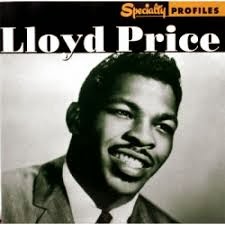
Remember what the 1950’s sounded like? It sounded like this! From 7pm sharp through to midnight it’s an overblown overdose of nostalgia sweeter than a diabetics urine. New Orleans-born Lloyd Price, the dapper ‘Mr Personality’ cranks up the jukebox compilation of hits with “Stagger Lee”, from a cold start to gas-mark seven. A straight American no.2 in May 1959 his “Personality” ran into UK opposition from an opportunistic cover by unlikely Pop Star Anthony Newley, yet still scored a respectable no.9 (11th July 1959) a few chart places beneath Newley’s version. Around the time I should have been swotting for my 11+, I was listening to ‘Saturday Club’, BBC Light Programme’s premier Pop show, hoping that svelte DJ Brian Matthew would favour the Price original on his play-list. Tonight, it’d be worth the ticket-Price to see him alone.


The Hispanic-chic of Chris Montez takes it higher by hurling himself into the aisles and jiving with every hep chicklet he can grab. “Let’s Dance” is the kind of title that just can’t fail. David Bowie did one. Lady Gaga did another. Chris Montez did it first, and it’s a jumping gem of a 45rpm. A walloping rhythm like it’s being beaten out on an old packing case, and a squeaky-cheap organ sound that anticipates both Doug Sahm and ? & The Mysterians. The ‘oom-pah-pah’ patronage of high-flying Big Bopper netted Johnny Preston the first of three hits in 1960, for which he’s profusely grateful, but even the soft-core teen-corn of “Cradle Of Love” finds its audience tonight. Then the rather inappropriately-named ‘Little’ Eva, shimmering in lurex, gets the evening’s first ovation and does “Locomotion” twice, with the mob on its feet as if it’s their national anthem.

Bobby Vee was the pretty-boy of fragile pubescent dreams who benefitted from some of Goffin-and-King’s most lushly-upholstered love songs, with which he (allegedly) out-sold Elvis in 1961. But he started his career standing-in for Buddy Holly, went on to cut a credible Holly tribute LP with the Crickets (‘Bobby Vee Meets The Crickets’, Liberty 1962), and here maintains that connection with a storming and deservedly well-received “Someday”. Similarly Duane Eddy might have one of the era’s most instantly recognisable sounds, but his thick ribs of twang scarcely tax his not-inconsiderable guitar skills, so he insinuates a searing twelve-bar “3:30 Blues”, then serves up “Peter Gunn” via its 1986 Art Of Noise arrangement. Keyboardist Larry Knechtel’s shock-headed machine-gun explosions come at absurdly startling angles to the evening’s basking retro vibe.


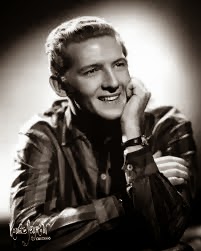
Then Jerry Lee Lewis is jet-lagged, flu-wracked and fuming. Arriving at the airport just two short hours before setting foot on stage, and furious to find the ‘Georgia Peach’ billed higher than the ‘Killer’ in the press ads, he razors his set down to its bare bones. Fronting a simple four-piece group he condescends to none of Mr Penniman’s dry-ice, break-dancers, lighting effects, big band or theatrics. Strolling nonchalantly into the spots, his back to the audience as if he’s doing a sound-check, he strikes up a casual conversation with his guitarist. Then, in a powder-blue roll-neck that paunches just above his black strides, he slouches in behind a neat Yamaha electric piano, for a set biased towards his 1970’s Country come-back. And as raggedly great as “Middle-Aged Crazy”, “Rockin’ My Life Away” and “She Still Comes Around” are, it’s not really what the hep-cats have come to dig this night. Hank Williams’ “You Win Again” is a torchy heartbreak of cracked romance that smoulders like slow napalm, but a maudlin drag through Presley’s “Blue Christmas” is plain cranky. This is where the Bop that won’t stop almost does! He hauls back with a jumping “Sweet Little Sixteen”, slamming from one song into the next allowing no space for applause or comment. This is the Killer NOT speaking… apart from a brief nod at ChuckleBerry as ‘probably the best lyric writer in Rock ‘n’ Roll’ (only PROBABLY?). Then it’s “Great Balls Of Fire”/“Whole Lotta Skakin’ Goin’ On” compressed into one, words fused together in a thirty-year meltdown of repetition into a single long phonetic scramble. There’s a perfunctory kicking-away of the piano stool, and a derisory arse-on-keyboard moment – and he’s gone.


Storming on stage to find his piano unmiked Little Richard coyly adlibs ‘someone done stole mah pay-ano. Was it you-oo Jerry Lee?’ And he’s exquisite, milking every moment, soaking up adoration, Rocking like a man of fifty-nine has no right to. “Bony Moronie” is followed by “Rock ‘n’ Roll Music”, then a spine-chilling “Send Me Some Lovin’”, and the shattering keyboard intro to “Good Golly Miss Molly”… after which he stops dead. ‘You like that, don’t you? You REALLY like that don’t you’ he coos, hanging on expectations, ‘then I’ll do it again’ – and he does! Awopbopaloobop! Alopbamboom! Bamalama Bamaloo! Nonsense rhymes. A hidden code. Over the following decades, Rock would produce more poetic lyricists. But Little Richard said everything that really needs to be said. The boy can’t help it. Of course, the sniffy hi-brow critics were correct. It was a de-sophistication. It was a reversion to more primitive forms. What they couldn’t understand, what we intuitively, inarticulately knew, was that this was ground zero, level one, of a new music that would dominate the second-half of the century, and our lives.

No-one could ever touch Little Richard. No-one could even come close. Elvis covered a spread of black and white R&B and early-Rockers, and in most every case tore them to shreds with wilder, rawer more primally uninhibited versions. But he fails when he does “Tutti Frutti” and “Long Tall Sally”, he can’t match Little Richard’s originals. Paul McCartney based his Rocker-voice on Little Richard, but the Beatles “Long Tall Sally” can’t hold a match to Little Richard’s original.

To me, as a white adolescent with a bad acne problem and relationship issues, Little Richard reached out across the Atlantic, seized me by the balls, squeezed, and my life was never the same afterwards. I had the big heavy black-&-silver London-American label 78rpm disc of his “Baby Face” – with a brittle chunk bitten out of the outer grooves, so I could only drop the stylus into the saxophone mid-point break, and catch the last verse. But I played it obsessively over and over again. Hearing Little Richard was the closest I’ve ever come to a religious experience, he is the closest thing to God I ever got. Not only the Quasar of Rock, but the camp Particle Accelerator of Pomp too. If this night is show-stealing then it’s in the Brink’s-MAT grand larceny league in which he loots the concession stands and mugs the usherette on the way out too, just for good measure.

At the exit, Mr Penniman’s god-squad of immaculately-suited Born-Again’s distribute free ‘Find The Lord’ volumes with a signed photo of Little Richard tucked within as inducement. I bin the book in the subway at the earliest opportunity, but hang onto the photo. That’s all the spiritual uplift I need under THIS Moon of love.


Book: 'THE LONG EARTH' by TERRY PRATCHETT & STEPHEN BAXTER


‘LONG, AND 
LONGER EARTHS’ 

Book Review of: 
THE LONG EARTH’ 
by 
TERRY PRATCHETT
STEPHEN BAXTER 
(Doubleday June 2012, then 
Corgi paperback 2013 ISBN: 978-0-552-16408-5) 


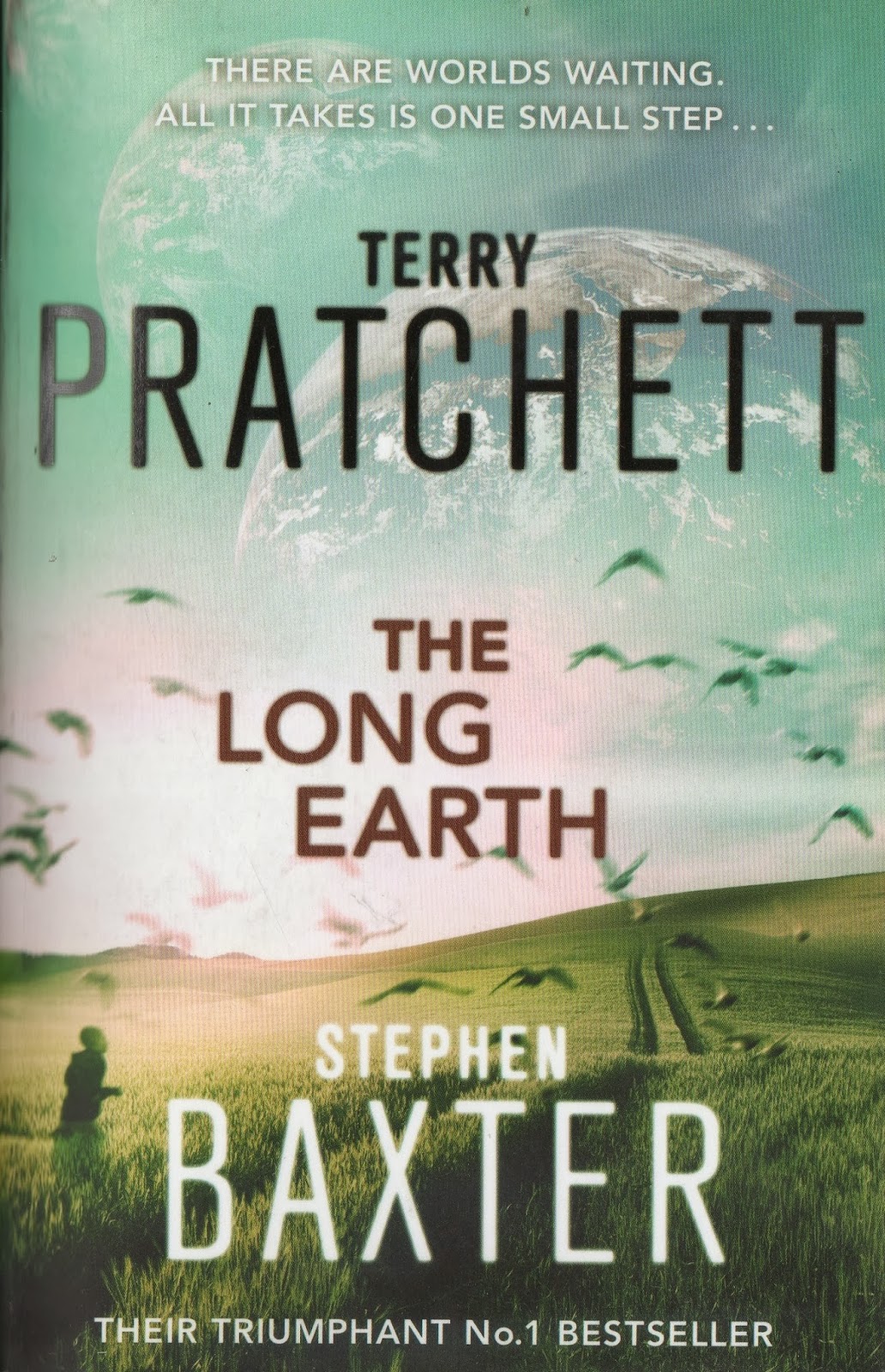
It’s that Lennon-McCartney thing. In any collaboration there’s the tendency to tease out the who wrote what conundrum. Using your skill and judgement. On the face of it there can hardly be two more dissimilar writers operating within the admittedly flexible confines of the same genre as Stephen Baxter and Terry Pratchett, almost. Pratchett with his whimsical humour, amusing witty satires and sometimes tedious jokiness. Baxter with his eternity-spanning quantum speculations, taking SF out into newer realms of wonder just when the it’s getting a bit stylistically predictable. Where is the common ground there? It’s difficult to see. Which makes it all the more amazing that this collaborative novel hangs together so well. Almost seamlessly. More serious than Pratchett. More playful than Baxter. An intriguingly episodic centre-ground combining the essential uniqueness of each.

Pratchett’s undeveloped manuscript ‘The High Meggas’ was the ignition event from which the ideas grew. The concept of multiple Earth’s stretching away east and west to an infinity of probability-space is hardly new to SF. It’s been frequently used as a vehicle to explore alternate histories in which events turned out slightly differently. Worlds where the Nazis won World War II, the Spanish Armada succeeded in invading England, Christianity failed to replace the pagan gods ensuring the Roman Empire survives to the present day. That kind of thing. Even the 1995-1999 TV-series ‘Sliders’ sets a group-jeopardy of characters lost in a blur of multiple alternate Earths. The fact that the endless sequence of adjacent Earth’s in the Baxter-Pratchett continuum are uninhabited, forest-worlds populated only by a variety of fauna, ‘both unfamiliar and familiar’, including some geologically-extinct species, provides ‘The Long Earth’s essential point of difference.

To me it seems to be making a similar point to the one Baxter makes in an earlier brilliant sequence, in which a multitude of primal ‘Big Bang’s misfire until our eventual stable cosmos stumbles into existence. The point being that there’s nothing inevitable or predetermined about the viable universe happening. Its existence is due to a one-in-several-million random chances in relativistic flux. The same with ‘the Long Earths’. There’s nothing inevitable, no manifest destiny about the evolution of homo sapiens, their civilisation and culture. Rather, that such an outcome is a freak one-in-several-million outcome of infinite other possibilities. This seems more to be a Baxter theme than a Pratchett one. But, once established, it allows a weave of separate tales to ramble across the never-ending new frontiers featuring a variety of characters, some of whom appear briefly and are then left to their own devices, others who interlink and reconnect into each other at a later point. Allowing both writers space to stretch out and follow their whims across the shared territory of ‘Earths, untold Earths. More Earths than could be counted.’


The ‘stepper’ device that initially allows people to reach the other Earths, powered by a potato, as the prefacing diagram illustrates, seems very much to be a Terry Pratchett invention. Credited to a reclusive ‘hippie born of generations of hippies’, Willis Linsay anonymously posts his invention on the internet as a kind of contra-corporate hippie-gesture, so that ‘Step Day’ happens simultaneously beyond government or entrepreneurial control. The idea that the ability to ‘step’ from world to world is also innate, and all that is required is the correct thought-signature – a mental state that tuning the device induces, is maybe a Baxter development. A kind of Zen discipline in which the device functions as a variety of techno-mandala. Although it’s as deceptive to attribute all humour-content to one writer and all seriousness to the other as it is to assign all the Beatles’ grit to John Lennon and their fluff to Paul McCartney. Collaborations are more complex organisms than that. Haggling over input-percentage is a pointless exercise.

There’s a tradition in, especially American SF, of pioneers opening up new frontiers. Not for nothing is space the ‘final frontier’. Nuclear apocalypse has been used as a convenient device to return the world to a kind a renewed revitalised pre-Columbian wilderness. The Long Earths are very much part of this. Our familiar Earth becomes Datum-Earth (as it was Earth-prime for ‘Sliders’). And just as global population-levels tip over into an unsustainable nine-billion, limitless new step-wise Earths become accessible. Enabling a whole new ‘go west young man’ flood of colonists opening up new continents. Worlds that unfold for steppers ‘like a Ray Harryhausen show-reel’ (for this book is very postmodern-aware of the Sc-Fi tradition in which it operates).

There’s a leisurely meandering pace to the novel, untypical of Baxter, taking diversions around aspects of this newly-revealed ‘multiverse’, meeting characters who sometimes recur, others who appear as one-offs. Private Percy Blakeney, the First World War soldier who is shocked into the company of what he mistakenly believes to be hairy Russians, is a natural accidental stepper. While the main thrust clarifies around ‘antisocial weirdo’ Joshua Valientè, brought up by Nuns, who has more conscious control of the same ability, and listens to its ‘silence’. He encounters Lobsang, who first appears as a Coca-Cola dispenser. He might be an AI or equally the downloaded soul of a Tibetan motorcycle-repairman mystic (his name recalling Lobsang Ludd of Pratchett’s 2001 novel ‘Thief Of Time’). Under the guise of the transEarth Institute, as a self-styled Jules Verne-ian ‘Robur The Conqueror’, he leads the unlikely pair in a phantasmagorical airship ‘The Mark Twain’, to step millions of Earths – counted off by an ‘Earthomenter’, in a bid to explore the farthest reaches of the Long Earth. Capable of downloading himself into ambulant units, Lobsang can also adopt the warm and amiable voice of David Kossoff, in a bid to humanise himself. Only to reappear as Indiana Jones to explore an extinct civilisation where ‘nothing had happened for a very long time, and went on not happening now’. Sally, daughter of the Stepper’s inventor joins the team, alongside an electro-cat called Shi-mi.

As they step they discover no other human worlds. But there are trolls, and elves who ride pig-mounts, who correspond to the Kromaggs of ‘Sliders’, humanoids on forked evolutionary paths. Some of them step worlds with ease, migrating across countless Earths to escape a terrible something encroaching across the gulf of worlds. But just as anticipations accelerate towards a climax-confrontation, there are new byways to distract the attention into new sub-themes. Speculations about, if every step-Earth has its own variant step-solar system, just possibly there’s an inhabited step-Mars out there? While governments extend their jurisdiction over their counterpart territories on adjacent Earths, to reap tax and material resources, as their claims become more tenuous and unenforceable the further they extend from Datum-Earth. But even the novel’s final resolution, meeting the mega-massive being called First Person Singular, is inconclusive. Without revealing any massive plot-secrets, there’s no real closure either. The open-ended inconclusive wanderings are obviously intended to travelogue on into the sequel – ‘The Long War’ (June 2013), and the series-novels beyond.


Terry Pratchett’s writing career had begun as a thirteen-year-old with a short story called “The Hades Business” in ‘The Technical Cygnet’, The High Wycombe Technical High School magazine. And there’s a clearly recognisable jokiness to this tale of Crucible who is recruited by Nicholas Lucifer as spin-doctor for his rebranded hell, installing Fun-Fair, Coffee Bar, Bowling Alley and a Jazz Band to make it a more attractive proposition. ‘Imagine the interior of a storm cloud’ he writes, ‘sprinkle liberally with ash and garnish with sulphur to taste.’ Pratchett’s ‘little satire’ was promptly reprinted in John Carnell’s ‘Science Fantasy no.60’ (August 1963), in the esteemed company of Mervyn Peake, Michael Moorcock and Thomas Burnett Swann. Carnell claiming this first as ‘one of those little touches an editor seldom gets the opportunity of doing’, adding that the precociously-talented schoolboy ‘shows great promise for the future.’ There was a second short fiction tale – “Night Dweller” in ‘New Worlds no.156’ (November 1965) which, according to editor Michael Moorcock ‘describes outer space in a new a somewhat poetic light.’ Very different, an impressionistic mood-piece about a dark ‘something that howled at the stars’, it indicates that the now-sixteen-year-old Pratchett had other gears, and possible other directions to follow. Instead, he advanced swiftly into establishing his own genre-defying ‘Discworld’ mythos, establishing a dedicated cult of followers.


While Baxter has other star-collaborations on his cv. ‘The Light Of Other Days’ (2000) is cover-credited to Baxter with Arthur C Clarke, but also carries a dedication to Bob Shaw, from whom the title is derived, as well as its concept of ‘slow glass’. The novel carries the same kind of wistful requiem for the discontinued Space Race as in ‘The Long Earth’ which laments how ‘we could have been out there, applying to join the galactic federation, not slashing and burning our way across endless copies of the same old planet.’ There’s also humour, but whether this comes from the plotline sketched out by Arthur C Clarke, or the solid textual fleshing-out of that plot by Baxter is uncertain. Britain exits the European Union, separates from Scotland, then ‘in 2019 England, with Wales, ceded Northern Ireland to Eire, packed the Royals off to Australia – where they were still welcome, and had become the fifty-second state of the United States of America.’ There are also holographic Beatles in a kind of overplayed retro-sixties nostalgia. Maybe this is the kind of teasingly provocative playfulness that might appeal to a Terry Pratchett readership?

At the novel’s focus there’s an investigative journalist called Kate Manzoni, and tele-evangelist Billybob Meeks taking advantage of an interactive virtual-reality heaven. There’s an extinction planet-sized Wormwood on collision course with Earth (Wormwood is a literal translation of the Russian Chernobyl), as global warming disrupts weather patterns. But it’s the OurWorld media corporation of Hiram Patterson (aka Hirdamani Patel) who sets up wormhole-technology as datapipe terminals. First their WormCam scanners abolish privacy in ways that Wikileaks could never envisage, then they extend out to glimpse the worlds of near star systems, and ultimately peek around the corners of time. History is revealed as a directionless patchwork of chance, opportunism, fabrication, confabulation and lie. ‘The human memory is not a passive recorder but a tool in the construction of the self, so history has never been a simple record of the past, but a means of shaping peoples.’


There’s a ‘depressing truth’ surrounding Elvis Presley, a revelation concerning Abraham Lincoln’s sexuality, Davy Crockett was a ‘self-manufactured myth’, and Betsy Ross did not design the Stars & Stripes flag. There were no Area 51 UFO’s. And despite stripping away the supernatural add-ons, Chapter 21 – ‘Behold The Man’, is kinder to the Jesus-myth than the 1969 Michael Moorcock novel (or the 1966 ‘New Worlds’ novella) from which it takes its name. The world adapts to constant surveillance either by using SmartShroud invisibility cloaks, or linking into an ‘internet of minds’. Those using worm-vision to reach the stars, as far as the Trifid Nebulae, or back down the DNA-trail to the very dawn of microbial life on Earth – and the bizarre revealed civilisation that preceded it, are named Stapledons, in a further SF reference to visionary writer Olaf Stapledon. It’s a sprawling, sometimes unsatisfying novel, alive with gimmicky techno-ideas that might belong to Clarke, and the long-range breadth of spectacle typical of both writers.

It’s not Baxter’s only collaboration with the SF master. In fact there’s a trilogy of novels dealing with the temporal ‘discontinuity’ – ‘Time’s Eye’ (2003), ‘Sunstorm’ (2005), and ‘Firstborn’ (2008) in which alien meddling has transfigured Earth into a patchwork of colliding history, with Alexander the Great facing off the Mongol hordes of Ghenghis Khan, and Rudyard Kipling on the NW Frontier startled by encounters with a primitive humanoid and 21st-century helicopter-gunships. Intended as a counterpart to the ‘2001: A Space Odyssey’ project, this is very much ‘Time’s Odyssey’.

Meanwhile the Terry Pratchett joint project continues with ‘The Long War’ (2013), which is set a tumultuous decade after its progenitor. Joshua and Lobsang are now caught up in new crises as fleets of world-stepping airships travel the Long Earths, the trolls become restless with their human interactions, and a new America – renamed ‘Valhalla’ is emerging to challenge the hegemony of datum-Earth. While the authorship is still as debatable. It’s that Lennon-McCartney thing.